
Aviation Updates: Massive Travel Chaos Paralyzes Germany as Lufthansa and Eurowings Suffer Over 1,500 Flight Cancellations and Delays
As severe operational friction absolutely crushes the German aviation network, the country's eight busiest airports record a devastating 1,472 flight delays and 115 outright cancellations.

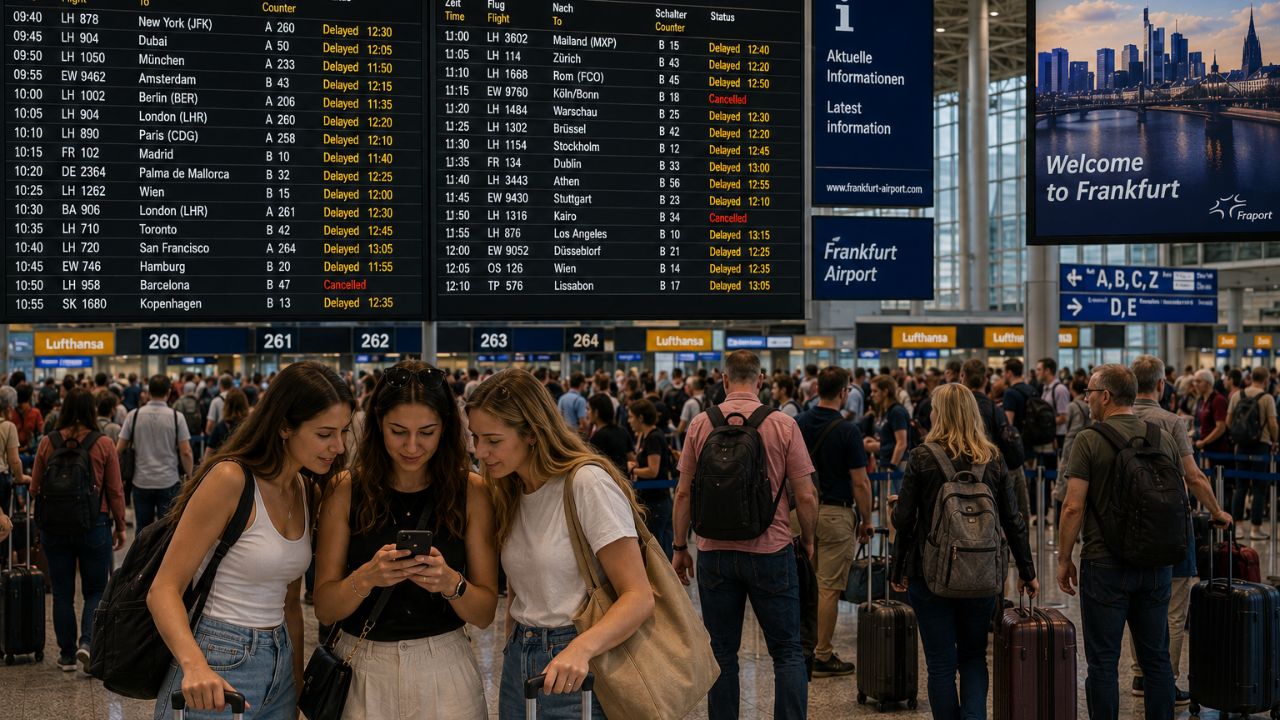
Image generated by AI
Aviation Updates: Massive Travel Chaos Paralyzes Germany as Lufthansa and Eurowings Suffer Over 1,500 Flight Cancellations and Delays
As systemic operational failures violently collide with peak summer travel demand, the entire German aviation network has descended into absolute gridlock, leaving thousands of furious passengers physically stranded across the country's largest transit hubs.
Image generated by AI
As high-impact airline news platforms rapidly issue continuous aviation updates regarding the intense fragility of the European transit grid, a massive operational collapse has just completely paralyzed Germany. The country's absolute busiest aviation gateways—ranging from Frankfurt and Munich to Berlin and Hamburg—have been crushed by a catastrophic wave of severe airport disruptions. Throughout a highly volatile 24-hour period, eight critical German hubs collectively recorded a staggering 1,472 massive flight delays alongside 115 outright flight cancellations. This systemic failure has instantly crippled critical domestic, European, and intercontinental routes, devastating operations for massive legacy and budget carriers alike, including Lufthansa, Eurowings, Ryanair, Condor, and British Airways. With critical high-yield connections to London, New York, Dubai, Paris, Amsterdam, and Madrid completely shattered during the summer holiday season, thousands of families and business travelers have been violently thrust into a nightmare scenario of localized travel chaos, exposing the terrifying vulnerability of Germany's highly integrated aviation infrastructure.
Expanded Overview: The Collapse of the German Network
To fully comprehend the sheer scale of this logistical disaster, aviation analysts must examine the massive, combined operational pressure placed upon the German transit grid.
Germany traditionally maintains one of Europe’s largest, most seamlessly interconnected aviation systems. However, this dense connectivity is a double-edged sword. A minor delay affecting aircraft rotations, crew scheduling, or air traffic control (ATC) instantly triggers a massive, unstoppable ripple effect. When a disruption strikes under peak summer passenger volumes, the massive accumulation of 1,587 total scheduling failures instantly reverberates globally. Germany’s federal aviation authorities and air navigation services are currently scrambling alongside airport operators to maintain basic safety requirements as airlines desperately attempt to recover their shattered schedules. The impact stretches far beyond Europe; because German hubs act as global transit bridges, delays here instantly corrupt long-haul operations bound for North America and the Middle East.
Section-Wise Breakdown: The Collapse of the Mega-Hubs
A forensic look at the localized failure data reveals that Germany's primary international gateways bore the absolute brunt of the operational friction.
Frankfurt International Airport remains Europe’s undisputed titan of long-haul and short-haul traffic. Consequently, it suffered the most catastrophic damage. With a massive 491 severely delayed departures and arrivals alongside 29 outright cancellations, Frankfurt handled the highest volume of disrupted flights in the nation. Because airlines rely on tightly coordinated schedules here, thousands of connecting passengers experienced severe itinerary adjustments. The disruption was equally terrifying further south at Munich International Airport. As a major connection point for intercontinental travel, Munich recorded 339 massive flight delays and 46 direct cancellations—the highest cancellation rate in the entire country, completely destroying the reliability of its premium routes.
Section-Wise Breakdown: Regional Gridlock Across the Country
While the massive mega-hubs collapsed, the heavy regional hubs servicing the rest of the country were similarly overwhelmed by the cascading ripple effect.
Germany’s capital region witnessed notable aviation disruption, with Berlin Brandenburg Airport reporting 217 delayed flights and 12 cancellations, severing vital domestic and European business links. In western Germany, Düsseldorf International Airport registered 168 flight delays and 7 cancellations, crippling travel for both outbound tourists and arriving passengers waiting for connecting rail transportation. Northern Germany also suffered; Hamburg Airport recorded 124 severe delays and 8 cancellations. Even the smaller commercial and cargo hubs could not escape the logistical nightmare: Cologne Bonn Airport suffered 82 delays (4 cancellations), Hanover/Langenhagen recorded 31 delays (6 cancellations), and Bremen logged 20 delays (3 cancellations).
Flight Details: Germany Aviation Network Severe Disruption Matrix
To fully comprehend the exact volume of delayed and canceled flights originating from each specific hub during this national crisis, the verified operational telemetry has been consolidated into the mandatory matrix below.
| German Airport | Total Delayed Flights | Total Cancelled Flights |
|---|---|---|
| Frankfurt International | 491 | 29 |
| Munich International | 339 | 46 |
| Berlin Brandenburg | 217 | 12 |
| Düsseldorf International | 168 | 7 |
| Hamburg | 124 | 8 |
| Cologne Bonn | 82 | 4 |
| Hanover/Langenhagen | 31 | 6 |
| Bremen | 20 | 3 |
| Total | 1,472 | 115 |
Passenger Impact: Navigating the Terminal Gridlock
For the thousands of passengers trapped inside heavily congested German terminals, surviving this massive gridlock requires immediate, aggressive action.
Travelers completely stranded by these delays and cancellations face a terrifying reality: the sheer volume of disrupted passengers means airline customer service desks are completely overwhelmed. Passengers are explicitly instructed to monitor airline notifications relentlessly via their mobile applications, allowing them to secure rebooking options before physical queues form. Travelers should legally demand assistance—including meal vouchers and hotel accommodations if an overnight stay is required—as mandated by European passenger rights frameworks. Crucially, travelers with tight international connections out of Frankfurt or Munich must remain hyper-alert, as a delay on their initial domestic leg will instantly result in a missed long-haul connection to New York or Dubai.
Industry Analysis: The Brutal Reality of Operational Recovery
From a macro-logistical perspective, resolving a nearly 1,600-flight national disruption requires massive, highly aggressive recovery protocols from airlines like Lufthansa and Eurowings.
Unlike outright cancellations, massively delayed flights create a unique operational nightmare. Airlines must constantly attempt to recover their schedules throughout the day while strictly adhering to mandatory safety requirements, complex aircraft rotations, and strict crew rest availability. When high passenger volumes compound these delays, the recovery process can bleed into the following day. During this volatile recovery phase, passengers are advised to maintain extreme flexibility, utilize Germany's highly reliable rail network as a potential backup if domestic flights fail, and arrive at the airport with massive amounts of extra time to survive the heavily congested security checkpoints.
Conclusion: A Warning to European Transit
Ultimately, the unprecedented operational collapse across Germany's eight busiest airports serves as a terrifying warning regarding the extreme fragility of modern European aviation during peak seasons. With Lufthansa, Eurowings, Ryanair, Condor, and British Airways caught in a massive web of 1,472 severe delays and 115 outright cancellations, the resulting travel chaos completely paralyzed the nation. As massive infrastructure pressure and compounding logistical failures continue to trigger massive airport disruptions and sudden flight cancellations across the continent, it is abundantly clear that passengers must fiercely advocate for themselves. By understanding their passenger rights and maintaining aggressive, real-time vigilance over their itineraries, travelers can attempt to mitigate the physical and financial devastation that inevitably follows a total national aviation meltdown.
Key Takeaways
- Massive National Collapse: Germany's aviation network collectively suffered a staggering 1,472 flight delays and 115 flight cancellations.
- Mega-Hubs Devastated: Frankfurt International accounted for 491 delays and 29 cancels, while Munich International suffered the highest cancellation volume (46) alongside 339 delays.
- Regional Failures: Berlin Brandenburg (217 delays), Düsseldorf (168 delays), and Hamburg (124 delays) were all severely crippled by the cascading friction.
- Global Airlines Affected: The disruptions paralyzed major carriers including Lufthansa, Eurowings, Ryanair, Condor, and British Airways, destroying routes to New York, Dubai, London, and Paris.
- Passenger Rights: Stranded travelers must actively demand their rights under European regulations, requiring airlines to provide care packages and potential compensation.
FAQ: German Airport Flight Delays and Cancellations
How many flights were affected across Germany today? The German aviation network recorded a massive, combined disruption consisting of 1,472 severe flight delays and 115 outright flight cancellations across eight major airports.
Which airport suffered the most disruptions? Frankfurt International was the most severely affected by volume, recording 491 delayed flights and 29 cancellations. Munich International suffered the highest number of outright cancellations (46).
Which airlines and routes were impacted by this massive gridlock? Major international and regional carriers were devastated by the delays, including Lufthansa, Eurowings, Ryanair, Condor, and British Airways. Critical long-haul and regional routes to London, New York, Dubai, Paris, Amsterdam, and Madrid were compromised.
What should I do if my flight through Frankfurt or Munich is delayed? Act immediately. Monitor your airline's app for automatic rebooking options, contact customer service, and familiarize yourself with EU passenger rights regarding mandatory assistance and potential compensation for severe delays.
Related Travel Guides
France Airports 1075 Delays Air France easyJet Travel Chaos 2026
Brussels Airport Brussels Airlines easyJet Delays Travel Chaos 2026
Copenhagen Airport 203 Delays SAS Lufthansa Travel Chaos 2026
Disclaimer: This article is strictly for informational and aviation safety analysis purposes. The specific operational telemetry (1,472 delays, 115 cancellations), affected airports (Frankfurt, Munich, Berlin, etc.), and affected carriers (Lufthansa, Eurowings, etc.) are based on verified flight tracking data and official statements from Germany's federal aviation authorities available at the time of publication. European airspace conditions, ATC congestion, and specific airline schedules are highly dynamic and subject to immediate, unannounced modification by Air Traffic Control or the operating carrier. Passengers traveling through German airports should explicitly prepare for potential severe delays, aggressively monitor their airline's mobile application, and verify their exact compensation eligibility directly with their airline prior to departure.
Disclaimer
This article is for informational and educational purposes only. It does not constitute legal, financial, or professional advice. While we strive to provide accurate and up-to-date information, travel policies, regulations, and conditions change rapidly. Always verify information with official sources before making travel decisions. Nomad Lawyer makes no representations about the accuracy, reliability, completeness, or suitability of the information provided. Readers should consult qualified professionals for advice specific to their circumstances. The views expressed in this article are those of the author and do not necessarily reflect the views of Nomad Lawyer.
Kunal K Choudhary
Co-Founder & Contributor
A passionate traveller and tech enthusiast. Kunal contributes to the vision and growth of Nomad Lawyer, bringing fresh perspectives and driving the community forward.
Learn more about our team →