
Georgia's Rail Game-Changer: BTK Railway Hits 5M Tonne Capacity
Georgia's modernised Baku Tbilisi Kars Railway launched full operations today, quintupling freight capacity to 5 million tonnes annually and reshaping the Middle Corridor between Asia and Europe.

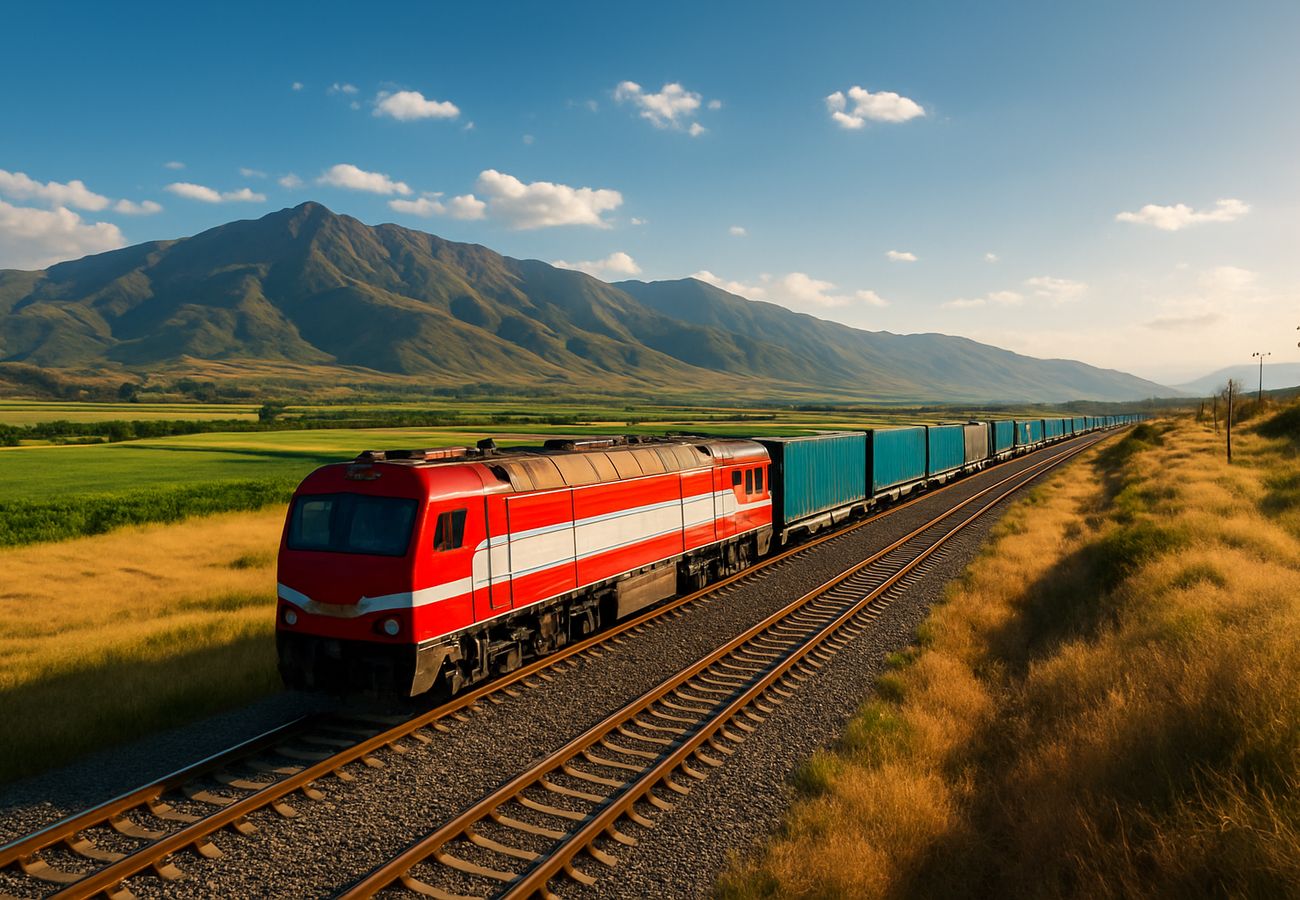
Image generated by AI
Georgia Just Became Europe's Freight Gateway
Georgia has quietly positioned itself as the lynchpin of Eurasian rail trade. Today, the modernised Baku Tbilisi Kars Railway enters full operations—and the numbers tell an extraordinary story.
The route's annual freight capacity has exploded from 1 million tonnes to 5 million tonnes. That's a 400% increase in cargo-moving power. For shippers routing goods from China and Central Asia toward European markets, this isn't just infrastructure news. It's a supply chain revolution.
The commissioning event unfolded at the Akhalkalaki Railway and Logistics Complex, a strategic junction in southern Georgia where cargo changes gauge and direction. This location sits on the critical rail spine connecting Azerbaijan, Georgia, and Türkiye—three nations now locked into a single, high-capacity freight corridor.
Reddit: "Finally, an alternative to chokepoint sea routes. The Middle Corridor is becoming real." — r/logistics
What Actually Changed: The 184-Kilometre Transformation
The BTK Railway originally launched in 2017, but today's milestone represents something fundamentally different. Georgia's section—spanning 184 kilometres—underwent surgical modernisation across five phases.
Engineers touched nearly every millimetre of this corridor. The work included:
- 13 railway stations rehabilitated for higher throughput
- 55 bridges strengthened for heavier loads
- 8 traction substations upgraded for power capacity
- 320 buildings retrofitted for operational support
- 30.3 kilometres of brand-new track laid
- 153.1 kilometres of existing track reconstructed
- A new wheelset changing station to manage gauge compatibility between nations
This wasn't cosmetic work. Every upgrade targeted the same goal: move more freight, faster, with fewer bottlenecks.
The wheelset station alone solves a critical problem. As trains cross from Georgia into Türkiye, wheels must change to match different rail gauges. This facility now handles that transition at scale—a technical detail that determines whether 5 million tonnes is achievable or just theoretical.
The Middle Corridor's Moment
The Middle Corridor has been the missing piece in global trade infrastructure for decades. It offers shippers a third option: neither the congested Suez Canal route nor the Russian-dominated Northern Corridor.
Cargo now flows like this:
Chinese goods move across the Caspian Sea to Azerbaijan. From Baku, trains roll west through Georgia's mountains. At Akhalkalaki, they transition to Turkish gauge and continue into Türkiye's rail network. Finally, they push toward European markets—bypassing maritime chokepoints entirely.
For freight forwarders managing Asia-Europe shipments, this matters viscerally. Faster transit times. Multiple routing options. Reduced dependence on single chokepoints. The Suez crisis last year reminded global supply chains why redundancy isn't luxury—it's survival.
The upgrade also stabilises the route politically. When infrastructure is genuinely valuable, governments protect it. A 5-million-tonne corridor attracts investment, cross-border cooperation, and long-term stability.
Azerbaijan's Caspian Play
Azerbaijan remains the eastern anchor of this system. The country has invested aggressively in its Baku International Sea Trade Port at Alat, which converts maritime Caspian traffic into rail traffic heading toward Georgia and beyond.
But infrastructure alone doesn't move freight. Azerbaijan Railways and Georgian Railway have created a joint venture to operate the BTK line with unified efficiency standards. This operational layer transforms the upgraded track into a coordinated network.
That collaboration model matters. It signals that three nations are treating this as a genuine shared corridor—not just three separate sections running through each other's territory.
Türkiye Closes the Western Gateway
Türkiye completes the circuit. Once trains enter Kars, they access the Turkish rail network's western branches and onward connections toward Europe.
But Ankara isn't resting on the BTK Railway alone. The government is simultaneously upgrading the Divriği-Kars-Georgia border corridor, strengthening eastern Turkey's logistics resilience. This creates a feedback loop: better Turkish infrastructure attracts more cargo to the BTK route, which justifies further Turkish investment.
The upgraded line now functions as part of a larger Eurasian freight ecosystem, not three isolated national projects.
The Numbers That Matter
| Metric | Details |
|---|---|
| Georgian section length | 184 km |
| New track built | 30.3 km |
| Existing track rehabilitated | 153.1 km |
| Previous annual capacity | 1 million tonnes |
| New annual capacity | 5 million tonnes |
| Railway stations upgraded | 13 |
| Bridges reinforced | 55 |
| Traction substations upgraded | 8 |
| Connected countries | Azerbaijan, Georgia, Türkiye |
| Original service launch | 2017 |
What This Means for Georgia Specifically
The real winner today is Georgia. The country transforms from a transit country into a logistics hub.
More freight flowing through Akhalkalaki generates revenue for Georgian Railways. Customs duties increase. Warehousing and dry-port operators find new business. Regional investment flows toward better infrastructure. International logistics companies establish regional offices in Tbilisi.
The knock-on effects ripple through employment, skills development, and regional competitiveness. A country that improves its logistics profile improves its entire economic trajectory.
Why Rail Freight Matters in 2026
Global supply chains are hungry for alternatives. Container ships face fuel costs, piracy risks, and climate volatility. Road corridors through Central Asia remain politically fragile. Railways offer stability, predictability, and capacity.
The modernised BTK Railway arrives exactly when shippers need new options. Block trains (dedicated freight trains running fixed schedules) can now operate reliably. Cargo volumes that previously required maritime routing now make economic sense by rail.
This infrastructure upgrade also signals to investors that the Middle Corridor is transitioning from ambition to reality. Governments don't spend this much money modernising railways without serious long-term commitment.
Tourism and Connectivity Implications
While the BTK Railway is fundamentally a freight corridor, its impact bleeds into travel and destination positioning. Better rail infrastructure improves a country's regional profile, attracts investment, and supports broader tourism connectivity.
Stronger rail corridors create more accessible border crossings, reduce customs friction, and position countries as modern, investment-ready destinations. They also enable future passenger service expansion—a natural evolution once freight infrastructure proves reliable.
For regional tourism—particularly cultural routes connecting Azerbaijan, Georgia, and Türkiye—better rail links eventually translate to better tourist logistics.
The Larger Game
The modernised BTK Railway represents something more than infrastructure news. It's a geopolitical statement: Asia-Europe trade has alternatives. It's an economic fact: 5 million tonnes annually changes regional competitiveness. It's a logistics reality: Georgia, Azerbaijan, and Türkiye now operate an integrated corridor.
The Middle Corridor is no longer theoretical. It's operational. And today, it just gained serious capacity.
Georgia's quiet rail revolution just reshaped Eurasian trade routes—whether Brussels or Beijing expected it or not.
Related Railway & Trade Infrastructure Guides
US Flights in Crisis — 369 Cancelled, 3,458 Delayed Nationwide Today
Four Seasons Napa Valley Agora Pop-Up Redefines Luxury Resort Experiences
Disclaimer
This article is for informational and educational purposes only. It does not constitute legal, financial, or professional advice. While we strive to provide accurate and up-to-date information, travel policies, regulations, and conditions change rapidly. Always verify information with official sources before making travel decisions. Nomad Lawyer makes no representations about the accuracy, reliability, completeness, or suitability of the information provided. Readers should consult qualified professionals for advice specific to their circumstances. The views expressed in this article are those of the author and do not necessarily reflect the views of Nomad Lawyer.
Kunal K Choudhary
Co-Founder & Contributor
A passionate traveller and tech enthusiast. Kunal contributes to the vision and growth of Nomad Lawyer, bringing fresh perspectives and driving the community forward.
Learn more about our team →