
A-10 Warthog's Unexpected Second Act: Why the Cold War Veteran Is Now the Military's Frontline Drone Hunter
Breaking airline news and aviation industry updates for 2026.

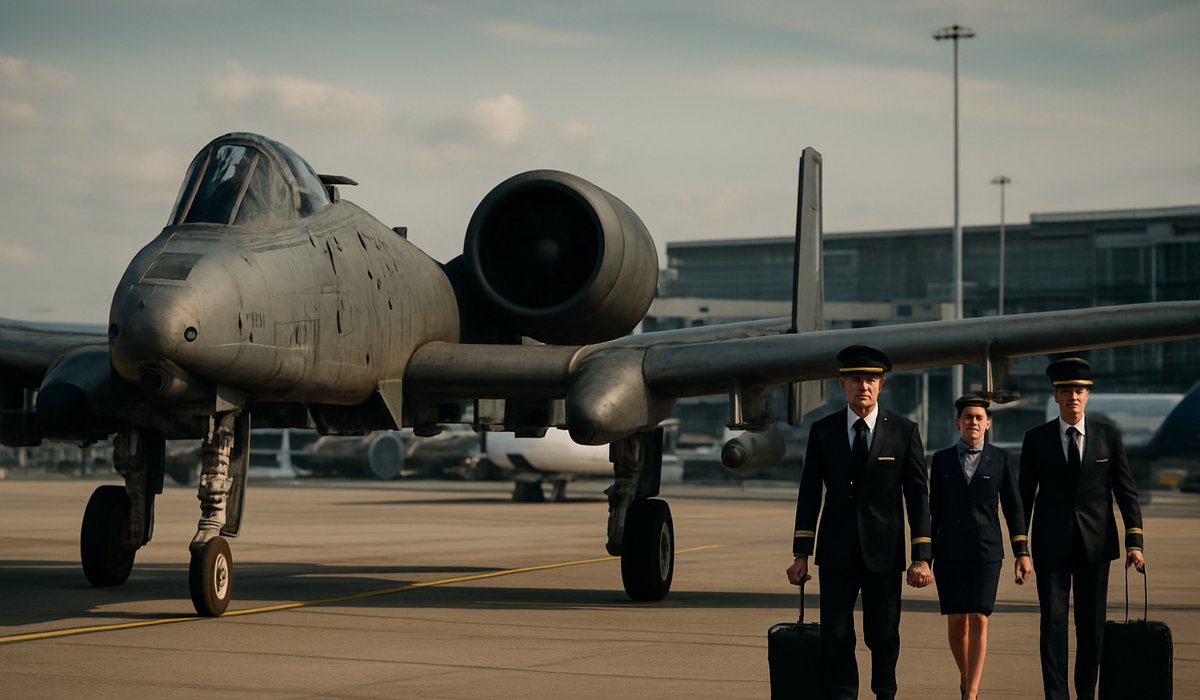
Image generated by AI
A-10 Warthog's Unexpected Second Act: Why the Cold War Veteran Is Now the Military's Frontline Drone Hunter
The aging close-air-support aircraft is finding renewed purpose in modern warfare, equipped with advanced laser-guided systems to combat unmanned threats across the Middle East
A Fighter Built for Yesterday, Essential for Today
The Republic A-10 Thunderbolt II, a tactical aircraft designed during the Cold War to destroy Soviet tanks on European battlefields, has undergone a remarkable operational transformation. Now, more than four decades after its maiden flight, the venerable "Warthog" has emerged as a critical asset in countering modern drone threats across the Middle East—a capability that has effectively extended its operational lifespan and complicated Pentagon retirement plans.
By 2024, U.S. Air Force A-10 squadrons have been actively employing modernized 2.75-inch laser-guided rocket systems to engage and neutralize unmanned aerial vehicles in active combat zones. The development of this drone-hunting capability, first documented in technical assessments dating back to 2019, has only recently become visible in operational settings, with combat engagements confirmed through pilot nose art depicting Shahed-series drone silhouettes—a traditional military practice documenting confirmed kills.
From Tank-Killer to Multi-Role Threat
The A-10's evolution reflects broader shifts in global security challenges. Originally conceived as a precision ground-attack platform optimized for armored warfare, the aircraft's robust airframe, exceptional maneuverability, and extended loiter time—critical characteristics that made it legendary during operations in Iraq and Afghanistan—have proven equally valuable against swarms of hostile drones.
The laser-guided 2.75-inch rocket system represents a cost-effective alternative to deploying advanced fighter jets for counter-drone operations. With sustained flight endurance and superior accuracy, A-10s provide persistent air defense capabilities that newer platforms struggle to match economically.
Strategic Implications for Military Planning
This operational pivot complicates the U.S. Air Force's long-standing modernization strategy. For years, military planners have promoted retirement of the aging A-10 fleet in favor of newer, multi-role fighters—primarily the F-35. However, demonstrated drone-hunting effectiveness has reinvigorated arguments for sustained A-10 operations, creating budgetary tensions between legacy and next-generation platforms.
The aircraft's newfound relevance underscores an uncomfortable reality in 21st-century defense: sometimes yesterday's solutions address today's emerging threats more effectively than tomorrow's expensive alternatives.
FAQ: Understanding the A-10's Modern Combat Role
Why is the A-10 Warthog effective against drones? The A-10's extended loiter time, precision maneuverability, and advanced targeting systems make it ideal for counter-drone operations. Its laser-guided rocket system provides accurate engagement with minimal collateral risk.
When did A-10s begin shooting down drones? Operational engagement appears to have commenced between 2023-2024, though development of the drone-hunting capability began years earlier in 2019.
Could the A-10 be retired despite its drone-hunting success? Unlikely in the near term. Demonstrated effectiveness against modern threats strengthens arguments for continued A-10 operations, complicating Pentagon retirement timelines.
What advantages does the A-10 have over modern fighters for this role? Lower operational costs, extended flight endurance, and proven accuracy make the A-10 more economical than deploying advanced fighters like the F-35 for persistent drone defense.
How does drone engagement change the A-10's operational doctrine? The A-10 transitions from pure close-air-support to a multi-role platform capable of air defense, ground attack, and counter-unmanned operations simultaneously.
Related Travel Guides
Flight Delay Compensation Guide 2026
Understanding Airline Route Changes
Airport Security Process Updated (2026)
External Resources
Disclaimer
This article is for informational and educational purposes only. It does not constitute legal, financial, or professional advice. While we strive to provide accurate and up-to-date information, travel policies, regulations, and conditions change rapidly. Always verify information with official sources before making travel decisions. Nomad Lawyer makes no representations about the accuracy, reliability, completeness, or suitability of the information provided. Readers should consult qualified professionals for advice specific to their circumstances. The views expressed in this article are those of the author and do not necessarily reflect the views of Nomad Lawyer.
Preeti Gunjan
Contributor & Community Manager
A passionate traveller and community builder. Preeti helps grow the Nomad Lawyer community, fostering engagement and bringing the reader experience to life.
Learn more about our team →