
Travel Four Seasons Peninsula Papagayo: Costa Rica's Wildlife Resort for Summer 2026
Four Seasons Resort Peninsula Papagayo launches immersive nature programs for summer 2026, bringing guests closer to Costa Rica's wildlife than ever before.

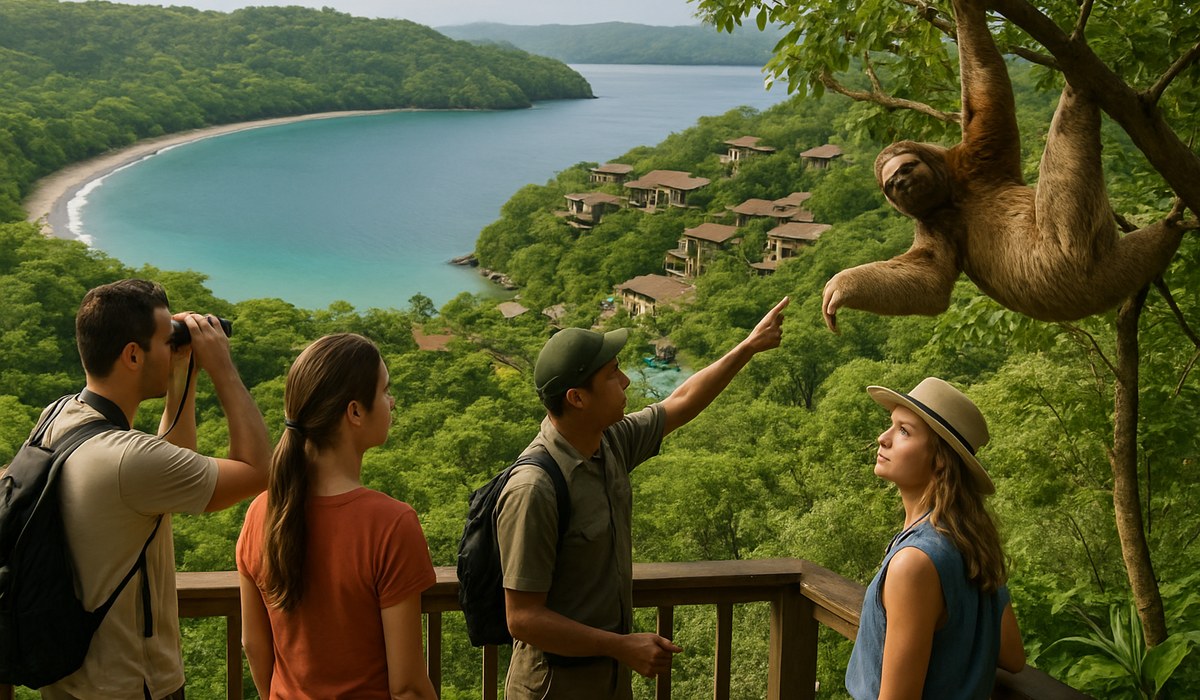
Image generated by AI
**> Quick Summary
• Four Seasons Resort Peninsula Papagayo introduces expanded wildlife encounter programs for summer 2026 travel season • 182-room luxury property transforms nature immersion into cornerstone of guest experience across Guanacaste Province • New guided excursions include sea turtle monitoring, howler monkey tracking, and rainforest canopy expeditions • Resort positions Costa Rica getaway as premium alternative to traditional beach-only Caribbean destinations**
While most luxury resorts keep wildlife at arm's length behind manicured gardens, Four Seasons Resort Peninsula Papagayo is betting its summer 2026 success on bringing guests closer to howler monkeys, sea turtles, and tropical ecosystems than ever before. The 182-room property in Costa Rica's Guanacaste Province has unveiled nature-focused programming that transforms what travelers expect from five-star tropical vacations.
General Manager Roberto Contreras confirmed the resort is recruiting three additional naturalist guides to handle projected demand. "We're seeing 40% more advance bookings for our nature packages compared to last summer," Contreras told hospitality industry analysts this week. "Travelers want authentic encounters, not just poolside relaxation."
The shift reflects broader momentum across luxury travel toward experiential programming. Industry observers point to changing guest priorities—particularly among North American travelers aged 35-50 who now comprise the resort's largest demographic segment. These visitors allocate premium budgets not for marble bathrooms alone but for memories that can't be replicated at properties closer to home, much like other luxury resort groups welcoming guests this season have discovered.
Wildlife Encounters That Define the Four Seasons Papagayo Experience
Four Seasons Resort Peninsula Papagayo sits on 1,400 acres of protected tropical dry forest within Culebra Bay, where the property maintains conservation easements across 900 undeveloped acres. White-faced capuchin monkeys traverse canopy pathways visible from guest suites. Scarlet macaws nest in beach almond trees along the resort's four beaches. Three-toed sloths inhabit cecropia trees behind the golf course clubhouse.
The resort's naturalist team documents 350 bird species within property boundaries annually. Marine biologists working with the on-site sustainability office have identified 23 fish species in near-shore reefs accessible by kayak from Prieta Beach. Olive ridley sea turtles nest on two resort beaches between July and November, with hatchling releases scheduled around tidal patterns that guests can observe under supervision.
Director of Recreation Ana Campos emphasizes the resort avoids any animal feeding or artificial baiting. "Every encounter happens on the wildlife's terms," Campos explained. "We teach guests to recognize howler monkey vocalizations that signal territorial boundaries. We show them which fig trees attract toucans at dawn. This isn't a zoo experience—it's reading nature's rhythms."
The property earned its five-star designation from Forbes Travel Guide by integrating luxury service standards with ecological authenticity. Naturalist guides carry spotting scopes and field identification apps, but they also coordinate with housekeeping to adjust pool maintenance schedules when iguanas lay eggs in landscaping zones near guest buildings.
Summer 2026 Nature Adventure Programs and Excursions
The resort's newly expanded "Into the Wild" package bundles accommodations with four guided experiences priced from $2,850 for three nights. Morning canopy walks depart at 6:15 AM, when activity peaks among arboreal mammals and resident bird populations. Guides equipped with radio telemetry track recently habituated spider monkey troops within the forest preserve, maintaining 15-meter observation distances per Costa Rican wildlife protocols.
Snorkeling excursions to Virador Beach deploy marine biologists who explain symbiotic relationships between sergeant major fish and brain coral formations. Underwater visibility averages 18 meters during dry season months from December through April, extending into early summer before June rains arrive. The resort limits group sizes to eight guests per guide, contrasting with 20-person tours common at neighboring properties.
Sunset catamaran cruises along the Peninsula's western coastline now include cetacean monitoring components. Bottlenose dolphins inhabit offshore waters year-round, while humpback whales migrate through the corridor from December to April and again from July to October. Marine naturalists aboard the resort's 52-foot sailing yacht record sightings that contribute to national conservation databases managed by Costa Rica's Ministry of Environment.
The resort introduced nocturnal rainforest hikes this season after guests requested access to crepuscular species. Two-hour walks departing at 7:30 PM reveal kinkajous foraging in strangler fig canopies, red-eyed tree frogs calling near ephemeral ponds, and spectacled owls hunting from silk-cotton tree perches. Participants carry red-filtered headlamps that minimize light pollution affecting wildlife behavior patterns.
Children aged 7-12 can join junior naturalist programs that teach field sketching techniques, camera trap deployment, and track identification. The curriculum aligns with Next Generation Science Standards used in U.S. elementary education, allowing families to treat the vacation as educational enrichment. Parents report that young participants return home requesting binoculars and field guides rather than additional screen time.
Luxury Amenities Meet Ecological Immersion
Traditional resort infrastructure remains intact across the Peninsula property. The Arnold Palmer-designed golf course winds through forest corridors where caddies double as wildlife spotters, alerting players to coati groups crossing fairways or green iguanas sunning on cart paths. Three clifftop infinity pools overlook Culebra Bay's yacht anchorages. Four restaurants serve Costa Rican fusion cuisine alongside international menus.
The 18,000-square-foot spa incorporates local botanical ingredients—coffee scrubs from Tarrazú highlands, volcanic clay from Rincón de la Vieja, coconut oil from Limón Province. Treatment rooms open onto private gardens where guests hear mantled howler vocalizations during massage sessions. Spa Director Mariana Vega trains therapists to explain the pharmacological properties of ingredients rather than simply listing them on menus.
Guest suites average 650 square feet, with private terraces oriented toward forest canopy or ocean views. Floor-to-ceiling windows allow wildlife observation without leaving air-conditioned comfort—a design feature that appeals to travelers who appreciate nature from curated vantage points. Turndown service includes animal sighting cards detailing species observed on property that day, personalized to each guest's location within the resort.
The property operates its own water treatment plant, solar array, and composting facility, infrastructure investments that reduce ecological footprint while maintaining luxury standards. Guests encounter these systems during optional sustainability tours led by environmental staff, contextualizing how redefining travel value beyond price increasingly includes environmental stewardship metrics alongside thread counts and amenity brands.
Contreras notes that 68% of current bookings come from repeat guests, a loyalty rate he attributes to the resort's dual identity. "Our guests want Egyptian cotton and howler monkeys," he observed. "They expect Nespresso machines in their suite and sea turtle nesting patrols at midnight. We've stopped seeing these as contradictions."
Planning Your Costa Rica Wildlife Escape: What to Know
Four Seasons Resort Peninsula Papagayo sits 35 kilometers from Liberia International Airport in Guanacaste Province, Costa Rica's northwestern gateway. Direct flights from major North American hubs take 4-6 hours, making the destination accessible for extended weekend trips that North Americans often compare to options like weekend escape destinations closer to home but with dramatically different ecosystems.
Summer high season runs from July through August, coinciding with North American school vacations. Room rates peak at $1,250-$1,850 per night for entry-level accommodations, with multi-bedroom villas reaching $6,500 nightly. Shoulder season pricing from May through June and September through November drops 25-35%, though wildlife activity remains robust outside peak tourist months.
Travelers should consult World Health Organization travel health guidelines regarding vaccinations and preventive medications for Central America. While Guanacaste's Pacific coastal region reports minimal malaria risk, yellow fever vaccination certificates may be required for travelers arriving from endemic areas. Standard tropical precautions include insect repellent containing 30% DEET and broad-spectrum sunscreen rated SPF 50 or higher.
The resort's concierge team arranges off-property excursions to Rincón de la Vieja National Park, where active volcanic features include boiling mud pools and sulfur fumaroles. Manuel Antonio National Park, four hours south, offers more accessible rainforest trails for families with young children. Monteverde Cloud Forest Reserve provides highland birding opportunities for serious ornithologists willing to travel six hours from the resort.
Currency exchange favors U.S. dollars, which are accepted alongside Costa Rican colones throughout Guanacaste Province. Credit cards work universally at the resort, though small cash amounts help for tipping naturalist guides at recommended rates of $20-30 per person for half-day excursions.
Pack lightweight, moisture-wicking clothing in neutral colors that photograph well against tropical backgrounds. Binoculars rated 8x42 or 10x42 significantly enhance wildlife viewing—the resort loans equipment, but serious birders prefer personal optics. Reef-safe sunscreen protects marine ecosystems during snorkeling activities while meeting environmental regulations increasingly enforced at Costa Rican marine reserves.
FAQ: Four Seasons Peninsula Papagayo Nature Adventures
When is the best time to visit for wildlife viewing? Dry season from December through April offers optimal conditions, with June through August providing excellent opportunities during North American summer vacation periods. Sea turtle nesting peaks from July to November, while humpback whale migrations occur December to April and again July to October.
Are the nature activities suitable for children? Junior naturalist programs accept children aged 7 and older, with private family guides available for younger participants. Most guided walks cover 2-3 kilometers on established trails, manageable for children accustomed to outdoor activity. The resort provides child-sized binoculars and field guides.
What wildlife can I realistically expect to see? White-faced capuchin monkeys and howler monkeys appear daily on property grounds. Scarlet macaws fly overhead most mornings. Sea turtle sightings depend on nesting season timing. Marine mammals require boat excursions with no guaranteed sightings, though dolphin encounter rates exceed 70% on scheduled cruises.
Do I need to book nature excursions in advance? Popular activities like sea turtle monitoring and dawn canopy walks fill quickly during July-August peak season. The resort recommends booking guided experiences when confirming accommodations, particularly for groups of four or more. Walk-up availability exists for most programs during shoulder seasons.
How does this compare to other Costa Rica eco-resorts? Four Seasons Peninsula Papagayo differentiates through luxury amenities paired with serious naturalist programming. Properties like Lapa Rios and Pacuare Lodge offer more rustic immersion, while neighboring Guanacaste resorts emphasize beach and golf experiences over wildlife education. The resort occupies a middle ground attracting guests seeking both comfort and ecological authenticity.
Related Articles:
Disclaimer
This article is for informational and educational purposes only. It does not constitute legal, financial, or professional advice. While we strive to provide accurate and up-to-date information, travel policies, regulations, and conditions change rapidly. Always verify information with official sources before making travel decisions. Nomad Lawyer makes no representations about the accuracy, reliability, completeness, or suitability of the information provided. Readers should consult qualified professionals for advice specific to their circumstances. The views expressed in this article are those of the author and do not necessarily reflect the views of Nomad Lawyer.
Preeti Gunjan
Contributor & Community Manager
A passionate traveller and community builder. Preeti helps grow the Nomad Lawyer community, fostering engagement and bringing the reader experience to life.
Learn more about our team →