
Force Largest Aircraft Fleet: 1970s Fighter Dominates USAF 2026
The US Air Force's force largest aircraft fleet in 2026 isn't a stealth fighter—it's a decades-old 1970s fighter jet. Sustainment and training aircraft prove equally critical to military air power operations.

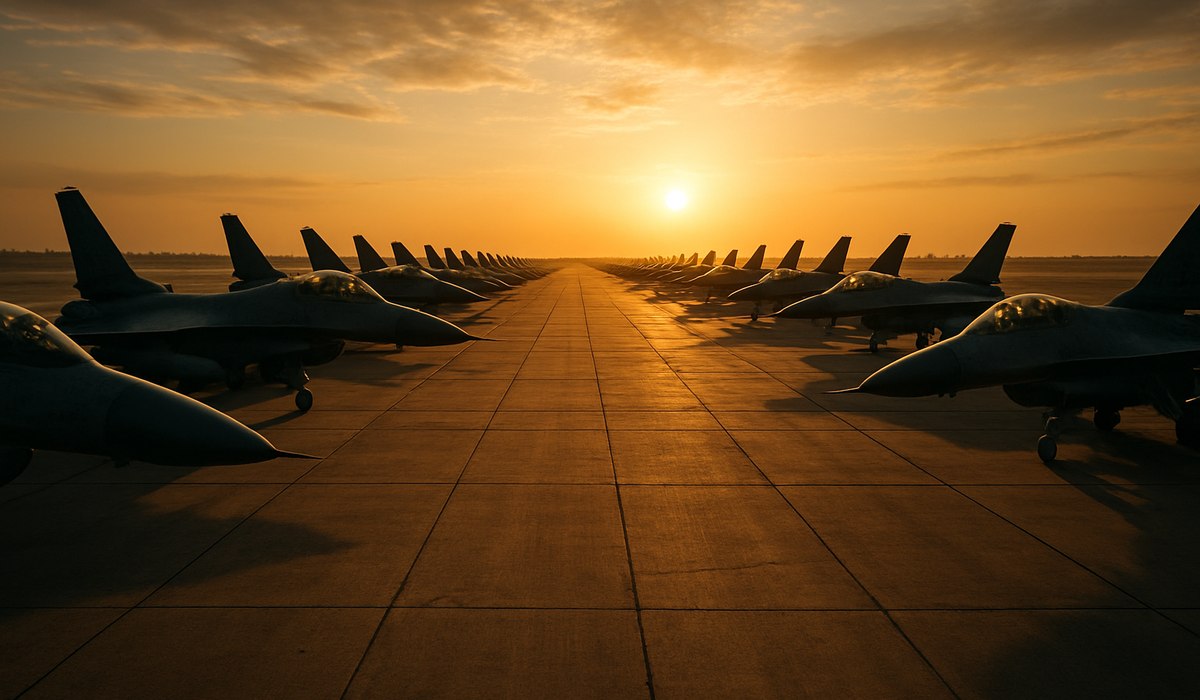
Image generated by AI
What You Need to Know: The Force Largest Aircraft Fleet Operating Today
The US Air Force's force largest aircraft fleet in 2026 isn't cutting-edge stealth technology—it's a fighter jet from the 1970s that continues proving its operational value across global airspace. When travelers examine which aircraft dominate USAF operations, they discover an unexpected reality: aging platforms alongside trainer jets and aerial refueling tankers form the backbone of American air power, not exclusively advanced combat systems. This strategic reliance on diverse aircraft types directly impacts airport operations, flight schedules, and airspace management that affects civilian aviation worldwide.
The USAF's Most Numerous Aircraft Fleet
The force largest aircraft in USAF operations isn't what many assume. Rather than F-35 Lightning II stealth fighters or B-21 Raider bombers, the service's most numerous platform is the F-16 Fighting Falcon—a fourth-generation fighter jet that first entered service in 1978. With hundreds of these aircraft still operational across multiple air bases, the F-16 remains the workhorse of American air defense and ground support missions.
The longevity of the F-16 reveals crucial insights about military aviation strategy. Originally designed during the Cold War, this platform has undergone continuous modernization, making it relevant for contemporary operations. The aircraft operates from bases across the continental United States and internationally, affecting airspace congestion and airport capacity at major hubs. Commercial pilots operating near military installations regularly coordinate with F-16 operations, making understanding this force largest aircraft category essential for aviation professionals.
Beyond the F-16, trainers like the T-6 Texan II and T-38 Talon comprise substantial portions of USAF fleets. These aircraft might seem secondary, but they represent critical infrastructure for pilot development. Every combat-ready pilot begins training in these entry-level platforms, making them foundational to maintaining air force readiness and capability.
Why Training and Tanker Aircraft Matter
Training aircraft represent a surprising but logical component of the force largest aircraft operated by USAF establishments. The T-6 Texan II serves as the primary trainer for Air Force pilots, with hundreds of airframes distributed across training bases nationwide. Likewise, the KC-135 Stratotanker—introduced in 1956—remains one of the most numerous aircraft in military service globally.
These aircraft categories operate continuously, generating substantial traffic at dedicated training facilities and strategic airbases. The KC-135, in particular, proves indispensable for extending combat range and enabling long-distance deployments. Military aircraft cannot conduct intercontinental operations without reliable aerial refueling, making tankers as operationally critical as fighters themselves. For air traffic control systems and civilian aviation planners, understanding tanker routes and training schedules directly affects commercial flight routing and delay management.
The importance of maintaining large trainer fleets extends beyond operational readiness. Pilot quality directly correlates with flight safety statistics. Well-trained pilots operating across civilian airspace reduce accident risks and enhance overall aviation safety. Commercial aviation benefits substantially when military pilot training receives adequate funding and resources, reflecting the interconnected nature of modern airspace management.
The Role of Sustainment in Air Power
Sustainment aircraft—cargo planes, support platforms, and logistics vehicles—form another critical category within the force largest aircraft operated by the USAF. The C-130 Hercules transport plane, first flying in 1954, continues as one of the military's most essential platforms. Hundreds remain in active service, conducting worldwide airlift missions that support humanitarian operations, disaster relief, and military deployments.
Understanding how military sustainment fleets operate informs civilian aviation planning. Military transport aircraft often utilize commercial airports during emergencies or large-scale operations, impacting civilian flight schedules and ground handling availability. When disaster strikes—whether hurricanes, earthquakes, or humanitarian crises—C-130s and similar platforms integrate into civilian airspace management protocols, requiring coordination between military and civilian air traffic control authorities.
The force largest aircraft categories reveal that military air power isn't exclusively about combat capability. Logistics, training, and support functions constitute the majority of operational sorties across USAF installations. This reality shapes how the Air Force allocates resources, manages personnel, and maintains readiness across peacetime and contingency operations.
Future Evolution of the USAF Fleet
The composition of the force largest aircraft operated by the USAF will evolve significantly through 2030 and beyond. While the F-16 will remain numerically dominant for the foreseeable future, newer platforms like the F-35 Lightning II will gradually increase in fleet representation. However, modernization occurs incrementally, meaning aging airframes will coexist with fifth-generation systems for decades.
This gradual transition affects aviation infrastructure nationwide. Military bases require updated maintenance facilities, hangar space, and specialized training to support newer platforms. These infrastructure improvements sometimes impact civilian aviation at shared-use facilities, where military and commercial operators coordinate ground support and runway access. Understanding the modernization timeline helps aviation professionals anticipate capacity constraints and scheduling challenges.
The emphasis on unmanned systems may ultimately reshape what constitutes the force largest aircraft in future decades. Drone operations, while increasing substantially, haven't yet supplanted manned aircraft in primary roles. The USAF continues investing in both traditional platforms and emerging technologies, suggesting a hybrid force structure will persist through the 2030s.
Key Data Table: USAF Fleet Composition Overview
| Aircraft Type | Primary Role | Entry Service Year | Approximate Active Fleet | Typical Basing |
|---|---|---|---|---|
| F-16 Fighting Falcon | Air-to-air/Ground attack | 1978 | 800+ | Continental US + Overseas |
| KC-135 Stratotanker | Aerial Refueling | 1956 | 400+ | Strategic bases |
| T-6 Texan II | Primary trainer | 2000 | 350+ | Training bases |
| T-38 Talon | Advanced trainer | 1961 | 500+ | Training bases |
| C-130 Hercules | Cargo/Transport | 1954 | 500+ | Logistics hubs |
What This Means for Travelers
Understanding the force largest aircraft operated by USAF has practical implications for both business and leisure travelers:
-
Flight Routing Awareness: Commercial flights often reroute around military airspace during training exercises or deployment operations. Check NOTAMs (Notices to Airmen) before traveling from airports near major military installations.
-
Airport Capacity Planning: At civilian airports sharing facilities with military operators—like Colorado Springs or San Antonio—expect occasional delays during training peaks or tanker operations. Plan extra connection time during summer months.
-
Noise Considerations: Hotels and properties near major USAF bases experience predictable noise patterns from F-16 operations and trainer flights. Weekday mornings typically see increased activity; book accommodations accordingly.
-
Infrastructure Improvements: Military modernization investments sometimes improve civilian airport facilities. New maintenance facilities and upgraded ground support often benefit commercial operators through expanded capacity and services.
-
Emergency Response Context: When humanitarian crises occur, C-130 and transport aircraft integration into civilian airports may cause temporary disruptions. Flexibility in travel plans near disaster zones proves essential.
-
International Considerations: American military bases worldwide maintain similar aircraft compositions. Understanding USAF operations helps explain potential delays when traveling to destinations with US military presence.
FAQ: Understanding USAF Fleet Operations
What is the most numerous aircraft in the USAF fleet?
The F-16 Fighting Falcon holds this distinction with over 800 active airframes. Despite being nearly 50 years old, continuous modernization keeps this platform operationally current. The aircraft operates from bases across the continental US and supports allied nations globally, making it the force largest aircraft category in terms of sheer numbers.
**Why does the Air Force
Disclaimer
This article is for informational and educational purposes only. It does not constitute legal, financial, or professional advice. While we strive to provide accurate and up-to-date information, travel policies, regulations, and conditions change rapidly. Always verify information with official sources before making travel decisions. Nomad Lawyer makes no representations about the accuracy, reliability, completeness, or suitability of the information provided. Readers should consult qualified professionals for advice specific to their circumstances. The views expressed in this article are those of the author and do not necessarily reflect the views of Nomad Lawyer.
Kunal K Choudhary
Co-Founder & Contributor
A passionate traveller and tech enthusiast. Kunal contributes to the vision and growth of Nomad Lawyer, bringing fresh perspectives and driving the community forward.
Learn more about our team →