
Footsteps Through Dublin: Where History and Modern Life Meet
Have you wished to visit Dublin but fear it's just a tourist trap? Discover how this historic city blends Viking origins, revolutionary history, and Silicon Docks modernity on foot.

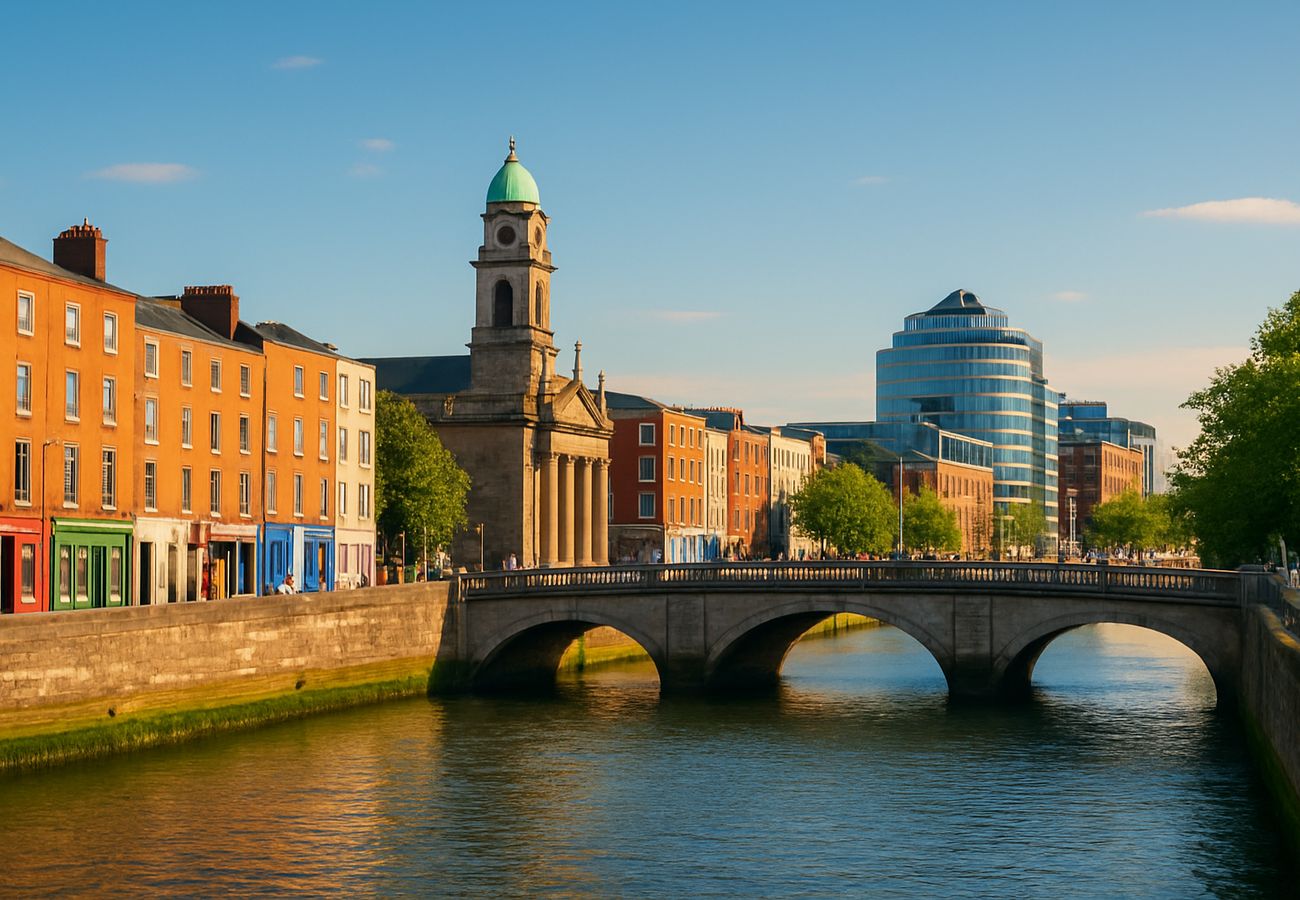
Image generated by AI
Have you wished to visit Dublin every time you see the postcards? But secretly, you’re terrified it’s all just a massive, overpriced tourist trap.
You might be worried about the real soul of this historic city that is buried beneath the tech giants, expensive hotels, and crowded markets. Your fear is absolutely right because Dublin has made a lot of progress in the past few decades.
But here’s the twist: Dublin doesn’t hide from its contradictions. It thrives on them.
Instead of a watered-down tourist hub, you’ll find a chaotic collision of modern and historic Dublin. It’s a place where a 200-year-old pub sits right next to a hyper-modern espresso bar, and neither one feels out of place. The history is living, breathing, and bumping shoulders with a relentless modern energy.
So, don’t worry about the glossy travel brochure that made you question your decision. We’ll talk about the Dublin city walking experience to see how a city with so much past manages to live completely in the present, and why you don’t need to worry about losing the real Ireland in the process. So, without further ado, let’s get into the topic.
The Weight of the Past: From Vikings to Revolution
Walking through Dublin’s city centre feels like peeling back layers of a very old, very complex onion. Every street reveals another chapter of the city’s Viking origins, medieval expansion, and revolutionary struggle. A Dublin historical walking tour is a journey through time.
Trinity College: Academic Silence in the Heart of the City
At the centre of it all stands Trinity College, an oasis of silence amidst the noise of modern Dublin. Passing through its grand front arch, the energy of the city fades into something calmer and more reflective.
The cobblestone squares have been walked by literary giants such as Oscar Wilde and Samuel Beckett, and that intellectual presence still lingers in the air. Most visitors come to the Old Library, home to the Book of Kells, a 9th-century illuminated manuscript that represents Ireland’s early “Saints and Scholars” era, when learning and faith were deeply intertwined.
Dublin Castle: Power, Control, and Transformation
A short walk from Trinity leads to Dublin Castle, one of the most important sites in Irish political history.
Built on the site of a former Viking settlement, the castle served as the centre of British administration in Ireland for centuries. Its courtyards and stone structures reflect layers of power, Norman expansion, colonial rule, and eventual Irish independence.
Today, Dublin Castle functions as a ceremonial and cultural site, but its atmosphere still carries the weight of governance and control that shaped the nation’s identity.
Christ Church Cathedral: The Medieval Heart of Dublin
Nearby stands Christ Church Cathedral, one of Dublin’s oldest and most atmospheric buildings.
Founded by a Viking king in the 11th century, the cathedral reflects Dublin’s deep medieval roots. Inside, the stone arches, crypts, and dim light create a powerful sense of stillness as if time itself has slowed down.
Beneath the cathedral lies a network of crypts and relics that remind visitors how Dublin began not as a modern capital, but as a Viking trading settlement shaped by conquest and faith.
The General Post Office (GPO): Birthplace of Revolution
As you move toward O’Connell Street, the mood of the city shifts again.
The General Post Office (GPO) is one of the most iconic buildings in Irish history. It was here in 1916 that the Easter Rising was declared, transforming an everyday postal building into the headquarters of revolution.
If you look closely at its neoclassical columns, you can still see bullet marks left from the uprising. For many Dubliners, the GPO is not just a monument; it is the emotional turning point of modern Irish identity, marking the moment the city stopped accepting rule and began fighting for independence.
Kilmainham Gaol: The Human Cost of Independence
For those willing to go deeper, a short journey outside the city center leads to Kilmainham Gaol, one of the most powerful historical sites in Ireland.
This former prison held many of the leaders of Irish rebellions, including figures from the 1916 Easter Rising. Walking through its cold corridors and execution yard is a deeply emotional experience, revealing the human cost behind Ireland’s struggle for freedom.
The contrast is striking, from the grandeur of Dublin Castle to the silence of prison cells where revolutionary leaders spent their final moments. It is this contrast that makes Kilmainham one of the most important stops on any Dublin history itinerary.
The Modern Pulse: Silicon Docks and Style
As you move east toward the Grand Canal Dock, the atmosphere shifts entirely. This is the "Silicon Docks," home to the European headquarters of global tech giants. Here, the architecture is all sharp angles, floor-to-ceiling glass, and steel. It feels like a different country compared to the traditional pubs of the Northside, yet it is undeniably Dublin.
What makes the city modern isn’t just the presence of big tech, though. It is the culture that has sprung up around it. You see it in:
- The Coffee Culture: Gone are the days when "tea or nothing" was the rule. Dublin now boasts world-class roasteries and independent cafes in almost every neighborhood.
- The Food Scene: While bacon and cabbage will always have a place, the modern Dublin palate is global, featuring everything from high-end Michelin-starred dining to authentic street food in the Liberties.
- Sustainable Spaces: The rise of bike lanes and pedestrianized zones, like the recent changes to Capel Street, shows a city evolving to prioritize people over cars.
Neighborhoods Worth Getting Lost In
While Dublin’s main streets like O’Connell Street and Grafton Street carry the city’s energy, the real character of the capital is found in its neighborhoods. These are the places where Dublin slows down, feels more personal, and reveals its everyday rhythm. Exploring these areas on foot is one of the best ways to experience a true Dublin walking tour beyond the city centre.
Each neighborhood has its own identity shaped by history, culture, food, and the people who live there.
| Neighborhood | Vibe | Best For | What Makes It Special |
|---|---|---|---|
| The Liberties | Historic, raw, evolving | Whiskey, history, markets | Oldest working-class district with distilleries and heritage streets |
| Stoneybatter | Trendy yet traditional | Cafés, pubs, local life | “Village within the city” feel with strong community energy |
| Portobello | Scenic, relaxed, artistic | Canal walks, brunch | Victorian charm along the Grand Canal with literary connections |
| Temple Bar | Lively, tourist-heavy | Nightlife, culture | Cultural quarter with music, pubs, and arts institutions |
| Smithfield | Modern, rising | Events, distilleries | Open squares, film culture, and growing creative scene |
| Rathmines | Local, residential, youthful | Food, everyday Dublin life | Affordable eateries, students, and authentic local atmosphere |
The Liberties: Dublin’s Oldest Soul
The Liberties is one of the oldest parts of Dublin, where the city’s medieval roots still echo through narrow streets and historic markets. Once known for weaving and distilling, it has evolved into a vibrant mix of old and new. Today, artisan whiskey distilleries sit alongside traditional market traders, while creative studios and art colleges bring fresh energy into its historic fabric. It is one of the best places to understand Dublin’s working-class heritage and modern transformation.
Stoneybatter: A Village Inside the City
Stoneybatter is often described as one of the “coolest neighborhoods in the world,” but what makes it special is its balance. It feels like a village tucked inside a capital city. You can walk from a traditional pub with a crackling fireplace straight into a modern vegan café within minutes. The streets are full of personality, and locals take pride in its strong community identity. It is ideal for slow walks, relaxed evenings, and authentic Dublin pub culture.
Portobello: Canals and Calm Streets
Portobello offers a softer, more scenic side of Dublin. Built along the Grand Canal, it is filled with tree-lined streets, Victorian houses, and quiet waterside paths. On weekends, it becomes a favorite spot for brunch, cycling, and canal-side walks. It also carries a literary connection, as writers and artists have long been drawn to its peaceful yet central location.
Temple Bar, Smithfield & Rathmines
Temple Bar remains Dublin’s cultural heart for music and nightlife, although it is more tourist-focused than local. Smithfield is a newer creative district with open squares, film festivals, and distilleries redefining the area. Rathmines, on the other hand, offers a more everyday Dublin experience that is full of students, affordable eateries, and a strong residential feel.
A Literary Soul in a Digital Age
Dublin is officially recognized as a UNESCO City of Literature, a title that reflects its deep-rooted obsession with storytelling, poetry, and the written word. Literature is not just part of Dublin’s identity. It is the city’s emotional backbone, shaping its streets, culture, and modern creative life.
Walking through Dublin today, it is impossible to ignore the presence of its literary ghosts. From James Joyce to Oscar Wilde, the city has produced some of the most influential writers in modern history. Joyce, in particular, immortalized Dublin in Ulysses, mapping the city so precisely that readers can still retrace his characters’ steps across real streets, pubs, and bridges. His work transformed Dublin itself into a living literary map.
Even in 2026, Dublin’s storytelling tradition is far from history. It is actively evolving. The city continues to host a vibrant literary scene that blends classic heritage with modern expression.
- Poetry slams regularly take place in underground venues and cultural spaces across the city
- Independent bookstores like Hodges Figgis remain cultural landmarks for readers and writers alike
- Literary festivals, readings, and book launches keep the city’s creative energy alive throughout the year
- Museums and literary centres preserve the legacy of writers like Joyce while encouraging new voices
Beyond formal events, Dublin’s creativity lives in everyday culture. The famous gift of the gab, Ireland’s natural talent for storytelling and conversation, has evolved into podcasts, spoken word performances, and digital storytelling platforms.
- Cafés double as creative hubs where writers draft, debate, and publish ideas
- Young Irish writers continue to draw inspiration from the city’s layered history and social change
- Public spaces often host cultural events that bring literature into daily life
Dublin today is more than just a city that remembers its writers. It is a city that continues to produce them. The result is a unique blend of past and present, where ancient literary tradition meets a fast-moving digital age.
The Enduring Magic of the "Craic"
If you ask a local what truly makes Dublin special, they won’t point you toward a monument, a museum, or a cathedral. Instead, they will talk about the craic — a uniquely Irish concept that blends conversation, humor, storytelling, and social energy into everyday life.
In simple terms, “craic” means fun, but in Dublin it goes far deeper than that. It is the atmosphere of connection that fills pubs, streets, parks, and even ordinary conversations. It is the shared laughter between strangers, the storytelling that stretches late into the night, and the feeling that every moment has a bit of personality to it.
You will find the craic everywhere in the city, but especially in its social spaces:
- In traditional pubs where live music and conversation overlap
- In public parks like St. Stephen’s Green and the Iveagh Gardens on sunny days
- In casual street interactions, where humour is part of daily life
- In cafés and markets where locals gather and talk freely
On rare sunny days, Dublin transforms completely. The city seems to spill into its green spaces. People lie on the grass, share stories, play music, and enjoy the brief warmth without rush or formality. There is something refreshing about how unpretentious it all feels.
What makes the craic truly unique is its equality. It does not matter who you are — a tech professional working in the Docklands, a student renting a small flat, or a visitor exploring the city for the first time. In Dublin, the craic levels everything. Everyone shares the same space, the same laughter, and the same simple joy of being part of a moment.
This is why the craic is often described not just as fun, but as a way of life in Ireland. It represents warmth, openness, and the ability to turn even the simplest moment into something memorable.
Best Time for a Walking Tour
Here’s the best time for exploring Dublin on foot:
| Season / Month | Weather Conditions | Crowd Level | Experience Quality | Why It’s Good for Walking Tours |
|---|---|---|---|---|
| March – April (Spring) | Cool, fresh, occasional rain, 8–13°C | Low to moderate | High | Blooming parks, fewer tourists, comfortable for long city walks and photography |
| May – Early June (Best Overall Window) | Mild, longer daylight, 13–18°C | Moderate | Very high | Best balance of weather + crowds; ideal for full-day walking tours and outdoor landmarks |
| Late June – August (Peak Summer) | Warmest period, 15–20°C, some rain | High | High (but busy) | Long daylight hours (up to 9–10pm), lively streets, festivals, but crowded attractions |
| September – Mid October (Shoulder Season) | Mild, slightly cooler, 10–15°C | Moderate | Very high | One of the best times: fewer crowds, golden autumn light, perfect walking weather |
| November – February (Off Season) | Cold, wet, shorter days, 3–9°C | Low | Moderate | Cheaper travel, quiet streets, but limited daylight and frequent rain reduce walking comfort |
Practical Tips for Visitors
Here are some practical tips for visiting Dublin and exploring the city on foot:
- The best time for a Dublin walking tour is May, June, and September for the best mix of mild weather, longer daylight, and fewer crowds.
- Spring is cooler but fresh and less crowded, making it great for relaxed sightseeing and photography.
- Early summer gives the most comfortable walking conditions with brighter days and lively streets.
- July–August is warmest and most energetic but expect heavy tourist crowds around major attractions.
- Winter is quiet and budget-friendly but has shorter days and colder, wetter weather, limiting long walks.
- Dublin weather changes quickly, so even in summer, light rain can appear anytime, so always plan for flexibility.
- Mid-morning to late afternoon is the best time of day for walking tours due to light, visibility, and activity levels.
- Weekday mornings are usually the least crowded for top landmarks like Trinity College and Dublin Castle.
- The key to enjoying Dublin is not perfect weather, but being prepared for all conditions.
Conclusion: A City of Transitions
Dublin is currently in a state of rapid transition. It is grappling with the challenges of growth, housing, and globalization, yet it manages to hold onto its core identity with a stubborn, fierce pride. It is a city that remembers its Viking foundations and its revolutionary scars, but one that is also looking firmly toward its role on the global stage.
When you walk through Dublin, you aren't just seeing a collection of buildings. You are witnessing a continuous conversation between the past and the future. From the medieval walls near Christchurch to the neon lights of the Docklands, every footstep tells a story. And the best part? The story is still being written, and by simply walking its streets, you become a small part of the narrative yourself.
Every footstep through Dublin reveals a story waiting to be told—history is not in the museums here, but under your feet.
Related Travel Guides
Europe Falls Short: Travel Realities Canadian Tourists Encounter Beyond the Dream
Disclaimer
This article is for informational and educational purposes only. It does not constitute legal, financial, or professional advice. While we strive to provide accurate and up-to-date information, travel policies, regulations, and conditions change rapidly. Always verify information with official sources before making travel decisions. Nomad Lawyer makes no representations about the accuracy, reliability, completeness, or suitability of the information provided. Readers should consult qualified professionals for advice specific to their circumstances. The views expressed in this article are those of the author and do not necessarily reflect the views of Nomad Lawyer.
Preeti Gunjan
Contributor & Community Manager
A passionate traveller and community builder. Preeti helps grow the Nomad Lawyer community, fostering engagement and bringing the reader experience to life.
Learn more about our team →