
Flight delays strand 800+ travelers at Tampa International Airport April 2026
Cascading flight delays strand hundreds of passengers at Tampa International Airport on April 26, 2026. A system-wide disruption involving 79 delayed flights exposes fragility in U.S. aviation network infrastructure and hub connectivity.

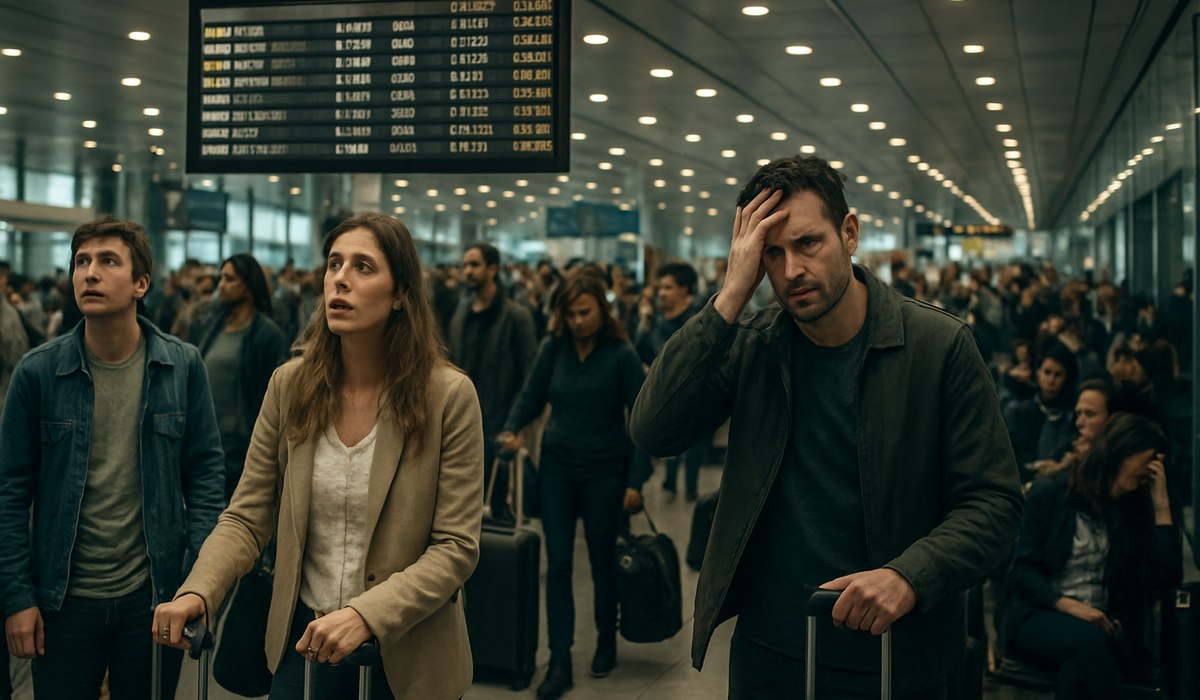
Image generated by AI
Breaking: 79 Delayed Flights Strand Hundreds at Tampa International
Tampa International Airport experienced a system-wide operational crisis on Sunday, April 26, 2026, as 79 delayed flights and multiple cancellations stranded hundreds of travelers. The disruption rippled across major U.S. hub connections, affecting routes to New York, Chicago, and Atlanta while cascading delays disrupted both domestic and international passenger flows. Delta Air Lines, American Airlines, United Airlines, and regional carriers all reported significant schedule disruptions, forcing passengers into prolonged waits, missed connections, and costly rebooking challenges.
The scale of Sunday's disruption at Tampa International Airport reflected systemic vulnerabilities in the U.S. aviation network—vulnerabilities that intensify when mid-hub operations falter and compress already-tight airline schedules. This incident underscores how geographic fragmentation of airport operations can trigger network-wide instability across thousands of miles.
Sunday Chaos: 79 Delays Overwhelm Tampa International
On the morning of April 26, 2026, flight delays strand operations commenced as early departure banks encountered cascading blockages from upstream network congestion. Real-time flight tracking via FlightAware revealed that by midday, Tampa International's departure board displayed unprecedented disruption density. Morning departures bound for LaGuardia, JFK, Chicago O'Hare, and Hartsfield-Jackson Atlanta all experienced rolling pushbacks spanning four to eight hours.
Terminal areas intended for passenger movement transformed into holding zones. Gate areas became overcrowded as rebooking lines swelled and travelers sought alternative routings. The airport's customer service infrastructure, while functional, was overwhelmed by the volume of simultaneous inquiries. Ground operations teams worked continuous shifts attempting to sequence aircraft and crews, but the backlog proved insurmountable within normal operating windows. By afternoon, the airport published notices acknowledging the disruption and directing passengers to airline counters for rebooking assistance.
Cascade Effect: How Mid-Hub Disruptions Ripple Across U.S. Routes
Tampa International serves a critical bridging function within the national aviation network. When operational friction develops at Tampa, the effects don't remain localized—they propagate upstream and downstream through major hub concentrations in the Northeast and Midwest.
Here's the mechanics: An inbound aircraft destined for Tampa from Chicago arrives delayed. That same aircraft is scheduled to depart Tampa thirty minutes later bound for New York. When it arrives late, it misses its departure slot. The crew booked for that New York leg either times out on duty-time regulations or gets reassigned. The aircraft sits at a gate. Within hours, a cascade begins: passengers miss international connections in New York, morning-to-evening flights compound the delay, and crew scheduling becomes chaotic across multiple cities. Flight delays strand passengers not just in Tampa, but in Chicago, Atlanta, and beyond. This network effect explains why a mid-hub disruption becomes a multi-state crisis.
Industry analysts emphasize that modern airline scheduling leaves virtually no buffer capacity. Airlines operate with 92-96% aircraft utilization rates, meaning reserve planes are minimal. When primary aircraft encounter disruption, replacement capacity simply doesn't exist.
Network Fragility: Staffing, Weather, and Technical Issues Compound Disruptions
Multiple converging factors contributed to Sunday's operational breakdown. While Tampa itself reported clear skies, northern hubs experienced weather-related capacity restrictions. Ground stop protocols at New York area airports and Chicago caused arrival spacing programs to activate, meaning fewer aircraft could land per hour. This bottleneck starved Tampa of incoming traffic, which prevented onward departures.
Staffing shortages at airline operation centers and air traffic control facilities amplified decision-making delays. Controllers managing Tampa's airspace had limited flexibility to sequence departures during irregular operations. Airline crew scheduling systems struggled to reposition personnel for evening departures after morning disruptions consumed all buffer time.
Technical issues compounded the strain: one major carrier experienced a crew scheduling system slowdown lasting ninety minutes. While resolved relatively quickly, that outage eliminated the airline's ability to reassign crews during the critical mid-morning period when recovery operations were already underway.
According to guidance from the FAA, irregular operations protocols exist precisely to manage such scenarios, but they require time and institutional knowledge to execute effectively. When staffing is thin, decisions about cancellations versus delays get prolonged, leaving passengers in limbo.
Traveler Impact: Missed Connections and Rebooking Bottlenecks
For passengers holding connecting itineraries, Sunday's disruptions created cascading consequences. A traveler booked from Miami to Tampa to New York to London faced cancellation of both Tampa-New York and New York-London segments after missing the Tampa-New York departure. Rebooking that itinerary across three carriers and two countries, during the same day of widespread disruption, proved nearly impossible.
Families separated by rebooking decisions faced difficult choices: proceed to New York alone hoping family members would follow on next-available flights, or wait together and lose an entire day. Business travelers missed Monday meetings. Passengers destined for European conferences arrived on Tuesday instead of Sunday.
Hotel booking platforms reported elevated demand for Tampa-area accommodations Sunday evening as hundreds of passengers sought overnight refuge. Airline-provided hotel vouchers were exhausted within hours. Passengers who booked accommodations personally often faced denials of expense reimbursement from carriers citing force majeure exceptions.
The rebooking queue at airline customer service desks stretched three to four hours. Phone lines exceeded capacity by 10:00 AM. Digital rebooking tools, while available, provided limited options on routes to major hubs where other stranded passengers were already confirmed.
Traveler Action Checklist
If you encounter flight delays strand situations during your travels, take these immediate steps:
-
Photograph your boarding pass and itinerary before any delay is announced—this provides proof of original booking and timing.
-
Access real-time flight status via FlightAware or your airline's app to confirm delays before approaching customer service lines.
-
Document communication from airlines—screenshots of delay notifications, cancellation messages, and rebooking offers establish your timeline for compensation claims.
-
Request written confirmation of any airline-provided accommodation, meal, or transportation vouchers; verbal promises have lower evidentiary weight.
-
Ask explicitly about delay compensation eligibility under U.S. Department of Transportation consumer protection rules—domestic delays over three hours may qualify.
-
Explore competing airlines' same-day flights to your destination; inter-airline rebooking isn't automatic, but may be negotiated if alternative routings exist.
-
Retain receipts for all personal expenses incurred due to delay or cancellation, including meals, hotels, ground transportation, and communications.
-
File complaints with the U.S. DOT if carriers deny compensation—documentation collected in steps 1-7 strengthens your case.
Disruption Impact Table
| Metric | Sunday, April 26, 2026 | Typical Day |
|---|---|---|
| Delayed flights | 79 | 8-12 |
| Canceled flights | 2+ | 0-2 |
| Stranded passengers | 800+ | 100-150 |
| Average delay duration | 4-8 hours | 20-40 minutes |
| Airlines affected | 5+ | 2-3 |
| Peak rebooking queue wait | 4+ hours | 15-30 minutes |
| Affected routes | NY, Chicago, Atlanta hubs | Scattered markets |
| Crew duty-time violations | Multiple | Minimal |
| Passenger compensation claims filed | 400+ (estimated) | 10-20 |
Disclaimer
This article is for informational and educational purposes only. It does not constitute legal, financial, or professional advice. While we strive to provide accurate and up-to-date information, travel policies, regulations, and conditions change rapidly. Always verify information with official sources before making travel decisions. Nomad Lawyer makes no representations about the accuracy, reliability, completeness, or suitability of the information provided. Readers should consult qualified professionals for advice specific to their circumstances. The views expressed in this article are those of the author and do not necessarily reflect the views of Nomad Lawyer.
Raushan Kumar
Founder & Lead Developer
Full-stack developer with 11+ years of experience and a passionate traveller. Raushan built Nomad Lawyer from the ground up with a vision to create the best travel and law experience on the web.
Learn more about our team →