
Flight Delays Costing U.S. Travelers $18 Billion Annually in Hidden Expenses
New analysis reveals flight delays cost U.S. travelers $18 billion annually through lost time and cascade expenses. Beyond simple inconvenience, disruptions trigger concrete financial losses across major airport hubs in 2026.

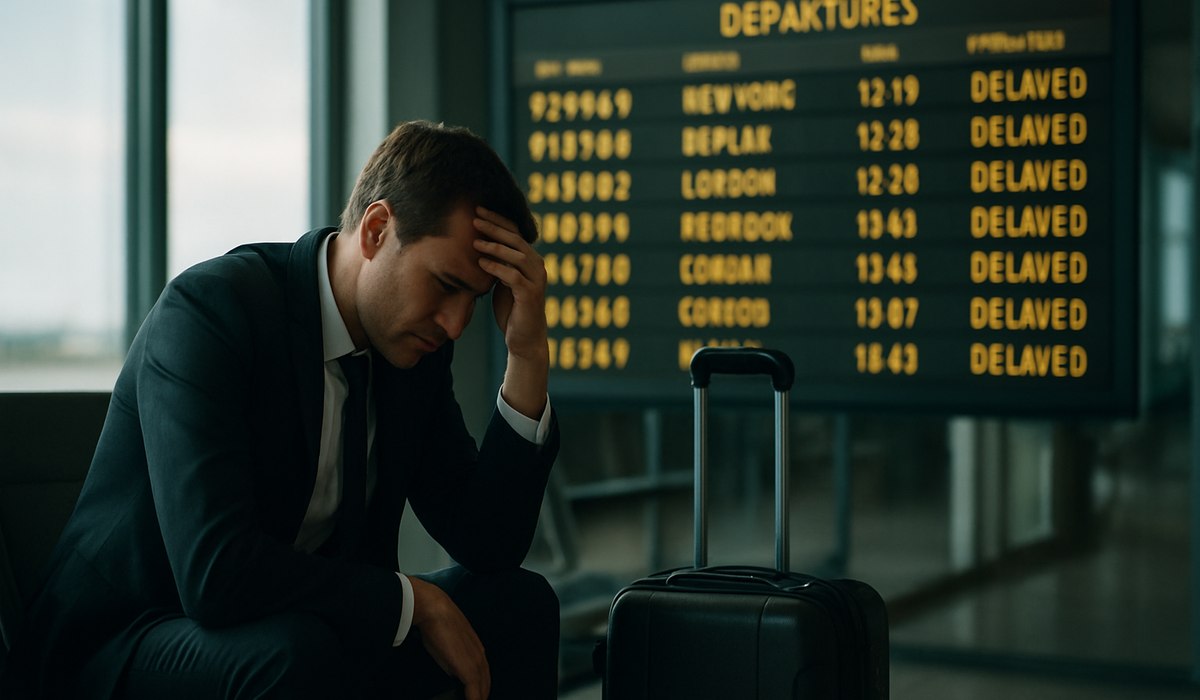
Image generated by AI
The $18 Billion Annual Drain on American Travelers
Flight delays are quietly draining U.S. travelers' wallets on a staggering scale, with new disruption data revealing that delays cost passengers more than $18 billion annually. This figure extends far beyond the inconvenience of sitting in airport terminals—it represents a genuine financial crisis triggered by lost productivity, missed reservations, and out-of-pocket expenses that compound across millions of journeys each year. Research analyzing national delay statistics shows that the average hourly value of time for air passengers hovers between $47 and $50, reflecting both leisure and business travelers. When applied to delay metrics, these benchmarks expose the true cost of disruptions that airlines and airports often dismiss as unavoidable.
The Hidden Price Tag on Every Hour Spent Waiting
The financial impact of flight delays costing travelers billions stems primarily from two sources: the quantifiable value of wasted hours and the cascade of expenses that follow each disruption. Global flight delay statistics compiled in 2026 indicate that passengers worldwide spent approximately 300 million hours waiting for delayed flights in 2023 alone. For U.S. domestic travel, a single delayed flight affecting a family of four can easily represent more than $200 in lost time before any additional out-of-pocket costs are considered.
High-traffic aviation hubs experience disproportionate financial losses. San Francisco International Airport, for instance, absorbs tens of millions of dollars in added costs during prolonged delay episodes, largely because routes serving this hub carry concentration of business travelers with higher hourly valuations. Economists examining congestion patterns and government-related slowdowns have found that the financial impact of delays is not evenly distributed across all routes and airports. Major metropolitan corridors see exponentially higher economic losses per disruption than regional or leisure-focused travel markets.
How Delays Trigger Cascade Expenses for Travelers
Beyond the abstract value of lost time, flight delays costing money manifest in concrete expenses that passengers encounter immediately. Travel insurance data from the 2025 summer season reveals that shorter delays generated average payouts of $500 per claim, primarily covering hotel rooms, meals, and local transportation. Missed-connection claims averaged more than $450, while baggage and airline delay claims regularly reached the low hundreds of dollars.
These figures only capture insured travelers who successfully filed claims. Industry analyses suggest that many passengers either lack coverage, fail to meet minimum delay thresholds, or never complete documentation required to recoup expenses. The result is that significant portions of delay-related costs—from last-minute airport hotels to midnight ride-hailing services—are absorbed directly by travelers themselves. Airlines frequently offer meal vouchers and accommodation stipends during controllable delays, yet these allowances often fall short of actual prices in major hub cities during peak seasons. A $15 meal voucher leaves passengers covering the remainder of airport dining costs from personal funds.
Beyond Time: Concrete Financial Losses Add Up Fast
The operational and safety decisions surrounding flight delays can amplify financial losses for passengers. According to guidance from the U.S. Department of Transportation issued in late 2025, airlines are not required to cover passenger expenses such as hotels and meals when cancellations or extended delays stem from certain safety actions. While carriers must provide refunds when flights are canceled, that money frequently returns days later and may not fully offset nonrefundable ground bookings that travelers lose in the interim.
Even when airlines offer accommodations during controllable delays, reimbursement rates prove insufficient in expensive markets. Negotiated hotel rates still require passengers to absorb transportation and incidental fees. This means travelers bearing the practical costs of disruption often experience a two-tier financial hit: the immediate out-of-pocket expenses during the delay, plus the delayed or partial reimbursement from airlines weeks later. Major metropolitan airports amplify this problem during peak travel seasons when hotel availability is scarce and pricing is elevated.
High-Traffic Hubs Face Tens of Millions in Added Costs
Major U.S. airports experience outsized financial impacts from flight delays costing the broader traveling public. Airport hubs serving predominantly business travel and high-income routes incur significantly larger economic losses per disruption event. San Francisco International, Chicago O'Hare, and New York area airports—which serve dense business corridors—see tens of millions in added costs during extended delay periods due to the elevated hourly value of professional travelers' time.
These major hubs also experience compounding effects: delays at one airport cascade across connecting flights at downstream destinations, multiplying the financial impact across regional aviation networks. A single weather event or operational issue at a major hub can trigger hundreds of secondary delays affecting thousands of passengers across multiple airports. The geographic concentration of these high-cost routes means that delay mitigation efforts at major hubs offer outsized financial benefits compared to interventions at regional airports.
Traveler Action Checklist
When facing flight delays, passengers can take strategic steps to document losses and pursue legitimate compensation:
-
Photograph and retain all receipts from meals, hotels, ground transportation, and rebooking services incurred due to delay or cancellation.
-
Document delay duration and cause using airline communications, boarding pass timestamps, and FlightAware records to establish eligibility for compensation.
-
Check your airline's customer service policies regarding meal vouchers, hotel accommodations, and rebooking options before accepting initial offers.
-
Review your travel insurance coverage and familiarize yourself with minimum delay thresholds and documentation requirements for filing claims.
-
File complaints with the U.S. Department of Transportation if carriers fail to provide required refunds or compensation, creating an official record of the disruption.
-
Monitor your bank account and airline communications for delayed refunds, which often take 7-14 days to process after flight cancellations.
-
Consider compensation claim services for international flights subject to EU regulations or eligible U.S. domestic routes, though these services typically retain a percentage of recovered compensation.
Key Data on Flight Delays Costing Travelers
| Metric | Amount | Details |
|---|---|---|
| Annual cost to U.S. travelers | $18 billion | Due to lost time and cascade expenses |
| Average hourly time value | $47-50 | Used to calculate financial impact |
| Global passenger hours waiting (2023) | 300 million hours | Worldwide flight delay impact |
| Family of four delay cost (1 hour) | $200+ | Before additional out-of-pocket expenses |
| Travel insurance claim payout (short delays) | ~$500 average | Hotels, meals, ground transportation |
| Missed connection insurance claims | ~$450 average | Rebooking and accommodation costs |
| San Francisco International hub impact | Tens of millions | During extended delay episodes |
| Meal voucher typical amount | $15 | Often insufficient for airport dining |
What This Means for Travelers
The $18 billion annual cost of flight delays costing American passengers represents a systematic transfer of financial risk from airlines to travelers. Understanding this impact empowers passengers to make informed decisions about travel insurance and compensation strategies:
-
Invest in comprehensive travel insurance that covers delays longer than 6-12 hours, particularly for connections or time-sensitive itineraries, since most delay costs fall on uninsured passengers.
-
Plan buffer time between connections to avoid missed-connection penalties, which average $450 in insured losses and often exceed $1,000 when counting uninsured traveler expenses.
-
Keep detailed records and receipts from all delay-related expenses, as documentation is essential for successful insurance claims and airline dispute resolution.
-
Monitor real-time flight tracking using resources like FlightAware to anticipate delays early and adjust ground plans before cascading costs accumulate.
-
Understand your rights under applicable regulations, which vary significantly between domestic U.S. flights and international journeys, particularly those involving European carriers or EU departure points.
FAQ
**Q: How much do flight delays actually cost the
Disclaimer
This article is for informational and educational purposes only. It does not constitute legal, financial, or professional advice. While we strive to provide accurate and up-to-date information, travel policies, regulations, and conditions change rapidly. Always verify information with official sources before making travel decisions. Nomad Lawyer makes no representations about the accuracy, reliability, completeness, or suitability of the information provided. Readers should consult qualified professionals for advice specific to their circumstances. The views expressed in this article are those of the author and do not necessarily reflect the views of Nomad Lawyer.
Kunal K Choudhary
Co-Founder & Contributor
A passionate traveller and tech enthusiast. Kunal contributes to the vision and growth of Nomad Lawyer, bringing fresh perspectives and driving the community forward.
Learn more about our team →