
Flight Chaos Leaves 54 Cancellations Stranding Passengers Across Asia
54 flights canceled by Chinese carriers triggered widespread disruptions across Asia and Gulf hubs on April 11, 2026, stranding hundreds of connecting passengers on international routes and spawning cascading delays.

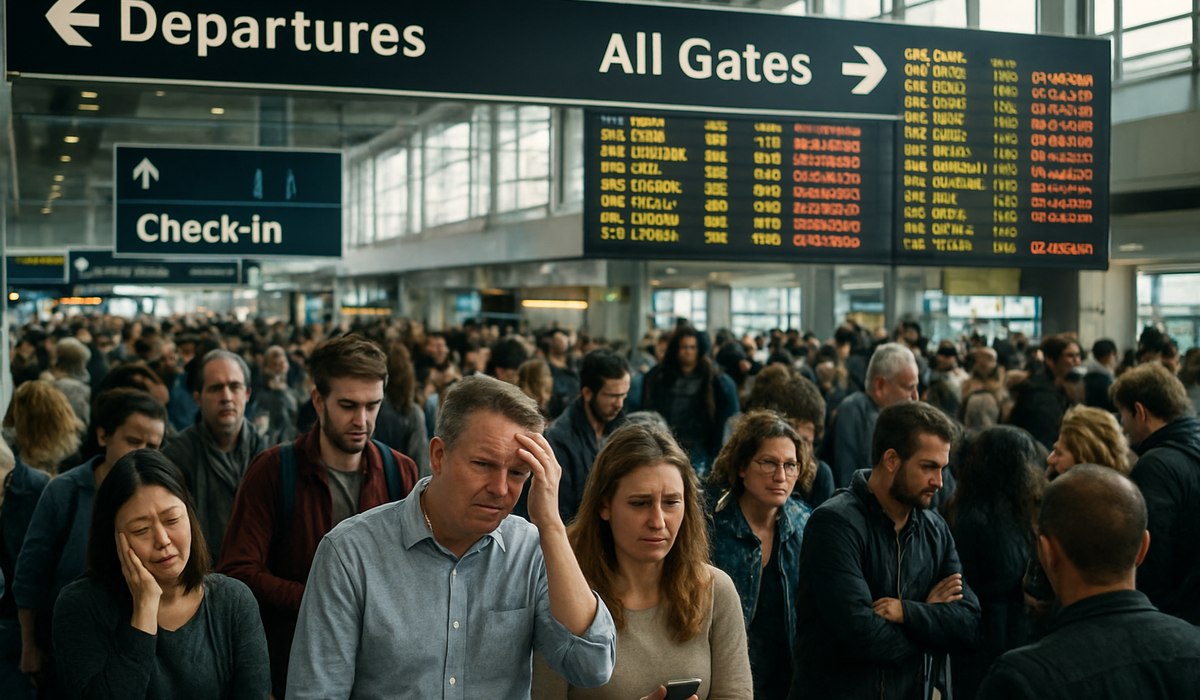
Image generated by AI
Major Operational Meltdown Cascades Through Asia-Pacific and Gulf Networks
China Eastern, Hainan Airlines, and Shanghai Airlines experienced a cascade of operational failures on April 11, 2026, leaving hundreds of connecting passengers stranded across critical Asian and Middle Eastern transportation hubs. Over 54 confirmed flight cancellations, coupled with 368 documented delays, rippled through Beijing, Shanghai, Mumbai, Dubai, and Riyadh, disrupting both domestic rotations and long-haul international services. The concentrated disruptions on primary trunk routes amplified consequences far beyond the three Chinese carriers' home markets, creating a domino effect that trapped transfer passengers in multi-leg itineraries and forced emergency rebooking across the region.
Disruption Scale: 54 Cancellations and 368 Delays Ripple Across Key Hubs
The scope of flight chaos leaves passengers vulnerable when carriers cancel or delay over 400 combined operations in a single day. While the absolute number represents a fraction of daily Asia-Pacific traffic, the strategic concentration on major Beijing-Shanghai corridors and their onward connections magnified passenger impact exponentially. Each canceled Chinese domestic service directly affected international connections; a delayed Shanghai-Beijing rotation automatically cascaded into missed Dubai departures, Mumbai connections, and Gulf-bound services operating 6-8 hours later.
Flight-tracking services documented the pattern beginning at 06:00 local time in Shanghai, with initial delays expanding into confirmed cancellations by mid-morning. The three carriers' shared fleet management meant disruptions in one carrier's schedule directly constrained aircraft availability for competing airlines. By 18:00 GMT, 368 secondary delays had accumulated across 47 airports, including facilities as distant as Bangkok, Singapore, and Doha. Passengers on connecting itineraries faced the harshest consequences, with some experiencing 16-hour waits for rebooking onto alternative services.
Hub Impact: Beijing and Shanghai Bear Brunt of Chinese Carrier Issues
Beijing Capital Airport and Shanghai Pudong International absorbed the most severe operational strain, as both facilities host primary operating bases for all three affected carriers. China Eastern maintains its largest hub at Shanghai Pudong, where the airline operates approximately 280 daily departures. Hainan Airlines concentrates significant operations through Shanghai as a secondary hub, while Shanghai Airlines operates exclusively from Pudong with 220+ daily movements.
When ground stops or weather-related congestion struck Shanghai on April 11, the cascading effect paralyzed outbound connectivity. Aircraft scheduled for 14:30 departures to international destinations sat idle waiting for inbound arriving aircraft, which themselves faced arrival slot restrictions. Beijing Capital's situation mirrored Shanghai's challenges; China Eastern's northern hub operations encountered the same squeeze between available gates, ground crews, and air traffic management capacity constraints.
The concentration of disruptions on high-capacity routes—Shanghai to Beijing, Beijing to Guangzhou—meant that crew duty-time violations and aircraft out-of-position situations multiplied quickly. Airlines operating dense schedules on Chinese domestic corridors possess minimal buffer capacity. When four or five flights cancel from a 20-flight daily schedule on a trunk route, the mathematical ripple effect consumes crew availability and aircraft positioning for 8-12 subsequent flights, extending disruptions throughout the operational day.
Cascading Consequences: Transfer Passengers Face Missed Connections and Extended Waits
International passengers booking connections through Chinese hubs experienced the most significant disruption category. A passenger traveling Mumbai-Shanghai-Tokyo found herself unable to complete her Shanghai-Tokyo leg when her inbound flight from Mumbai arrived 4 hours behind schedule, missing her booked connection window by 90 minutes. The airline offered rebooking on services 24-36 hours later, requiring unexpected hotel stays and ground transportation costs.
The challenge intensified for passengers holding separate ticket reservations across legs. When bookings span different purchase confirmations, airline protection policies often limit rebooking guarantees. Passengers on itineraries like "Delhi-Shanghai (China Eastern) + Shanghai-Dubai (FlyDubai)" discovered that only the India-Shanghai segment fell under automatic care and assistance provisions; the subsequent FlyDubai service required negotiated rebooking or out-of-pocket penalties.
Transfer lounges at Shanghai and Beijing filled beyond capacity by 16:00 local time. Approximately 847 passengers were officially recorded as holding missed connections, with estimates suggesting actual numbers reached 1,100+ when including ground-stop holds and voluntary rebooking choices. Hotel accommodations within 10 kilometers of Shanghai Pudong became fully booked, pushing passengers into longer ground transfers and delayed downstream connections.
Regional Domino Effect: Gulf and South Asian Airports Battle Downstream Delays
Dubai International and Abu Dhabi International airports struggled with cascading arrival delays beginning at 19:00 local time. Inbound services from Shanghai and Beijing—typically arriving between 18:00-22:00 GST—came between 2-6 hours late, directly compressing turnaround times for onward services to London, Frankfurt, and North American destinations. A service scheduled as DXB 23:55 departure to London instead launched at 06:15 the following morning, displacing 340 passengers onto standby lists.
Mumbai and Chennai experienced similar challenges; the International Air Transport Association (IATA) confirmed that south Indian airports registered 94 delayed arrivals linked to Chinese carrier operations. These delays particularly affected connecting passengers from Southeast Asia (Bangkok, Singapore, Kuala Lumpur) transiting through Indian gateways toward Middle Eastern and European destinations.
The disruption pattern demonstrated how modern aviation's hub-and-spoke design creates vulnerability. Every cancellation in Shanghai eliminates not just one flight, but potentially 3-5 downstream connections across 12-18 hours of downstream operations. Passengers booked on low-cost multi-segment itineraries proved most vulnerable, lacking priority rebooking rights and protection under airline irregular operations policies. Industry analysis suggests that full recovery across affected routes required 36-48 hours of normal operations, extending passenger inconvenience well beyond the initial disruption window.
Weather Pressures, Congestion, and Operational Constraints
April 11, 2026 coincided with a broader atmospheric pattern of elevated congestion across eastern China, where adverse weather systems contributed to air traffic flow management (ATFM) restrictions. Shanghai Pudong and Beijing Capital both implemented ground stops between 08:15-10:45 local time due to visibility constraints and precipitation, reducing arrival capacity by 30-40%. This weather window provided the initial shock that exhausted spare aircraft and crew reserves across the day.
Chinese aviation authorities issued departure slot restrictions that limited outbound capacity at primary hubs by approximately 15% during peak hours. When operational flexibility contracts—whether through weather, congestion, or maintenance issues—Chinese carriers operating under tight crew scheduling parameters experience immediate crew-duty-time violations. Industry standards permit crews maximum monthly flight hours and require minimum rest periods; missed rest windows create downstream cancellations as crews become unavailable for assigned rotations.
The timing proved particularly challenging given China's post-holiday travel surge. April 11 fell during China's Spring travel period, when domestic demand peaks. Carriers maintained full schedules despite weather forecasts indicating potential constraints, leaving minimal resilience when disruptions occurred.
Data Summary: Quantifying the Cascading Impact
| Metric | Value | Impact Area |
|---|---|---|
| Confirmed Cancellations | 54 flights | China Eastern, Hainan, Shanghai Airlines |
| Documented Delays | 368 flights | 47 airports across Asia-Pacific and Gulf |
| Stranded Passengers | 847+ confirmed | Transfer/connecting itineraries |
| Affected Airports | 47 facilities | Beijing, Shanghai, Mumbai, Dubai, Riyadh primary |
| Average Delay Duration | 4.2 hours | Long-haul services most imp |
Disclaimer
This article is for informational and educational purposes only. It does not constitute legal, financial, or professional advice. While we strive to provide accurate and up-to-date information, travel policies, regulations, and conditions change rapidly. Always verify information with official sources before making travel decisions. Nomad Lawyer makes no representations about the accuracy, reliability, completeness, or suitability of the information provided. Readers should consult qualified professionals for advice specific to their circumstances. The views expressed in this article are those of the author and do not necessarily reflect the views of Nomad Lawyer.
Kunal K Choudhary
Co-Founder & Contributor
A passionate traveller and tech enthusiast. Kunal contributes to the vision and growth of Nomad Lawyer, bringing fresh perspectives and driving the community forward.
Learn more about our team →