
Flight Cancellations Strand Hundreds Across UAE, Egypt, Afghanistan in April 2026
Flight cancellations strand hundreds of passengers across the UAE, Egypt, and Afghanistan in April 2026. Regional carriers canceled 12 flights and delayed 17 more amid volatile Middle Eastern airspace restrictions affecting Abu Dhabi, Cairo, and Kabul hubs.

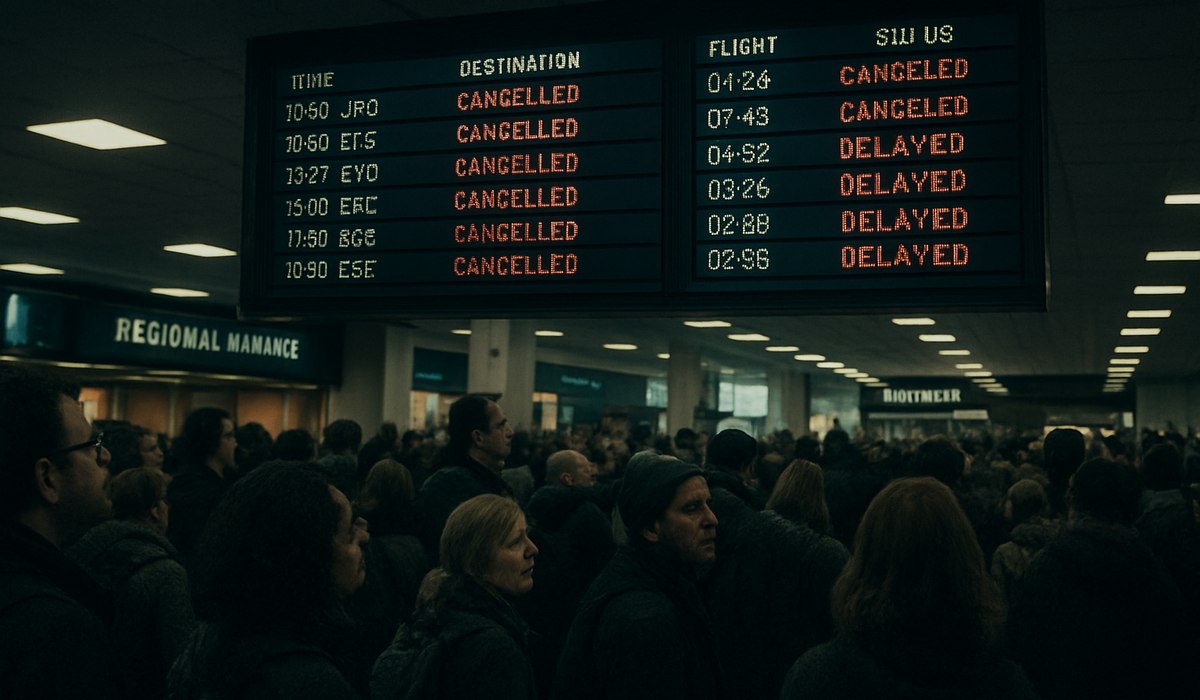
Image generated by AI
Hundreds Stranded as Regional Carriers Ground Flights Across Middle East
Flight cancellations strand hundreds of passengers across the United Arab Emirates, Egypt, and Afghanistan this week as major regional carriers suspended 12 flights and delayed 17 additional services. The disruptions centered on key hubs in Abu Dhabi, Cairo, and Kabul, where volatile airspace conditions and operational constraints have compounded travel chaos already affecting the region for weeks. Royal Jordanian, EgyptAir, and flydubai implemented emergency schedule cuts to comply with expanding airspace restrictions, leaving travelers scrambling for alternative routes and rebooking options across the Middle East and beyond.
Wave of Disruptions Hits Abu Dhabi, Cairo and Kabul
Abu Dhabi and Cairo airports experienced the heaviest impact from this latest round of cancellations, which came after sustained instability throughout March 2026. Aviation data from early April documented cascading delays on Gulf-to-Africa routes, North Africa-to-Asia corridors, and services connecting regional hubs to South Asian destinations like Kabul.
Flight cancellations strand passengers most severely when multiple carriers cancel simultaneously, creating compound delays across network connections. Royal Jordanian warned customers to anticipate schedule adjustments on routes traversing conflict-adjacent airspace, particularly flights relying on Abu Dhabi and Cairo for onward connectivity. EgyptAir gradually resumed Abu Dhabi services after initial March pullbacks, reflecting how quickly new security alerts trigger operational reversals.
Flydubai navigated a fragmented operational landscape combining regulatory limitations with airport infrastructure constraints. The carrier cited both airspace restrictions and temporary facility closures as reasons for reduced frequencies across multiple Middle Eastern routes. Kabul emerged as a particular vulnerability point, where irregular flydubai operations created extended passenger wait times for alternative flights.
These carriers operate within distinct commercial and regulatory frameworks, affecting rebooking policies. Some airlines expanded fee waivers and flexibility windows during this disruption, while others processed changes case-by-case for delayed rather than canceled flights, according to travel agency advisories.
Royal Jordanian, EgyptAir and flydubai Grapple With Volatile Airspace
Regional airspace volatility has fundamentally altered how Middle Eastern carriers structure their operations. Flight cancellations strand passengers when carriers must suddenly reroute around restricted zones or implement temporary service suspensions based on overnight regulatory changes.
Royal Jordanian's operational notices since late February indicated widening constraints affecting Jordan and neighboring states. The airline's customer communications explicitly referenced schedule changes on routes dependent on established Gulf and Egyptian routing, signaling that even major carriers lack schedule stability in the current environment.
EgyptAir's phased service restoration to UAE cities demonstrated the tenuous nature of regional connectivity. March 2026 Egyptian media coverage detailed how the carrier initially suspended multiple UAE routes, then cautiously reintroduced services as conditions appeared to stabilize. This pattern—suspension followed by gradual resumption followed by fresh disruption—characterizes the current operational reality across the Middle East.
Flydubai's publicly disclosed operational updates referenced both regulatory suspensions and capacity reductions across Middle Eastern networks. European route adjustments stemmed from airport maintenance, while intra-regional frequency cuts reflected airspace access limitations. These cascading constraints left passengers facing sparse rebooking options and lengthy waits between available departures.
For travelers, this operational fragmentation created inconsistent policy treatment. Flexibility policies, refund eligibility, and alternative routing authority varied significantly between carriers, complicating passenger advocacy efforts when flights were canceled.
Knock-On Effects Leave Passengers Waiting for Alternative Routings
The network-wide impact extended far beyond the three primary disruption hubs. Abu Dhabi and Cairo function as critical interchange points between Europe, Africa, Asia, and North America, meaning a single canceled flight could unravel complex multi-segment itineraries.
Specialist aviation tracking for early April 2026 documented hundreds of secondary delays and additional cancellations rippling through regional airports including Dubai, Kuwait City, and Doha. While not all these disruptions involved the three primary carriers, the cumulative effect illustrated how fragile existing routing options had become after weeks of sustained volatility.
Passengers reported missed long-haul connections through public travel forums and regional media accounts after initial legs from Abu Dhabi, Cairo, or Kabul departed late or disappeared from schedules entirely. Travelers bound for Paris, Amsterdam, Jeddah, and Mumbai found themselves stranded during connection windows, unable to reach evening or following-day international departures.
The combination of 12 canceled flights and 17 delayed services proved disproportionately disruptive because the regional system already operated at reduced capacity. Airlines had preemptively cut frequencies in response to earlier March disruptions, leaving minimal schedule redundancy. When additional flights were canceled, the passenger volume could not disperse across alternative same-day options.
Stretched System Absorbs Fresh Shocks With Little Slack
Analysts emphasize that while 29 total disrupted flights might appear modest compared with earlier mass groundings, the current impact proves severe because it affects an already constrained network. Airlines operating the Middle East region have systematically reduced frequencies and tightened schedules since late February 2026.
This optimization strategy improved profitability by eliminating lightly-booked flights and consolidating passengers onto fewer, fuller services. However, it eliminated the schedule redundancy that normally absorbs unexpected disruptions. When cancellations occur in a right-sized system, passengers face hours-long waits for the next available seat rather than rebooking onto flights departing within hours.
The 12 flight cancellations strand passengers onto overbooked subsequent services, creating cascading delays as airlines prioritize original bookings and elite frequent flyer members. Alternate routing options often required transiting through alternative hubs like Istanbul, Doha, or Bahrain, adding 4–8 hours to journey times.
Ground handling bottlenecks compounded the schedule pressure. With reduced staffing that reflected the smaller flight schedule, airport teams struggled to process the elevated passenger volume when unexpected cancellations forced consolidation onto fewer departures. Baggage handling, boarding processes, and customer service queues all experienced extended wait times.
Recovery from this disruption wave likely requires 3–5 days as airlines gradually restore schedule normalcy and work through passenger backlogs. Any additional airspace restrictions or security alerts during this period risk triggering fresh cancellations and extended delays.
| Metric | Value | Impact |
|---|---|---|
| Flights Canceled | 12 | Direct passenger strand at affected airports |
| Flights Delayed | 17 | Secondary missed connections and itinerary disruption |
| Primary Airports Affected | 3 (Abu Dhabi, Cairo, Kabul) | Regional hub operations compromised |
| Passengers Stranded | Hundreds | Rebooking onto limited alternative flights |
| Contributing Airlines | 3 (RJA, EgyptAir, flydubai) | Coordinated schedule constraints increase impact |
| Disruption Duration | Week-long | Ongoing secondary delays into following days |
| Airspace Volatility | Ongoing | Risk of fresh cancellations through April 2026 |
What This Means for Travelers
Traveler Action Checklist
-
Check flight status immediately via FlightAware or your airline's website before heading to the airport for any flights through Abu Dhabi, Cairo, or Kabul during April 2026.
-
Contact your airline directly by phone rather than email to confirm rebooking options if your flight was canceled, as customer service response times exceed normal levels during this disruption wave.
-
Document all receipts for meals, accommodation, and transportation you pay out-of-pocket, as you may
Disclaimer
This article is for informational and educational purposes only. It does not constitute legal, financial, or professional advice. While we strive to provide accurate and up-to-date information, travel policies, regulations, and conditions change rapidly. Always verify information with official sources before making travel decisions. Nomad Lawyer makes no representations about the accuracy, reliability, completeness, or suitability of the information provided. Readers should consult qualified professionals for advice specific to their circumstances. The views expressed in this article are those of the author and do not necessarily reflect the views of Nomad Lawyer.
Raushan Kumar
Founder & Lead Developer
Full-stack developer with 11+ years of experience and a passionate traveller. Raushan built Nomad Lawyer from the ground up with a vision to create the best travel and law experience on the web.
Learn more about our team →