
Asia-Pacific Airlines Face Jet Fuel Price Surge: How Five Major Carriers are Diverging in 2026
A dramatic spike in jet fuel prices is forcing Asia-Pacific airlines into divergent survival strategies, highlighting the critical role of fuel hedging and balance sheet strength.

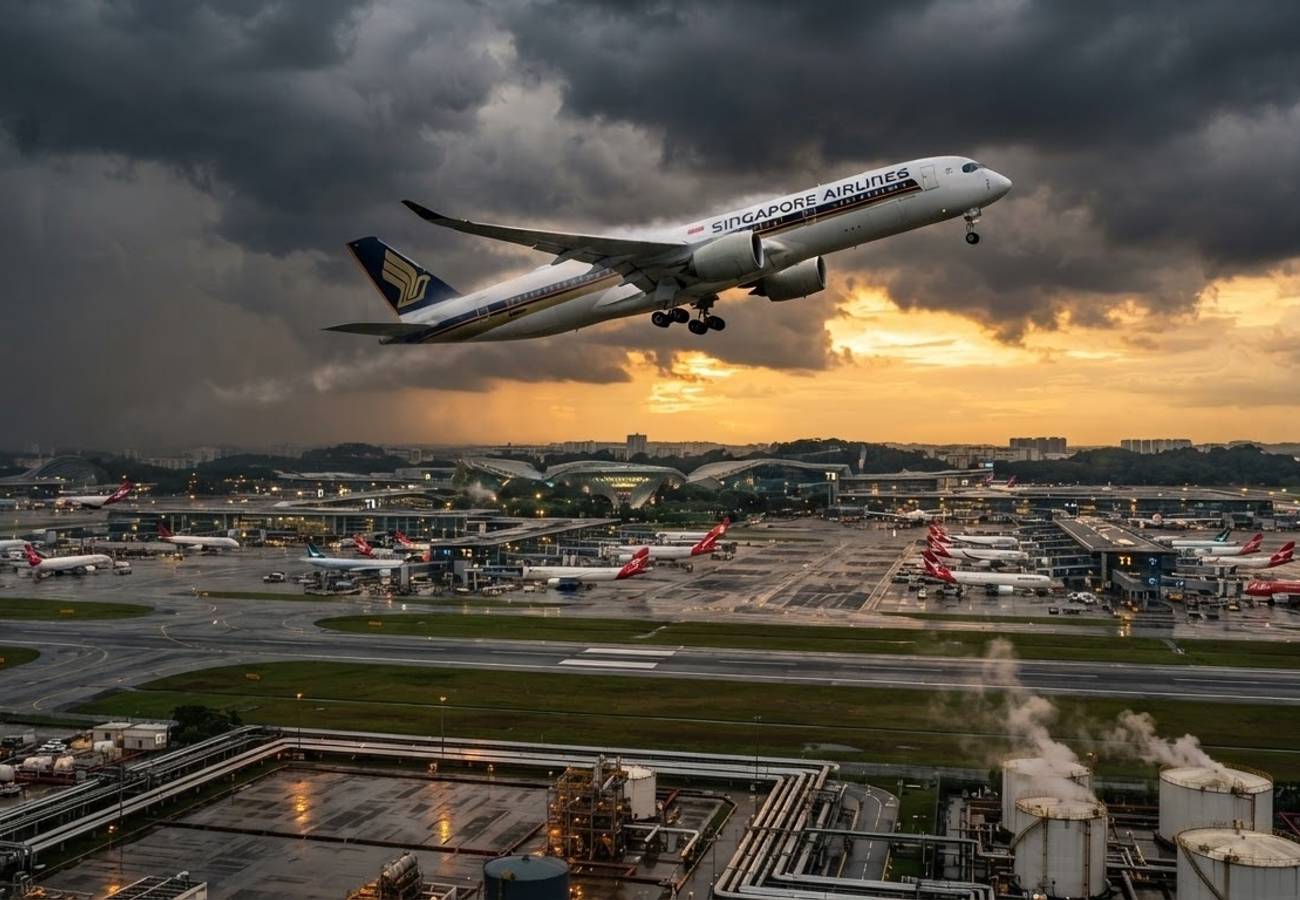
Image generated by AI
Jet fuel prices across the Asia-Pacific region have more than doubled following Middle East conflicts, pushing energy costs to 30 percent or more of total airline operating expenses. This sudden volatility is creating a sharp divide between carriers with robust hedging programs and those exposed to the volatile spot market.
The current energy crisis is not merely a result of crude oil fluctuations but is exacerbated by refining bottlenecks and the closure of critical shipping lanes. These localized disruptions have caused jet fuel prices in Asian markets to climb several dollars per barrel above the global average. This surge arrives at a precarious time, as many regional operators had reduced their fuel protection programs during the relatively stable period between 2024 and 2025.
As a result, the aviation landscape in 2026 has become fragmented. While some flag carriers are utilizing financial buffers to maintain stability, low-cost carriers and under-hedged airlines are facing immediate liquidity strains and operational contractions.
Singapore Airlines Manages Costs Amid Indian Investment Pressures
Singapore Airlines is recognized as a leader in fuel risk management, employing a sophisticated hedging strategy that has locked in pricing for a significant portion of its requirements into late 2026. This proactive approach has effectively dampened the initial impact of the price spike.
Despite this protection, the carrier is not entirely immune. Financial data indicates that as older hedges expire and the "crack spread"—the price difference between Brent crude and refined jet fuel—widens, net fuel costs are rising. Furthermore, the airline's profitability is being squeezed by losses associated with its strategic investment in the Air India group.
For the passenger, this financial pressure is unlikely to result in widespread flight cancellations. Instead, the airline is expected to utilize its premium market positioning and the high traffic volumes at Changi Airport to pass increased costs onto consumers through adjusted fares and fuel surcharges.
Cathay Pacific Struggles with Partial Hedging Gaps
Cathay Pacific has adopted a more moderate hedging posture, covering only a fraction of its fuel exposure. Reports indicate that the airline focused heavily on crude oil benchmarks rather than the refined jet fuel margins. While this provided flexibility during periods of price stability, it has left the carrier vulnerable now that refinery margins have surged.
In 2025, fuel costs already represented nearly 30 percent of the airline's operating expenses. To combat the current price doubling, Cathay Pacific has implemented significant increases in ticket fuel surcharges.
This strategy reflects a cautious institutional memory. The airline previously suffered heavy losses when it locked in high prices just before a market downturn. This historical trauma has prevented Cathay from pursuing the aggressive hedging seen in other carriers, leaving it more exposed to the current 2026 shock.
Qantas and Japan Airlines Leverage High Coverage Ratios
Qantas enters this crisis in a position of strength, boasting one of the highest hedge ratios in the Asia-Pacific region. Data from investor relations reveals that the Australian carrier had secured approximately 80 percent of its fuel needs for the latter half of 2024, with rolling protections extending through 2025 and 2026.
This financial cushion, paired with a lucrative loyalty program and strong post-pandemic revenue, allows Qantas to avoid drastic capacity cuts. The airline is instead opting for surgical fare increases and the optimization of lower-margin routes.
Japan Airlines (JAL) maintains a more conservative but effective buffer, with coverage for roughly one-third of its fuel consumption. While its heavy reliance on long-haul international flights makes it sensitive to fuel spikes, JAL has managed the impact through disciplined capacity control and a general recovery in travel demand.
AirAsia and Asiana Face Immediate Operational Strain
At the opposite end of the spectrum, carriers like Malaysia's AirAsia and South Korea's Asiana Airlines have operated with minimal to no fuel hedging. Consequently, the doubling of jet fuel prices has impacted their unit costs immediately and directly.
In South Korea, Asiana has entered a state of "emergency management." This has led to the immediate reduction of capacity on price-sensitive leisure routes and the cancellation of several long-haul services. Smaller operators and low-cost carriers (LCCs) often lack the balance sheet strength required to post the collateral necessary for large-scale hedging contracts.
AirAsia faces a similar dilemma. Operating on razor-thin margins in a hyper-competitive regional market, the airline cannot easily raise fares without losing its core customer base. This has forced the carrier to consider aircraft delivery deferrals and aggressive internal cost-cutting measures to remain viable.
Comparative Fuel Strategy Outcomes in Asia-Pacific
| Airline | Hedging Strategy | Primary Impact | Passenger Experience |
|---|---|---|---|
| Singapore Airlines | High/Sophisticated | Moderate cost increase | Higher fares, stable schedules |
| Qantas | Very High (80%+) | Low immediate impact | Selective fare hikes |
| Japan Airlines | Moderate (approx. 33%) | Manageable margin compression | Stable operations |
| Cathay Pacific | Partial/Benchmark-based | High exposure to refinery margins | Significant fuel surcharges |
| AirAsia/Asiana | Minimal to None | Direct hit to unit costs | Route cuts, capacity reductions |
Strategic Implications for the Aviation Sector
The current crisis demonstrates that fuel policy is no longer a back-office technicality but a primary driver of corporate survival. Industry experts warn that prices will remain elevated for several months because refining capacity cannot be scaled rapidly to meet demand, regardless of whether shipping lanes reopen.
This environment is likely to trigger a period of consolidation. Airlines with deep reserves and protected fuel costs are positioned to capture market share, while unhedged operators may be forced to seek new ownership or drastically scale back their networks.
For the traveler, the era of ultra-cheap regional flights may be pausing. The combination of higher surcharges and the retreat of LCCs from marginal routes means that connectivity in the Asia-Pacific region will become more expensive and potentially less frequent in the short term.
The divergence in airline fortunes proves that in a volatile energy market, the balance sheet is as important as the aircraft fleet.
Related Travel Guides
Disclaimer
This article is for informational and educational purposes only. It does not constitute legal, financial, or professional advice. While we strive to provide accurate and up-to-date information, travel policies, regulations, and conditions change rapidly. Always verify information with official sources before making travel decisions. Nomad Lawyer makes no representations about the accuracy, reliability, completeness, or suitability of the information provided. Readers should consult qualified professionals for advice specific to their circumstances. The views expressed in this article are those of the author and do not necessarily reflect the views of Nomad Lawyer.
Preeti Gunjan
Contributor & Community Manager
A passionate traveller and community builder. Preeti helps grow the Nomad Lawyer community, fostering engagement and bringing the reader experience to life.
Learn more about our team →