
Airbus Completes Historic Assembly of First A350F Cargo Aircraft, Signaling Major Shift in Freight Aviation Market
Breaking airline news and aviation industry updates for 2026.

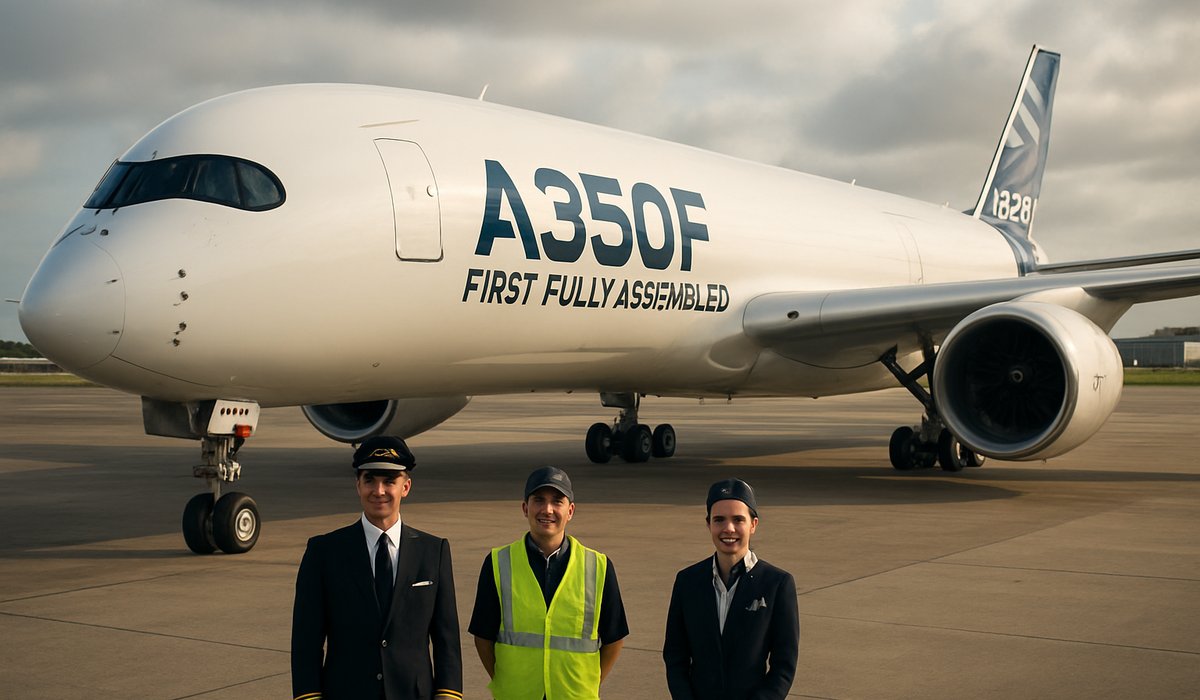
Image generated by AI
Airbus Completes Historic Assembly of First A350F Cargo Aircraft, Signaling Major Shift in Freight Aviation Market
The aerospace giant's maiden wide-body freighter reaches production milestone as global air cargo demand continues reshaping commercial aviation
Historic Manufacturing Milestone Achieved
Airbus has successfully completed final assembly of its inaugural A350F freighter variant, marking a watershed moment for the European manufacturer and the broader aviation cargo sector. The completion, confirmed by company leadership in late June, officially transitions the long-awaited program from production phase into comprehensive testing protocols—a critical juncture that brings commercial delivery substantially closer.
The A350F represents Airbus's strategic entry into the specialized wide-body freighter market, a segment that has experienced explosive growth and premium valuations following pandemic-era supply chain disruptions and sustained e-commerce demand. The aircraft's completion underscores the intensifying competition between major manufacturers to capture market share in what industry analysts project as one of aviation's most lucrative niches over the coming decade.
Strategic Implications for Global Freight Networks
The maiden A350F's assembly completion carries significant implications for the aviation industry's cargo operations. Airlines and freight operators have long prioritized dedicated cargo capacity, particularly following years when passenger aircraft conversions became the primary supply source due to production constraints on purpose-built freighters.
According to Airbus's Freighter Marketing division, the A350F will deliver unprecedented operational efficiency compared to existing wide-body cargo platforms. The aircraft promises enhanced fuel economy, extended range capability, and substantially larger payload capacity—a combination that addresses persistent industry complaints about rising jet fuel prices and operational cost pressures affecting profit margins across the sector.
Moving Into Critical Testing Phase
With assembly now complete, the A350F enters rigorous validation and certification testing required by aviation authorities worldwide. This phase typically encompasses structural testing, systems verification, and extended flight trials designed to confirm the aircraft meets all regulatory requirements before commercial operators accept their aircraft.
Industry observers expect final regulatory clearance within months rather than years, positioning early-delivery customers—which reportedly include major international carriers—to integrate the freighter into revenue operations by late 2024 or early 2025.
Competitive Landscape Intensifies
The A350F's emergence directly challenges Boeing's cargo aircraft dominance, particularly its 777F variant, which has commanded the premium wide-body freighter segment for nearly two decades. Airbus's entry introduces genuine competition and potentially accelerates innovation cycles across the market, ultimately benefiting airlines seeking next-generation cargo solutions.
The timing proves particularly strategic given persistent global supply chain sensitivities and e-commerce operators' continued reliance on air freight—trends unlikely to reverse substantially in coming years.
Frequently Asked Questions
What is the A350F and why does it matter for the aviation industry? The A350F is Airbus's purpose-built wide-body freighter aircraft, designed specifically for dedicated cargo operations. It matters because it introduces significant competition into a market historically dominated by Boeing, while offering modern fuel efficiency and larger payload capacity that addresses operational cost pressures airlines face amid volatile jet fuel prices.
When will the A350F enter commercial service? Following completion of testing and regulatory certification phases, the aircraft is expected to enter revenue service with early customers by late 2024 or early 2025, though exact timelines depend on regulatory approval progression.
How does the A350F compare to existing cargo aircraft? The A350F delivers superior fuel economy, extended operational range, and increased payload capacity compared to competing platforms, making it particularly attractive for airlines seeking to optimize freight network economics while reducing per-unit transportation costs.
Which airlines have ordered the A350F? While Airbus has confirmed customer orders, specific airline identities and order quantities remain partially undisclosed in current announcements, though industry sources indicate major international carriers represent early delivery commitments.
What impact will this have on airline baggage fees and shipping costs? Increased cargo capacity and operational efficiency typically drive competitive pricing pressure, potentially benefiting shippers and consumers through improved supply chain economics, though direct effects on passenger baggage charges depend on broader industry dynamics and individual carrier strategies.
Related Travel Guides
External Resources
Disclaimer
This article is for informational and educational purposes only. It does not constitute legal, financial, or professional advice. While we strive to provide accurate and up-to-date information, travel policies, regulations, and conditions change rapidly. Always verify information with official sources before making travel decisions. Nomad Lawyer makes no representations about the accuracy, reliability, completeness, or suitability of the information provided. Readers should consult qualified professionals for advice specific to their circumstances. The views expressed in this article are those of the author and do not necessarily reflect the views of Nomad Lawyer.
Kunal K Choudhary
Co-Founder & Contributor
A passionate traveller and tech enthusiast. Kunal contributes to the vision and growth of Nomad Lawyer, bringing fresh perspectives and driving the community forward.
Learn more about our team →