
Fiji Airways and Pacific Carrier Monopolies Drive Remote Island Fares to Exorbitant Levels in 2026
Monopolistic flight routes and infrastructure limits in the Pacific are driving ticket prices to thousands of pounds, effectively locking out budget travelers from Tuvalu, Kiribati, Nauru, and Niue.

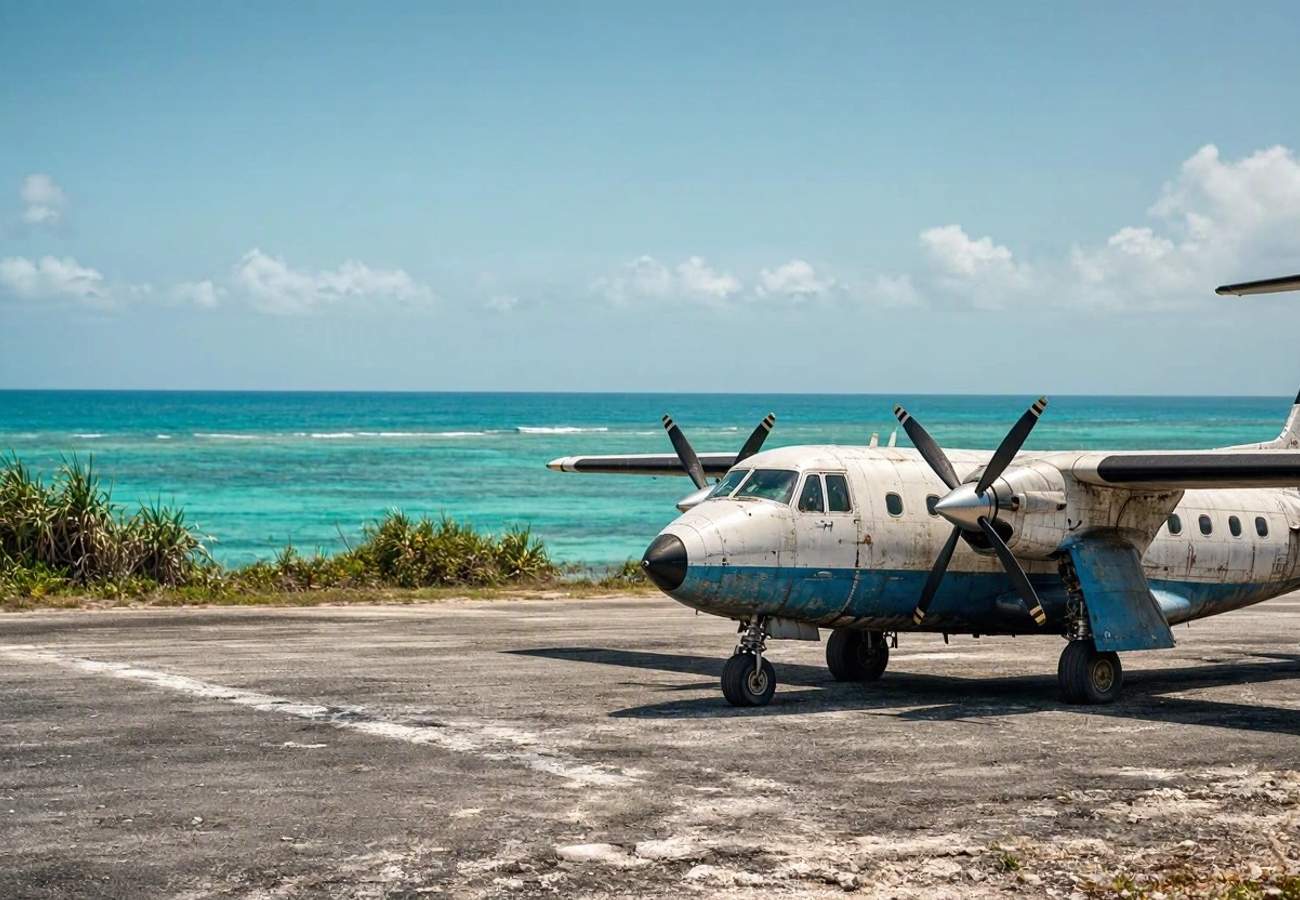
Image generated by AI
A traveler planning a bucket-list expedition to the Polynesian atolls of Tuvalu recently discovered that a single round-trip ticket would cost thousands of pounds, with no budget alternatives available. This is not an isolated case of "peak season" pricing, but a systemic failure of competition in the remote Pacific, where a handful of carriers hold absolute control over the skies.
The Economics of Isolation: Pacific Aviation Monopolies
The cost of accessing remote Pacific island nations has reached a tipping point, driven by a combination of geographic isolation, infrastructure deficits, and a lack of market competition. In many of these regions, a single airline—most notably Fiji Airways—controls the primary transit corridors. Without the pressure of competing carriers, ticket prices remain artificially inflated, regardless of demand.
Beyond market control, the physical limitations of these destinations dictate the price. Many remote islands possess runways too short for large, fuel-efficient wide-body aircraft. This forces airlines to use smaller planes with limited seating capacities. When combined with the massive amounts of fuel required to traverse thousands of miles of open ocean, the "per-seat" cost skyrockets. For the passenger, this results in a premium price tag for a flight that often involves multiple exhausting stops.
Regional Impact and Visitor Statistics
The financial barrier to entry is reflected in the dwindling visitor numbers. Many of these nations now receive fewer than 10,000 international tourists annually, as the average vacationer opts for more accessible tropical destinations.
Remote Pacific Connectivity Matrix 2026
| Country | Approx. Annual Visitors | Primary Hub / Carrier | Key Cost Driver | Impact on Passenger |
|---|---|---|---|---|
| Tuvalu | ~3,600 | Nadi, Fiji (Fiji Airways) | Single-carrier monopoly & short runway limits | Multi-stop routes; exorbitant baseline fares |
| Kiribati | ~7,000 | Tarawa via Fiji / Nauru | 3.5M sq km ocean span; fuel costs | Prohibitive transit costs to primary gate |
| Nauru | < 1,000 | Nauru Airlines (Australia/Pacific) | Lack of competition; reserve fuel requirements | High international transit rates |
| Niue | Limited | Auckland, NZ (Single Carrier) | Capped weekly departures; tight inventory | Near-impossible spontaneous booking |
Your Rights as a Passenger
Traveling to these regions often involves "interlining"—booking separate tickets across different airlines to reach a final destination. This creates a legal grey area when disruptions occur.
1. The "Separate Ticket" Trap If you book a flight to Fiji on one airline and a connecting flight to Tuvalu on another (separate tickets), the first airline is generally not responsible for your missed connection if the first flight is delayed. You are only entitled to the protections offered by the specific carrier for that leg of the journey.
2. EU261 and UK CAA Protections If your journey begins at an EU or UK airport (e.g., London to Nadi), you are protected by EU261/2004 or UK CAA guidelines. If your flight is canceled or delayed by more than three hours, you may be entitled to up to €600 (£520) in compensation, provided the delay was not caused by "extraordinary circumstances" (such as extreme weather).
3. US DOT Refund Rules For passengers departing from or arriving in the US, US Department of Transportation (DOT) rules mandate that if an airline cancels a flight or makes a "significant change" to your itinerary, you are entitled to a full refund to the original form of payment, regardless of whether the ticket was "non-refundable."
Rebooking Strategy and Alternatives
When facing a disruption in the Pacific, options are slim due to the lack of competing carriers. Use these strategies to mitigate losses:
- Monitor Real-Time Data: Use FlightAware or Flightradar24 to track your aircraft's inbound progress. In remote regions, airlines are often slow to update status boards; the aircraft's physical location is the only truth.
- The "Hub-and-Spoke" Pivot: If a flight from Nadi to Tarawa or Funafuti is canceled, do not wait for the airline to offer a solution. Immediately check for alternative regional hubs (such as Brisbane or Honiara) that might offer indirect routes via smaller charter services.
- Refund vs. Rebooking: Given the monopolistic nature of these routes, a refund may leave you stranded with no other way out. Always prioritize a "re-route" or "re-accommodation" over a refund unless you have confirmed a seat on a different carrier.
- Insurance Verification: Ensure your travel insurance specifically covers "Trip Interruption" for remote regions. Standard policies may have caps that are lower than the actual cost of a last-minute Pacific ticket.
FAQ: Pacific Aviation Costs 2026
Am I entitled to compensation for flight delays in the Pacific? Yes, if your flight departed from an EU/UK airport or was operated by an EU/UK carrier. For other routes, compensation depends on the airline's Contract of Carriage and local laws (e.g., DGCA in India or DOT in the US).
Can I get a full refund if my flight to Nauru or Tuvalu is canceled? Under US DOT rules (for US-linked flights), you are entitled to a full refund if the airline cancels. For other jurisdictions, you are typically entitled to a refund or a rebooked flight at no extra cost.
Why are there no budget airlines in the Pacific? Low-cost carriers rely on high-volume, quick-turnaround flights and large airports. The short runways, massive distances, and low passenger volumes of the Pacific make the budget model financially impossible.
What should I do if I miss a connection on a separate ticket? Contact the second airline immediately to see if they can hold your seat. Since they are not legally obligated to rebook you for free, you may need to claim the loss through your travel insurance.
The price of paradise is becoming a luxury only the elite can afford.
Related Travel Guides
Disclaimer
This article is for informational and educational purposes only. It does not constitute legal, financial, or professional advice. While we strive to provide accurate and up-to-date information, travel policies, regulations, and conditions change rapidly. Always verify information with official sources before making travel decisions. Nomad Lawyer makes no representations about the accuracy, reliability, completeness, or suitability of the information provided. Readers should consult qualified professionals for advice specific to their circumstances. The views expressed in this article are those of the author and do not necessarily reflect the views of Nomad Lawyer.
Preeti Gunjan
Contributor & Community Manager
A passionate traveller and community builder. Preeti helps grow the Nomad Lawyer community, fostering engagement and bringing the reader experience to life.
Learn more about our team →