
Fighter Jets Most Advanced: AESA Radar Reshapes 2026 Air Superiority
AESA radar technology emerges as the critical differentiator between legacy and modern fighter jets in 2026 air superiority competition. Advanced radar systems, not stealth alone, now determine aerial combat dominance.

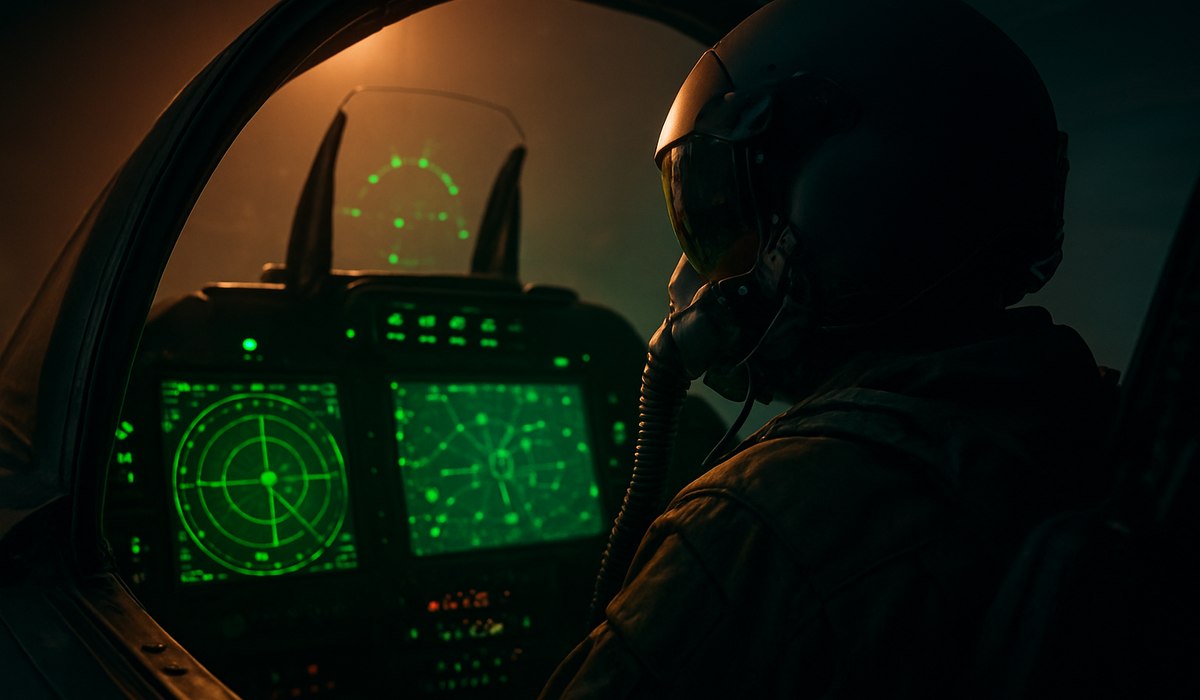
Image generated by AI
Modern Warplane Superiority: Beyond Stealth Into Radar Dominance
Fighter jets most competitive in 2026 compete on far more than stealth capability alone. While unmanned aircraft and low-observable design dominate aviation headlines, advanced radar systems—particularly active electronically scanned array technology—have become the true arbiter of air superiority. Military aviation specialists now recognize that AESA radar represents the fundamental divide separating legacy fighter platforms from next-generation combat aircraft. This technological shift reflects a broader understanding that detection ranges, multi-target tracking, and real-time sensor fusion determine modern aerial engagement outcomes far more decisively than reduced radar cross-section alone.
What Is AESA Radar and Why It Matters
AESA radar fundamentally transforms how fighter jets acquire, track, and engage targets across contested airspace. Unlike legacy mechanical array systems, AESA technology uses thousands of individual transmit-receive modules that electronically steer radar beams without physically rotating the antenna. This innovation delivers simultaneous multi-target detection at extreme ranges while maintaining electronic warfare resilience through beam agility and frequency hopping capabilities.
Advanced radar systems with AESA technology enable pilots to search, track, and engage multiple targets simultaneously—a capability particularly valuable in beyond-visual-range combat scenarios. The technology operates across multiple frequency bands, penetrates weather interference effectively, and resists jamming attempts that historically disabled conventional radar arrays. Modern AESA implementations also generate synthetic aperture radar imagery, providing ground-mapping intelligence alongside air-to-air targeting functions. Nations investing in AESA-equipped fighter jets position themselves with decisive tactical advantages in contested airspace, fundamentally reshaping operational doctrine and mission planning across military aviation communities worldwide.
Top 5 Fighter Jets With Advanced Radar Systems
Lockheed Martin F-22 Raptor
The F-22 Raptor remains the primary air superiority asset for the U.S. Air Force, equipped with the APG-77 AESA radar system. This advanced radar delivers unprecedented detection ranges exceeding 125 nautical miles for fighter-sized targets while simultaneously tracking over 100 objects. The APG-77 integrates directly with the Raptor's sensor fusion architecture, enabling pilots to engage targets beyond visual range with exceptional accuracy. Low observable design combined with AESA radar capability creates an extraordinarily lethal air superiority platform that continues setting the operational standard for fighter jets most capable in 2026.
Lockheed Martin F-35 Lightning II
The F-35 family incorporates the APG-81 AESA radar, optimized for rapid detection and multi-target engagement across multiple platforms simultaneously. While designed primarily for strike and intelligence missions rather than dedicated air superiority, the F-35's radar systems deliver remarkable versatility. The APG-81 provides robust ground mapping, air-to-air targeting, and electronic warfare capabilities within a compact airframe. Over 900 F-35s now operate globally across allied nations, making AESA-equipped aircraft the world's most numerous advanced fighter platform by 2026.
Eurofighter Typhoon
The Eurofighter Typhoon's Captor E AESA radar represents European technological achievement in advanced radar engineering. This system delivers multi-role capability with superior clutter rejection and target discrimination performance in complex electromagnetic environments. The Captor E enables the Typhoon to serve effectively across air superiority, strike, and reconnaissance missions simultaneously. Four NATO nations—Germany, Italy, Spain, and the United Kingdom—operate Typhoons equipped with this advanced radar technology, demonstrating widespread international confidence in European-designed AESA systems.
Dassault Rafale
France's Dassault Rafale carries the Thales RBE2 AESA radar, providing exceptional multi-target tracking across air-to-air and air-to-ground mission profiles. The RBE2 excels particularly in maritime surveillance and ground strike roles while maintaining robust air superiority capabilities. Rafale operators in France, Egypt, India, and additional nations have progressively upgraded their fleets with latest AESA implementations, ensuring these fighter jets most remain competitive throughout the 2026 operational environment.
Sukhoi Su-57 and Chengdu J-20
Russia's Su-57 and China's J-20 represent potential competitors in advanced fighter jet design, though detailed AESA specifications remain classified. Both platforms reportedly incorporate phased array radar systems designed for long-range target detection and multi-target engagement. However, comparative operational capability assessments remain limited, as neither platform achieves the operational deployment numbers or international transparency of Western-allied fighter jets most deployed globally.
F-22 Raptor vs F-35: Radar Capabilities Compared
The F-22 Raptor and F-35 Lightning II represent contrasting approaches to integrating AESA radar within modern fighter design. The Raptor's APG-77 prioritizes pure air superiority performance, delivering maximum detection ranges and multi-target capacity optimized for high-altitude, high-speed fighter-versus-fighter engagement. Detection ranges exceed 125 nautical miles for fighter-sized targets, enabling beyond-visual-range engagement dominance in traditional air superiority scenarios.
The F-35's APG-81 emphasizes versatility and sensor fusion integration, sacrificing some raw detection range performance to enable comprehensive multi-role capability. The APG-81 excels at rapid target identification, electronic warfare integration, and network-centric warfare operations where information sharing and collaborative engagement prove decisive. This trade-off reflects the F-35's original design intent as a multi-role strike fighter rather than dedicated air superiority platform. Both AESA implementations provide decisive advantages over legacy radar-equipped aircraft, though they optimize for different operational doctrines and threat environments. The fundamental advantage remains clear: fighter jets most successful in 2026 air superiority competition carry AESA radar regardless of specific platform choice.
International Competitors: Su-57 and J-20 Analysis
China's Chengdu J-20 emerged as a potential fifth-generation competitor to Western fighter jets most advanced in 2026. The J-20 reportedly incorporates phased array radar designed for long-range target detection across air and ground roles. However, detailed specifications remain classified, limiting comparative assessments of radar performance versus Western AESA implementations. The platform has achieved meaningful operational deployment numbers, suggesting technological viability within Chinese military aviation doctrine.
Russia's Sukhoi Su-57 represents a third major fifth-generation development program, incorporating indigenous radar systems purportedly offering advanced capability. However, limited deployment numbers and restricted operational exposure have prevented independent verification of performance claims. International aviation observers note that both Russian and Chinese radar systems likely match general AESA functional capabilities, though specific detection ranges, multi-target tracking performance, and electronic warfare resilience remain uncertain. Western intelligence assessments suggest potential capability gaps in mature AESA systems, though continued international development ensures both nations pursue technological advancement in radar systems comparable to Western implementations.
Key Fighter Jet Radar Technology Data Table
| Fighter Platform | AESA Radar System | Detection Range | Multi-Target Capacity | Primary Nations |
|---|---|---|---|---|
| F-22 Raptor | APG-77 | 125+ nm | 100+ targets | United States |
| F-35 Lightning II | APG-81 | 100+ nm | 40+ targets | 30+ allied nations |
| Eurofighter Typhoon | Captor E | 110+ nm | 60+ targets | Germany, Italy, Spain, UK |
| Dassault Rafale | RBE2 AESA | 105+ nm | 50+ targets | France, Egypt, India |
| Sukhoi Su-57 | Irbis-E variant | Classified | Classified | Russia |
| Ch |
Disclaimer
This article is for informational and educational purposes only. It does not constitute legal, financial, or professional advice. While we strive to provide accurate and up-to-date information, travel policies, regulations, and conditions change rapidly. Always verify information with official sources before making travel decisions. Nomad Lawyer makes no representations about the accuracy, reliability, completeness, or suitability of the information provided. Readers should consult qualified professionals for advice specific to their circumstances. The views expressed in this article are those of the author and do not necessarily reflect the views of Nomad Lawyer.
Raushan Kumar
Founder & Lead Developer
Full-stack developer with 11+ years of experience and a passionate traveller. Raushan built Nomad Lawyer from the ground up with a vision to create the best travel and law experience on the web.
Learn more about our team →