
FIFA World Cup Group G Teams Face Intense Cross-Border Travel Restrictions and Logistics Hurdles as Belgium and Iran Prepare for Los Angeles Stadium Showdown: Latest Update
The FIFA World Cup Group G race for the Round of 32 qualification intensifies as Belgium and Iran prepare to clash at Los Angeles Stadium under complex cross-border travel regulations.

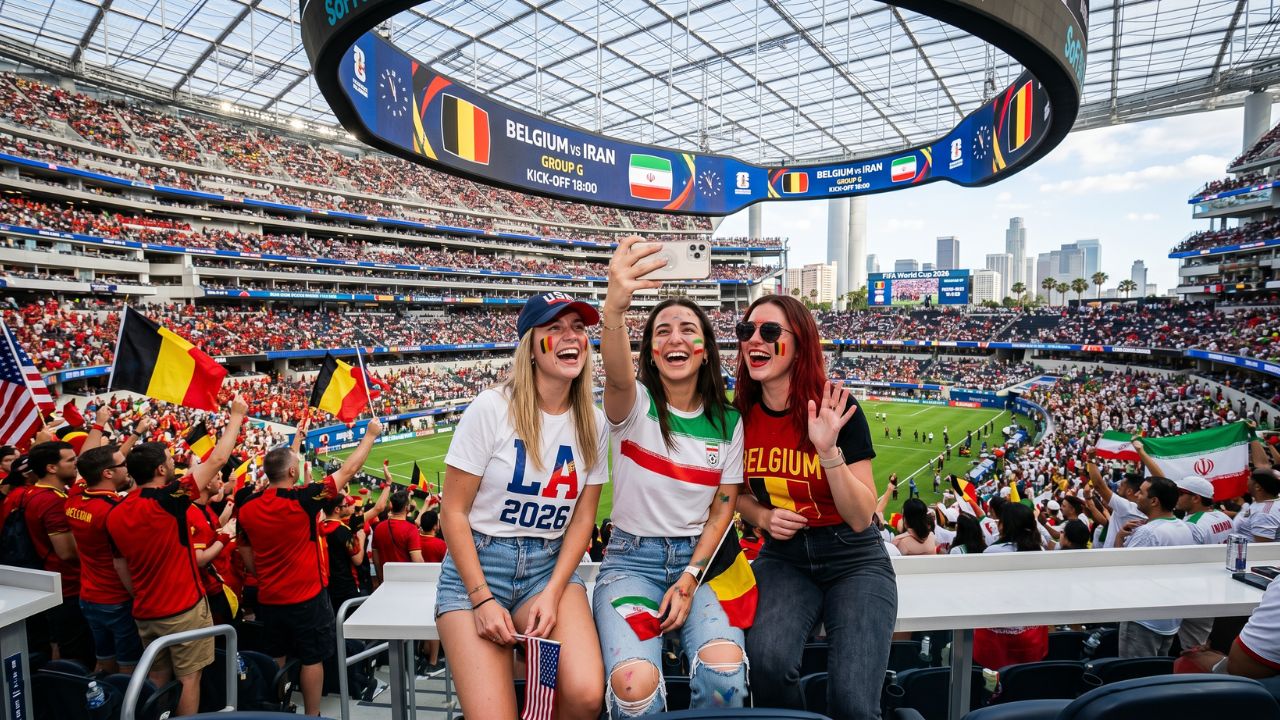
Image generated by AI
Published on June 21, 2026
International sports logistics and border policies are taking center stage as Belgium and Iran prepare for a crucial Group G match, highlighting the impact of cross-border travel restrictions on major sporting events. With all four teams in Group G level on one point, the upcoming game at Los Angeles Stadium is vital for securing a place in the Round of 32. However, Iran’s unique travel requirements—requiring players to commute between Mexico and the United States—have highlighted the operational challenges of a multi-host tournament. Fans traveling from Europe, the Middle East, and North America are urged to monitor immigration updates and allow extra transit time between venues.
Quick Summary
- High-Stakes Showdown: Belgium and Iran will face off on Sunday at Los Angeles Stadium in a vital bid to qualify for the Round of 32.
- Group G Deadlock: Following 1-1 and 2-2 draws in the opening fixtures, all Group G nations (Belgium, Iran, Egypt, and New Zealand) are level on one point.
- Commute from Mexico: Due to geopolitical tensions and U.S. entry rules, Iran relocated its base to Mexico, requiring players to cross the border shortly before and after matches.
- Logistical Concerns Raised: Iran has formally raised concerns about these border crossings, pointing out the additional travel strain on players compared to other teams.
- Tourism Rebound: Despite transit challenges, the tournament is driving significant sports tourism across North America, boosting airlines and hotels.
Context Paragraph:
The implementation of temporary entry guidelines for participating teams is managed by the host nation's immigration departments in coordination with FIFA. As teams travel between venues in the United States, Mexico, and Canada, border agencies have introduced fast-track lanes to handle the high volume of players, staff, and international supporters. Despite these efforts, geopolitical tensions and strict visa policies have created unique cross-border travel restrictions for certain teams, affecting training schedules and player recovery times during the group stage.
Event and Incident Details: FIFA World Cup Group G Showdown Strained by Cross-Border Travel Restrictions
The qualification race in Group G is one of the most competitive in the tournament, with Belgium, Iran, Egypt, and New Zealand all sitting on one point after their opening fixtures. Belgium’s initial match ended in a 1-1 draw against Egypt, where the team struggled until Romelu Lukaku came on to help secure the equalizer. Managerial expectations are high as Belgium looks to star midfielder Kevin De Bruyne, winger Jeremy Doku, and goalkeeper Thibaut Courtois to secure a win and avoid another early exit like in the 2022 World Cup.
Meanwhile, Iran enters the match after an exciting 2-2 draw against New Zealand, led by captain Mehdi Taremi, Mohammad Mohebi, and Ramin Rezaeian. However, Iran’s preparation has been complicated by unusual travel arrangements. The team had to move its base camp from Arizona to Mexico before the tournament began. Under special U.S. entry rules, Iranian players are only allowed to enter the United States for a limited time around each match and must depart immediately afterward, resulting in frequent travel between Mexico and the U.S.
To illustrate the competitive standing and travel conditions of the Group G teams, the table below provides a detailed breakdown of their status:
| Group G Nation | Points | Opening Match Result | Key Players to Watch | Team Base Camp Location | Primary Travel & Transit Conditions |
|---|---|---|---|---|---|
| Belgium | 1 | 1-1 draw vs Egypt | Kevin De Bruyne, Romelu Lukaku, Jeremy Doku, Thibaut Courtois | United States | Standard tournament transit; no special border restrictions |
| Iran | 1 | 2-2 draw vs New Zealand | Mehdi Taremi, Mohammad Mohebi, Ramin Rezaeian | Mexico (relocated from Arizona) | Subject to strict entry windows; frequent Mexico-U.S. border crossings |
| Egypt | 1 | 1-1 draw vs Belgium | Star attackers and defensive coordinators | United States | Standard tournament transit and training protocols |
| New Zealand | 1 | 2-2 draw vs Iran | Striking options and physical defenders | United States / Mexico border zones | Standard travel routes between group stage venues |
Risk and Impact: Key Logistics Pressures Faced by Players and Supporters
The combination of strict immigration rules and multi-nation hosting has created several operational challenges:
- Player Fatigue from Border Crossings: The requirement for Iran to commute between Mexico and the U.S. creates extra travel strain that could impact player recovery.
- Complex Immigration Procedures: Teams and staff must manage strict entry windows, requiring precise coordination with border authorities.
- Increased Border Wait Times: Large numbers of international fans traveling between matches in the U.S. and Mexico are experiencing delays at land border crossings and airports.
- High Travel Costs: Strong demand from fans has driven up airline ticket prices, hotel rates, and local transit costs across North America.
- Enhanced Security Checks: Tight security measures at ports of entry and near match venues have added to transit times for traveling supporters.
What Authorities and Tournament Planners Say About Cross-Border Travel Restrictions
Tournament organizers and immigration authorities are working to balance security requirements with operational efficiency. Representatives from the U.S. Department of State emphasize that entry rules are applied consistently to maintain security, while special coordination offices have been set up to help tournament participants with visa processing. Despite these measures, Iranian team officials have raised concerns, noting that the constant travel puts their players at a disadvantage compared to teams based in the host countries.
Aviation and tourism boards report that despite these logistics challenges, the tournament has triggered a major surge in sports tourism. Airlines are operating extra flights to connect host cities, and hotels in key markets like Los Angeles are reporting occupancy rates near capacity. Tourism analysts note that matches involving teams with large global fanbases are generating significant local economic activity, highlighting the close connection between sports events and destination promotion.
Practical Traveler Advice: Navigating FIFA World Cup Travel and Entry Procedures
Fans planning to attend the Group G match in Los Angeles or travel between host countries should follow these tips:
- Verify Your Visa and Entry Documents: Double-check the visa and entry requirements for both the United States and Mexico, and make sure your passport is valid for at least six months.
- Allow Extra Transit Time: With high passenger volumes and tight security, give yourself extra time when traveling between host cities and arriving at stadiums.
- Carry Printed Match Tickets and Booking Details: Keep paper copies of your tickets, hotel reservations, and travel documents handy for border inspections.
- Monitor Flight and Train Schedules: Stay updated on transportation schedules and check for any delays or route changes before you head out.
- Set Up Local Mobile Data Plans: Ensure you have working mobile data or international roaming to access digital tickets and transit apps.
- Register with Guest Tracking Systems: Follow any required local registration or security tracking protocols established for international visitors.
Broader Context: The Intersect of Geopolitics, Elite Sports, and Global Tourism
The logistical challenges in Group G highlight the complex intersection of sports, international relations, and tourism. While multi-host tournaments allow more countries to share the benefits of major sporting events, they also require unprecedented cooperation between border agencies. For fans, these events are a unique opportunity to travel across North America, boosting airline demand and local economies. However, for teams, the success of their campaign depends not just on their performance on the pitch, but also on how well they manage the challenges of international travel.
What to Expect Next / Looking Ahead
Following Sunday's match at Los Angeles Stadium, both Belgium and Iran will prepare for their final group stage fixtures. Border control agencies are expected to maintain fast-track lanes for players and official staff to ensure smooth travel. If Iran manages to qualify for the Round of 32, tournament coordinators may need to adjust their travel arrangements and base camp locations to ensure fair preparation conditions for the knockout rounds.
Conclusion
The high-stakes match between Belgium and Iran highlights how cross-border travel restrictions and complex logistics can influence even the world's biggest sporting events. While Belgium is focused on finding its rhythm after drawing with Egypt, Iran is balancing its qualification hopes with unique travel demands. By planning ahead, keeping travel documents organized, and staying updated on transit requirements, fans can enjoy the excitement of the World Cup while navigating these international travel challenges safely.
Related Travel Guides
- Israel and Gulf Powers Closely Monitor US-Iran Switzerland Talks to Protect Commercial Flight Routes and Secure Aviation Corridors in the Middle East: New Travel Alert
- Spain Leads European Nations in Pressuring Gulf and Levant States for Visa Amnesty, Demanding a Pause on Visa Overstay Fines in the Middle East: New Travel Alert
- United Arab Emirates Suspends Visa Overstay Penalties for Stranded Travelers Amid Regional Disruptions: Latest Update
FAQ: World Cup Travel Logistics and Cross-Border Restrictions
Why does the Iranian team have to travel between Mexico and the United States?
Due to geopolitical tensions and U.S. entry rules, Iran relocated its tournament base from Arizona to Mexico. The team is required to enter the United States shortly before each match and return to Mexico afterward, leading to frequent travel between the two host countries.
Where is the Group G match between Belgium and Iran being played?
The crucial Group G match is scheduled to take place at Los Angeles Stadium in the United States on Sunday.
What are the current standings in Group G?
All four teams in Group G—Belgium, Iran, Egypt, and New Zealand—are level on one point after drawing their opening fixtures (Belgium drew 1-1 with Egypt, and Iran drew 2-2 with New Zealand).
How does the multi-host format of the World Cup impact fans?
While it allows supporters to visit multiple countries, it also requires them to navigate different visa rules and border checks, which can lead to longer transit times at land borders and airports.
Who are the key players to watch for Belgium and Iran?
Belgium relies on Kevin De Bruyne, Romelu Lukaku, Jeremy Doku, and Thibaut Courtois. Iran’s key players include Mehdi Taremi, Mohammad Mohebi, and Ramin Rezaeian.
Disclaimer
This article is for informational and educational purposes only. It does not constitute legal, financial, or professional advice. While we strive to provide accurate and up-to-date information, travel policies, regulations, and conditions change rapidly. Always verify information with official sources before making travel decisions. Nomad Lawyer makes no representations about the accuracy, reliability, completeness, or suitability of the information provided. Readers should consult qualified professionals for advice specific to their circumstances. The views expressed in this article are those of the author and do not necessarily reflect the views of Nomad Lawyer.
Raushan Kumar
Founder & Lead Developer
Full-stack developer with 11+ years of experience and a passionate traveller. Raushan built Nomad Lawyer from the ground up with a vision to create the best travel and law experience on the web.
Learn more about our team →