
Sun Country Airlines Cuts Minneapolis-St. Paul Fall Schedule: Impact on 2026 Fares
Sun Country Airlines is reducing its flight frequency at MSP by mid-to-high single digits, potentially triggering a 'hub penalty' and higher autumn fares for passengers.

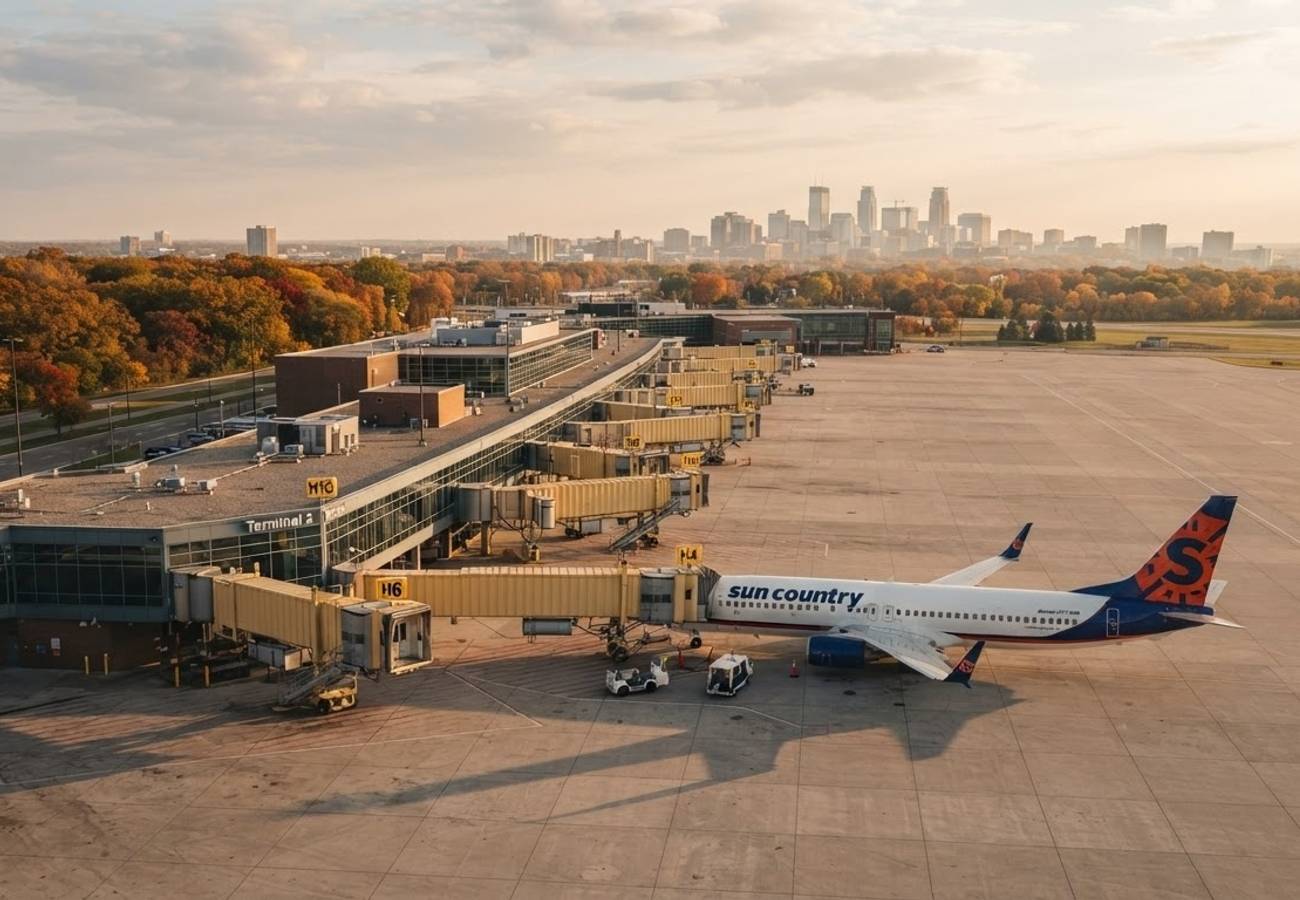
Image generated by AI
Minneapolis–St. Paul (MSP) travelers face a tightening market this autumn as Sun Country Airlines scales back its home-base operations. The reduction in low-cost capacity is expected to drive up ticket prices and limit nonstop options.
MSP Schedule Contraction and Capacity Loss
Data from public schedule filings indicate that Sun Country Airlines is implementing significant cuts to its Minneapolis–St. Paul International Airport operations, with the most acute reductions occurring in September. The carrier is on track to reduce its overall flying from the Twin Cities by an estimated mid-single to high-single digit percentage this year compared to previous projections.
Flight tracking and schedule analysis show that hundreds of planned departures for the early fall have been removed. This retrenchment affects several leisure routes, where previously frequent weekly options have been replaced by limited dates and times.
Operational Drivers: Pilots and Ownership
Our analysis of current industry reports suggests this pullback is not driven by a lack of demand, but by internal resource constraints:
- Pilot Availability: Sun Country is currently balancing its scheduled passenger flights against cargo operations and charter contracts, all of which draw from the same pilot pool.
- Corporate Restructuring: Following an acquisition earlier this year, the airline's new parent company is reevaluating aircraft deployment to prioritize high-profit cargo and charter revenue over marginal scheduled routes.
- Seasonal Shift: While winter "sun destinations" are expected to return, the immediate contraction limits the availability of low-fare seats during the critical fall break and early "snowbird" migration period.
The MSP "Hub Penalty" and Delta's Market Position
The reduction in Sun Country's capacity creates a precarious environment for MSP passengers due to the dominance of Delta Air Lines. In aviation economics, this often leads to a "hub penalty," where a lack of low-cost competition allows the dominant carrier to maintain higher average fares.
Recent ticket price trends in the Twin Cities indicate double-digit percentage increases on several routes between fall 2024 and fall 2025 (adjusted for inflation), specifically on routes where alternative carriers have scaled back. With Spirit Airlines having already exited several MSP routes, the removal of Sun Country seats further diminishes the competitive pressure that typically keeps basic economy fares low.
Passenger Rights & Advisory: Navigating the Fall Disruption
For the affected passenger, the reduction in flights means a higher probability of delays, cancellations, and price volatility. Our analysis of current aviation policies suggests the following actionable steps:
1. Compensation and Rebooking Rights If your Sun Country flight is canceled due to these schedule "optimizations," you are entitled to a full refund to the original form of payment if you choose not to travel. Under US DOT guidelines, airlines must provide prompt refunds for canceled flights, regardless of the reason.
2. Managing Fare Spikes To avoid the "hub penalty" pricing, passengers should:
- Compare Total Costs: Analyze the price of a connecting flight through a different hub versus a nonstop Delta flight.
- Regional Alternatives: Evaluate nearby Upper Midwest regional airports that maintain a stronger low-cost carrier presence.
- Booking Window: Shop earlier than usual; the current capacity crunch means "flash sales" and off-peak bargains are becoming rarer.
3. Loyalty vs. Cost Passengers should weigh the cost of higher base fares against the breadth of Delta's schedule. In a constrained market, the reliability of a legacy carrier's network may outweigh the savings of a diminished low-cost alternative.
Industry Analyst View
The shift at Sun Country signals a broader trend in the 2026 aviation market: a pivot toward diversified revenue streams (cargo and charter) over aggressive passenger growth. By sacrificing marginal leisure routes, the airline is insulating itself against volatility, but it is leaving a vacuum at MSP. This allows legacy carriers to regain pricing power, effectively ending the era of ultra-competitive leisure fares in the Twin Cities for the foreseeable future.
The balance of power at MSP is shifting back toward legacy hubs, leaving the budget traveler with fewer exits.
Related Travel Guides
Disclaimer
This article is for informational and educational purposes only. It does not constitute legal, financial, or professional advice. While we strive to provide accurate and up-to-date information, travel policies, regulations, and conditions change rapidly. Always verify information with official sources before making travel decisions. Nomad Lawyer makes no representations about the accuracy, reliability, completeness, or suitability of the information provided. Readers should consult qualified professionals for advice specific to their circumstances. The views expressed in this article are those of the author and do not necessarily reflect the views of Nomad Lawyer.
Preeti Gunjan
Contributor & Community Manager
A passionate traveller and community builder. Preeti helps grow the Nomad Lawyer community, fostering engagement and bringing the reader experience to life.
Learn more about our team →