
FAA Proposes Federal Rule to Override State Meal and Rest Break Laws for Commercial Airline Crews to Ensure Operational Standardization
The FAA releases a proposal to establish a single federal standard for airline crew meal breaks, overriding state labor regulations.

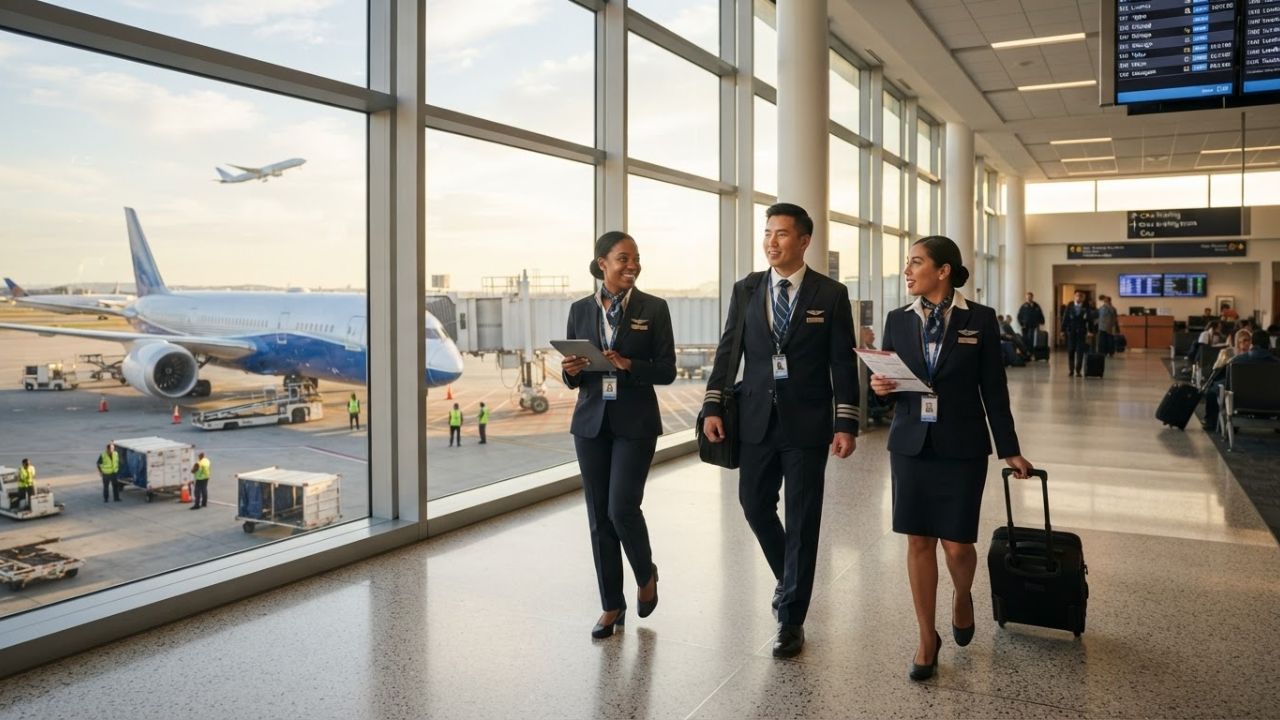
Image generated by AI
Aviation labor regulation in the United States faces a major transition. The Federal Aviation Administration (FAA) is proposing a federal rule to preempt state-level meal and rest break requirements for commercial flight crews, aiming to establish a single nationwide standard.
Regulatory Preemption Seeks to Eliminate State-by-State Patchwork Scheduling
According to reports, the Notice of Proposed Rulemaking (NPRM) was officially released on July 4, 2026.
Regulatory filings published by the FAA indicate that the proposed rule is designed to resolve operational conflicts caused by varying state labor laws.
Under current rules, airlines operating national networks must navigate different state-level rest requirements, such as California's mandatory 30-minute meal break.
The agency argues that overriding these state rules is necessary to maintain scheduling consistency, safety readiness, and national network integrity.
This federal preemption strategy is rooted in the Airline Deregulation Act of 1978, which limits individual states from regulating airline prices, routes, and services.
High-Stakes Litigation in California Highlights Carrier Compliance Struggles
The proposed rulemaking follows years of legal friction between national airlines and state labor agencies.
Several carriers have faced class-action lawsuits brought by flight crew members seeking compensation for missed rest breaks.
A primary example involves a major carrier that agreed to a $24 million settlement to resolve claims regarding California break violations.
State appeals courts have previously ruled that federal safety laws do not automatically override state worker protections.
By introducing this rule, the agency seeks to establish a clear legal boundary, removing state-level authority over flight crew work schedules.
The tables below display the legal background and the expected operational impacts.
State-Level Litigation Over Airline Crew Break Laws
| Target Airline Carrier | Primary Legal Dispute | Settlement / Court Ruling | State Jurisdiction | Legal Argument Basis |
|---|---|---|---|---|
| American Airlines | Crew claims of missed meal breaks | $24 million payout settlement | California | State labor code compliance |
| Alaska Airlines | Crew rest rules dispute post-Virgin acquisition | Lower court ruling sustained | California / Supreme Court | Preemption under Airline Deregulation Act |
Projected Impact of FAA Rule on Key Aviation Stakeholders
| Stakeholder Group | Primary Operational Impact | Projected Scheduling Shift | Legal Risk Exposure |
|---|---|---|---|
| Commercial Airlines | Unified scheduling algorithm utilization | Removal of state-by-state schedule overrides | Significantly reduced litigation risk |
| Flight Crews | Elimination of state-mandated local breaks | Reliance on federal fatigue minimums | Increased reliance on union contracts |
| Labor Unions | Transition to private contract negotiations | Push for contract-based break schedules | Focused on bargaining agreements |
Federal Safety Guidelines Focus on Uninterrupted Crew Readiness During Flight Operations
The agency's primary argument for standardizing rest rules centers on inflight safety protocols.
Flight attendants are responsible for managing emergency evacuations, firefighting, and medical crises during flight operations.
Mandating that crew members take uninterrupted meal breaks during duty periods could compromise emergency response readiness.
Federal fatigue management rules will remain the baseline for determining maximum duty limits and minimum rest periods.
Hybrid Labor Contract Models Offer Alternative Break Structures
While state laws may be preempted, labor unions are expected to advocate for contract-based rest protections.
Negotiation models supported by the Association of Flight Attendants-CWA (AFA-CWA) demonstrate how break rules can be integrated directly into collective bargaining agreements.
For example, selected agreements include provisions for 10-minute seated breaks on shorter sectors and 30-minute breaks on longer block times.
This shift suggests that future fight crew protections will be enforced through private contracts rather than public state laws.
Why This Matters
Our analysis of the flight data indicates that automated airline crew scheduling is highly sensitive to local regulatory variations. Modern carrier software optimizes crew pairings, turn times, and fatigue compliance across national route networks using unified algorithms.
State-mandated rest breaks force manual overrides in scheduling software, leading to operational inefficiencies and increased standby crew reserve requirements.
By standardizing these rules, carriers can optimize crew utilization, lowering overall labor costs on transcontinental flights.
However, this preemption removes a legal tool that crews have used to negotiate better working conditions.
Ultimately, this regulatory shift will place the burden of enforcing rest breaks entirely on future collective bargaining negotiations.
Industry Outlook
Market trends suggest that U.S. carriers will strongly support the preemption rule to eliminate compliance risks and reduce legal liabilities. Labor unions are projected to launch legal challenges during the public comment period, which closes in September.
Expect the final rule to be implemented in late 2026, leading to a standardization of crew scheduling systems across all domestic networks. The regulatory environment is projected to remain highly contested.
Key Takeaways
- FAA Proposal: The FAA is proposing a rule to override state-level meal and rest break laws for flight crews.
- Legal Context: The rulemaking follows significant litigation, including a $24 million settlement by American Airlines.
- Safety Focus: The agency argues that state-mandated breaks can interfere with crew readiness during inflight emergencies.
- Unified Scheduling: Standardizing the rules will allow airlines to run unified scheduling algorithms nationwide.
- Union Impact: Flight crew break protections will likely transition from state law to collective bargaining agreements.
FAQ
Why is the FAA proposing to override state meal break laws?
The agency wants to establish a single federal standard to eliminate the scheduling complexity and safety risks of navigating varying state rules.
How does this affect California's labor laws?
If finalized, the federal rule would preempt California's strict 30-minute meal break requirement for airline flight crews.
What are the safety arguments raised by the FAA?
The FAA argues that mandatory, uninterrupted meal breaks could prevent crew members from responding immediately to inflight emergencies like fires or medical crises.
When will this proposed rule take effect?
The proposal is open for public comment until September 2026, after which the FAA will review feedback before drafting a final rule.
Disclaimer
This article is for informational and educational purposes only. It does not constitute legal, financial, or professional advice. While we strive to provide accurate and up-to-date information, travel policies, regulations, and conditions change rapidly. Always verify information with official sources before making travel decisions. Nomad Lawyer makes no representations about the accuracy, reliability, completeness, or suitability of the information provided. Readers should consult qualified professionals for advice specific to their circumstances. The views expressed in this article are those of the author and do not necessarily reflect the views of Nomad Lawyer.
Kunal K Choudhary
Co-Founder & Contributor
A passionate traveller and tech enthusiast. Kunal contributes to the vision and growth of Nomad Lawyer, bringing fresh perspectives and driving the community forward.
Learn more about our team →