
Aviation Updates: Massive FAA Crackdown Locks JFK at 81 Flights Per Hour Until 2028 to Prevent Terrifying National Travel Chaos
As severe airport disruptions threaten to collapse US airspace, the FAA violently caps JFK capacity, triggering a massive slot-control war among major airlines.
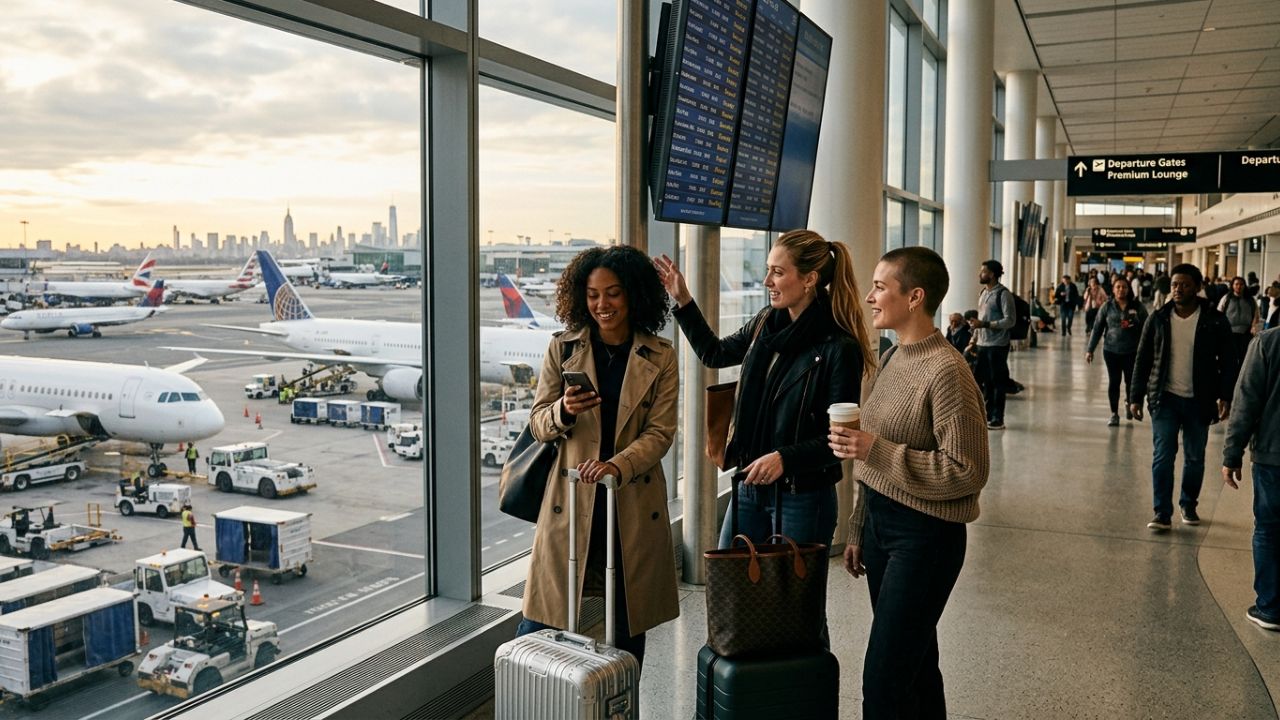
Image generated by AI
Aviation Updates: Massive FAA Crackdown Locks JFK at 81 Flights Per Hour Until 2028 to Prevent Terrifying National Travel Chaos
As incredibly severe terminal gridlock and massive airspace congestion threaten to completely suffocate the absolute largest transit hubs across the United States, the FAA has aggressively executed a massive regulatory crackdown, permanently locking JFK operations at 81 flights per hour to prevent catastrophic, nation-wide travel chaos.
While incredibly exhausted global passengers desperately navigate an incredibly brutal summer defined by rolling flight cancellations and severe, localized airport disruptions, a massive, highly strategic regulatory intervention is actively reshaping the absolute highest levels of American commercial aviation. According to the absolute latest breaking airline news, the Federal Aviation Administration (FAA) has officially triggered a monumental, paradigm-shifting extension of the High Density Rule at John F. Kennedy International Airport (JFK). Desperate to ensure that severe, localized regional hub gridlock does not completely destroy the entire US aviation network, the FAA has formally locked operations to a strict ceiling of 81 movements per hour, extending these brutal slot controls completely through October 2028.
This highly critical operational fortress explicitly positions JFK not as a growth market, but as a heavily regulated, completely capped capacity zone. By aggressively enforcing this strict limit, the FAA is directly combating the massive travel chaos that routinely plagues travelers when airlines attempt to recklessly over-schedule peak hours. Because traditional mega-hubs frequently suffer from severe runway saturation leading to massive, unannounced airport disruptions, this 81-flight ceiling serves as an absolute national defense mechanism. It completely bypasses the terrifying logistical nightmares that strand thousands of passengers navigating the incredibly volatile Northeast corridor, forcing major carriers like American Airlines, Delta Air Lines, and JetBlue Airways into a brutal, high-stakes battle for existing slots rather than unconstrained expansion.
Aviation Updates: Insulating the Northeast Corridor
This massive, highly structural shift in national airspace management perfectly illustrates the intense, incredibly fragile nature of modern intercontinental mobility.
According to highly detailed, official aviation updates, this strategic capacity lock is explicitly designed to massively enhance network stability while aggressively eliminating terrifying operational anxiety for holidaymakers. The 81-flight rule applies across almost the entire operational day, effectively capping growth at one of the world’s most in-demand gateways. Because open-capacity airports are increasingly crippled by rolling travel chaos stemming from reckless scheduling, funneling passenger flows through a strictly regulated environment explicitly guarantees a unified, highly reliable transit model. This massive regulatory optimization prevents a repeat of 2007—when restrictions were briefly relaxed, causing airlines to flood peak hours and triggering severe, cascading delays that rippled violently across the entire US air traffic system.
Section-Wise Breakdown: Navigating the Regulated Hub
The sudden, massive evolution of these critical transit controls actively impacts several incredibly distinct, highly sensitive operational dynamics at JFK.
The Slot Trading Fortress
At the absolute core of this massive operational pivot is the strategic elevation of JFK slots into highly valuable financial assets. Operating alongside LaGuardia Airport and Ronald Reagan Washington National Airport as one of only three fully slot-controlled airports in the US, JFK operates under a strict "use it or lose it" mandate. Airlines must operate at least 80% of allocated slots or violently risk losing them. By aggressively enforcing this threshold, the FAA actively protects passengers from the severe travel chaos caused by airlines hoarding unused capacity. However, this creates a deeply complex trading ecosystem where legacy carriers swap, lease, and trade peak-hour access, effectively locking out low-cost competitors and restricting cheap passenger access.
The New Terminal One Illusion
The ultimate execution of this highly strategic deployment heavily targets the public perception of airport expansion. While massive infrastructure upgrades, including the New Terminal One, are currently underway, they will not change the 81-flight-per-hour ceiling. By completely separating terminal modernization from runway capacity, the FAA explicitly bypasses the severe logistical nightmares typically associated with uncontrolled terminal expansion. These upgrades will simply improve efficiency within a fixed capacity envelope, explicitly shielding passengers from the excruciating, multi-hour transit delays that define modern flight cancellations without actually adding a single new daily flight to the schedule.
Flight Details and Verified Disruption Bypass Matrix
To fully understand the exact structural parameters of this massive regulatory lock and how the FAA successfully navigates complex regional congestion, the following matrix explicitly details the operational mandates and historical context.
Confirmed FAA JFK Disruption Matrix
| Regulatory / Operational Metric | Massive Capacity & Strategic Details | Regional Congestion Impact & Control |
|---|---|---|
| FAA Regulatory Action | High Density Rule extended through October 2028. | Prevents complete systemic collapse of the US airspace. |
| Strict Capacity Ceiling | Locked at 81 flight movements (takeoffs/landings) per hour. | Eradicates massive peak-hour travel chaos. |
| "Use It or Lose It" Mandate | Airlines must operate at least 80% of allocated slots. | Stops airlines from artificially triggering airport disruptions. |
| Primary Impacted Carriers | American Airlines, Delta Air Lines, and JetBlue Airways. | Forces legacy carriers into a brutal slot-trading economy. |
| Historical Context (2007) | Brief relaxation of rules caused catastrophic national delays. | Proves that uncontrolled JFK expansion destroys the national grid. |
| Slot-Controlled US Airports | JFK, LaGuardia (LGA), and Ronald Reagan (DCA). | Heavily regulates access to the most vital economic centers. |
Data explicitly reflects the massive, highly structural operational shift designed to flawlessly execute national passenger stabilization, directly forcing airlines to reevaluate their highly fragile, expansion-focused strategies.
Passenger Impact: The Financial Toll of the 81-Flight Lock
For the highly demanding passengers actively engaged in this massive New York mobility shift, traditional, highly anticipated summer travel is frequently viewed as completely terrifying and incredibly expensive.
The successful enforcement of the 81-flight limit significantly degrades cheap travel convenience for thousands of incredibly exhausted families and regional tourists. Instead of relying absolutely solely on a highly competitive, expanding market—where new route launches could drive down prices—travelers are now trapped in a capacity-managed economy. By actively utilizing this massive regulatory lock, the FAA successfully bypasses the terrifying, anxiety-inducing reality of severe, rolling airport disruptions, but the cost is massive. Airlines are heavily prioritizing high-yield international routes and premium business departures. This ensures persistent high fares during demand surges and severely limits new, low-cost route launches, physically pricing many travelers out of the peak-hour New York market.
Industry Analysis: The Economics of Access Rights
Aviation structural analysts strictly point out that this massive, multi-national operational shift perfectly illustrates the extreme, highly vital importance of heavily optimized slot utilization.
Aviation data explicitly indicates that massive legacy carriers are absolutely desperate to secure high-yield JFK traffic to actively combat the terrifying reality of domestic low-cost competition. Industry observers strongly view this 2028 FAA extension as the absolute ultimate catalyst for a closed competitive loop. When runway slots are tightly constrained by legacy hub congestion, relying on a closed slot-trading system completely destroys the ability of new entrants to scale.
Mr. Anup Kumar Keshan, Founder and Editor-in-Chief of Travel And Tour World, explicitly noted the severity of this shift: “JFK is entering a phase where infrastructure expansion is no longer the main story—capacity governance is. The real battle is not for runways, but for access rights that define who can grow in New York and who cannot.”
By aggressively establishing this operational foundation, incumbent airlines absolutely ensure that they maintain a highly lucrative grip on the JFK market, completely insulating their operations from the unpredictable pricing wars that violently plague open-capacity airports.
Conclusion: A Highly Regulated New York Future
The massively evolving infrastructure dynamics directly defining JFK's integration into the 2028 regulatory cycle violently reflect a much broader, highly critical structural transformation currently dominating how US commercial aviation is physically managed.
Rather than violently forcing massive international traffic through a deeply congested, highly restricted, unmanaged network, JFK is incredibly increasingly functioning as a highly capitalized, strategically restricted, heavily traded ecosystem. As airlines aggressively utilize secondary slot trading to permanently alter their New York footprint, travelers actively navigating the incredibly busy intercontinental sector must absolutely remain highly vigilant. To actively survive potential travel chaos during peak pricing phases, passengers must aggressively monitor all breaking aviation updates, actively secure seats months in advance to avoid capacity-induced price gouging, and perfectly understand that escaping modern airport disruptions fundamentally requires accepting that JFK will not add a single new peak-hour flight for the next four years.
Key Takeaways
- Massive Regulatory Lock: The FAA extends JFK's High Density Rule through October 2028, strictly locking operations at 81 flights per hour.
- Preventing Systemic Collapse: The strict ceiling prevents severe travel chaos and cascading delays across the entire US aviation network.
- "Use It or Lose It" Rule: Airlines must utilize 80% of their slots, heavily driving a secondary market of trading and leasing among legacy carriers.
- Barrier to Entry: The slot-controlled system structurally prevents low-cost competitors from launching new peak-hour routes, locking in high fares.
- Terminal Illusion: New Terminal One upgrades will not increase the 81-flight limit, solely focusing on efficiency rather than total expansion.
- Passenger Survival Strategy: Travelers are strictly advised to aggressively book early and expect high fares, as the massive cap on peak-hour flights guarantees zero supply growth during severe demand surges, effectively monetizing airport disruptions.
Related Travel Guides
Massive UAE Visa Bombshell: Strict New 30-Day Escape Window Announced
Travel Chaos Cripples Spain as Iberia and Ryanair Suffer 1,079 Delays
Global Flight Cancellation and Compensation Guide 2026
Disclaimer: This article is strictly for informational purposes only. Massive FAA regulatory actions, highly localized terminal slot protocols, and complex airline trading strategies change rapidly based on operational demand and federal oversight. Always carefully verify your specific itinerary and aggressively monitor real-time route pricing directly with your airline before attempting to fly into heavily restricted airports like JFK.