
FAA Chicago OHare Flight Caps Extended 2027
The FAA extends Chicago O'Hare daily flight caps through October 2027. Review the schedule disruptions, affected routes, and passenger compensation rights.

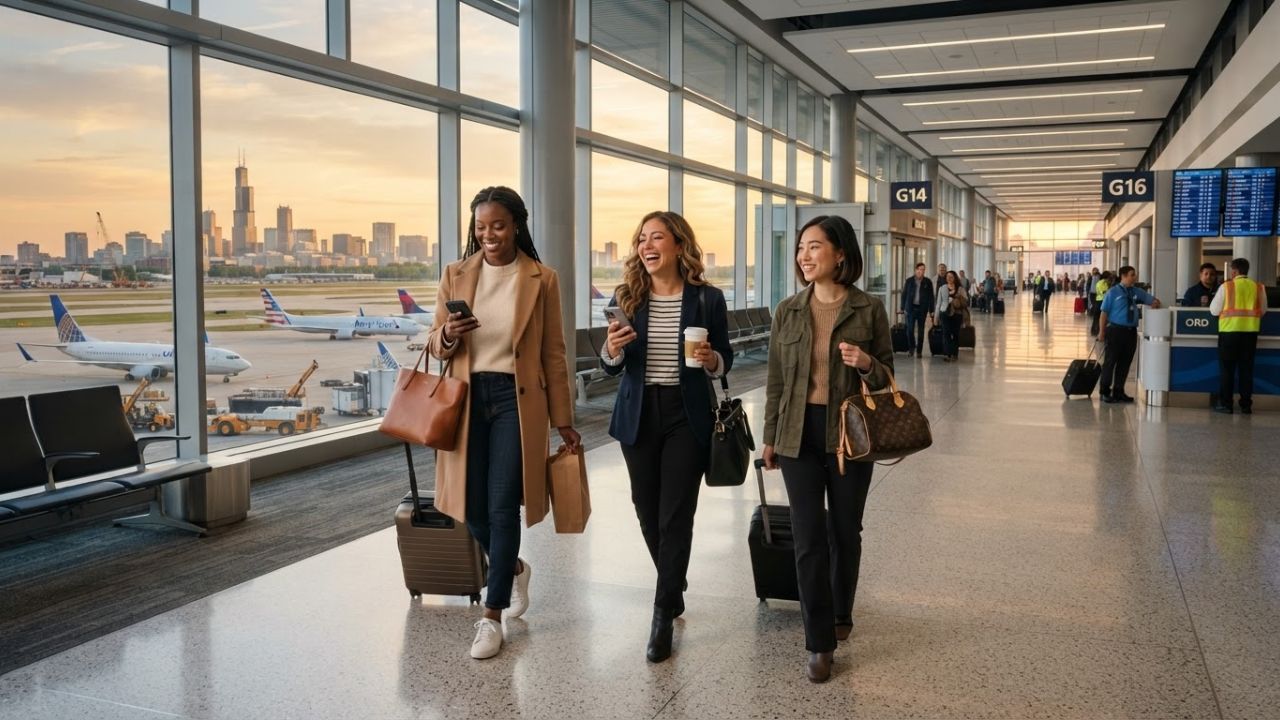
Image generated by AI
FAA Extends Chicago O'Hare Daily Flight Caps Through October 2027 Disrupting Schedules for United and American Airlines Travelers Nationwide
The Federal Aviation Administration has extended daily flight caps at Chicago O'Hare International Airport through October 2027, maintaining a daily limit of 2,708 arrivals and departures. This policy aims to improve schedule reliability during major runway reconstruction but will limit capacity expansions for United Airlines and American Airlines.
The Disruption Details
The Federal Aviation Administration (FAA) has confirmed that the daily capacity caps at Chicago O'Hare International Airport (ORD) will remain in effect until the end of October 2027. The order maintains a limit of 2,708 daily flights, representing a 10 percent reduction from the peak schedules originally proposed by major carriers. Regulators determined that continuing the flight limits is necessary to manage systemic delays caused by airfield construction, weather bottlenecks, and runway reconfigurations.
Airlines had initially planned to operate up to 3,080 daily movements during peak seasons, but air traffic telemetry from FlightAware tracking systems indicated that such volumes would worsen delays across the national airspace system. O'Hare serves as a primary geographic transfer hub in the United States, connecting East Coast, West Coast, and international routes. The FAA's decision prioritizes operational predictability, allowing carriers to align their timetables with realistic airfield capacity.
Flight & Airport Impact Breakdown
The capacity restrictions and runway reconfigurations affect O'Hare operations in several key areas:
- Chicago O'Hare International Airport (ORD): Capped at 2,708 daily arrivals and departures. Field construction reduces taxiway flexibility, causing aircraft blockages during peak departure waves.
- United Airlines Hub Operations: United is optimizing its flight schedules by shifting flights to higher-demand corridors and deploying larger aircraft to maintain passenger volume under the daily cap.
- American Airlines Hub Operations: American is reducing flight frequencies on low-yield regional routes, which may limit connection options for travelers from smaller Midwestern airports.
- Transatlantic and International Corridors: Scheduled departures to European, Asian, and Latin American destinations face tighter slot windows to prevent gate congestion at International Terminal 5.
- National Connecting Airspace: Because ORD handles a high volume of connecting passengers, localized delays can quickly trigger disruptions in other major airline hubs like Dallas-Fort Worth (DFW), Denver (DEN), and Newark (EWR).
Passenger Rights & Advisory (Information Gain)
- Refund Entitlements Under U.S. DOT Rules:
- Right to a Cash Refund: Under United States Department of Transportation (DOT) rules, if an airline cancels a flight or makes a significant schedule change, passengers are entitled to a full cash refund to their original payment method. A significant change is defined as a departure or arrival delay of more than 3 hours for domestic flights, or more than 6 hours for international flights.
- Travel Vouchers vs. Cash: Airlines are prohibited from forcing passengers to accept travel credits or vouchers in place of a refund. Passengers should decline voucher offers and request a refund if they choose not to travel on the rebooked itinerary.
- Rebooking and Accommodation Guidelines:
- Controllable Delays: If a delay is caused by airline-related issues (such as maintenance or crew scheduling), both United and American have committed to rebooking passengers on the next available flight at no extra cost, providing meal vouchers, and covering overnight hotel accommodations.
- Weather-Related Delays: If a flight is delayed due to weather in Chicago, carriers are not legally required to provide hotel vouchers. Passengers should check their credit card benefits or travel insurance policies, which often cover lodging expenses during weather-related delays.
- European Union Flight Connections (EU261/2004): For passengers transiting through Chicago on flights departing from the European Union on European carriers, standard EU261 passenger rights apply. These rules mandate duty of care (meals, communications, and hotel stays) during extended delays.
Industry Analyst View
Our analysis indicates that the FAA's decision to extend flight limits through 2027 represents a regulatory shift toward operational reliability over slot expansion. Historically, airlines constructed competitive hubs by scheduling high flight frequencies during peak windows, which frequently exceeded actual runway limits during severe weather. By maintaining a capacity ceiling, the FAA is encouraging carriers to publish more reliable timetables that are resilient during winter storms and summer convective activity.
This policy has network-wide benefits. Because Chicago O'Hare is centrally located in the U.S. aviation system, delays at ORD can quickly affect flight crews and aircraft scheduled for subsequent runs nationwide. While the cap limits short-term growth for United and American, it provides scheduling predictability that improves crew utilization and reduces missed connections. The capacity limits are expected to remain until multi-billion dollar runway reconfigurations under the O'Hare Modernization Program are fully complete.
FAQ
Why has the FAA extended the flight limits at Chicago O'Hare?
The FAA extended the limits to improve schedule reliability and reduce traffic congestion while major airfield reconstruction and runway modernization projects are underway.
How many daily flights are allowed under the cap?
Operations at Chicago O'Hare are capped at a maximum of 2,708 arrivals and departures per day, representing a 10 percent reduction from peak planned schedules.
What passenger rights apply if my flight through O'Hare is cancelled?
Under U.S. DOT rules, passengers are entitled to a full cash refund if their flight is cancelled or significantly delayed and they choose not to travel on the rebooked itinerary.
Related Travel Guides
Disclaimer
This article is for informational and educational purposes only. It does not constitute legal, financial, or professional advice. While we strive to provide accurate and up-to-date information, travel policies, regulations, and conditions change rapidly. Always verify information with official sources before making travel decisions. Nomad Lawyer makes no representations about the accuracy, reliability, completeness, or suitability of the information provided. Readers should consult qualified professionals for advice specific to their circumstances. The views expressed in this article are those of the author and do not necessarily reflect the views of Nomad Lawyer.
Kunal K Choudhary
Co-Founder & Contributor
A passionate traveller and tech enthusiast. Kunal contributes to the vision and growth of Nomad Lawyer, bringing fresh perspectives and driving the community forward.
Learn more about our team →