
[FAA](https://www.faa.gov) Bans SFO Parallel Landings: End of Iconic Procedure
The [FAA](https://www.faa.gov) permanently halts San Francisco International Airport's legendary side-by-side parallel landings in 2026, citing safety risks and modern congestion standards that no longer support the visual separation procedure.

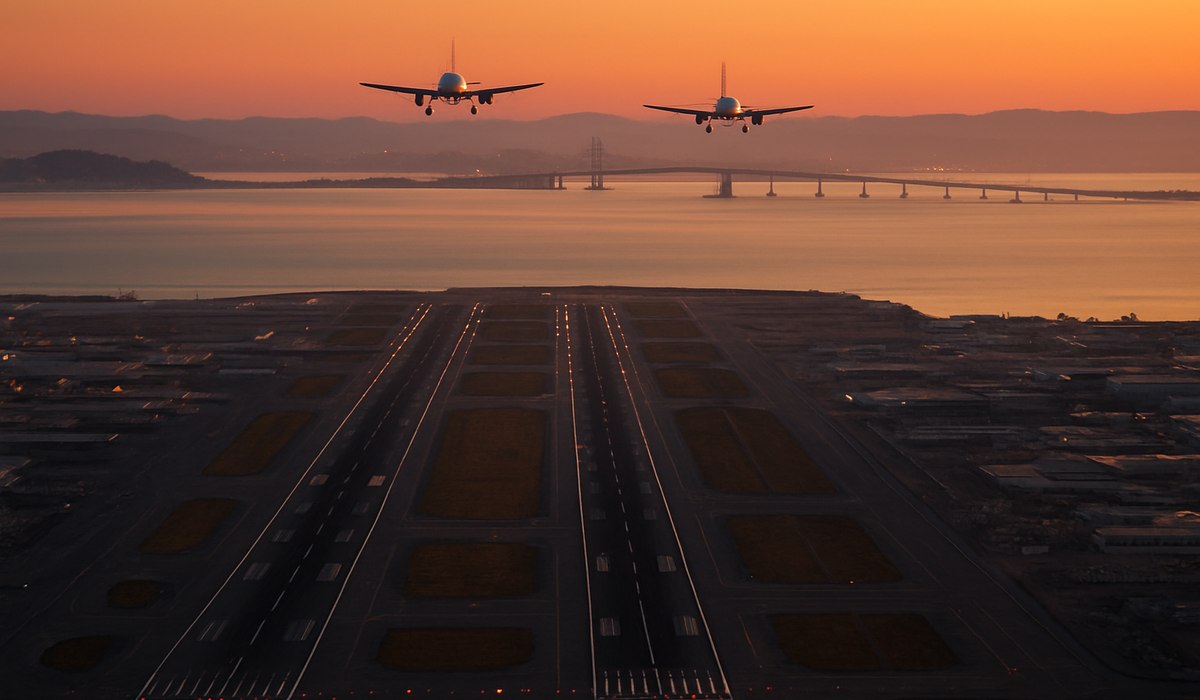
Image generated by AI
The FAA's Historic Decision on San Francisco's Parallel Landings
The Federal Aviation Administration has officially ended San Francisco International Airport's iconic side-by-side parallel landings, a procedure that once defined the airport's operational efficiency. The agency determined that current congestion levels and modern safety standards no longer support the visual separation procedures that enabled simultaneous approaches to adjacent runways. This marks a significant shift in how SFO manages its busiest traffic periods and affects thousands of daily passengers.
The FAA's decision reflects evolving priorities in aviation safety management. San Francisco International Airport, which processes over 60 million passengers annually, depended on parallel landing capabilities during peak hours to accommodate its position as a major West Coast hub. However, increased air traffic and contemporary safety protocols have made this procedure incompatible with national operational standards.
What Were SFO's Parallel Landings?
San Francisco International Airport's parallel landing system represented a marvel of aviation coordination. The procedure allowed two aircraft to land simultaneously on adjacent runways using visual separation rules, where pilots maintained their own spacing and altitude awareness. This technique required exceptional pilot skill and clear visibility conditions.
The system worked by leveraging the airport's dual runway configuration and strict radio communication protocols. Controllers provided guidance, but pilots bore responsibility for maintaining adequate separation during final approach. The procedure proved instrumental during the 1980s and 1990s when SFO experienced explosive growth. Airlines considered it a competitive advantage, allowing carriers like United, American, and Southwest to increase landing frequency without infrastructure expansion. The visual separation procedures became legendary among aviation professionals, representing the pinnacle of pilot expertise and airport efficiency. However, technological advancement and traffic density eventually rendered the method outdated. Modern instruments and precision approach systems now enable safer, more reliable methods for managing simultaneous arrivals. The FAA determined that maintaining visual procedures contradicted contemporary safety management principles, particularly given SFO's role as a major international gateway. Visit [the FAA's official website](https://www.faa.gov) for detailed regulatory information.
Why Did The FAA Ban The Procedure?
The FAA's decision stems from multiple intersecting factors centered on operational safety and congestion management. Modern airport congestion at SFO parallel landings operations exceeded what visual separation procedures could safely accommodate. The agency found that visual separation rules depended heavily on pilot perception and atmospheric conditions—factors increasingly unreliable during dense traffic periods.
Contemporary safety standards emphasize procedural redundancy and instrument-based verification over pilot visual judgment. The FAA concluded that current traffic volumes at San Francisco International Airport created unacceptable risk margins when relying on visual separation. Additionally, the agency aligned with international aviation standards that discourage visual procedures at high-traffic facilities.
Climate factors also influenced the decision. San Francisco's notorious fog and marine layer frequently reduced visibility below minimums needed for safe visual separation. Controllers had already restricted parallel landing approvals during poor weather, effectively limiting the procedure's utility. The FAA determined that a capability available only under specific conditions contradicted operational efficiency goals.
Congestion management strategies have evolved significantly since parallel landings became standard practice. Modern approach spacing techniques, better traffic flow software, and optimized runway utilization now provide safer alternatives. The FAA found that retiring visual separation procedures actually improved overall airport capacity through more reliable, predictable operations. Learn more about aviation congestion management at FlightAware.
Impact On Airlines And Travelers
The elimination of FAA bans SFO parallel landings procedures creates operational challenges for carriers serving San Francisco International Airport. Airlines including United Airlines, American Airlines, Southwest Airlines, and Delta Air Lines must adjust scheduling strategies and expect reduced peak-hour capacity.
United Airlines, which operates approximately 350 daily departures and arrivals at SFO, faces the most significant impact as the airport's dominant carrier. The carrier previously relied on parallel landing capabilities to accommodate its evening bank operations and busy morning pushes. Southwest Airlines, another high-volume operator at SFO with over 100 daily movements, must restructure its point-to-point network strategy.
American Airlines and Delta Air Lines, while operating fewer SFO flights, still experience schedule complications. The loss of parallel landing availability reduces flexibility during weather events or operational disruptions. Carriers will likely implement several countermeasures: spreading departures across wider time windows, increasing gate utilization, and potentially reducing frequency on lower-demand routes.
For travelers, reduced parallel landing capacity translates to potential delays during peak periods, particularly between 6–9 a.m. and 4–7 p.m. Passengers should expect longer ground holds during peak operations. Airlines may adjust flight schedules to distribute demand more evenly, potentially affecting preferred departure times. Business travelers connecting through SFO will experience tighter connection windows and increased missed-connection risk.
What's Next For SFO Operations?
San Francisco International Airport and the FAA are implementing compensatory measures to maintain operational efficiency post-ban. The airport authority is investing in upgraded ground navigation systems and optimized taxiway routing to reduce ground transit times. These improvements aim to offset capacity losses from eliminated visual separation procedures.
Enhanced runway occupancy management will become increasingly important. Airport operators are deploying real-time runway status monitoring and improved coordination between ground control and approach frequencies. These technological solutions enable faster aircraft turnarounds without compromising safety margins.
The FAA is also working with SFO to implement optimized approach spacing techniques that replace visual separation methods. Controllers will utilize enhanced radar technology and precise altitude/speed assignments to maintain safe separation distances. These procedures offer greater reliability than visual methods, particularly during poor visibility conditions.
Capacity constraints may eventually justify infrastructure investment. Some aviation analysts suggest SFO will eventually require additional runway capacity to accommodate regional growth. A third runway or expanded parallel runway capability with instrument-based procedures could restore lost capacity. However, such projects require substantial investment and environmental review timelines. For current passenger information, check the SFO website or contact your airline directly.
Traveler Action Checklist
-
Check your flight schedule immediately if booked on SFO routes during peak hours (6–9 a.m., 4–7 p.m.) to verify any schedule changes from your airline.
-
Book buffer time between connections through SFO; add minimum 90 minutes for domestic-to-domestic connections and 120 minutes for international-to-domestic transfers.
-
Monitor flight status using FlightAware for real-time delay information; parallel landing elimination may increase delays during peak operations.
-
Contact your airline directly if traveling within 30 days to understand specific operational impacts on your flight and preferred alternatives.
-
Review airline compensation policies on the US DOT website for delay recovery procedures and passenger rights.
-
Consider arriving at SFO earlier than usual, as ground operations may slow without parallel landing efficiency during peak periods.
Key Data Table
| Metric | Details |
|---|---|
| Airport Affected | San Francisco International Airport (SFO) |
| Annual Passengers (Pre-Ban) | 60+ million |
| Primary Impacted Carriers | United, Southwest, American, Delta |
| Peak Impact Hours | 6–9 a.m., 4–7 p.m. PST |
| Visual Separation Dependency | Weather-dependent; restricted in fog/low visibility |
| FAA Decision Date | April 2, 2026 |
| Implementation | Immediate |
| Compensatory Technology | Enhanced radar, optimized spacing procedures |
| Expected Delays | 10–20 minutes during peak periods |
| Long-term Solution | Infrastructure investment/third runway consideration |
What This Means for Travelers
The FAA's
Disclaimer
This article is for informational and educational purposes only. It does not constitute legal, financial, or professional advice. While we strive to provide accurate and up-to-date information, travel policies, regulations, and conditions change rapidly. Always verify information with official sources before making travel decisions. Nomad Lawyer makes no representations about the accuracy, reliability, completeness, or suitability of the information provided. Readers should consult qualified professionals for advice specific to their circumstances. The views expressed in this article are those of the author and do not necessarily reflect the views of Nomad Lawyer.
Kunal K Choudhary
Co-Founder & Contributor
A passionate traveller and tech enthusiast. Kunal contributes to the vision and growth of Nomad Lawyer, bringing fresh perspectives and driving the community forward.
Learn more about our team →