
Aviation Updates: EVA Air Expands Washington-Taipei Route, Offering North Americans an Escape from Transpacific Travel Chaos
EVA Air deploys the Boeing 787-9 Dreamliner on a four-weekly service from Washington Dulles to Taipei, creating a highly efficient transit corridor to Bangkok and Chiang Mai.

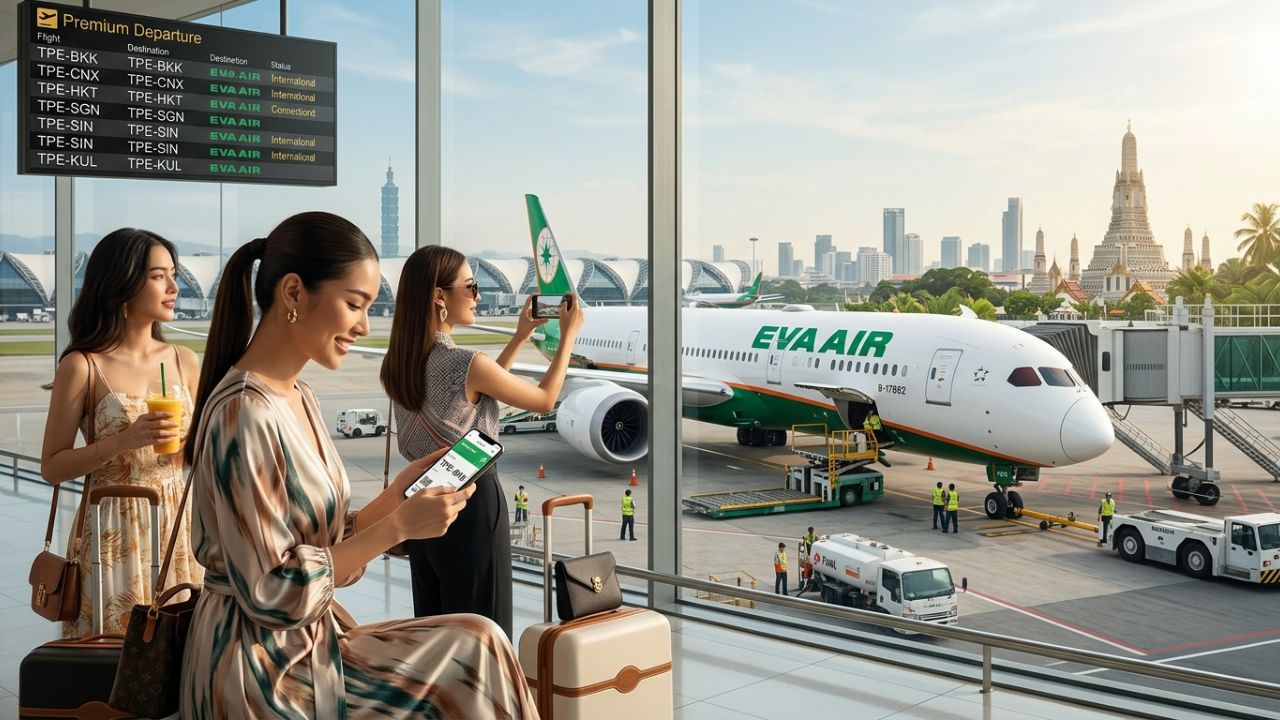
Image generated by AI
Aviation Updates: EVA Air Expands Washington-Taipei Route, Offering North Americans an Escape from Transpacific Travel Chaos
By heavily fortifying its Taipei transit hub, EVA Air is actively insulating US travelers from the severe operational friction associated with highly fragmented Asian itineraries.
Image generated by AI
As post-pandemic transpacific travel demand continues to surge, legacy carriers are fiercely competing to establish the most efficient routing options across the globe. According to the absolute latest airline news and verified aviation updates, EVA Air has aggressively strengthened its North American network by heavily upgrading connectivity between the United States and Thailand. The carrier officially expanded its highly strategic Washington Dulles–Taipei route, specifically engineering the service to provide North American passengers with a highly resilient transit corridor. By funneling traffic through Taiwan’s highly efficient Taoyuan International Airport, EVA Air allows passengers to completely bypass the massive airport disruptions and rolling flight cancellations that frequently plague heavily congested, multi-stop Asian itineraries. This critical network expansion grants travelers seamless, high-frequency access into Bangkok, Chiang Mai, and other major Thai destinations, effectively eliminating the travel chaos traditionally associated with ultra-long-haul journeys to Southeast Asia.
Expanded Overview: The Hub-and-Spoke Efficiency Model
When analyzing global aviation infrastructure strategies, the strategic deployment of a hyper-efficient transit hub is the ultimate defense against operational meltdowns.
Taiwan’s Taipei Taoyuan International Airport acts as the absolute epicenter of EVA Air’s global network strategy. Rather than forcing passengers into highly complex, multi-carrier itineraries that frequently result in missed connections and severe travel delays, EVA Air utilizes Taipei as an impenetrable fortress hub. This specific hub-and-spoke model is universally recognized across the aviation industry as the absolute best method to optimize connectivity between massive long-haul markets (like North America) and high-density regional destinations (like Thailand). By strictly coordinating flight scheduling and maintaining high-frequency regional services out of Taipei, EVA Air dramatically reduces total journey fragmentation and actively insulates its passengers from localized Southeast Asian airspace congestion.
Section-Wise Breakdown: The Washington Dulles to Taipei Corridor
The absolute foundation of this enhanced connectivity relies entirely on the strength of the transpacific crossing.
To execute this strategy, EVA Air formally introduced a dedicated four-weekly service directly linking Washington Dulles International Airport and Taipei. This specific route instantly strengthens one of Asia’s most important and highly lucrative transit corridors. For travelers originating in the Washington D.C. metropolitan region, this direct link across the Pacific completely removes the necessity of transferring through heavily delayed domestic hubs like Los Angeles or San Francisco. By maintaining a strict four-weekly frequency, EVA Air ensures that inbound passenger flow remains highly consistent, allowing the airline to properly absorb capacity without overloading the Taoyuan terminal infrastructure.
Section-Wise Breakdown: Unlocking the Thailand Gateways
Upon landing in Taipei, North American travelers instantly gain access to EVA Air’s massive Southeast Asia network, featuring multiple daily, high-speed connections directly into Thailand.
Because direct, non-stop flights between the US and Thailand remain incredibly limited, this transit connectivity is absolutely vital. The primary funnel pushes passengers directly into Bangkok, specifically through Suvarnabhumi Airport—Thailand's massive regional aviation hub actively managed by Airports of Thailand Public Company Limited (AOT). However, the connectivity explicitly expands beyond the capital. Through Taipei, EVA Air provides critical secondary access to Chiang Mai, which continues to experience explosive growth driven by the cultural and wellness tourism markets. Furthermore, this streamlined routing significantly improves access to highly demanded southern beach destinations, including Phuket and Krabi.
Flight Details: North America-Thailand Connectivity Matrix
The exact operational telemetry outlining this strategic route expansion has been consolidated into the mandatory matrix below, detailing the specific aircraft and frequency metrics.
EVA Air North America-Thailand Connectivity Matrix
| Operational Metric | Route & Equipment Data |
|---|---|
| Airline Carrier | EVA Air |
| Primary Route | Washington Dulles – Taipei (Taoyuan) |
| Flight Frequency | Four (4) times per week |
| Aircraft Type | Boeing 787-9 Dreamliner |
| Primary Hub | Taipei Taoyuan International Airport |
| Key Onward Destinations | Bangkok, Chiang Mai, Phuket, Krabi |
| Primary Thai Gateway | Suvarnabhumi Airport (managed by AOT) |
Passenger Impact: Bypassing Fragmentation and Delays
For the North American consumer, the immediate impact of this route expansion is a massive reduction in travel complexity and transit-related anxiety.
Ultra-long-haul travel to Thailand historically required multiple agonizing stopovers, frequently leaving passengers highly exposed to rolling delays and severe missed connections across different airline alliances. By utilizing the EVA Air network, passengers experience a tightly controlled, single-carrier itinerary. This actively ensures smoother baggage transfers, highly coordinated boarding protocols in Taipei, and vastly shorter total travel times. For high-value, long-stay international visitors, this reliability completely transforms the journey from an endurance test into a highly efficient, predictable transit experience.
Industry Analysis: Boeing 787-9 Deployment Strategy
Aviation analysts monitoring transpacific capacity note that EVA Air’s exclusive deployment of the Boeing 787-9 Dreamliner on the Washington Dulles route is a highly calculated tactical maneuver.
The Boeing 787-9 is globally renowned for its advanced fuel efficiency, heavily reduced cabin noise, and highly advanced cabin pressurization systems. On ultra-long-haul routes exceeding 14 hours, passenger comfort directly dictates airline competitiveness. By deploying the Dreamliner, EVA Air actively mitigates passenger fatigue while simultaneously lowering its environmental impact compared to older generation wide-body aircraft. This aligns perfectly with global aviation sustainability targets while ensuring the airline maintains a superior hard product in a fiercely competitive transpacific market.
Conclusion: Driving Thailand’s Tourism Engine
Ultimately, EVA Air’s decision to expand its four-weekly Washington Dulles to Taipei route using the advanced Boeing 787-9 Dreamliner serves as a massive catalyst for Thailand’s inbound tourism sector. By offering North American travelers a highly reliable, frictionless transit corridor through Taipei Taoyuan International Airport, the airline actively shields passengers from the travel chaos and flight cancellations associated with fragmented itineraries. As Thailand’s tourism authorities (including AOT at Suvarnabhumi Airport) aggressively prioritize high-value, long-haul arrivals, EVA Air’s expanded connectivity provides the exact infrastructure required to push passengers deep into the country. Whether destined for the bustling streets of Bangkok, the wellness retreats of Chiang Mai, or the beaches of Phuket and Krabi, this route secures Thailand’s position as a premier, highly accessible global destination.
Key Takeaways
- Route Expansion: EVA Air strengthened its North American network by introducing a four-weekly service between Washington Dulles and Taipei.
- Aircraft Deployed: The ultra-long-haul transpacific route is exclusively operated using the highly advanced Boeing 787-9 Dreamliner.
- Transit Hub: Taipei Taoyuan International Airport serves as the strategic hub, allowing passengers to bypass congested, multi-stop itineraries.
- Thailand Access: The Taipei hub provides multiple daily, high-speed connections directly into Bangkok (Suvarnabhumi Airport), Chiang Mai, Phuket, and Krabi.
- Tourism Impact: The highly efficient routing supports Thailand’s official strategy to attract high-value, long-stay visitors from the United States.
FAQ: EVA Air Washington Dulles to Taipei Route 2026
What aircraft does EVA Air use on the Washington Dulles to Taipei route? EVA Air exclusively operates the highly advanced Boeing 787-9 Dreamliner on this transpacific route, featuring advanced cabin pressurization to reduce passenger fatigue.
How often does the EVA Air flight from Washington Dulles to Taipei operate? The airline has established a highly consistent four-weekly service directly connecting Washington Dulles International Airport and Taipei Taoyuan.
What onward destinations in Thailand does this route connect to? Passengers transiting through EVA Air's Taipei hub gain immediate access to multiple daily flights into major Thai destinations including Bangkok, Chiang Mai, Phuket, and Krabi.
Related Travel Guides
Iberia Toronto Madrid A321XLR Direct Route Expansion 2026
Flair Airlines Montreal Punta Cana Winter Route Expansion 2026
Transpacific Flight Delay Passenger Survival Guide 2026
Disclaimer: This article is strictly for informational purposes. Route frequencies (four-weekly service), hub operations (Taipei Taoyuan), destination connectivity (Bangkok, Chiang Mai, Phuket, Krabi), and aircraft assignments (Boeing 787-9 Dreamliner) are based on official EVA Air network data and Thai tourism strategies at the time of publication. Airline schedules, aircraft deployment, and regional transit connectivity are highly dynamic and subject to continuous modification based on operational capacity. Passengers must verify exact itineraries and layover times directly with the carrier prior to booking.
Disclaimer
This article is for informational and educational purposes only. It does not constitute legal, financial, or professional advice. While we strive to provide accurate and up-to-date information, travel policies, regulations, and conditions change rapidly. Always verify information with official sources before making travel decisions. Nomad Lawyer makes no representations about the accuracy, reliability, completeness, or suitability of the information provided. Readers should consult qualified professionals for advice specific to their circumstances. The views expressed in this article are those of the author and do not necessarily reflect the views of Nomad Lawyer.
Raushan Kumar
Founder & Lead Developer
Full-stack developer with 11+ years of experience and a passionate traveller. Raushan built Nomad Lawyer from the ground up with a vision to create the best travel and law experience on the web.
Learn more about our team →