
Europe’s Tourism Supercycle: Germany and Major Economies Drive Explosive GDP Growth for 2026
A strategic shift toward high-value travel, digital transformation, and sustainable destination management is propelling

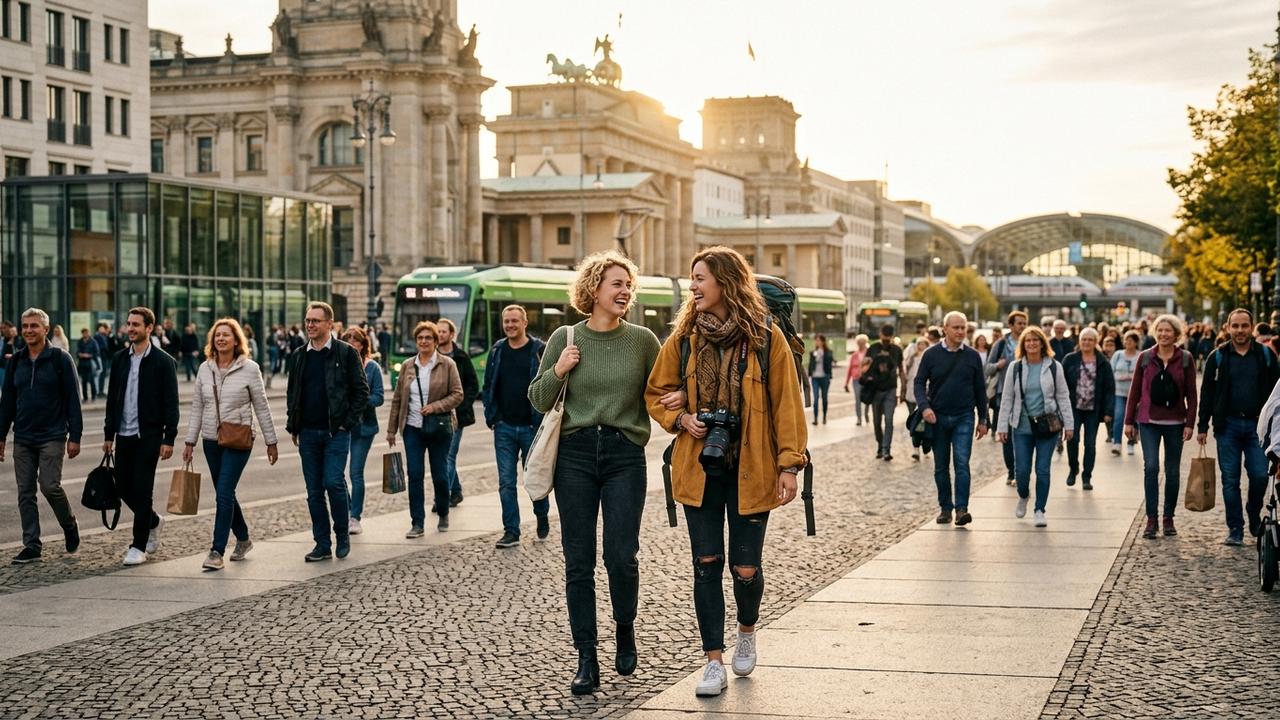
Image generated by AI
Europe Enters a Structural Tourism Supercycle
The European travel landscape in 2026 has evolved beyond a simple post-pandemic recovery, entering what analysts describe as a "structural supercycle." This era is defined by a transition from volume-based tourism to a value-driven economy. Major powers—including Germany, France, Spain, Italy, Portugal, and the United Kingdom—are leveraging cultural reinvention and premiumization to attract high-spending global travelers.
While general economic growth across the continent is estimated at approximately 1%, travel and tourism are expanding at a rate of 3.5% to 4%. In most large European economies, tourism now contributes between 8% and 16% of national GDP, with some Southern European nations exceeding 20% when indirect economic effects are factored in.
National Strategies and Economic Impacts
Germany: The Hybrid Tourism Model
Germany has successfully transitioned from a heritage-centric destination to a diversified "hybrid" economy. By balancing urban cultural hubs with nature-based tourism, Germany now sees tourism contributing between 8% and 11% of its GDP.
The nation's strategy relies on a dual-track appeal: a massive cultural infrastructure featuring over 6,000 museums and 80 opera houses, paired with a commitment to ecology, with 36% of its territory under environmental protection. Key growth areas include Berlin, Munich, Frankfurt, and the Bavarian Alps, with a strategic focus on decentralizing visitor traffic away from major cities.
France: Global Volume Leadership
France remains the world's most visited country, consistently surpassing 100 million international arrivals annually. With international receipts estimated between $70 billion and $75 billion, France contributes roughly 8% to 9% of its GDP directly through tourism. The current strategy emphasizes "value enhancement," pushing visitors toward rural eco-regions and cultural micro-destinations to reduce pressure on Paris.
Spain: The GDP Powerhouse
Spain is currently Europe’s most tourism-dependent major economy, with the sector accounting for 14% to 15.5% of its GDP. Annual receipts are estimated between €95 billion and €100 billion. To ensure long-term resilience, Spain is shifting its focus from mass coastal tourism toward "spending intensity," prioritizing sustainability and the dispersion of visitors across the mainland.
Italy: Premium Heritage and Luxury
Italy is consolidating its position as the engine for luxury and experiential travel. Contributing 10% to 13% of its GDP, Italy sees 55 million to 60 million international visitors annually. While Rome and Venice remain anchors, the growth is now driven by agritourism and vineyard circuits, with a projected sector growth of 3.8% for 2026.
Portugal and the UK: Niche Growth and Cultural Hubs
Portugal has emerged as a "lifestyle destination economy," with tourism contributing 15% or more of its GDP. The rise of digital nomads and long-stay visitors in Lisbon and the Algarve has significantly increased the economic yield per visitor.
Meanwhile, the United Kingdom maintains a steady 8% to 10% GDP contribution. Despite challenges regarding travel costs and currency fluctuations, London remains a global magnet for high-value urban tourism and major events.
Regional Specializations and Emerging Markets
The European tourism map is now a "multi-speed system" where different regions play distinct economic roles:
- High-Dependency Zones: Greece and Croatia both see tourism contributing 20% or more to their respective GDPs, though they remain heavily seasonal.
- Rapid Expanders: Türkiye is outperforming most peers with growth estimated at 15% to 18% above pre-pandemic levels, driven by Istanbul's role as a global transit hub.
- Ultra-Premium Models: Switzerland continues to prioritize high-spending, low-volume visitors, focusing on luxury hospitality and winter sports.
European Tourism Economic Data 2026
| Country | GDP Contribution (Approx.) | Key Economic Driver | Estimated Annual Receipts/Arrivals |
|---|---|---|---|
| Germany | 8% – 11% | Cultural & Nature Hybrid | €38B – €45B Receipts |
| France | 8% – 9% | Global Volume/Culture | 100M+ Arrivals / $70B–$75B Receipts |
| Spain | 14% – 15.5% | Coastal & Urban Mass Market | €95B – €100B Receipts |
| Italy | 10% – 13% | Luxury & Heritage | €50B – €60B Receipts |
| Portugal | 15%+ | Lifestyle & Long-stay | High Growth in Digital Nomadism |
| UK | 8% – 10% | Urban Cultural Hubs | High-value event-driven travel |
| Greece | 20%+ | Seasonal Island Tourism | 30M – 35M Visitors |
| Croatia | 20%+ | Adriatic Coastal/Cruise | High efficiency ratio |
| Türkiye | High Growth | Transit & Mass Tourism | 50M – 60M Visitors |
Key Takeaways
- Value over Volume: Europe is prioritizing "high-yield" travelers (luxury and long-stay) over sheer arrival numbers.
- Economic Engine: Tourism is growing at 3.5%–4%, vastly outpacing the general European GDP growth of ~1%.
- Diversification: Countries like Germany and France are aggressively decentralizing tourism to protect urban centers and boost rural economies.
- Digital Integration: The 2026 boom is supported by a digital transformation in booking and experience platforms.
FAQ
Which European country has the highest tourism dependency in 2026? Greece and Croatia are among the most dependent, with tourism contributing 20% or more to their national GDP.
How is Germany changing its tourism approach? Germany is moving toward a "hybrid" model that blends its dense cultural infrastructure (museums and opera houses) with sustainable, nature-based tourism in rural and alpine regions.
What is driving the "Tourism Supercycle" in Europe? The supercycle is driven by a combination of luxury travel demand, the rise of digital nomads, sustainable destination strategies, and a global shift toward experiential travel.
Related Travel Guides
Disclaimer
This article is for informational and educational purposes only. It does not constitute legal, financial, or professional advice. While we strive to provide accurate and up-to-date information, travel policies, regulations, and conditions change rapidly. Always verify information with official sources before making travel decisions. Nomad Lawyer makes no representations about the accuracy, reliability, completeness, or suitability of the information provided. Readers should consult qualified professionals for advice specific to their circumstances. The views expressed in this article are those of the author and do not necessarily reflect the views of Nomad Lawyer.
Raushan Kumar
Founder & Lead Developer
Full-stack developer with 11+ years of experience and a passionate traveller. Raushan built Nomad Lawyer from the ground up with a vision to create the best travel and law experience on the web.
Learn more about our team →