
European Aviation Crisis 2026: 2,911 Flight Delays and 83 Cancellations Paralyze Major Hubs
A massive wave of disruption across Europe's airspace resulted in 2,911 delayed flights and 83 cancellations in one day, exposing structural vulnerabilities in peak-season aviation capacity.

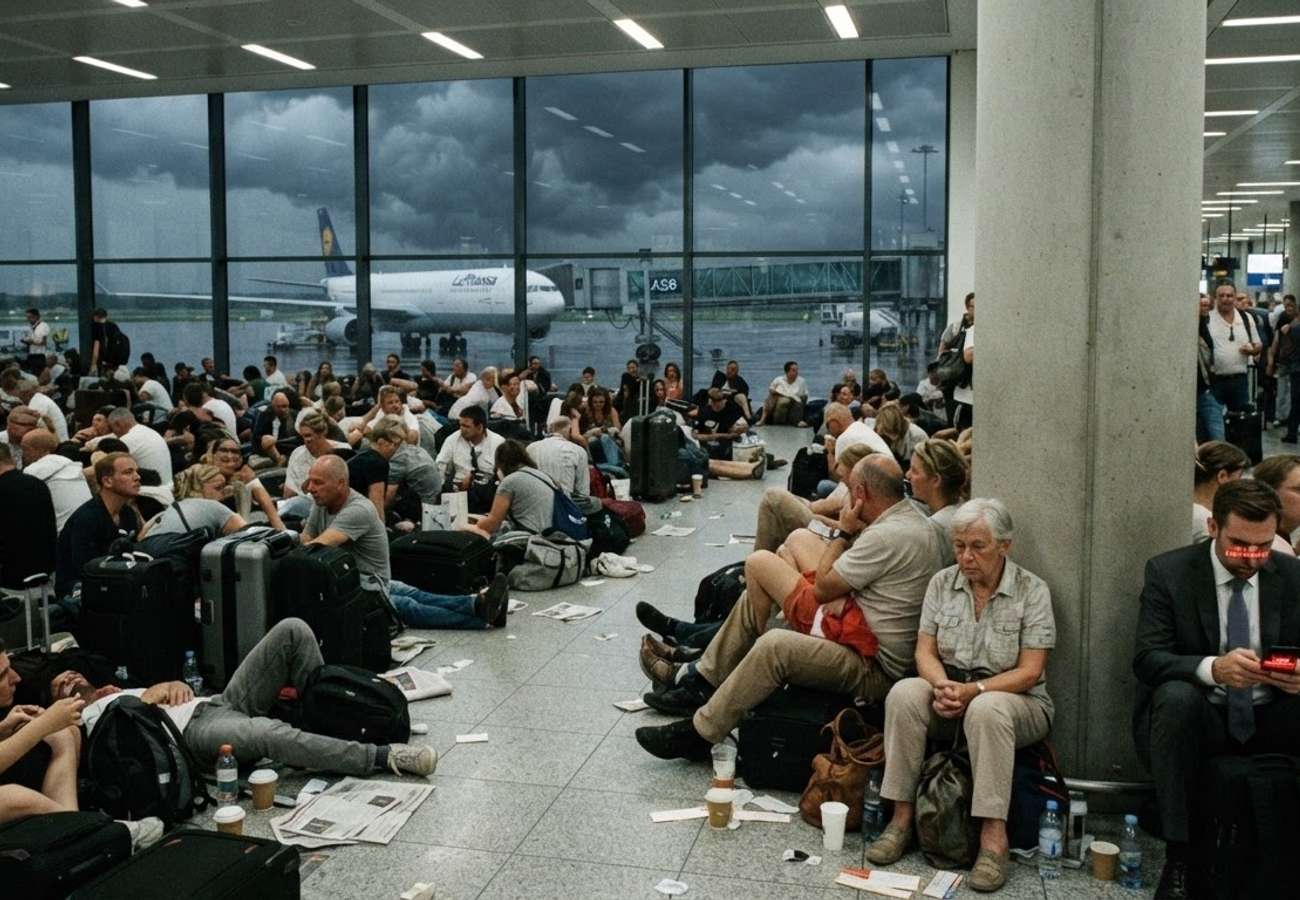
Image generated by AI
Europe's aviation network has reached a breaking point this summer, with 2,911 delayed flights and 83 cancellations recorded in a single operational day. The disruption has created severe bottlenecks at the continent's primary gateways, leaving thousands of passengers stranded.
The scale of the interference is concentrated within Europe's most critical hubs. Live flight-tracking data confirms that London, Paris, Amsterdam, Frankfurt, Madrid, and Barcelona bore the brunt of the congestion. London and 15 other major gateways collectively accounted for the 2,911 delays and 83 cancellations, triggering a domino effect of missed connections and overwhelmed security checkpoints.
Our analysis of the network indicates that the system is operating with virtually zero margin for error. EUROCONTROL data reveals that average departure delays have consistently exceeded 16 minutes per flight in recent monthly briefings. When a sudden spike occurs, as seen in this latest event, the tightly timed connection windows at transfer hubs collapse, multiplying the impact of a single late inbound aircraft across hundreds of onward passengers.
Operational Breakdown: The Primary Drivers
The current gridlock is not the result of a single failure but a compounding set of systemic pressures:
- Atmospheric Instability: Seasonal thunderstorms across western and southern Europe forced immediate air traffic restrictions, slowing arrival and departure rates.
- Airspace Saturation: EUROCONTROL reports continued pressure in Spanish and Greek airspace, where leisure traffic growth has outpaced capacity.
- Staffing and Management: Limitations in air traffic management staffing have led to ground holds and airborne holding patterns, even when airport runways are clear.
- Rotational Failures: For low-cost carriers with tight turnaround times, initial weather delays created "reactionary delays," leaving crews and aircraft out of position for subsequent flights.
Impact on Passenger Logistics
For the traveler, these statistics manifest as multi-hour waits in departure halls and aircraft held at gates awaiting departure slots. The disruption has led to a surge in overnight stays as flights were pushed beyond crew duty limits.
Logistically, this has created a secondary crisis in airport hospitality. When multiple flights from a single destination are delayed, nearby hotels reach capacity instantly, forcing airlines to outsource accommodation to outlying districts. Passenger advocacy data suggests some travelers on high-traffic leisure routes are being rebooked on services two days after their original departure date.
Network Performance Metrics
The following data highlights the systemic nature of the current instability:
| Metric | Value | Scope |
|---|---|---|
| Total Delayed Flights | 2,911 | Single Operational Day (16 Major Hubs) |
| Total Cancellations | 83 | Single Operational Day (16 Major Hubs) |
| Avg. Departure Delay | >16 Minutes | Recent Monthly Average (EUROCONTROL) |
| Primary Hubs Affected | 6+ | London, Paris, Amsterdam, Frankfurt, Madrid, Barcelona |
Why This Matters: The Industry Implication
From a logistical perspective, this event proves that Europe's aviation infrastructure is operating at a "critical saturation point." The fact that 2,911 delays can occur in a single day suggests that the network can no longer absorb routine shocks.
For the frequent traveler or digital nomad, the real impact is the death of the "short layover." Relying on a 90-minute connection in Frankfurt or Paris is now a high-risk strategy. We are seeing a market shift where passengers are intentionally building 4-6 hour buffers into their itineraries to avoid the cascading failure of same-day connections. Furthermore, the reliance on low-cost carrier (LCC) models—which prioritize rapid aircraft rotation—makes the entire ecosystem more fragile; one storm in Spain can effectively ground a fleet in Germany by the following afternoon.
Forward Outlook
Market trends suggest that these "chaos days" will remain a recurring feature of the summer calendar until airspace capacity is expanded or demand is managed. Hubs are attempting to mitigate this by prioritizing "first-wave" departures in the early morning to reset the clock, but this is a temporary fix.
Travelers should be aware of their protections under EU Regulation EC 261. In the event of such systemic failures, passengers are entitled to care, meals, and rerouting. However, as capacity shrinks, the ability of airlines to provide these services in real-time is diminishing, making independent travel insurance and flexible booking essential.
The European sky is full, and the margin for error has vanished.
Related Travel Guides
Disclaimer
This article is for informational and educational purposes only. It does not constitute legal, financial, or professional advice. While we strive to provide accurate and up-to-date information, travel policies, regulations, and conditions change rapidly. Always verify information with official sources before making travel decisions. Nomad Lawyer makes no representations about the accuracy, reliability, completeness, or suitability of the information provided. Readers should consult qualified professionals for advice specific to their circumstances. The views expressed in this article are those of the author and do not necessarily reflect the views of Nomad Lawyer.
Preeti Gunjan
Contributor & Community Manager
A passionate traveller and community builder. Preeti helps grow the Nomad Lawyer community, fostering engagement and bringing the reader experience to life.
Learn more about our team →