
Europe Birdwatching Tourism Surge 2027: Falsterbo Leads Top 15 European Sanctuaries in Ecotourism Shift
Sweden's Falsterbo Peninsula leads Europe's top 15 birdwatching sites with a 50.7 score, as managed reserves across England and Scotland drive nature tourism into 2027.

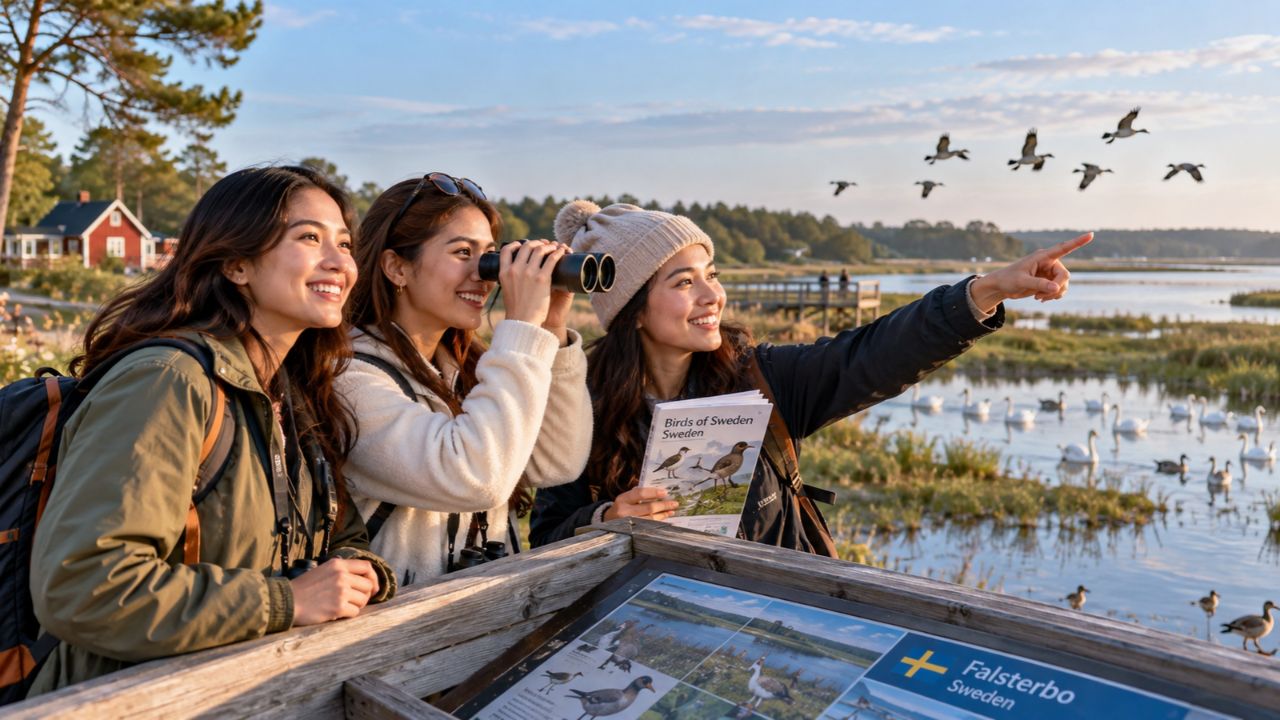
Capturing a continent-leading index score of 50.7 out of 100 on the strength of 284 recorded avian species across its Skåne migration bottleneck, Sweden’s Falsterbo Peninsula heads an elite group of 15 European wildlife reserves reshaping regional travel economies ahead of 2027. According to the 2026 AllClear international destination audit, which evaluated more than 100 global birdwatching habitats across species density, rare sightings, weather stability, international airport proximity, and average ground expenses, Europe has emerged as a premier destination for slow, conservation-oriented travel. Across eight nations—with England and Scotland assessed independently—managed coastal marshes, tidal flats, inland reservoirs, and Mediterranean deltas are generating high-yield visitor traffic that extends well outside traditional peak summer vacation months.
The geographic distribution of the top-tier rankings illustrates the economic and ecological balance required for successful wildlife tourism. While Visit Sweden promotes the southwestern Baltic coast as an autumn raptor observation corridor, the United Kingdom captures seven of the top 15 European positions, driven by managed sanctuaries overseen by the Royal Society for the Protection of Birds (RSPB) and the Wildfowl & Wetlands Trust (WWT). These sites demonstrate that preserving sensitive coastal wetlands can provide sustainable, low-impact economic benefits for rural hospitality, regional rail links, and specialized guide services.
Ornithological Infrastructure: Why Managed Sanctuaries Anchor Shoulder-Season Tourism
Unlike conventional mass tourism that strains municipal resources during July and August, ornithological travel peaks during seasonal migration windows in spring and autumn, as well as during winter waterfowl gatherings. This seasonal rhythm provides regional tourism boards with a practical solution to shoulder-season travel slumps.
The 2026 AllClear audit highlights how managed infrastructure transforms wild habitats into accessible, educational destinations:
- Sweden's Southwestern Bottleneck: Falsterbo Peninsula in Skåne serves as the primary departure point for millions of migratory birds navigating the Baltic Sea toward continental Europe and Africa. Autumn raptor migrations—including buzzards, kites, and falcons—attract international researchers, photographers, and independent nature travelers who patronize boutique coastal guesthouses after summer beach crowds subside.
- The British Managed Reserve Network: England accounts for one-third of Europe's top 15 sites. From Titchwell Marsh in Norfolk (ranking second with a 50.2 score) to Minsmere in Suffolk (ranking fifth at 46.4), these reserves combine wheelchair-accessible viewing hides, boardwalk trails, and visitor education centers with active water-level management, ensuring high species counts alongside controlled human impact.
- Remote Island Havens: Scotland's Fair Isle (ranking third at 49.7) and Loch Gruinart on Islay (ranking 15th at 36.4) show how remote island outposts leverage distinct geographic positions. Fair Isle functions as a vital North Sea pelagic sanctuary for breeding seabirds and rare autumn passage migrants, while Loch Gruinart provides winter feeding grounds for international populations of Greenland barnacle geese and Greenland white-fronted geese.
European Ornithological Index: Top 15 Destinations Ranked by Accessibility, Species Diversity, and Value (2026–2027)
| European Rank | Destination Name | Sovereign Territory | Index Score (/100) | Primary Ecological Habitat | Flagship Avian Species & Notable Sightings | Key Visitor Infrastructure & Institutional Steward |
|---|---|---|---|---|---|---|
| 1 | Falsterbo Peninsula | Sweden (Skåne) | 50.7 | Coastal spit, dunes, and Baltic flyway | 284 recorded species; migratory raptors (buzzards, kites, falcons) | Falsterbo Bird Observatory; marked trails and coastal hides |
| 2 | Titchwell Marsh | England (Norfolk) | 50.2 | Coastal saltmarshes, lagoons, reedbeds | Avocets, marsh harriers, bitterns, migrating waders | RSPB managed; accessible raised boardwalks and hides |
| 3 | Fair Isle | Scotland (Shetland) | 49.7 | Oceanic island, sea cliffs, moorland | Puffins, skuas, shearwaters, rare Siberian vagrants | Fair Isle Bird Observatory; ferry and regional air links |
| 4 | Kalloni Saltpans | Greece (Lesvos Island) | 47.7 | Coastal saltpans and tidal mudflats | Over 330 island species; greater flamingos, black storks, avocets | Designated municipal viewing towers; saltwork access tracks |
| 5 | Minsmere | England (Suffolk) | 46.4 | Coastal reedbeds, lowland heath, woods | Bitterns, avocets, bearded tits, nightingales | RSPB flagship site; discovery center and accessible hides |
| 6 | Lake Kerkini National Park | Greece (Central Macedonia) | 45.2 | Freshwater reservoir, riparian forest | Over 300 recorded species; Dalmatian pelicans, pygmy cormorants | National park authority; guided electric boat excursions |
| 7 | Rutland Water | England (Rutland) | 44.7 | Inland reservoir, lagoons, scrub | Breeding ospreys, wintering wildfowl, diving ducks | Leicestershire and Rutland Wildlife Trust; birdwatching center |
| 8 | Slimbridge Wetland Centre | England (Gloucestershire) | 44.3 | Severn Estuary wetlands, managed pools | Bewick’s swans, white-fronted geese, wintering waders | Wildfowl & Wetlands Trust (WWT) global headquarters |
| 9 | Bowling Green Marsh | England (Devon) | 43.3 | Exe Estuary grazing marsh and mudflats | Black-tailed godwits, avocets, teal, migratory waders | RSPB managed viewing hide; adjacent to Topsham rail station |
| 10 | Ria Formosa Natural Park | Portugal (Algarve) | 42.4 | 60-kilometer coastal lagoon barrier system | Purple swamphens, flamingos, spoonbills, terns | Marim Environmental Education Centre; marked nature trails |
| 11 | Camargue | France (Provence) | 41.2 | Rhône Delta saline lagoons and marshes | Greater flamingo nesting colonies, herons, egrets, pratincoles | Camargue Regional Natural Park; Pont de Gau bird park |
| 12 | Ebro Delta | Spain (Catalonia) | 38.2 | Mediterranean delta, rice paddies, lagoons | Audouin’s gulls, flamingos, squacco herons, gloss ibis | Ebro Delta Natural Park; cycling trails and observation hides |
| 13 | Hortobágy National Park | Hungary (Puszta) | 37.6 | Alkaline grasslands, fishponds, wetlands | Up to 40,000 common cranes gathering in October; great bustards | National park visitor center; narrow-gauge heritage railway |
| 14 | Monfragüe National Park | Spain (Extremadura) | 36.5 | Mediterranean dehesa, rocky river gorges | Black vultures, griffon vultures, Spanish imperial eagles | Hosts International Ornithological Tourism Fair (26–28 Feb 2027) |
| 15 | Loch Gruinart | Scotland (Islay) | 36.4 | Coastal sea loch, farmland, peat bog | Greenland barnacle geese, white-fronted geese, corncrakes, harriers | RSPB reserve visitor center; viewing platform and farm trails |
Regional Flyways and Institutional Management: From the North Sea to Mediterranean Deltas
Beyond northern Europe, Mediterranean wetlands serve as vital staging hubs for trans-Saharan migrants. Greece secures two positions in the top six through contrasting habitats. Kalloni Saltpans on the Aegean island of Lesvos (ranking fourth with a 47.7 score) hosts more than 330 recorded species across its coastal flats, serving as an essential spring refueling station for northbound wading birds. In mainland northern Greece, Lake Kerkini National Park (ranking sixth at 45.2) supports Europe's premier wintering and breeding population of rare Dalmatian pelicans, accommodating sustainable electric-boat viewing tours operated by local cooperatives.
In southwestern Europe, Portugal’s Ria Formosa Natural Park in the Algarve (ranking tenth at 42.4) encompasses approximately 60 kilometers of barrier islands, channels, and saltmarshes. Monitored through the Marim Environmental Education Centre, the park shelters resident populations of the purple swamphen while providing birdwatching alternatives just minutes from traditional Algarve beach resorts. Similarly, France’s Camargue in the Rhône Delta (ranking 11th at 41.2) protects expansive nesting colonies of greater flamingos alongside rich heronries.
Spain demonstrates distinct regional specialization across two entries:
- Wetland Dynamics: Catalonia’s Ebro Delta (ranking 12th at 38.2) balances commercial rice cultivation with wildlife management, creating productive foraging zones for Audouin’s gulls and migratory waders.
- Raptor Havens and Industry Events: Extremadura’s Monfragüe National Park (ranking 14th at 36.5) protects steep quartzite cliffs that support Europe’s densest breeding concentrations of black vultures, griffon vultures, and Spanish imperial eagles. Monfragüe also serves as an institutional center for the sector, hosting the prestigious International Ornithological Tourism Fair between 26 and 28 February 2027, uniting gear manufacturers, conservation groups, and travel buyers.
In Central Europe, Hungary’s Hortobágy National Park (ranking 13th at 37.6) showcases the scale of interior migration corridors. Across its grasslands and artificial fishponds, up to 40,000 common cranes gather simultaneously during October sunsets, creating one of Europe's most significant inland wildlife spectacles.
Expert Analysis: The Economics of Specialized Wildlife Tourism, Off-Peak Capacity, and Conservation Mandates
The expansion of birdwatching travel illustrates how specialized ecotourism can diversify regional economies without requiring disruptive infrastructure development.
For regional airline networks and rail operators, birdwatching tourism generates steady non-peak passenger volume. Because prime observation seasons occur during autumn (September–November) and spring (March–May), wildlife travelers fill seat capacity when standard leisure traffic dips. This steady demand helps maintain off-season flight schedules and secondary rail links serving regional gateways such as Exeter (near Bowling Green Marsh), Faro (adjacent to Ria Formosa), and Debrecen (near Hortobágy).
The economic mechanics of this market differ markedly from high-volume beach tourism:
- Extended Stays and Higher Daily Spend: Wildlife watchers invest heavily in optical gear, professional field guides, specialized vehicle rentals, and extended accommodations near remote reserves. Their daily economic contribution directly benefits rural guesthouses, local pubs, and independent guides rather than foreign resort conglomerates.
- Infrastructure Efficiency: Developing birdwatching destinations requires minimal capital investment compared to building conventional resorts. Boardwalks, timber hides, viewing towers, and small visitor centers maintain low construction costs while protecting delicate wetland soils and shoreline grasses from foot traffic erosion.
- Enforceable Conservation Regulations: Success relies on strict visitor management. As demonstrated across RSPB reserves like Titchwell and Minsmere, establishing designated viewing zones prevents human disturbance of ground-nesting birds and sensitive wintering waterfowl. When travelers pay entry fees or join conservation memberships, their expenditures directly fund habitat management, brush clearing, predator fencing, and hydrological restoration.
Key Takeaways
- Falsterbo Secures First Place: Sweden’s Falsterbo Peninsula leads Europe with a score of 50.7/100, driven by 284 recorded species and its status as a primary autumn raptor migration corridor.
- British Reserve Prominence: The UK accounts for seven of the top 15 sites, led by England's Titchwell Marsh (2nd, 50.2) and Scotland's Fair Isle (3rd, 49.7), highlighting the value of managed reserve infrastructure.
- Shoulder-Season Travel Hedge: Avian migration cycles generate steady travel demand during spring and autumn, balancing regional flight capacity and rural hospitality occupancy outside peak summer periods.
- Specialized Tourism Fairs: Monfragüe National Park in Spain (14th, 36.5) will anchor industry development by hosting the International Ornithological Tourism Fair from 26 to 28 February 2027.
- Mass Migration Wonders: Hungary’s Hortobágy National Park (13th, 37.6) hosts gatherings of up to 40,000 migrating common cranes simultaneously at the Great Fishponds in October.
FAQ: European Birdwatching Tourism 2027
What makes Sweden’s Falsterbo Peninsula Europe's top birdwatching site?
Falsterbo scored 50.7/100 in the 2026 AllClear audit due to its 284 recorded bird species, accessible observation hides, and prime location as a concentrated Baltic migration route for birds of prey.
When is the best time of year to take a European birdwatching holiday?
Spring (March–May) offers peak northbound breeding activity across the Mediterranean and UK, while autumn (September–November) provides raptor and crane migrations in Sweden and Hungary. Winter brings waterfowl to English marshes.
How does birdwatching benefit regional European destinations?
Birdwatchers travel during spring, autumn, and winter, providing reliable patronage for rural hotels, guesthouses, and regional transport providers when summer leisure travel drops off.
What is the International Ornithological Tourism Fair?
Held at Monfragüe National Park in Extremadura, Spain, from 26 to 28 February 2027, this premier annual trade fair gathers international tour operators, optics manufacturers, and conservation experts to promote sustainable wildlife travel.
As European travelers look beyond generic vacation corridors ahead of 2027, the quiet discipline of managed wetlands and migration bottlenecks proves that ecological conservation remains regional tourism's most durable economic asset.
Related Travel Guides
Disclaimer
This article is for informational and educational purposes only. It does not constitute legal, financial, or professional advice. While we strive to provide accurate and up-to-date information, travel policies, regulations, and conditions change rapidly. Always verify information with official sources before making travel decisions. Nomad Lawyer makes no representations about the accuracy, reliability, completeness, or suitability of the information provided. Readers should consult qualified professionals for advice specific to their circumstances. The views expressed in this article are those of the author and do not necessarily reflect the views of Nomad Lawyer.
Kunal K Choudhary
Co-Founder & Contributor
A passionate traveller and tech enthusiast. Kunal contributes to the vision and growth of Nomad Lawyer, bringing fresh perspectives and driving the community forward.
Learn more about our team →