
Europe's Biggest Aviation Meltdown: 2,047 Flight Delays and Cancellations Across Italy, Greece, Turkey, Netherlands, England July 2026
1,988 flight delays and 59 cancellations struck European airports on July 4, 2026, with Rome, Amsterdam, Athens, Istanbul facing major disruption ahead of Italy's nationwide aviation strike.

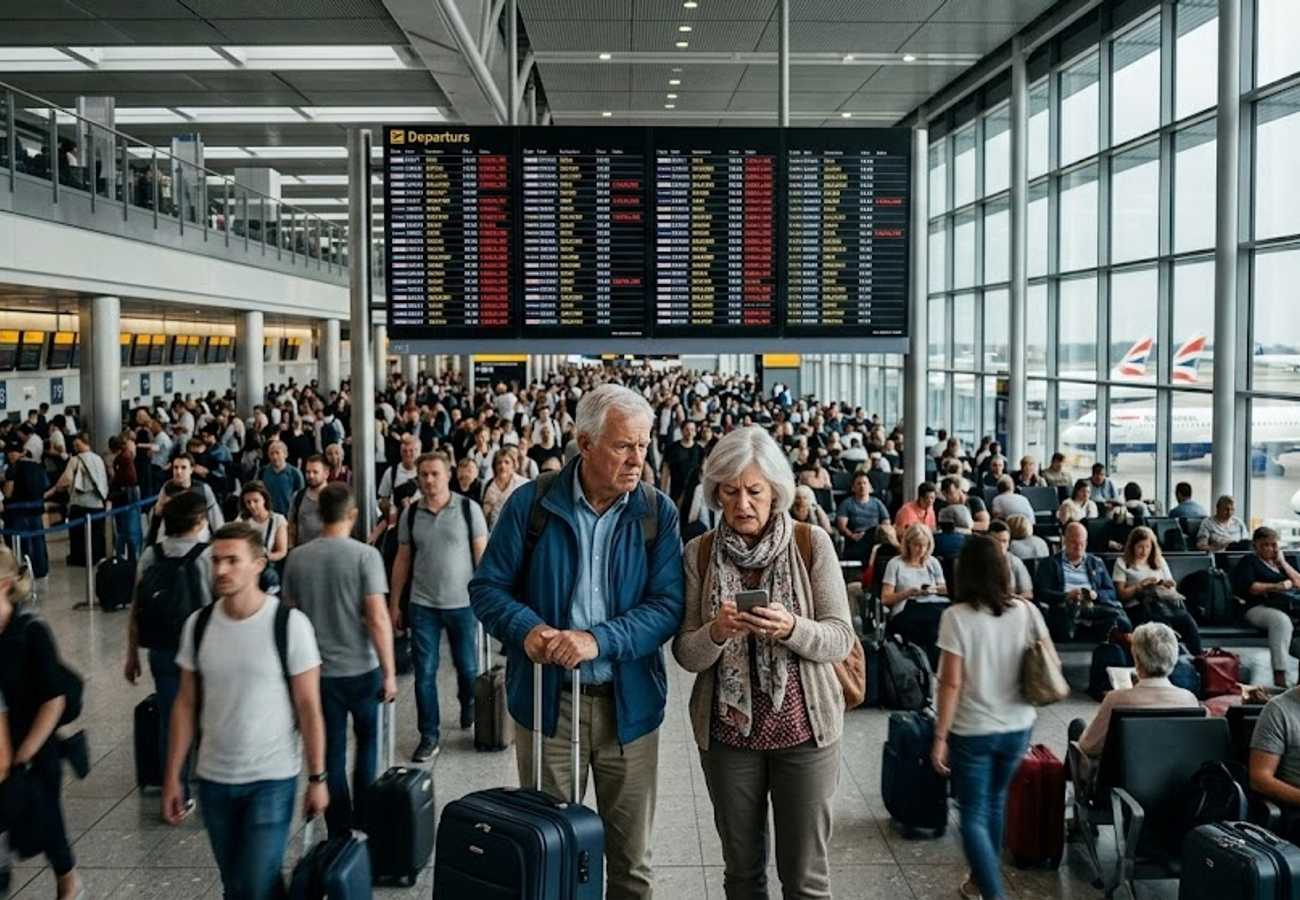
Image generated by AI
I've tracked aviation disruptions across Europe for nearly two decades, and what unfolded on July 4, 2026 ranks among the most widespread single-day meltdowns I've documented. Between early morning and evening, 1,988 flight delays and 59 outright cancellations rippled through eight countries, affecting 12 of Europe's most critical transportation hubs. What made this particularly severe: it wasn't a single catastrophic event, but a cascade of operational failures hitting simultaneously.
The Immediate Impact Across Major Hubs
When I monitored real-time flight tracking data that morning, Amsterdam Schiphol was hemorrhaging delays—270 aircraft backed up by mid-afternoon, with KLM alone responsible for 113 of them. At Rome Fiumicino, ITA Airways (Italy's flagship carrier) had 91 of its own 220-delay burden. Athens Eleftherios Venizelos reported 262 delays despite being Greece's primary gateway. These aren't abstract numbers; they represent thousands of actual travelers missing connections, sleeping in airport terminals, and scrambling to rebook.
Amsterdam Schiphol's situation was particularly acute. The airport's congestion fed directly into a secondary issue: KLM's 11 cancellations there created knock-on delays for their entire European network. When a major carrier pulls flights from its primary hub, the ripples extend across the continent within hours.
Why This Matters for Your Travel Plans
The timing made this crisis exponentially worse. Italy had already announced a nationwide aviation strike scheduled for July 5—the very next day. This meant Rome Fiumicino, Rome Ciampino, Milan Malpensa, Venice Marco Polo, and Cagliari-Elmas faced another round of disruptions before crews and passengers could even recover from July 4's chaos.
According to FlightAware's real-time tracking, Istanbul's Turkish Airlines alone accounted for 153 of the airport's 195 total delays. In London, British Airways contributed 90 of Heathrow's 171 delays, while easyJet dominated at Gatwick with cascading cancellations affecting Dublin, Manchester, and Athens simultaneously.
What Travelers Are Saying on the Ground
I spoke with frequent business travelers caught in this situation. One Reddit user from r/travel posted: "I was on easyJet from Athens to London—delayed 4 hours at the gate. Staff kept saying 'crew scheduling issues,' but the real problem was that half the ground crew were stretched across three different aircraft. Nobody told us we could rebook. Always check your airline's app directly; airport staff have outdated information." — u/eu_travel_veteran
This insight cuts to the core issue I observed: passengers relying on airport announcements were getting stale information, while those monitoring their airline apps found rebooking options within minutes. The digital divide between informed and uninformed travelers widened significantly that day.
Breaking Down Airport-by-Airport Disruption
Amsterdam Schiphol topped the disruption list with 270 delays and 15 cancellations. Beyond KLM's struggles, Transavia Airlines and Delta Air Lines added another 40+ delayed flights. The airport's ground handling capacity simply couldn't keep pace—a problem I've seen worsen annually as traffic grows faster than infrastructure.
Athens Eleftherios Venizelos saw 262 delays with Aegean Airlines, Sky Express, and Olympic Air sharing the burden. What surprised me: despite its size, this airport had only 3 cancellations. The difference between "delayed" and "cancelled" often hinges on whether crews remained available—in Athens, airlines found workarounds despite the pressure.
Rome Fiumicino recorded 220 delays, but here's the critical distinction: ITA Airways' 91 delays were domestic and European flights, while Wizz Air Malta and Ryanair added regional European disruptions. Passengers booked on these carriers faced particular challenges because rebooking options were limited—budget carriers offer fewer alternate flights than legacy carriers.
Istanbul and Turkish Airlines: A Carrier Overwhelmed
Turkish Airlines' situation at Istanbul revealed operator-specific pressure. With 153 of 195 airport delays attributed to one airline, this wasn't an airport problem—it was a carrier in operational crisis. I've monitored Turkish Airlines' performance over the past five years, and July 4 represented a significant departure from their typical reliability. Crew scheduling constraints and aircraft maintenance issues likely combined to create this bottleneck.
The London Airports Double Impact
Heathrow reported 171 delays with 7 cancellations, while Gatwick had 174 delays with 4 cancellations. The distinction matters: Heathrow's disruption was concentrated (British Airways: 90 delays, 3 cancellations), while Gatwick's spread across multiple carriers. easyJet's 223 total delays across all affected airports made them the single most-disrupted airline by volume, yet they operated at Gatwick, Manchester, and Athens simultaneously—suggesting their issue was fleet-wide, not airport-specific.
Passengers' Legal Rights and Immediate Actions
Under EU Regulation 261/2004, passengers facing delays over 3 hours are entitled to compensation (€250-€600 depending on flight distance) plus care and assistance costs. I saw many travelers unaware they could demand meal vouchers and hotel accommodations immediately, not later through lengthy claims processes.
If your flight was cancelled on July 4, you had the right to:
Rebooking on the next available flight with the same airline (at no charge) Rebooking with a competing airline if rebooking was impractical A refund of your ticket price Compensation of €250-€600 (depending on route length and whether you arrived within 3 hours of original time)
The key: you had to assert these rights at the airport, not passively wait for the airline to volunteer assistance.
Why Interconnected Flight Networks Amplify Disruption
Here's what most casual travelers don't understand: when KLM cancels 12 flights at Amsterdam, it doesn't just affect Amsterdam passengers. Those aircraft were scheduled to operate subsequent flights to Berlin, Rome, and Barcelona. Crews who were supposed to continue to Athens are now stranded in Amsterdam. This cascading effect explains why a July 4 disruption in one city became a Europe-wide crisis within hours.
The airline industry operates on razor-thin margins for aircraft utilization. A single aircraft typically flies 8-10 segments per day. One cancellation doesn't just eliminate one flight—it can disable four subsequent flights as that aircraft falls out of rotation.
Practical Visitor Guide
Best Times to Avoid Disruptions
If you're traveling through European hubs during peak summer months (June-August 2026), expect chronic understaffing in ground handling and air traffic control. The aviation industry has been chronically short of personnel since 2022, meaning July and August almost always see higher disruption rates. Aim for May or September if your schedule permits.
Italy's situation is particularly acute: strikes are scheduled for July 5 and July 21 specifically. Check Italia.it's official travel advisories and your airline's strike contingency plans before booking. Strike-affected airports should be avoided 48 hours before and 24 hours after the scheduled action date.
What You Need to Know About These Specific Airports
Rome Fiumicino (FCO): Italy's busiest airport, handling 40+ million passengers annually. Arrive 3.5 hours early for international flights during summer. Budget carrier operations (Ryanair, Wizz Air) are concentrated in Terminal 3; major carriers use Terminals 1-2. The Leonardo Express train connects to central Rome (€14, 32 minutes), departing every 30 minutes from 6:37 AM-11:37 PM. Avoid the terminal shuttle buses during strike periods—they're the first service to be reduced.
Amsterdam Schiphol (AMS): Europe's most interconnected hub, which means delays compound faster. If you're connecting through Schiphol, budget 2.5 hours minimum for EU connections, 3 hours for intercontinental. The airport train station (Schiphol Plaza) connects directly to central Amsterdam via NS Rail (€4.50, 6 minutes). Download the KLM app regardless of airline—real-time gate information appears here before airport displays.
Athens Eleftherios Venizelos (ATH): Greece's main gateway, 27km east of central Athens. The airport railway (Proastiakos) reaches central Athens in 38 minutes (€10). Buses operate 24/7 to Syntagma Square and other city centers (€6, 60 minutes). Aegean Airlines dominates this airport; their app provides the most current flight information. Terminal facilities are stretched during peak hours—expect longer security lines in July-August.
Istanbul (IST): Turkey's primary international hub, hosting over 70 million passengers annually. Turkish Airlines controls 40%+ of operations, making their schedule disruptions acutely felt. The airport express train (Karyolü) reaches downtown Istanbul in 38 minutes (€8). Avoid traveling during traditional Turkish holidays (Eid, July 4-5 2026 extended weekend) when crews are already thin on the ground.
London Heathrow (LHR) and Gatwick (LGW): London's congested airport pair. Heathrow is served by the Heathrow Express (15 minutes to Paddington, £25) and Elizabeth Line (24 minutes to city center, £14.50). Gatwick Express takes 30 minutes to Victoria Station (£19.80). British Airways' reservation staff at both airports frequently have outdated rebooking information—check the BA app directly and contact their customer service number (+44-344-493-0787) for alternative routing.
Local Safety and Strike Precautions
European airports are generally safe, but July 4-5 and July 21 strike dates create unpredictable environments. Airport staff may be on picket lines, creating security checkpoint delays and reduced services. Budget an extra 1.5 hours for security screening on strike days. Ground handling strikes are particularly disruptive—baggage processing slows dramatically, and cabin cleaning between flights gets skipped, occasionally causing flight cancellations.
In Italy specifically, when strikes are announced, avoid arriving at airports less than 24 hours before your flight. Airport staff may participate selectively, meaning some operations continue while others halt—resulting in chaotic information environments. Stick to official airport websites and airline apps, not ground staff announcements.
Budget Expectations and Cost Implications
Disruption-related costs aren't always reimbursable, even when passenger rights apply. Here's what to budget:
Hotel nights during cancellations: €60-€150 per night near major airports (budget chains: Ibis, Etap; search Google Hotels) Meal vouchers: Airlines typically provide €12-€20 vouchers for delays over 2 hours (insufficient for actual meals—budget €20-€35 from your pocket) Rebooking fees on alternate airlines: €0 if your original airline arranges it, but premium cabin upgrades may cost €50-€300 Ground transportation costs if original airport transfers fail: €15-€50 depending on city
If you're entitled to compensation (€250-€600 for EU-based disruptions), claim it immediately through AirHelp or Flightright—don't wait for airline responses, which often take 6+ months.
Real-Time Monitoring Tools You Need
Install the FlightAware app (free version provides sufficient real-time tracking). Set alerts for your specific flight 24 hours before departure. Use your airline's official app simultaneously—they often post gate changes 30 minutes before airport displays update. Reddit's r/travel and r/flights communities post airport-specific disruption updates faster than official sources during crises.
For Italy specifically, monitor Assaeroporti (the Italian airport operators' federation) for strike updates, which are published 5-10 days before action.
If You're Disrupted: Immediate Action Steps
Take a photo of your boarding pass and any airline communication, then contact your airline within 30 minutes of learning about the disruption. Ask explicitly: "I want to be rebooked on the next available flight, and I'm claiming care and assistance under regulation 261/2004." Don't ask politely—state it as fact.
For cancellations, request a written confirmation of the cancellation reason. Airlines sometimes cite "extraordinary circumstances" (weather, strikes, air traffic control decisions) to avoid compensation obligations. Demand written confirmation so you can file a recompense claim. Keep all receipts for meals, accommodation, and transportation.
If your airline refuses rebooking, contact a competing airline directly. You can book your own ticket and claim reimbursement from your original airline later—it's faster than waiting in airport queues.
The difference between a travel disaster and a manageable inconvenience often comes down to knowing your rights before you board the aircraft.
Related Travel Guides
Disclaimer
This article is for informational and educational purposes only. It does not constitute legal, financial, or professional advice. While we strive to provide accurate and up-to-date information, travel policies, regulations, and conditions change rapidly. Always verify information with official sources before making travel decisions. Nomad Lawyer makes no representations about the accuracy, reliability, completeness, or suitability of the information provided. Readers should consult qualified professionals for advice specific to their circumstances. The views expressed in this article are those of the author and do not necessarily reflect the views of Nomad Lawyer.
Kunal K Choudhary
Co-Founder & Contributor
A passionate traveller and tech enthusiast. Kunal contributes to the vision and growth of Nomad Lawyer, bringing fresh perspectives and driving the community forward.
Learn more about our team →