
Europe Facing Historic Flight Cancellations as Ireland, Spain, UK, Germany, and France Suffers from Escalating Jet Fuel Shortages and Skyrocketing Energy Costs Amid Strait of Hormuz Blockades and US-Iran Conflict: How Lufthansa, British Airways, and Ryanair are Navigating Global Energy Crisis and Shipping Disruptions
Europe is facing a severe aviation crisis as jet fuel shortages and skyrocketing energy costs, driven by Strait of Hormuz tensions, force Lufthansa, British Airways, and Ryanair to cut flights.

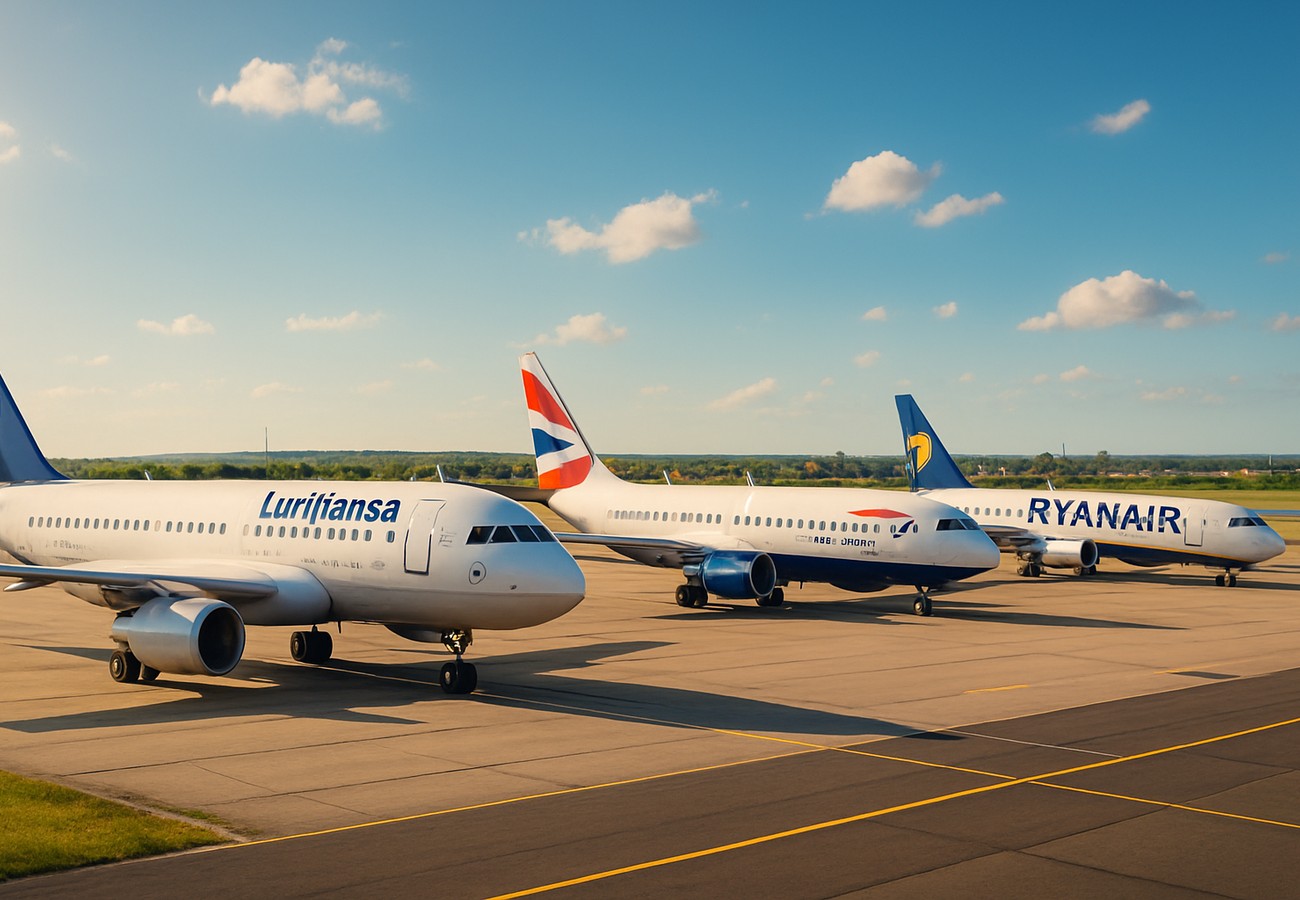
Image generated by AI
Quick Summary
- Continental Crisis: Europe is facing a historic aviation emergency as Ireland, Spain, the UK, Germany, France, Sweden, and the Netherlands suffer from escalating jet fuel shortages and skyrocketing energy costs.
- Geopolitical Trigger: The crisis is a direct consequence of the global energy crisis and shipping disruptions caused by the Strait of Hormuz blockades and the intensifying US-Iran conflict.
- Airline Meltdown: Major carriers including Lufthansa, British Airways, Air France, Iberia, and Ryanair have been forced to slash flight frequencies and cancel routes to preserve fuel reserves.
- Hub Disruption: Key European hubs such as London Heathrow, Frankfurt, and Amsterdam Schiphol are recording record delays as fuel supply chains reach critical risk levels.
- Economic Impact: The heart of European tourism is under threat, with rising airfares and reduced capacity hitting peak travel season bookings in Madrid, Paris, and Dublin.
- Source: European Aviation Safety Agency (EASA) and International Air Transport Association (IATA) Emergency Bulletin, May 8, 2026.
BRUSSELS, BELGIUM — In what is being described as the most significant threat to the heart of European tourism in decades, the continent’s aviation sector has entered a state of "High-Energy Paralysis." According to breaking reports released on May 8, 2026, a perfect storm of jet fuel shortages, skyrocketing oil prices, and geopolitical volatility in the Strait of Hormuz has triggered a wave of historic flight cancellations across the United Kingdom, Ireland, Germany, and the Mediterranean. This development is being analyzed by senior aviation journalists as a direct fallout of the US-Iran conflict, which has disrupted critical fuel supply routes and forced airlines like Lufthansa and Ryanair to surmount the risks of a "Supply Chain Blockade" through aggressive capacity cuts and record-high ticket prices.
Expanded Overview: The Fuel-Driven European Aviation Meltdown
The scale of the European fuel crisis has reached a critical peak as of May 2026. Data from the International Air Transport Association (IATA) reveals that the cost of aviation fuel has spiked to unsustainable levels, driven by the global energy crisis. With critical Middle Eastern shipping routes effectively blockaded, the reliability of fuel delivery to European hubs has collapsed. This has led to widespread travel chaos, as carriers scramble to secure enough reserves to keep even minimal schedules operational. The industry is currently surmounting a "Resourceful Risk," where the cost of every liter of fuel is being weighed against the viability of long-haul tourism corridors.
Ireland: Facing Critical Supply Risk and Ryanair Route Cuts
Ireland, traditionally a "Sovereign Sanctuary" for North Atlantic travel, is now grappling with an energy price surge that has sent fuel costs spiraling. The Irish Aviation Authority (IAA) has confirmed that the country’s fuel supply chain is at "Critical Risk."
- Airlines Affected: Aer Lingus and Ryanair have been forced to adjust schedules, opting for strategic route cancellations to mitigate the impact of record-high import costs.
- Passenger Impact: Travelers in Dublin and Shannon are facing significantly higher airfares and a greater probability of delays as the island nation surmounts its reliance on Middle Eastern fuel imports.
Spain: Tourism Heartlands Hit by Iberia and Vueling Cutbacks
Spain, the world’s leading destination for sun and culture, is facing a "Mediterranean Shutdown." With oil prices inflating the cost of every rotation, the Spanish government has provided emergency subsidies, but these have failed to stop the bleeding.
- Strategic Slashes: Iberia and Vueling have slashed routes to long-haul destinations. Cities like Madrid, Barcelona, and Seville are seeing fewer flights, directly impacting the local economies that depend on peak-season foreign visitors.
- Disruption Alert: Tourists planning to visit the Costa del Sol are encountering travel chaos as fuel supply constraints force last-minute flight cancellations.
The United Kingdom: Heathrow and Gatwick Face "Aviation Emergency"
The UK, the beating heart of European connectivity, is currently the epicenter of the airport disruptions. London Heathrow and Gatwick are facing severe operational bottlenecks due to the UK’s vulnerability to Middle Eastern fuel disruptions.
- Operational Shifts: British Airways and easyJet have adjusted summer schedules, with the Civil Aviation Authority (CAA) warning that the "Fuel Squeeze" could lead to a permanent rise in ticket prices.
- Regional Impact: The tourism industry in London is reeling, with hotel bookings down as international travelers avoid the risk of being stranded at disrupted hubs.
Germany and the Netherlands: Lufthansa and Schiphol Staggered by Shortages
Germany and the Netherlands are witnessing a "Logistical Siege." Lufthansa has admitted to potential record financial losses if the fuel shortages continue.
- Frankfurt and Munich: These hubs are struggling to meet fueling demands, forcing Lufthansa to focus exclusively on fuel-efficient aircraft and shorter regional routes.
- Amsterdam Schiphol: One of Europe’s largest hubs is recording a sharp decline in international arrivals as the Dutch government works to mitigate the impact of the Strait of Hormuz tensions on fuel supply chains.
France and Sweden: Government Aid Fails to Halt the Energy Crisis
In France, the government has stepped in with aid packages for Air France, but the airline has still been forced to scale back long-haul operations to Paris. Similarly, in Sweden, SAS has cut international frequencies as the Swedish government implements emergency fuel measures to surmount the "Resourceful Risk" of the 2026 season.
Flight Disruption Details: Major Hub Impact Table
The following table outlines the scale of the airport disruptions across key European gateways as of May 8, 2026:
| Hub Airport | Primary Airline | Disruption Status | Fuel Level | Impact Level |
|---|---|---|---|---|
| London Heathrow (LHR) | British Airways | Severe | < 15% Reserves | Critical |
| Frankfurt (FRA) | Lufthansa | Moderate-High | < 20% Reserves | High |
| Amsterdam Schiphol (AMS) | KLM | Severe | < 12% Reserves | Critical |
| Dublin (DUB) | Aer Lingus | Moderate | < 25% Reserves | Elevated |
| Madrid Barajas (MAD) | Iberia | Moderate-High | < 18% Reserves | High |
| Stockholm Arlanda (ARN) | SAS | Moderate | < 22% Reserves | Elevated |
| Paris Charles de Gaulle (CDG) | Air France | Moderate-High | < 19% Reserves | High |
Industry / Expert Analysis: The Geopolitical Chokehold on Aviation
Aviation and logistics experts suggest that the "European Meltdown" is a direct result of the "Geopolitical Chokehold" in the Strait of Hormuz. In an era where the global energy crisis makes every movement an investment, the reliance of European nations on Middle Eastern oil has become their greatest operational liability. The US-Iran conflict has not only driven up oil prices but has fundamentally broken the "Just-in-Time" fuel delivery model that modern aviation relies on. By surmounting the logistical fatigue of 2026, airlines are now forced to choose between financial survival and maintaining the "Sovereign Connections" that define the European travel market.
What Happens Next: Toward an Aviation Resilience Strategy
Following the May 8 report, several key developments are anticipated:
- Fuel Hardening: Rapid implementation of strategic fuel reserves at key European hubs to surmount the shipping disruptions.
- Fleet Pivot: Airlines will accelerate the transition to sustainable aviation fuels (SAF) to further surmount the Strait of Hormuz volatility.
- Global Alignment: European governments are expected to seek new energy anchors in Saudi Arabia, the UAE, and Qatar to stabilize the aviation sector during the 2026 peak season.
Conclusion: Reinforcing the European Anchor Amid Global Risk
The escalating fuel crisis across Europe is a testament to the power of "Resourceful Resilience" in a world of shipping disruptions and oil price volatility. By surmounting the challenges of the global energy crisis and the geopolitical shadow of the Strait of Hormuz, the aviation sector is proving that it is the ultimate "Operational Anchor." As the world watches the Middle East, the message from the hubs of Europe is clear: the planes are grounded, the costs are high, and the recovery is strictly protected.
Key Takeaways: European Aviation Fuel Crisis 2026
- Alert: Historic flight cancellations hitting UK, Germany, Spain, and Ireland.
- Fuel Status: Critical jet fuel shortages driven by Strait of Hormuz blockades.
- Airlines: Lufthansa, British Airways, and Ryanair cutting capacity and raising fares.
- Geopolitics: US-Iran conflict and global energy crisis at the heart of the disruption.
- Impact: Peak travel season tourism in Paris, Madrid, and London under severe threat.
- Outlook: Long-term recovery dependent on energy stability and new maritime supply routes.
Related Aviation Reports
Disclaimer
This article is for informational and educational purposes only. It does not constitute legal, financial, or professional advice. While we strive to provide accurate and up-to-date information, travel policies, regulations, and conditions change rapidly. Always verify information with official sources before making travel decisions. Nomad Lawyer makes no representations about the accuracy, reliability, completeness, or suitability of the information provided. Readers should consult qualified professionals for advice specific to their circumstances. The views expressed in this article are those of the author and do not necessarily reflect the views of Nomad Lawyer.
Kunal K Choudhary
Co-Founder & Contributor
A passionate traveller and tech enthusiast. Kunal contributes to the vision and growth of Nomad Lawyer, bringing fresh perspectives and driving the community forward.
Learn more about our team →