
End of an Era for the Superjumbo in Australia: Etihad Airways, China Southern, Korean Air, and Malaysia Airlines Terminate A380 Flights to Sydney and Melbourne
Four major airlines exit the A380 market in Australia, signaling a massive shift towards fuel-efficient A350 and Boeing 787 fleets for long-haul travel to Sydney and Melbourne.

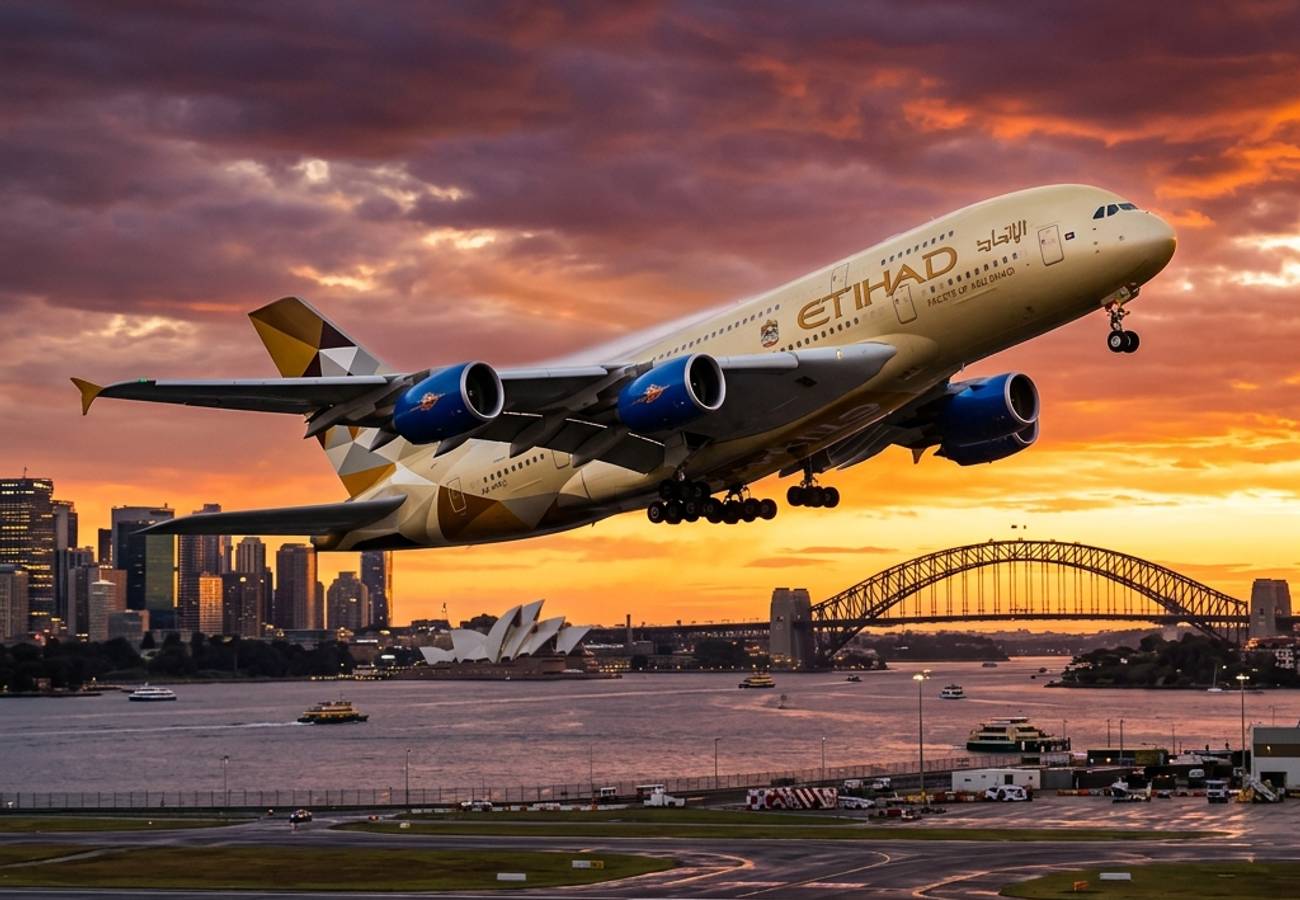
Image generated by AI
End of an Era for the Superjumbo in Australia: Etihad Airways, China Southern, Korean Air, and Malaysia Airlines officially Terminate A380 Flights to Sydney and Melbourne Amid Massive Aviation Updates and Travel Chaos in 2026
Four Global Giants Pivot to Fuel-Efficient Fleets as the Iconic Airbus A380 Departs Australian Skies, Signaling a Seismic Shift in Long-Haul Capacity and Regional Connectivity
A historic chapter in Australian aviation is coming to a close as four of the world’s most prominent carriers—Etihad Airways, China Southern Airlines, Korean Air, and Malaysia Airlines—have officially terminated their Airbus A380 operations to Australia. This collective withdrawal from the "Land Down Under" marks a seismic shift in global aviation strategy, as airlines prioritize fleet modernization and operational agility over raw passenger capacity. The departure of the superjumbo from major hubs like Sydney Kingsford Smith (SYD) and Melbourne Airport (MEL) is already triggering significant aviation updates, as travelers and industry analysts alike brace for a new landscape of long-haul travel.
While the A380 was once the undisputed queen of the skies, its exit is set to cause temporary airport disruptions as schedules are recalibrated to accommodate more efficient, twin-engine aircraft. For the millions of passengers who have experienced the unparalleled silence and luxury of the double-decker jet, the end of these services represents a bittersweet transition in the quest for a more sustainable aviation industry.
Expanded Overview: The Strategic Pivot Away from the Giant
The retirement of the A380 by these four giants is not merely a post-pandemic adjustment; it is a calculated pivot towards the future of sustainable aviation. Carriers are increasingly opting for the Airbus A350 and Boeing 787 Dreamliner, which offer superior fuel efficiency and lower emissions per passenger mile. This shift is essential in an era where environmental concerns and fluctuating fuel prices dominate airline news.
For Australia, a market traditionally reliant on high-capacity long-haul links, the loss of these double-decker jets means a significant recalibration of seat availability. While the move aims to prevent long-term travel chaos by ensuring a more resilient and flexible fleet, the immediate impact on capacity to the Middle East and Asia is profound. As these high-capacity jets are replaced by smaller, more frequent services, the nature of "premium" travel to Australia is being redefined.
Section-Wise Breakdown: The Carriers Bowing Out
Etihad Airways: Closing the Abu Dhabi-Sydney Corridor
Etihad was once one of the most prolific operators of the A380 in Australia, recording over 2,700 departures to Sydney and Melbourne before the gradual withdrawal of the fleet. The airline’s decision to move toward the Boeing 787 and A350 marks a total shift in its Abu Dhabi hub strategy, focusing on high-frequency, "right-sized" connectivity rather than massive capacity dumps.
China Southern: A Shift in the Guangzhou Hub
As China’s largest carrier, China Southern utilized the A380 to dominate the Guangzhou to Sydney (CAN-SYD) route. However, as the airline modernizes its long-haul fleet, the superjumbo has been phased out in favor of the more economical A350-900. This move reflects the broader trend in the Chinese aviation market toward efficiency and a reduction in operational overhead.
Korean Air: Redefining the Seoul-Sydney Link
Korean Air operated its flagship A380s on the Seoul Incheon (ICN) to Sydney route, completing over 700 departures between 2015 and 2020. The airline has now pivoted to the Boeing 787-10 for its Australian operations, citing the need for better fuel performance and the flexibility to match seat capacity with fluctuating seasonal demand.
Malaysia Airlines: Fleet Restructuring and the A380 Exit
Malaysia Airlines’ relationship with the A380 was short-lived but iconic. As part of a massive group-wide restructuring, the airline retired its entire A380 fleet from the Kuala Lumpur to Sydney (KUL-SYD) corridor. This move was a critical step in the carrier’s return to profitability, as it moved toward a more streamlined, twin-engine long-haul fleet.
Flight Details & A380 Retirement Profiles
The following data outlines the historical footprint and the official exit dates for the A380 services provided by these four carriers.
A380 Retirement Profile: Australia 2026
| Airline | Route Origin | Route Destination | Aircraft Replacement | Retirement Year |
|---|---|---|---|---|
| Etihad Airways | Abu Dhabi (AUH) | Sydney (SYD) | Boeing 787 / A350 | 2020 |
| China Southern | Guangzhou (CAN) | Sydney (SYD) | Airbus A350 | 2022 |
| Korean Air | Seoul (ICN) | Sydney (SYD) | Boeing 787 | 2020 |
| Malaysia Airlines | Kuala Lumpur (KUL) | Sydney (SYD) | Airbus A350 | 2020 |
Passenger Impact: What Travelers Need to Know
The departure of the superjumbo is a double-edged sword for travelers heading to or from Australia. While the aircraft offered unparalleled comfort, its replacement brings its own set of benefits.
- Capacity Crunch: With fewer seats available per flight, passengers may experience higher ticket prices during peak travel seasons like Christmas and the Australian summer.
- Increased Frequency: The shift to smaller jets often allows airlines to offer more daily flight options, providing better flexibility for business travelers.
- Modern Cabins: While the A380 was luxurious, the new A350 and 787 aircraft being deployed often feature the latest generation of business class suites and improved cabin humidity/pressure systems.
- Bypassing Chaos: Newer aircraft are statistically more reliable, potentially reducing the frequency of flight cancellations due to technical issues that sometimes plagued the aging A380 fleet.
Industry Analysis: The Rise of the Twin-Engine Long-Haulers
The aviation world is currently in the midst of a "efficiency revolution." The four-engine A380, while popular with passengers, has become an operational burden for many airlines. With the rise of the ultra-long-range Airbus A350-1000 and the Boeing 777X, the need for a 500-seat behemoth has diminished.
Aviation experts suggest that this withdrawal from Australia is a precursor to a wider global trend. Except for Emirates and Qantas, which continue to leverage the A380 for high-density flagship routes like Dubai-Sydney and London-Sydney, the superjumbo is becoming a rare sight. This move is also a major win for the industry’s net-zero targets, as the newer twin-engine jets consume up to 25% less fuel per seat.
Conclusion: A Fond Farewell to the Queen of the Skies
As the last of these A380s depart from Sydney and Melbourne, the Australian aviation landscape enters a more focused, efficient era. The "Superjumbo" defined a decade of travel, making the vast distances between Australia and the rest of the world feel smaller and more comfortable. However, the future belongs to the lean and the green. While we say a fond farewell to the A380 services of Etihad, China Southern, Korean Air, and Malaysia Airlines, the commitment of these carriers to the Australian market remains as strong as ever—just in a different, more sustainable package.
Key Takeaways
- Four-Way Exit: Etihad, China Southern, Korean Air, and Malaysia Airlines have ended A380 services to Australia.
- Focus on Efficiency: Airlines are replacing the A380 with Airbus A350 and Boeing 787 fleets.
- Capacity Shift: Travelers should expect fewer seats but potentially more frequent flight options.
- Ongoing A380 Links: Emirates and Qantas continue to operate the A380 on select Australian routes.
- Environmental Goals: The move is a significant step toward reducing the carbon footprint of long-haul travel.
Related Travel Guides
- Minneapolis St. Paul Airport Chaos: 126 Flight Delays and 19 Cancellations Strand Travelers to France, South Korea, Mexico, and Caribbean
- easyJet Flight EZY2058 Diverted to Milan Malpensa Triggering Travel Chaos and Overnight Delays: British Travelers Stranded for 13 Hours After Greece to Manchester Flight Cancellations and Airport Disruptions in 2026
- JAL Launches Luxury Domestic Overhaul April 2026: First Class, Boeing 737-8, Premium Lounges
Disclaimer
This article is for informational and educational purposes only. It does not constitute legal, financial, or professional advice. While we strive to provide accurate and up-to-date information, travel policies, regulations, and conditions change rapidly. Always verify information with official sources before making travel decisions. Nomad Lawyer makes no representations about the accuracy, reliability, completeness, or suitability of the information provided. Readers should consult qualified professionals for advice specific to their circumstances. The views expressed in this article are those of the author and do not necessarily reflect the views of Nomad Lawyer.
Kunal K Choudhary
Co-Founder & Contributor
A passionate traveller and tech enthusiast. Kunal contributes to the vision and growth of Nomad Lawyer, bringing fresh perspectives and driving the community forward.
Learn more about our team →