
Airbus A380 Operations Collapse by 17% as Aviation Industry Faces Mounting Pressures
Breaking airline news and aviation industry updates for 2026.

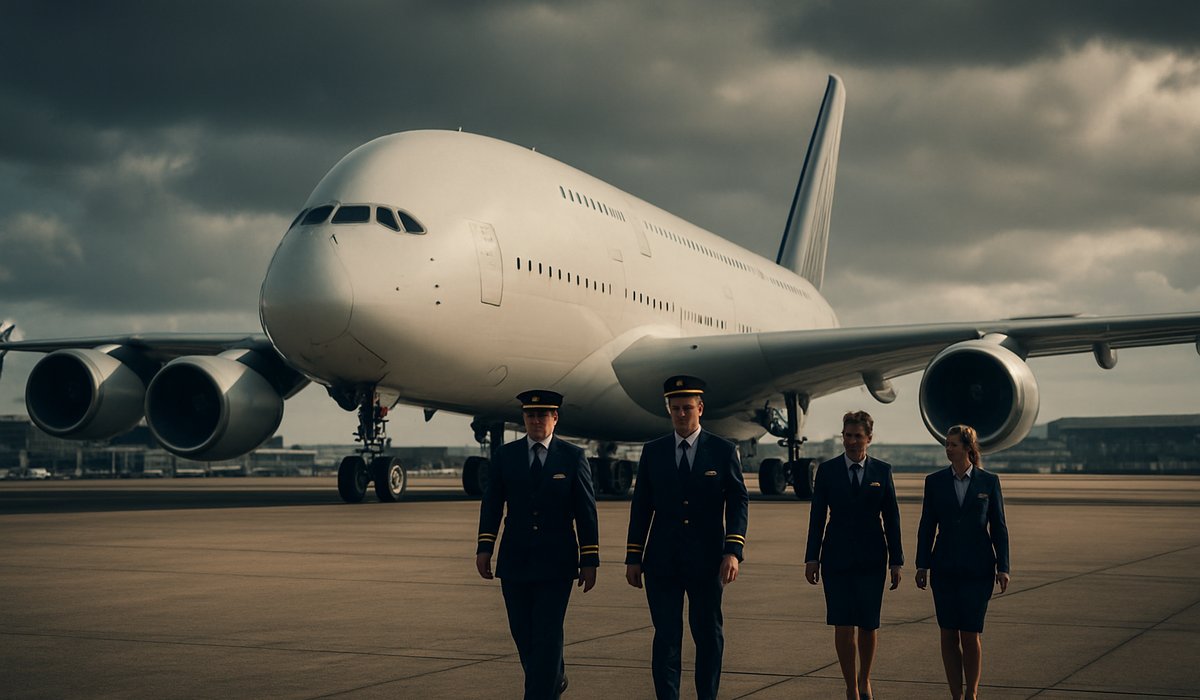
Image generated by AI
Airbus A380 Operations Collapse by 17% as Aviation Industry Faces Mounting Pressures
The world's largest passenger aircraft confronts existential challenges amid geopolitical turbulence and shifting airline economics
The Superjumbo's Steep Decline
The Airbus A380—long heralded as the flagship of modern aviation—is experiencing a dramatic operational contraction, with flight deployments plummeting 17% as the aircraft enters what industry analysts increasingly describe as a critical juncture. The double-deck wide-body giant, which carries up to 853 passengers in high-density configurations, faces an uncertain future as global carriers reassess their fleet strategies amid compounding headwinds.
The decline marks a sharp reversal for an aircraft program that once symbolized aviation's ambitions. Airlines worldwide have systematically reduced A380 service frequency, signaling broader concerns about the aircraft's viability in an evolving market landscape shaped by fuel economics, route profitability, and geopolitical instability.
Pandemic Aftermath and Operational Fallout
The travails facing the A380 extend back to the 2020 coronavirus pandemic, which forced mass groundings of the entire global fleet. While most operators gradually restored superjumbo services to pre-pandemic networks, several carriers seized the opportunity to permanently retire their aircraft from commercial operations, replacing them with smaller, more efficient wide-body alternatives.
This structural shift proved consequential. Airlines discovered that smaller aircraft—particularly the Boeing 777 and Airbus A350—could generate comparable revenue with significantly lower operating costs, reduced fuel consumption, and greater scheduling flexibility. The economic calculus fundamentally changed against the A380's favor.
Geopolitical Headwinds Intensify Crisis
Fresh complications emerged with escalating Middle Eastern tensions, particularly surrounding the 2026 Iran aviation crisis. The aviation sector's exposure to regional instability has prompted route realignments and capacity reductions on critical Asia-Europe corridors historically dominated by A380 operations. Insurance premiums have risen, and some carriers have preemptively reduced superjumbo frequencies on affected routes.
This convergence of challenges—structural economic disadvantages combined with geopolitical uncertainty—has crystallized doubts about whether airlines can sustain economically viable A380 operations going forward.
Industry Implications
The A380's deteriorating operational footprint raises fundamental questions about ultra-high-capacity aircraft viability. With Airbus ending A380 production in 2021 and no significant new orders anticipated, the fleet appears destined for gradual contraction. Legacy carriers operating the aircraft face mounting pressure to either optimize remaining services or accelerate retirement timelines.
For passengers, the implications remain mixed: fewer A380 flights mean reduced sightings of the iconic aircraft, though airlines operating remaining services report strong premium cabin demand and brand loyalty among business travelers who value the spacious upper-deck experience.
Frequently Asked Questions
What is causing the 17% decline in A380 operations? The reduction reflects a combination of factors: permanent retirements following pandemic groundings, superior economics of smaller wide-body aircraft, and recent geopolitical instability affecting key A380 routes, particularly in the Middle East and Asia-Europe corridors.
Which airlines still operate the A380, and are they reducing service? Major operators including Emirates, Singapore Airlines, British Airways, Lufthansa, and Air France continue operating A380s, though most have reduced frequencies. Emirates remains the largest operator with a substantial fleet commitment.
Will the A380 be phased out completely? While complete phase-out seems inevitable over the next decade, some carriers—particularly those with strong premium market positions—may maintain limited A380 operations on flagship routes where the aircraft's prestige and capacity justify higher operating costs.
How do jet fuel prices affect A380 profitability? The A380's high fuel consumption makes it particularly vulnerable to oil price volatility. Its four engines burn approximately 12% more fuel per seat than modern twin-engine aircraft, making it economically marginal when fuel costs spike.
What aircraft are replacing retired A380s? Airlines typically transition A380 capacity to Boeing 777-300ER, 777X, and Airbus A350-900/1000 aircraft, which offer superior fuel efficiency, lower maintenance costs, and greater operational flexibility despite lower absolute passenger capacity.
Related Travel Guides
Flight Delay Compensation Guide 2026
Understanding Airline Route Changes
Airport Security Process Updated (2026)
External Resources
Disclaimer
This article is for informational and educational purposes only. It does not constitute legal, financial, or professional advice. While we strive to provide accurate and up-to-date information, travel policies, regulations, and conditions change rapidly. Always verify information with official sources before making travel decisions. Nomad Lawyer makes no representations about the accuracy, reliability, completeness, or suitability of the information provided. Readers should consult qualified professionals for advice specific to their circumstances. The views expressed in this article are those of the author and do not necessarily reflect the views of Nomad Lawyer.
Raushan Kumar
Founder & Lead Developer
Full-stack developer with 11+ years of experience and a passionate traveller. Raushan built Nomad Lawyer from the ground up with a vision to create the best travel and law experience on the web.
Learn more about our team →