
Emirates Adds Third Daily Dubai–Cape Town Flight with First Airbus A350 Deployment in South Africa
Emirates expands its Dubai–Cape Town route with a third daily frequency and introduces the Airbus A350, marking the aircraft's first deployment in South African skies.

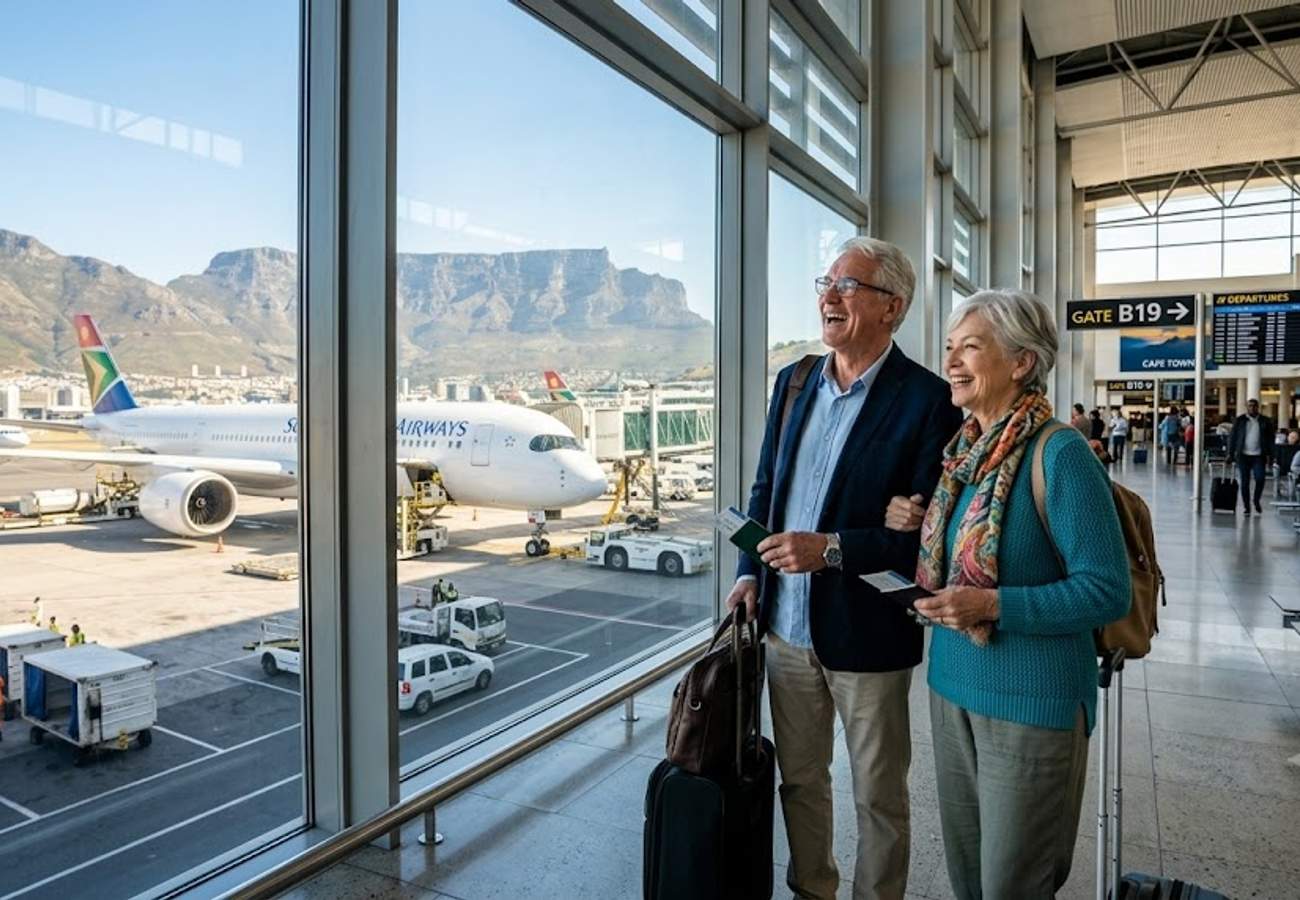
Image generated by AI
Emirates has significantly strengthened its footprint in South African aviation by introducing a third daily service on the Dubai–Cape Town corridor and deploying the Airbus A350 aircraft for the first time on the route. The expansion arrives as sustained passenger demand and improving global connectivity requirements drive Emirates' long-haul strategy across Africa's premium markets.
Capacity Surge Reshapes Middle East–South Africa Connectivity
The introduction of a third daily frequency between Dubai International Airport (DXB) and Cape Town International Airport (CPT) represents a major capacity injection on one of Emirates' most strategically significant African routes. This move directly addresses rising travel volumes between the UAE and South Africa while reinforcing Dubai's role as a continental aviation nexus.
Cape Town commands premium positioning within Emirates' African portfolio. The city attracts year-round leisure and business traffic, supported by world-class tourism infrastructure, growing corporate activity, and its role as a regional economic hub. The additional frequency alleviates congestion on existing services and delivers passengers with expanded departure and arrival windows—a critical advantage for global connecting passengers.
The expansion also distributes passenger traffic more evenly across daily rotations, reducing peak-hour bottlenecks and improving operational efficiency. For travellers, this translates into shorter connection windows through Dubai and greater scheduling flexibility when building international itineraries.
Flight Schedule and Aircraft Configuration
| Flight Number | Route | Frequency | Aircraft Type | Cabin Configuration |
|---|---|---|---|---|
| EK778 (new) | Dubai–Cape Town | Daily | Airbus A350-900 | Premium Economy + Business + Economy |
| EK775 | Dubai–Cape Town | Daily | Boeing 777-300ER | Premium Economy + Business + Economy |
| EK771 | Dubai–Cape Town | Daily | Boeing 777-300ER | Premium Economy + Business + Economy |
The inaugural EK778 service marked the official launch of the third daily rotation. This designation signals Emirates' commitment to long-term route development and reflects confidence in sustained demand patterns across the Middle East–South Africa corridor.
Airbus A350 Enters South African Skies
The introduction of the Airbus A350 on the Cape Town service represents a watershed moment for regional aviation. This marks the aircraft's inaugural deployment within South Africa, elevating long-haul travel standards on a route that historically operated narrower-body and older wide-body configurations.
The A350 delivers measurable operational and passenger-facing advantages. Advanced aerodynamic design reduces fuel consumption by up to 25% compared to legacy wide-body aircraft, while its cabin pressure systems and humidity-control technology minimize fatigue on ultra-long-haul flights. The aircraft operates at a higher cabin altitude equivalent (6,000 feet vs. 8,000 feet on traditional jets), reducing passenger fatigue during the 14-hour flight profile.
For Emirates, deploying next-generation aircraft on high-demand routes optimizes fleet utilization and signals strategic confidence. The A350's 314-seat configuration (in Emirates' three-cabin layout) allows the airline to inject capacity without proportionally increasing flight frequencies—a competitive advantage when airport slot availability constrains expansion options.
Passengers experience a quieter cabin environment due to enhanced insulation, improved air filtration, and advanced onboard entertainment systems. These amenities directly support Emirates' premium positioning in the Africa–Asia–Europe connectivity market.
Market Dynamics and Competitive Positioning
South Africa represents one of Emirates' cornerstone African markets. The carrier maintains dual-frequency operations to Johannesburg International Airport (JNB) and now triple frequencies to Cape Town International Airport (CPT), reinforcing market dominance on the continent's two most economically significant gateways.
Cape Town's strategic importance stems from convergent factors: robust inbound tourism (5+ million annual international arrivals), established business infrastructure, and geographic positioning as the gateway to South Africa's Western Cape province. The city's wine routes, coastal attractions, and urban tourism experiences generate sustained premium leisure traffic.
By expanding capacity, Emirates directly counters potential competitive threats from other Gulf carriers and European legacy airlines seeking to penetrate South African markets. The move also capitalizes on post-pandemic recovery trends, where long-haul leisure and business travel to Africa has exceeded pre-2020 baseline forecasts.
Network Integration and Passenger Flow Optimization
The third daily frequency multiplies viable connecting itineraries through Dubai (DXB). Passengers from Cape Town now access enhanced onward connections to:
- European destinations via morning/midday arrivals into Dubai
- Asian gateways (India, Southeast Asia, East Asia) via afternoon arrivals
- Americas connections via evening rotations
Business travellers benefit most acutely. Existing services offered limited same-day connection windows for premium itineraries (e.g., Cape Town–Dubai–London). The new EK778 frequency creates additional departure slots aligned with optimal connection times, reducing layover duration and minimizing transit disruption.
Inbound tourism receives equal benefit. International visitors now align Cape Town arrivals with hotel check-in windows, reducing wasted ground time and improving customer satisfaction metrics. This capacity flexibility strengthens Cape Town's competitive positioning against alternative African leisure gateways.
Fleet Modernisation and Sustainability Strategy
The A350 deployment reflects Emirates' broader fleet modernisation programme. The airline systematically rotates legacy wide-body aircraft off long-haul routes, replacing them with next-generation platforms that deliver operational efficiency and environmental performance gains.
The A350's fuel efficiency advantage translates directly to cost reduction and carbon emissions mitigation. Operating the aircraft on a route with 1,095 annual rotations (three daily frequencies × 365 days) generates substantial cumulative savings compared to Boeing 777-300ER operations—approximately 250 tonnes less annual CO2 emissions per aircraft rotation.
This approach allows Emirates to reconcile capacity expansion with sustainability commitments. Rather than deploying additional narrower-body flights, the airline substitutes older wide-body capacity with modern, fuel-efficient aircraft. The strategy aligns with ICAO's Carbon Offsetting and Reduction Scheme for International Aviation (CORSIA) compliance requirements and enhances corporate environmental positioning.
Cape Town's Emerging Role in Global Aviation Networks
Cape Town's elevation to triple-daily service status reflects its transition from secondary African gateway to primary continental hub. The city now ranks among Africa's most connected destinations on long-haul carriers, competing directly with Johannesburg and Lagos for premium traveller volume.
This connectivity improvement strengthens Cape Town's competitiveness in the global travel marketplace. The city's differentiation—premium tourism assets combined with business infrastructure—attracts diverse passenger demographics. Enhanced air access multiplies addressable market size and improves tourism economics across the Western Cape region.
Emirates' capacity expansion signals confidence in Cape Town's long-term growth trajectory. As secondary global cities gain increased long-haul connectivity, competitive dynamics shift. Destinations with strong tourism and business fundamentals—coupled with improved air accessibility—capture disproportionate leisure and business traffic growth.
Strategic Implications for African Aviation Markets
The triple-daily Dubai–Cape Town service strengthens Gulf carrier dominance across African long-haul markets. Emirates now operates the continent's most frequent Gulf carrier service to South Africa, establishing operational and brand advantages difficult for European legacy carriers to challenge.
This expansion also demonstrates sustainable route profitability within African markets. Capacity growth on premium routes (rather than frequency expansion on marginal routes) validates a differentiated competitive strategy: serve premium passenger segments at high yields rather than compete on volume with low-cost carriers on regional networks.
For Cape Town International Airport, the expansion drives terminal traffic growth and enhances commercial revenue through increased passenger volumes and connecting-traffic secondary spend (retail, food & beverage, lounge access).
Emirates' commitment to Cape Town—evidenced through A350 deployment and frequency expansion—signals enduring confidence in South Africa's position within global long-haul travel networks.
Related Travel Guides
Disclaimer
This article is for informational and educational purposes only. It does not constitute legal, financial, or professional advice. While we strive to provide accurate and up-to-date information, travel policies, regulations, and conditions change rapidly. Always verify information with official sources before making travel decisions. Nomad Lawyer makes no representations about the accuracy, reliability, completeness, or suitability of the information provided. Readers should consult qualified professionals for advice specific to their circumstances. The views expressed in this article are those of the author and do not necessarily reflect the views of Nomad Lawyer.
Preeti Gunjan
Contributor & Community Manager
A passionate traveller and community builder. Preeti helps grow the Nomad Lawyer community, fostering engagement and bringing the reader experience to life.
Learn more about our team →