
Emirates Airbus A380 Upgrades Defy Industry Shift Away from Superjumbos
Emirates continues significant investment in A380 fleet modernization in 2026, bucking industry trends as competitors retire superjumbo aircraft. Discover why the carrier remains committed to this iconic aircraft.

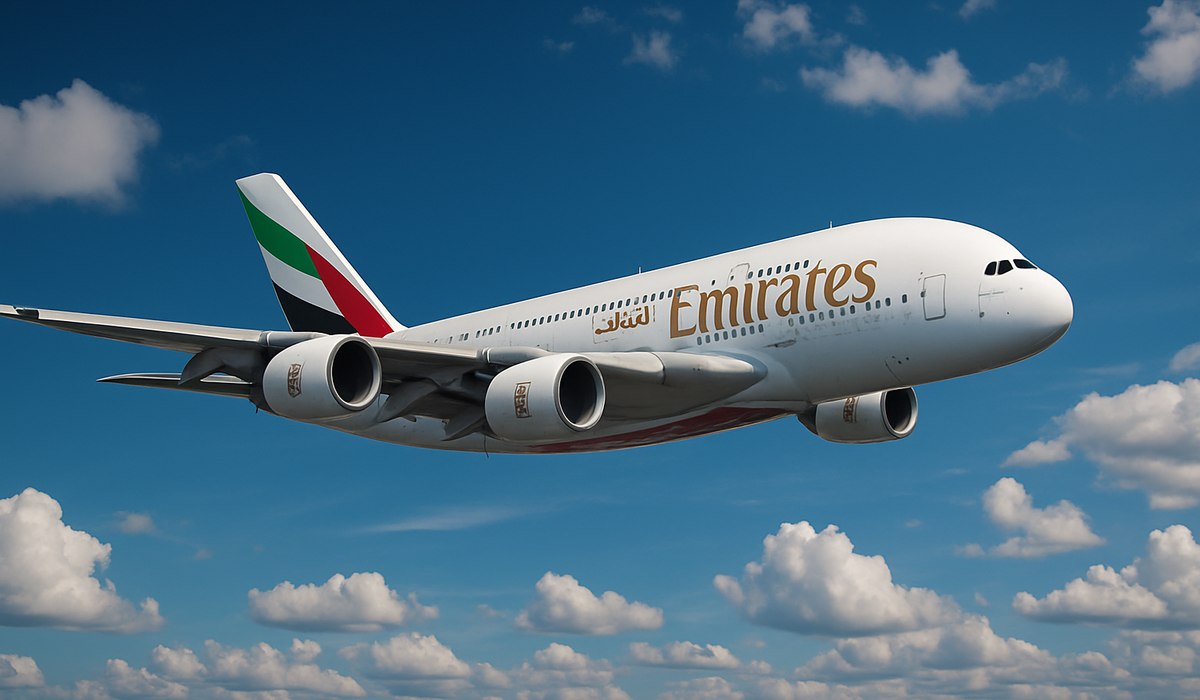
Image generated by AI
Emirates' Bold A380 Commitment Stands Apart
Emirates has recommitted to upgrading its Airbus A380 fleet throughout 2026, bucking aviation's broader shift toward smaller, fuel-efficient aircraft. While competitors like Lufthansa, Air France, and Singapore Airlines retire their superjumbos, the Dubai-based carrier continues investing heavily in modernizing cabins, avionics systems, and passenger amenities on its 120-aircraft A380 fleet. This contrarian strategy reflects Emirates' confidence in hub-and-spoke operations and its position as the world's largest A380 operator.
Why Emirates Remains Committed to the A380
Modern aviation has fundamentally reorganized around point-to-point routing and fleet diversification. Most carriers abandoned the hub-and-spoke model that dominated the 1990s and 2000s, embracing smaller twin-engine aircraft like the Boeing 787 Dreamliner and Airbus A350 for efficiency and flexibility. Infrastructure limitations compound the A380 challenge—the majority of global airport gates and runways cannot accommodate this double-deck giant, restricting deployment options.
Yet Emirates sees strategic value where competitors see liability. Dubai's position as a premium long-haul hub, coupled with its modern facilities designed for superjumbos, gives the airline a competitive moat. The A380 carries 550 passengers in a three-class configuration versus 300–400 on comparable widebodies, reducing seat-mile costs on ultra-high-demand routes like Dubai-London and Dubai-New York. Emirates' A380 upgrades focus on premium cabin improvements, enhanced cabin technology, and operational reliability—investments designed to justify premium pricing on these capacity-heavy services.
The Industry's A380 Problem
The A380's decline reflects both market forces and technical constraints. Airbus produced only 251 aircraft before halting production in 2021 due to poor order book performance. Most airlines discovered that operating one superjumbo required extensive training, specialized ground equipment, and dedicated airport infrastructure—costs that smaller fleets couldn't justify economically.
Rising fuel costs, post-pandemic route restructuring, and the explosive growth of low-cost carriers accelerated A380 retirements. Carriers worldwide grounded or retired superjumbos to reduce operational complexity and maintenance overhead. However, Emirates benefited from volume economics: with over 100 A380s in service, it achieved maintenance scale and pilot training efficiency that smaller operators lacked. This operational foundation enabled the airline to embrace A380 upgrades where others couldn't afford them.
Competitive Advantages of Emirates' Strategy
Emirates' A380 fleet modernization strategy delivers several commercial advantages. First, the superjumbo's unmatched capacity allows Emirates to serve premium leisure and business routes with higher-margin pricing. Second, the aircraft's iconic status drives brand loyalty—travelers specifically book A380 flights, particularly on prestigious routes. Third, Dubai's hub infrastructure was purpose-built for A380 operations, making the aircraft central to Emirates' competitive positioning.
Recent upgrades include premium economy cabin reconfiguration, advanced in-flight entertainment systems, and enhanced WiFi connectivity. These improvements target high-yield passengers on long-haul premium routes, where Emirates commands price premiums against competitors operating smaller aircraft. The airline's commitment also reflects confidence in post-pandemic demand recovery on premium long-haul segments, where superjumbo economics improve relative to narrowbody alternatives.
Future of Superjumbo Aviation
The A380's long-term viability depends on carriers like Emirates sustaining demand. If Emirates maintains profitability with its upgraded fleet, it may encourage other Gulf carriers or Asian airlines to extend A380 service lives rather than accelerate retirements. Airbus has explored potential A380neo variants with improved engines and aerodynamics, though no formal orders exist as of April 2026.
Climate considerations pose mounting pressure on large-capacity aircraft. Aviation's path toward net-zero emissions by 2050 may ultimately phase out conventional superjumbos in favor of smaller, more efficient platforms or sustainable aviation fuel-powered alternatives. However, Emirates' current investment horizon extends through 2035–2040, suggesting the airline is betting on A380 commercial viability across the coming decade. The company's upgrade program essentially extends the economic life of its existing fleet while regulatory and technological transitions develop.
What This Means for Travelers
Emirates' A380 investment strategy has direct implications for passengers booking long-haul premium travel in 2026 and beyond.
-
Premium cabin improvements: Upgraded business and first-class suites on A380 routes offer enhanced amenities, better technology, and reconfigured layouts. Book A380 flights specifically if these premium improvements matter to your travel experience.
-
Route availability: Emirates' A380 commitment ensures continued service on iconic routes like Dubai-London Heathrow, Dubai-New York JFK, and Dubai-Sydney with premium capacity. These routes will maintain A380 schedules throughout 2026.
-
Price positioning: A380 flights command premium fares reflecting cabin quality and capacity economics. Budget-conscious travelers may find better value on competing carriers operating smaller widebodies, though A380 pricing often captures premium ancillary revenue through premium seating.
-
Booking timing: A380-configured flights sell faster on popular routes. Book 8–12 weeks in advance to secure A380 travel on premium services during peak seasons.
-
Reliability expectations: Newly upgraded A380s undergo rigorous testing, suggesting minimal disruption risk. Travelers can expect consistent on-time performance and reduced cancellations from A380 fleet upgrades.
Key Data: Emirates A380 Fleet Overview
| Metric | Value |
|---|---|
| Total A380 aircraft in Emirates fleet | 120+ |
| Passengers per A380 (three-class config) | 550 |
| Passengers per Boeing 777-300ER (comparable widebody) | 350–400 |
| Typical A380 route range | 8,000–15,000 km |
| Premium cabin reconfiguration timeline | 2024–2027 |
| Airbus A380 total production (all airlines) | 251 aircraft |
| Year A380 production ended | 2021 |
| Emirates' estimated share of global A380 fleet | 48% |
Traveler Action Checklist
Follow these steps to maximize your Emirates A380 experience in 2026:
-
Confirm A380 deployment: Check Emirates' route schedule on their website or flight booking platform to verify A380 aircraft assignment before purchasing tickets.
-
Select premium seating: Book business or first-class cabins to access newly upgraded suites and amenities on modernized A380 aircraft.
-
Book during optimal windows: Purchase tickets 8–12 weeks before departure to secure A380-configured flights during peak demand periods.
-
Verify cabin amenities: Contact Emirates directly or review recent cabin review videos to confirm specific upgrades on your scheduled flight number.
-
Monitor schedule changes: Check FlightAware regularly for any fleet changes or route modifications affecting your booked A380 flight.
-
Review baggage policies: Understand Emirates' baggage allowance for premium cabin passengers to maximize luggage for extended journeys.
-
Prepare for premium pricing: Budget accordingly—A380 premium fares typically exceed comparable widebody pricing by 15–25% depending on route and season.
FAQ: Emirates A380 Upgrades and Superjumbo Travel
Q: Why is Emirates upgrading A380 aircraft when other airlines are retiring them?
A: Emirates operates 120+ A380s, achieving cost efficiency through scale. Dubai's hub infrastructure was designed for superjumbos
Disclaimer
This article is for informational and educational purposes only. It does not constitute legal, financial, or professional advice. While we strive to provide accurate and up-to-date information, travel policies, regulations, and conditions change rapidly. Always verify information with official sources before making travel decisions. Nomad Lawyer makes no representations about the accuracy, reliability, completeness, or suitability of the information provided. Readers should consult qualified professionals for advice specific to their circumstances. The views expressed in this article are those of the author and do not necessarily reflect the views of Nomad Lawyer.
Preeti Gunjan
Contributor & Community Manager
A passionate traveller and community builder. Preeti helps grow the Nomad Lawyer community, fostering engagement and bringing the reader experience to life.
Learn more about our team →