
El Salvador Expands Global Tourism Reach: MITUR and CORSATUR Target Long-Haul Markets

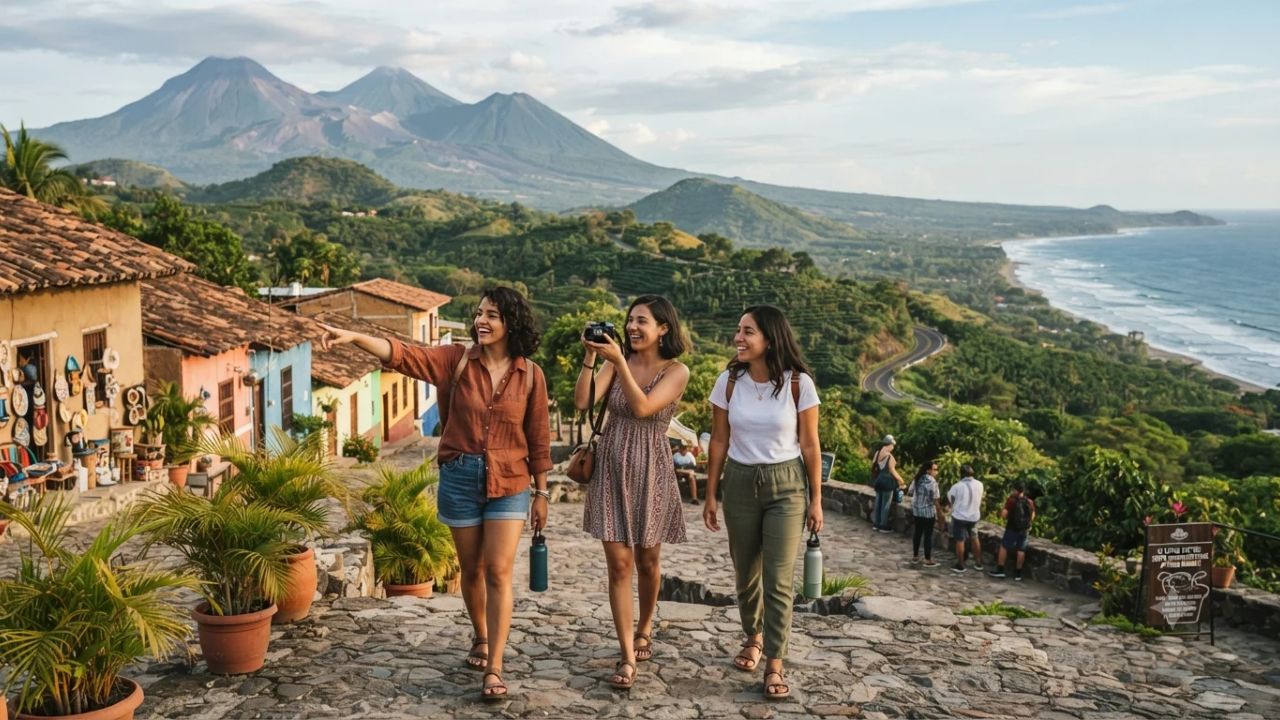
Image generated by AI
Connecting Pacific surf breaks to high-altitude volcanic ridges within a two-hour transit window, El Salvador is executing an institutional realignment across its visitor economy. Backed by hundreds of pre-scheduled commercial B2B meetings at the El Salvador Travel Market, national tourism authorities are systematically pivoting away from low-yield regional transit. Instead, the country is pitching its compact geography directly to high-spending outbound tour operators across Europe and the Nordic countries, fundamentally rewiring the competitive map of Central American leisure travel.
Central American Transit Dynamics: The Shift from Regional Backpacker to Long-Haul Explorer
For decades, international travel into El Salvador was largely confined to overland backpackers traveling the Pan-American Highway or specialized diaspora travelers visiting family. Neighboring hubs in Costa Rica and Guatemala captured the lion's share of high-spending North American and European travelers looking for nature immersion and heritage tourism. However, a profound national stabilization, paired with targeted infrastructure modernization, has enabled the government to rethink how the country engages the global marketplace.
Leading this institutional charge is a tripartite coordination model: the El Salvador Ministry of Tourism (MITUR) oversees overarching policy and regulatory alignment, the Salvadoran Tourism Corporation (CORSATUR) manages international promotion and buyer relations, and the Salvadoran Chamber of Tourism (CASATUR) coordinates private-sector hotel, transport, and guide operations. Rather than relying on generic consumer advertising that treats the destination as an undifferentiated beach stop, these agencies have adopted a targeted business-to-business approach designed to embed local boutique operators directly into the catalogues of global travel wholesalers.
By courting specialized buyers from distant regions who traditionally favored Costa Rican eco-lodges or Mexican beach resorts, El Salvador is diversifying its revenue base. European and Nordic travelers represent an especially valuable demographic: they record longer average lengths of stay, register higher per-day expenditure, and actively seek out combined itineraries that blend community-based agriculture, heritage walking tours, and adventure sports.
Commercial B2B Mechanics: Structuring the El Salvador Travel Market at Hilton San Salvador
The operational epicenter of this commercial transition is the El Salvador Travel Market (ESTM), hosted periodically at major urban hospitality venues including the Hilton San Salvador Hotel. Far from a passive trade show, the event operates as an intensive commercial clearinghouse. Hundreds of pre-arranged, algorithmic business appointments match domestic inbound operators, transport providers, and boutique estate hoteliers with vetted international procurement agents.
To ensure that foreign travel planners understand the ground reality of modern Salvadoran transit, the host committee integrates these formal negotiation sessions with structured familiarization tours. International delegates are moved rapidly from convention halls into the field, experiencing the country's upgraded road networks, digital booking platforms, and hospitality standards firsthand.
| Commercial Segment | Target Outbound Origin | Core Travel Offerings | Average Transit Commitment | Primary Institutional Anchor |
|---|---|---|---|---|
| Long-Haul Experiential | Nordic Region & Western Europe | Volcanic trekking, coffee finca lodges, colonial heritage | 10 to 14 days multi-region | CORSATUR International Buyer Program |
| Pacific Coastal Adventure | North America & Europe | Point-break surfing, coastal wellness, marine conservation | 5 to 9 days coastal base | Surf City Infrastructure Initiative |
| MICE & Corporate Delegations | Central America & United States | Urban conventions, executive retreats, culinary showcases | 3 to 5 days capital-centered | CASATUR & Hilton San Salvador |
| Agro-Tourism & Culture | Global specialty travelers | High-altitude shade-grown coffee trails, Mayan archaeology | 7 to 10 days interior loop | MITUR Regional Development Framework |
This organized commercial framework allows local businesses—many of which lack the marketing budgets required to attend international travel expos in London, Madrid, or Berlin—to negotiate directly with foreign wholesalers in San Salvador. For international buyers, the platform eliminates the logistical opacity that once plagued Central American reservations, providing clear pricing structures, liability assurances, and dependable multi-destination transport links.
Geography as Infrastructure: How Compact Topography Compresses Transit Times
The primary operational asset supporting this marketing pivot is El Salvador's geographical scale. Encompassing roughly 21,000 square kilometers, it is the smallest republic on the Central American isthmus. While destinations like Costa Rica, Colombia, or Mexico require domestic flights or arduous six-to-eight-hour overland transfers to move between coastlines and highland cloud forests, El Salvador accomplishes this shift in a fraction of the time.
A traveler landing at El Salvador International Airport San Óscar Arnulfo Romero y Galdámez (SAL), administered by the Comisión Ejecutiva Portuaria Autónoma (CEPA), can access the world-class right-hand point breaks of La Libertad along the Pacific coast in approximately 35 minutes via modern highway bypasses. From those same coastal breaks, travelers can motor inland to the colonial heritage plazas of Suchitoto, the volcanic crater lakes of Coatepeque, or the mountain coffee fincas of the Ruta de las Flores within 90 to 120 minutes.
This topographic density functions as an economic multiplier. It enables tour planners to sell comprehensive, multi-themed vacation packages within a single one-week holiday window. A traveler can surf world-class waves at sunrise, tour a working specialty coffee estate by early afternoon, and dine in a colonial highland village before nightfall, all without repacking bags for an inter-island flight or losing an entire vacation day to transit exhaustion.
Expert Analysis: Yield Per Visitor, Long-Haul Logistics, and the Security Dividend
For travelers booking Central American itineraries, the direct consequence of this institutional repositioning is an elevated standard of localized service alongside rising premium accommodation costs. By targeting higher-spending European and Nordic demographics, Salvadoran operators are steadily shifting inventory toward high-end boutique lodges, private guide services, and curated gastronomic experiences. The pricing pressure this creates means that coastal enclaves, particularly along the Surf City corridor, are transitioning from budget hostel strips into structured, master-planned resort environments with rates that increasingly mirror established Caribbean gateways.
This evolution is fundamentally anchored by the country's dramatic security turnaround. For years, travel warnings depressed international arrivals and starved rural communities of external capital. The rapid stabilization of civic safety has unleashed what economists term a "peace dividend" across the tourism sector. However, the operational challenge now shifts from physical safety to infrastructure absorption.
Rural roads leading to elevated volcanic trailheads and protected nature reserves must manage growing vehicle volumes without degrading fragile ecosystems. Furthermore, while the capital city and main coastal arteries boast world-class asphalt, secondary rural roads and boutique accommodation grids still face water-management and renewable-power constraints.
At the aviation level, the expansion of long-haul visitor traffic places greater reliance on hub carriers operating through San Salvador. While Avianca maintains an extensive network connecting the capital across the Americas, establishing direct, non-stop flight paths to European gateways remains the essential hurdle for sustained growth. Until long-haul widebody routes from hubs like Madrid or Frankfurt touch down directly at SAL, travelers from distant markets will continue navigating one-stop connections through Miami, Houston, or Panama City, keeping transit friction in place for less adventurous flyers.
Key Takeaways
- Targeted Market Pivot: MITUR, CORSATUR, and CASATUR are shifting promotional resources away from low-yield regional campaigns toward high-spending outbound travelers in Nordic and European markets.
- Commercial B2B Platform: The El Salvador Travel Market, hosted at venues like the Hilton San Salvador Hotel, matches domestic boutique operators directly with international wholesale buyers through hundreds of pre-scheduled meetings.
- Geographical Compression: El Salvador's compact territory enables international travelers to move from Pacific surf coastlines to volcanic coffee plantations in under two hours without domestic flights.
- Infrastructure Upgrades: Modernized highway corridors connecting San Salvador's international airport to coastal and highland zones have turned transit speed into the country's primary competitive advantage over regional neighbors.
- Hospitality Modernization: The rapid shift toward experiential and eco-tourism is driving capital investment into boutique lodging, culinary tourism, and standardized guide certifications nationwide.
FAQ: El Salvador International Tourism 2026
What is the main international airport in El Salvador?
El Salvador is served by El Salvador International Airport San Óscar Arnulfo Romero y Galdámez (SAL), located in San Luis Talpa, roughly 40 kilometers south of the capital city and 35 minutes from the Pacific coast.
How long does it take to travel between the beach and mountains in El Salvador?
Thanks to modern highway infrastructure and compact geography, travelers can drive between Pacific surf beaches like El Tunco and high-altitude volcanic coffee regions like the Ruta de las Flores in approximately 90 to 120 minutes.
What is the El Salvador Travel Market?
The El Salvador Travel Market is an institutional B2B tourism fair where local hotels, transport providers, and tour operators meet directly with international travel agencies and wholesalers to negotiate commercial contracts and tour packages.
Which international travelers are driving El Salvador's tourism growth?
While North American visitors remain the largest overall demographic, specialized promotional efforts are accelerating arrivals from European and Nordic countries seeking authentic nature, active surf sports, and cultural heritage experiences.
As transit times shrink and travel infrastructure matures, El Salvador is proving that geographical compactness, when paired with strategic institutional vision, can turn a small republic into a giant of international travel.
Related Travel Guides
Springfield Illinois Hotel Demand & Route 66 Centennial Guide
Belize Sargassum Travel Guide & Coastal Vacation Planning
10-best-surf-and-adventure-getaways-central-america-reddit-2026
Disclaimer
This article is for informational and educational purposes only. It does not constitute legal, financial, or professional advice. While we strive to provide accurate and up-to-date information, travel policies, regulations, and conditions change rapidly. Always verify information with official sources before making travel decisions. Nomad Lawyer makes no representations about the accuracy, reliability, completeness, or suitability of the information provided. Readers should consult qualified professionals for advice specific to their circumstances. The views expressed in this article are those of the author and do not necessarily reflect the views of Nomad Lawyer.
Raushan Kumar
Founder & Lead Developer
Full-stack developer with 11+ years of experience and a passionate traveller. Raushan built Nomad Lawyer from the ground up with a vision to create the best travel and law experience on the web.
Learn more about our team →