
El Quseir Hotel Transforms 1907 Tribal Chief's Residence Into Red Sea Heritage Retreat in 2026
Experience the legacy of the Ababda tribe at El Quseir Hotel, a six-room boutique retreat converted from a 1907 tribal chief's house on Egypt's historic Red Sea coast.

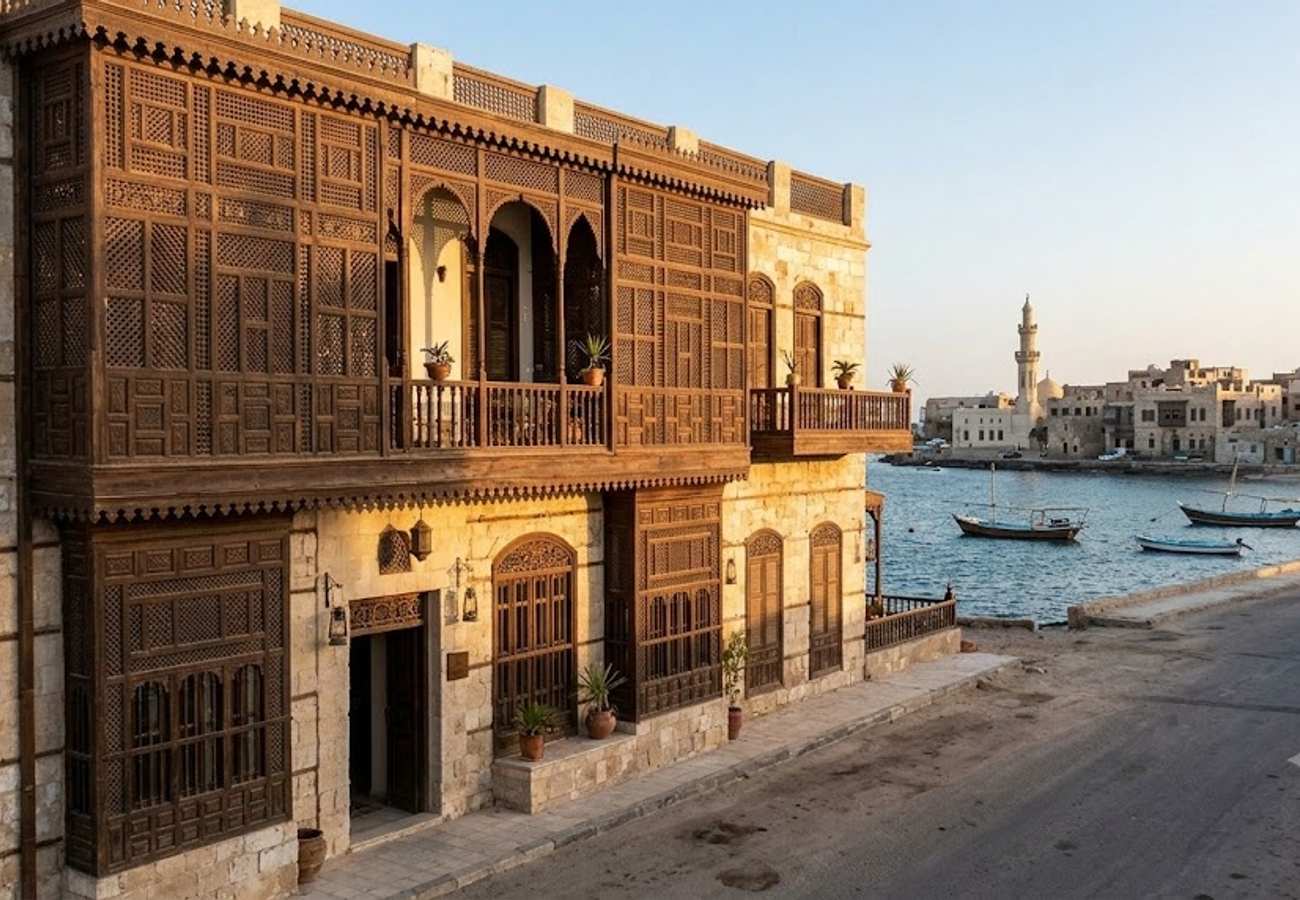
Image generated by AI
Egypt welcomed approximately 19 million international visitors in 2025, a 21% increase from 2024. Amid this surge, El Quseir Hotel offers a rare, small-scale alternative to the massive resorts dominating the Red Sea coast.
The Shift Toward Architectural Authenticity
While the Egyptian coastline is often associated with sprawling all-inclusive complexes, a distinct trend is emerging toward "slow tourism" and heritage preservation. El Quseir Hotel stands as a primary example of this shift. Originally constructed in 1907, the building served as the residence of Sheikh Tawfiq Ali Mustafa, a senior chief of the Red Sea Ababda tribe.
The property was not merely a home but a public statement of authority. As the Sheikh El Mashayekh, Tawfiq’s residence was a social hub for pilgrims, traders, and officials. Today, that same structure has been reimagined as a six-room boutique hotel. The transition, led by Swedish businessman Peter Willem Berg, focused on a conservative restoration in the late 1990s, ensuring the property reopened in 2000 without losing its soul to modern luxury clichés.
The hotel's most striking feature is the carved wooden mashrabiya—traditional latticework—that covers a significant portion of the façade. By preserving the original timber beams and shutters, the hotel provides a tactile connection to the early 20th century, selling atmosphere and history over scale.
Cultural Evolution: From Hajj Port to Mining Hub
For the visitor, the real impact of staying at El Quseir Hotel is the immersion into the town's layered history. El Quseir was once a strategic gateway between the Nile Valley and the Red Sea, serving as a critical departure point for Hajj pilgrims. The Ababda tribespeople, whose legacy is embedded in the hotel's walls, were the essential guides for caravans crossing the Eastern Desert from Qena to the coast.
The town's prosperity was documented in the 1860s by German physician Karl Klunzinger, who noted a population of between 6,000 and 8,000 residents. However, the economic tide shifted with the 1858 opening of the Alexandria-Cairo-Suez railway and the 1869 opening of the Suez Canal, which diverted maritime traffic and pilgrims away from El Quseir.
The town found a second wind in the early 20th century through the phosphate industry. In 1912, the Banco di Roma established the Egyptian Phosphate Mining and Trading Company. During this era, Sheikh Tawfiq acted as a vital intermediary between Italian mining operators and the local community, further cementing the house's role as a center of regional power.
El Quseir Hotel: Heritage Specifications
| Key Detail | Specification |
|---|---|
| Original Construction | 1907 |
| Original Owner | Sheikh Tawfiq Ali Mustafa |
| Tribal Affiliation | Red Sea Ababda |
| Current Format | Six-room boutique hotel |
| Restoration Period | Late 1990s (Reopened 2000) |
| Architectural Highlight | Carved wooden mashrabiya |
| Location | Seafront corniche, El Quseir |
| Positioning | Heritage and small-scale accommodation |
Environmental Value and Community Impact
The restoration of the Sheikh's house was more than a real estate venture; it was a catalyst for local empowerment. Peter Willem Berg extended his commitment to the community by establishing a vocational training center in 2002, providing computing skills to local youth and sending instructors to Sweden for qualification.
By avoiding the "luxury resort" blueprint, El Quseir Hotel supports a more sustainable tourism model. It encourages visitors to engage with the local economy and explore the town’s Ottoman-era citadel, Roman remains, and traditional souks, rather than remaining sequestered within a hotel perimeter. This alignment with the Egyptian government's goal of product diversification helps spread tourism revenue beyond the typical hotspots.
Timeline of Regional Transformation
| Historical Development | Approximate Date | Impact on El Quseir |
|---|---|---|
| Red Sea Trading Role | Antiquity | Established coastal gateway status |
| Hajj & Caravan Activity | Pre-modern era | High demand for Ababda guides |
| Muhammad Ali Era | Early 19th Century | Increased grain traffic to holy cities |
| Alex-Cairo-Suez Railway | 1858 | Diverted travelers toward Suez |
| Suez Canal Opening | 1869 | Reduced maritime importance |
| Sheikh Tawfiq's House | 1907 | Symbol of renewed local influence |
| Phosphate Industry | Early 20th Century | Created new European-led economic base |
| Hotel Restoration | Late 1990s | Launched heritage-led tourism |
Visitor Insider Tips
To get the most out of a visit to this heritage retreat, travelers should look beyond the hotel rooms:
- The Mashrabiya Experience: Spend time observing the play of light through the carved wooden screens during the "golden hour" (just before sunset). These screens were historically designed for privacy and ventilation—essential for the Red Sea climate.
- Off-Peak Windows: Visit between October and April to avoid the extreme summer heat, allowing for comfortable walks through the old town and the corniche.
- Local Dining: Avoid the resort menus. Head into the traditional souk to find authentic Red Sea seafood and Bedouin-influenced dishes.
- Cultural Etiquette: When exploring the town, remember that El Quseir is more conservative than Hurghada or Sharm El Sheikh. Modest dress is appreciated when interacting with local residents and visiting the citadel.
- Hidden Spot: Seek out the Ottoman-era citadel for a panoramic view of the port that once served thousands of Hajj pilgrims.
Tourism Outlook
The long-term success of destinations like El Quseir depends on the availability of long-term capital for preservation. While the hotel serves as a successful proof-of-concept, the challenge remains to scale these restoration projects to other historic houses in the area. As global travelers increasingly seek "Information Gain"—experiences that offer genuine cultural depth over curated luxury—El Quseir is positioned to become a cornerstone of Egypt's diversified tourism strategy.
A rare bridge between the tribal authority of 1907 and the conscious travel of 2026.
Related Travel Guides
Disclaimer
This article is for informational and educational purposes only. It does not constitute legal, financial, or professional advice. While we strive to provide accurate and up-to-date information, travel policies, regulations, and conditions change rapidly. Always verify information with official sources before making travel decisions. Nomad Lawyer makes no representations about the accuracy, reliability, completeness, or suitability of the information provided. Readers should consult qualified professionals for advice specific to their circumstances. The views expressed in this article are those of the author and do not necessarily reflect the views of Nomad Lawyer.
Kunal K Choudhary
Co-Founder & Contributor
A passionate traveller and tech enthusiast. Kunal contributes to the vision and growth of Nomad Lawyer, bringing fresh perspectives and driving the community forward.
Learn more about our team →