
EasyJet Deploys Autonomous Aircraft Taxiing System at Amsterdam Schiphol, Signaling Industry Shift Toward Sustainable Aviation
Breaking airline news and aviation industry updates for 2026.

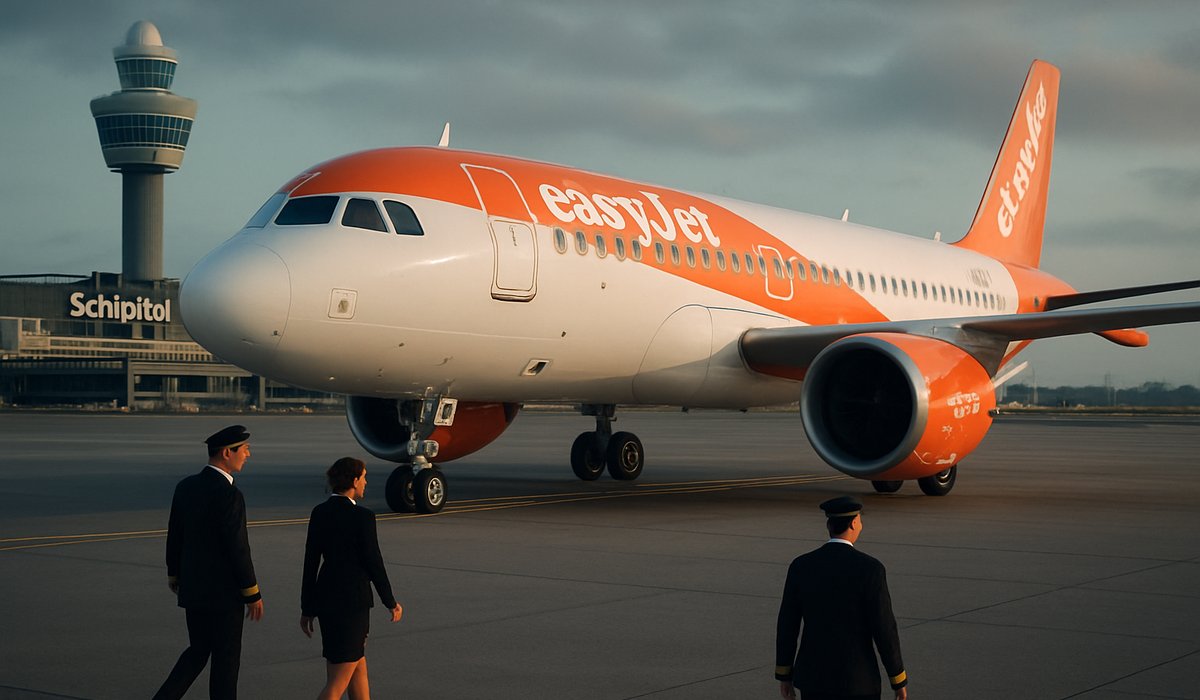
Image generated by AI
EasyJet Deploys Autonomous Aircraft Taxiing System at Amsterdam Schiphol, Signaling Industry Shift Toward Sustainable Aviation
European budget carrier pioneers engine-off ground operations technology to cut emissions and fuel costs at one of Europe's busiest hubs
Revolutionary Ground Handling Technology Takes Flight
EasyJet has successfully implemented autonomous aircraft taxiing technology at Amsterdam Schiphol Airport, deploying TaxiBot—an innovative towing system that eliminates the need for main engine operation during ground movements. The milestone represents a significant advancement in sustainable aviation practices, with the carrier's first operational flight using the technology commencing on April 30, following successful preliminary trials earlier in 2024.
The system fundamentally transforms how aircraft transition between terminal gates and runways by employing a specialized towing vehicle to guide planes while their main engines remain dormant. Aircraft operate exclusively on auxiliary power units (APUs) during ground movements, a critical operational shift that substantially reduces jet fuel consumption and emissions during one of the most fuel-intensive phases of airport operations.
How TaxiBot Addresses Industry Challenges
Ground taxiing represents a persistent operational inefficiency across global aviation. Aircraft engines—designed for high-altitude cruise at optimal fuel efficiency—consume disproportionate quantities of fuel during low-speed ground movements. This operational reality has drawn increasing scrutiny from environmental regulators and increasingly cost-conscious airlines navigating volatile jet fuel markets.
The adoption of engine-off taxiing directly addresses dual pressures confronting modern carriers: escalating sustainability mandates from European Union aviation regulations and persistent inflationary pressures on operational expenses. For budget carriers like EasyJet—already operating under thin margins typical of low-cost business models—reducing unnecessary fuel burn presents tangible cost savings while simultaneously demonstrating environmental commitment to increasingly conscious consumers.
Broader Industry Implications and Future Expansion
This development carries substantial ramifications for aviation's decarbonization trajectory. Amsterdam Schiphol, consistently ranking among Europe's top-ten busiest airports by passenger volume, provides an ideal testing ground for scalable green technology. Successful implementation at this high-traffic facility signals feasibility for adoption across congested European airports where ground delays frequently extend taxiing durations.
Industry analysts project that widespread TaxiBot adoption could reduce annual aviation fuel consumption by measurable percentages across major European hubs, translating into meaningful carbon emission reductions and operational cost savings industry-wide. The technology aligns with the European Union's broader "Fit for 55" framework, which mandates substantial aviation sector emissions reductions by 2030.
EasyJet's pioneering approach positions the carrier as a sustainability leader within Europe's hypercompetitive budget aviation sector, potentially differentiating the brand amid intensifying competition from Ryanair, Wizz Air, and traditional full-service carriers increasingly adopting green initiatives.
Frequently Asked Questions
What is TaxiBot technology and how does it work? TaxiBot is an autonomous towing system that guides aircraft between gates and runways using a specialized tug vehicle while aircraft engines remain off, relying instead on auxiliary power units for essential systems.
How much fuel can airlines save with autonomous taxiing systems? Fuel savings vary by aircraft type and taxiing distance, but industry estimates suggest 4-5% reductions in total flight fuel consumption, with ground operation fuel use declining by 85-90% when engines remain off.
Is engine-off taxiing safe for aircraft systems? Yes—auxiliary power units are specifically designed to sustain all essential aircraft systems during ground operations, making engine-off taxiing operationally safe and standard industry practice across compatible aircraft models.
Will other airlines adopt this technology at major European airports? Multiple carriers have expressed interest in TaxiBot deployment, with implementation discussions underway at Frankfurt, Paris Charles de Gaulle, and other congested European hubs where operational efficiency gains are most substantial.
How does autonomous aircraft taxiing reduce overall aviation emissions? Ground operations account for 4-5% of total flight emissions; eliminating main engine use during taxiing prevents unnecessary combustion of jet fuel during low-speed movements where engines operate at minimal efficiency.
Related Travel Guides
- South Florida Transit Guide Compares Miami International Airport and Fort Lauderdale Airport Access After Spirit Airlines Operational Shutdown
- Ultra-Rare Military Aircraft: Why the World's Most Advanced Warplanes Were Built in Tiny Numbers
- Stockholm to Gran Canaria: Norwegian Air Launches Direct Nordic Route
Disclaimer
This article is for informational and educational purposes only. It does not constitute legal, financial, or professional advice. While we strive to provide accurate and up-to-date information, travel policies, regulations, and conditions change rapidly. Always verify information with official sources before making travel decisions. Nomad Lawyer makes no representations about the accuracy, reliability, completeness, or suitability of the information provided. Readers should consult qualified professionals for advice specific to their circumstances. The views expressed in this article are those of the author and do not necessarily reflect the views of Nomad Lawyer.
Preeti Gunjan
Contributor & Community Manager
A passionate traveller and community builder. Preeti helps grow the Nomad Lawyer community, fostering engagement and bringing the reader experience to life.
Learn more about our team →