
Dozens Stranded as Jet2 Plane Departs Without Boarding Group
A Jet2 flight departed Manchester Airport in April 2026 with 35 passengers' luggage aboard after ground handling trapped them in a stairwell for 40 minutes, highlighting critical boarding process failures affecting travelers.

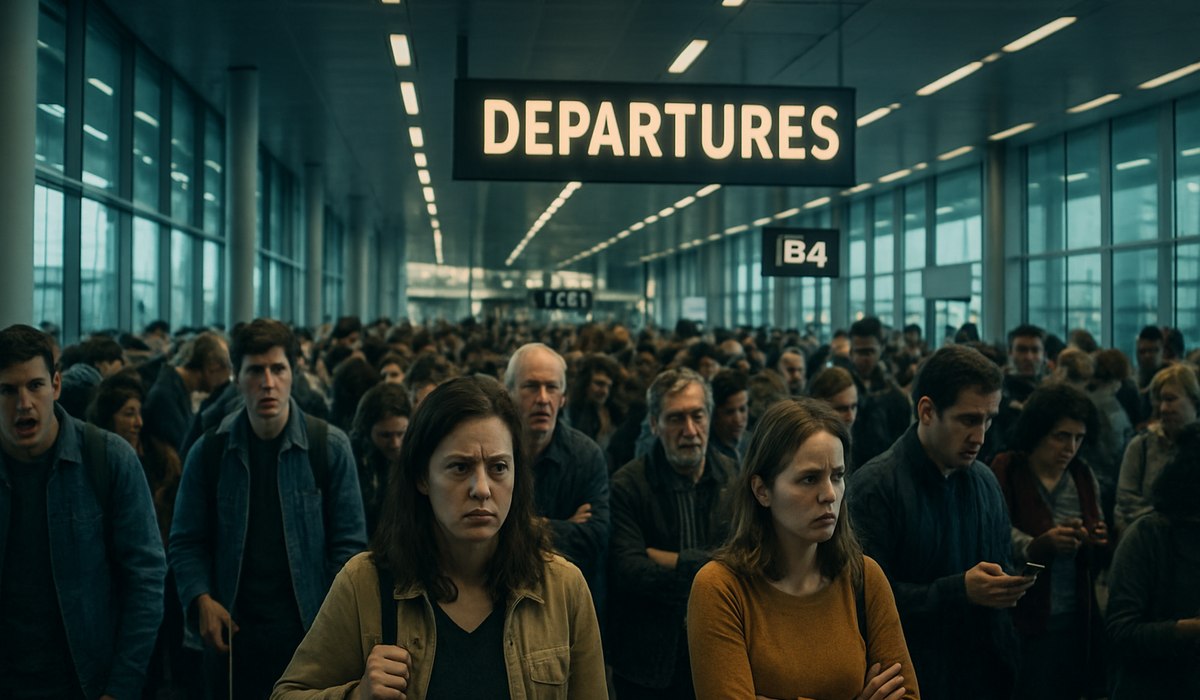
Image generated by AI
Dozens Stranded as Jet2 Flight Departs Without Boarding Group
Jet2 left approximately 35 passengers stranded at Manchester Airport on April 20, 2026, when their aircraft departed with checked luggage still aboard while the group remained trapped in a stairwell near the departure gate. The passengers had completed security screening and boarding checks but were held in an enclosed, dead-end stairwell for up to 40 minutes with no staff present and no transportation to the aircraft. By the time they were released back into the terminal, the flight to Alicante, Spain had already taken off. The incident underscores a critical operational breakdown between ground handling, gate operations, and airline staff—a problem that raises serious questions about passenger safety protocols and communication systems at major European airports.
Stairwell Bottleneck Leaves Passengers Behind
The April 2026 incident at Manchester Airport reveals how a single operational failure can cascade into a complete boarding disaster. Thirty-five travelers who had successfully cleared all pre-boarding requirements were directed down a stairwell adjacent to the departure gate, where they were told to expect either an airport bus or direct aircraft access. Instead, they found themselves in an enclosed space with no visible staff, no signage, and no transportation arriving.
Ground handling personnel failed to communicate with passengers or supervise the boarding process during this critical 40-minute window. While stranded travelers waited in confusion, gate agents presumably recorded boarding passes as scanned in their systems, potentially marking these passengers as already aboard. This automated notation allowed flight operations to proceed with departure procedures without verification that all boarded passengers had physically reached the aircraft.
By the time airport staff retrieved the group from the stairwell and returned them to the terminal, the Jet2 aircraft had already pushed back from the gate. Most troubling: the plane departed with all checked luggage belonging to the stranded passengers loaded in the cargo hold, adding financial hardship and lost belongings to an already distressing travel disruption. Manchester Airport official passenger services and Jet2 customer support have since acknowledged the incident requires investigation and systematic review of ground handling protocols.
How the Boarding Process Failed
Modern airport operations involve dozens of handoff points between security, ground handlers, gate agents, and airline staff. At Manchester, the boarding architecture itself created unnecessary complexity. Using a stairwell as a holding area—rather than a direct gate queue or jet bridge staging area—introduced an additional physical barrier that made passenger supervision difficult and communication unreliable.
Industry experts note that several preventative measures could have stopped this incident before stranded passengers became a reality. First, a dedicated staff member should have been assigned to supervise the stairwell queue and communicate real-time updates to waiting passengers. Second, systematic headcounts should have been conducted at the gate before door closure, comparing the manifest against physically present travelers. Third, clear signage and public address announcements should have oriented passengers about expectations and timelines.
The most critical failure was the assumption that scanned boarding passes equaled confirmed boarding. Modern airport systems often record passengers as processed once their documents are electronically read, but this creates a dangerous gap when passengers are then separated from direct gate access. Gate agents relied on this automated data rather than visual verification, allowing the aircraft to depart with missing passengers still showing as "boarded" in the system.
Similar Incidents Highlight Systemic Weak Spots
The Manchester stairwell incident is not an isolated operational hiccup. Across Europe and beyond, 2026 has seen multiple reports of dozens stranded when aircraft departs without complete passenger manifests. These recurring failures suggest underlying weaknesses in how airlines and airports coordinate boarding under time pressure.
In Poland, a Ryanair flight from Katowice to Dortmund departed while dozens of ticketed passengers remained in security screening queues. Travelers who arrived within what they considered adequate connection time found themselves unable to clear crowded checkpoint lines before the boarding deadline. Some passengers passed through security but reached the gate after doors had already closed, watching their flight taxi away with empty seats visible from the terminal.
A Wizz Air flight from Jeddah to London created a 30-hour disruption involving passengers confined to airport buses, returned to the terminal multiple times, and ultimately separated from their original routing when an aircraft substitution caused confusion. Passengers weren't clearly informed about aircraft changes or new departure times, leading many to miss their reboooked flights entirely.
Social media platforms and passenger forums reveal dozens of smaller incidents where gate changes announced only via overhead speakers, unposted gate assignments, or incomplete boarding calls led to groups missing flights. One widely shared account described over ten passengers left behind when a gate reassignment happened without proper notification to waiting travelers. These patterns point to systemic weak spots in staff training, communication infrastructure, and passenger accountability procedures across multiple airlines and airports.
What Passengers' Rights Are
When an airline departs without boarding passengers who have checked in and arrived at the gate, travelers are entitled to specific protections under European Union and international regulations. Under EU Regulation 261/2004, passengers denied boarding—whether involuntarily or due to operational failure—are entitled to compensation ranging from €250 to €600 depending on flight distance, plus rebooking on the next available flight at no additional cost.
Passengers affected by the Jet2 incident should document everything: boarding passes, scans of tickets, timestamps of events, photos of the stairwell location, and names of any airport staff they encountered. This evidence strengthens compensation claims significantly. Affected travelers should contact Jet2 customer service immediately with this documentation and demand written explanation of how the boarding failure occurred.
Additionally, passengers can file complaints with aviation authorities in their country of origin and with the UK Civil Aviation Authority, which oversees Jet2 operations. These formal complaints create regulatory pressure and may trigger mandatory operational audits. Most importantly, travelers should never accept a simple flight reboooking as adequate resolution—legal compensation is a separate entitlement that airlines frequently understate or fail to proactively offer.
Key Data Table: Incident Comparison and Impact
| Incident | Airline | Airport | Date | Passengers Affected | Aircraft Status | Primary Cause |
|---|---|---|---|---|---|---|
| Manchester Stairwell | Jet2 | Manchester | April 2026 | 35 | Departed with luggage | Ground handling failure |
| Katowice Security | Ryanair | Katowice | 2026 | Dozens | Departed on schedule | Security bottleneck |
| Jeddah Disruption | Wizz Air | King Abdulaziz | 2026 | Multiple groups | Departed with confusion | Aircraft substitution miscommunication |
| Gate Assignment Failure | Unnamed | European hub | 2026 | 10+ | Taxied away | Unposted gate change |
| Bus Delay Incident | Multiple | Various | 2026 | Varied | Departed late | Shuttle transportation failure |
What This Means for Travelers
The Manchester incident and similar 2026 boarding failures demand that passengers take active responsibility for their airport experience:
-
Arrive early and stay visible: Don't simply check in online and assume you can arrive 30 minutes before departure. Appear at the gate area at least 45-60 minutes before international flights, giving buffer time for unexpected delays or communication failures.
-
Confirm gate assignments repeatedly: Check the airport departure boards at least three times—upon arrival, 30 minutes before departure, and immediately before heading to the gate. Gate changes happen frequently, and relying on a single announcement creates risk.
-
Stay near the gate queue: Once boarding begins, position yourself where gate agents can see you. If directed into a holding area like the Manchester stairwell, ask staff directly about timeline expectations and request confirmation that
Disclaimer
This article is for informational and educational purposes only. It does not constitute legal, financial, or professional advice. While we strive to provide accurate and up-to-date information, travel policies, regulations, and conditions change rapidly. Always verify information with official sources before making travel decisions. Nomad Lawyer makes no representations about the accuracy, reliability, completeness, or suitability of the information provided. Readers should consult qualified professionals for advice specific to their circumstances. The views expressed in this article are those of the author and do not necessarily reflect the views of Nomad Lawyer.
Preeti Gunjan
Contributor & Community Manager
A passionate traveller and community builder. Preeti helps grow the Nomad Lawyer community, fostering engagement and bringing the reader experience to life.
Learn more about our team →