
Douglas Mawson Inaugural Caen Port Call Ignites Normandy Cruise Tourism During 82nd D-Day Anniversary Celebrations in 2026
Aurora Expeditions' Douglas Mawson makes historic debut at Port of Caen-Ouistreham during D-Day commemorations, signaling major growth in French cruise tourism and heritage travel demand.

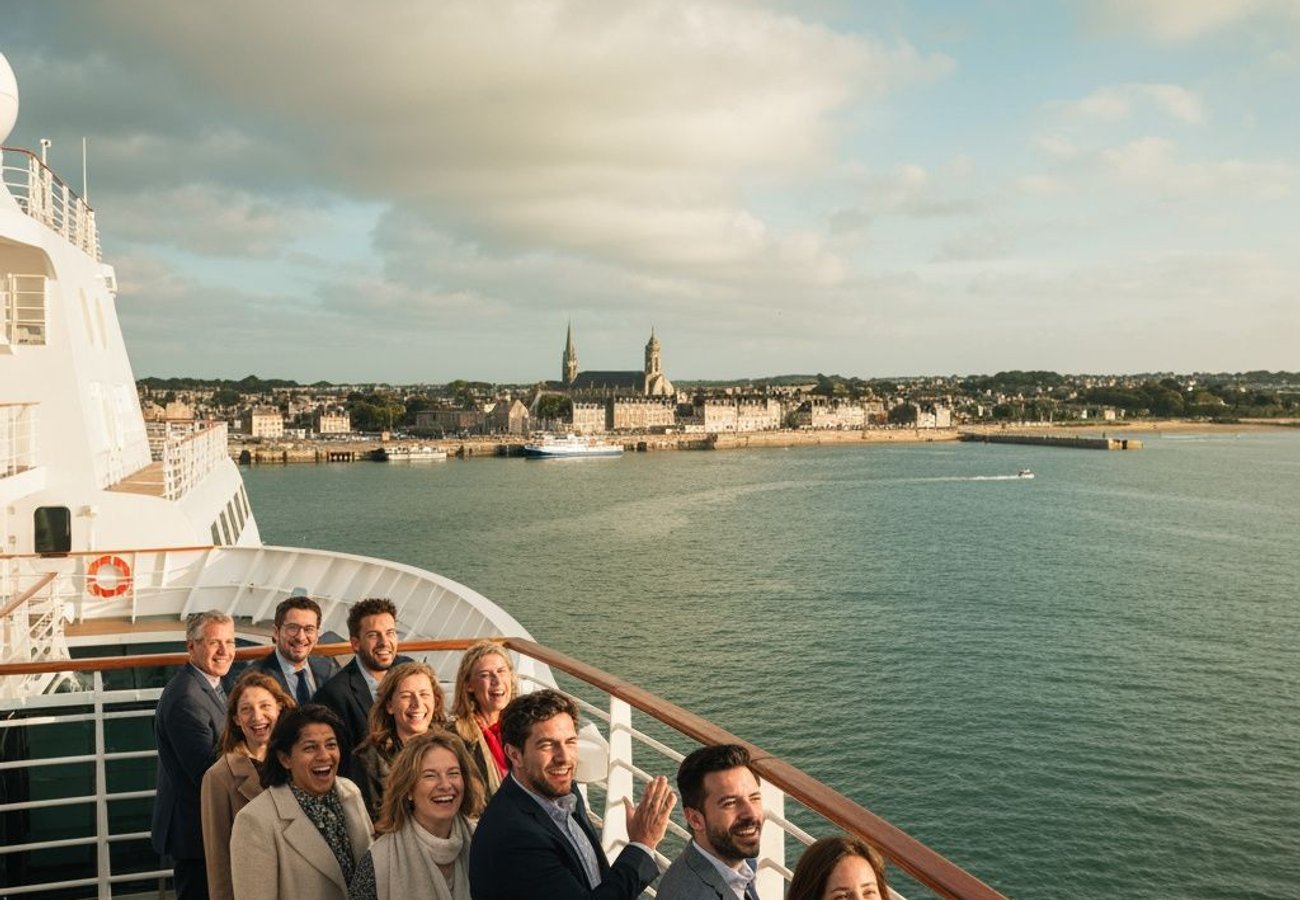
Image generated by AI
Aurora Expeditions Makes Historic Statement: Douglas Mawson Arrives at Caen During Europe's Most Significant Remembrance Week
The Douglas Mawson, an expedition-class vessel operated by Aurora Expeditions, pulled into the Port of Caen-Ouistreham on June 14, 2026—not by accident, but with perfect historical timing. The ship's inaugural arrival coincided with the 82nd anniversary of D-Day and the Battle of Normandy, transforming a routine cruise call into a watershed moment for French heritage tourism.
This wasn't just another port visit. For regional tourism officials, cruise operators, and the broader travel industry watching Normandy's evolution, the arrival signaled something far more consequential: international cruise tourism has discovered France's most historically resonant destination, and it's arriving in force.
The Expedition Vessel Phenomenon: How Smaller Ships Are Reshaping Heritage Tourism
What makes this story significant isn't the size of the vessel—it's the philosophy behind it. Expedition ships operate differently from the megaships dominating most cruise routes. They prioritize immersive, educational experiences over sheer passenger volume.
Reddit: "Expedition cruises hit different. You're not just sightseeing—you're actually learning something," — r/cruise
Passengers aboard Douglas Mawson aren't here for casino nights and Broadway shows. They're here to walk the beaches where 156,000 Allied soldiers landed. They're here to stand in military cemeteries. They're here to understand what happened across this 50-mile stretch of French coast in June 1944, and how that single military operation reshaped the modern world.
This alignment between expedition cruising philosophy and Normandy's heritage-focused tourism ecosystem is precisely why the region is poised for explosive growth. As the broader cruise industry continues fragmenting into ultra-specialized niches—from luxury expedition vessels to river cruises to adventure-focused small ships—ports like Caen-Ouistreham suddenly occupy a sweet spot they've never occupied before.
The 82nd Anniversary Effect: When History Becomes Tourism Gold
The timing of Douglas Mawson's arrival during the anniversary commemorations wasn't coincidental—it was strategic. Every June, Normandy experiences a surge of international visitors seeking to participate in D-Day remembrance activities.
Veterans, descendants of veterans, history students, educators, and general tourists converge on the region. Museums report record attendance. Restaurants book solid weeks in advance. Transportation services strain under demand.
This year, the cruise industry managed to integrate itself directly into that existing pilgrimage traffic. Rather than passengers traveling to France independently and then arranging their own Normandy visits, they're now booking entire cruise itineraries centered on heritage experiences.
The economic multiplier effect is enormous. A cruise passenger arriving at Caen doesn't just spend money once. They book shore excursions. They eat dinner ashore. They purchase souvenirs at museums. They tip their guides. Over a typical three-to-five-day stay in a region, a heritage cruise tourist represents a meaningful revenue stream for local hospitality operators.
Beyond the Beaches: Caen, Mont-Saint-Michel, and the Diversification of Normandy Tourism
One brilliant aspect of Normandy as a cruise destination lies in its portfolio diversity. Yes, D-Day history dominates the narrative. But the region offers far more than bunkers and cemeteries.
Caen presents medieval architecture, world-class museums, and centuries of Norman heritage extending centuries before 1944. Passengers can explore the Abbaye-aux-Hommes and Abbaye-aux-Dames (both 11th-century foundations), wander through UNESCO-recognized neighborhoods, and sample Norman gastronomy—particularly cider and Camembert cheese that originate within kilometers of the port.
Mont-Saint-Michel, visible from the Normandy coast and accessible via organized shore excursions, remains one of France's most photographed landmarks. The island abbey attracts over 3 million visitors annually. For cruise passengers with limited time ashore, guided excursions to Mont-Saint-Michel provide convenient access to an iconic European destination without requiring independent travel planning.
This layered destination appeal matters enormously for cruise line itinerary planning. It enables marketing that positions Normandy as offering "history AND culture AND architecture AND gastronomy," rather than positioning it as a single-note destination.
Infrastructure Investments Signal Long-Term Industry Confidence
Perhaps most telling about the industry's confidence in Caen as an emerging cruise hub is the investment cascade already underway. Port authorities have committed substantial capital to infrastructure modernization, signaling that this isn't a temporary tourism spike but a fundamental repositioning of the destination.
A new bridge project scheduled for completion in 2027 represents the cornerstone of this expansion strategy. The improved navigational access will allow larger cruise vessels—potentially ships carrying 3,000+ passengers—to enter the port safely. Currently, the port accommodates smaller and mid-sized vessels, limiting the volume of cruise traffic.
Once this infrastructure upgrade completes, expect a material increase in cruise calls. Larger cruise lines that currently cannot include Caen in their itineraries suddenly gain access to a historically significant destination with minimal logistical friction.
This is how port infrastructure investments drive tourism multipliers. Better infrastructure attracts larger ships. Larger ships mean more passengers. More passengers mean more shore excursions, more restaurant reservations, more museum visits, more retail spending. A single $30-50 million port improvement investment can generate hundreds of millions in long-term tourism revenue.
The Operational Success Story That Nobody's Talking About
Buried in the logistics of Douglas Mawson's arrival was a less glamorous but equally important achievement: the port successfully managed simultaneous overnight cruise calls from multiple vessels.
This might sound routine to industry observers, but it's actually quite significant. Many regional European ports struggle with overnight cruise operations. Simultaneous calls require careful coordination of cargo handling, provisioning, waste management, passenger movement, and crew operations. Ports that execute this smoothly gain competitive advantages in cruise operator scheduling.
Caen-Ouistreham's operational performance during the D-Day weekend suggested to cruise operators that this port can handle complexity. That confidence translates directly into future cruise call commitments.
The Broader Normandy Tourism Ecosystem Awakens
What's happening in Normandy right now mirrors broader shifts across European heritage tourism. Travelers increasingly seek "purpose-driven" experiences—journeys where the destination carries meaningful historical, cultural, or educational weight.
The cruise industry has recognized this demand and is recalibrating its deployment strategies accordingly. Rather than chasing warm-weather destinations with beaches and resorts, cruise operators are now aggressively marketing historical and cultural itineraries to aging, affluent demographics that represent the industry's core market.
Aurora Expeditions specifically targets this demographic. The company operates expedition vessels designed for destination immersion rather than onboard entertainment. Passengers aboard these ships tend to be highly educated, well-traveled, and specifically interested in learning about the places they visit.
For Normandy, this represents a massive market opportunity. The region possesses UNESCO World Heritage sites, world-class museums, authentic regional culture, and unparalleled historical significance. It was only a matter of time before the cruise industry connected these assets with its target demographic.
What's Next: The Caen Cruise Tourism Acceleration
Douglas Mawson's arrival was not an isolated event. Port authorities have already confirmed that numerous additional cruise visits are scheduled for coming seasons. This sequential booking pattern signals that cruise operators view Caen as a proven, viable destination worth incorporating into regular rotation schedules.
Expected developments include:
Larger vessels entering the port as 2027 bridge completion approaches. Cruise lines will expand existing itineraries or create new Normandy-focused sailings. Shore excursion operators will expand capacity and develop new experiences. Hospitality infrastructure (hotels, restaurants, guide services) will grow to accommodate increased passenger volumes. Additional regional attractions will develop cruise-specific programming.
The transformation won't happen overnight. But the momentum is unmistakable. Normandy stands at an inflection point where heritage tourism, cruise industry expansion, infrastructure investment, and global commemorative events align to create genuine, sustained growth.
The quiet revolution in cruise tourism isn't about bigger ships—it's about smarter destinations.
Related Travel Guides
Disclaimer
This article is for informational and educational purposes only. It does not constitute legal, financial, or professional advice. While we strive to provide accurate and up-to-date information, travel policies, regulations, and conditions change rapidly. Always verify information with official sources before making travel decisions. Nomad Lawyer makes no representations about the accuracy, reliability, completeness, or suitability of the information provided. Readers should consult qualified professionals for advice specific to their circumstances. The views expressed in this article are those of the author and do not necessarily reflect the views of Nomad Lawyer.
Kunal K Choudhary
Co-Founder & Contributor
A passionate traveller and tech enthusiast. Kunal contributes to the vision and growth of Nomad Lawyer, bringing fresh perspectives and driving the community forward.
Learn more about our team →