
The Disneyfication of Yosemite: Why Modern Tourists Mistake Wilderness for Theme Parks in 2026
Analyzing the psychological shift where visitors treat Yosemite and other national parks as sanitized attractions, leading to dangerous behavioral patterns and increased rescue operations.

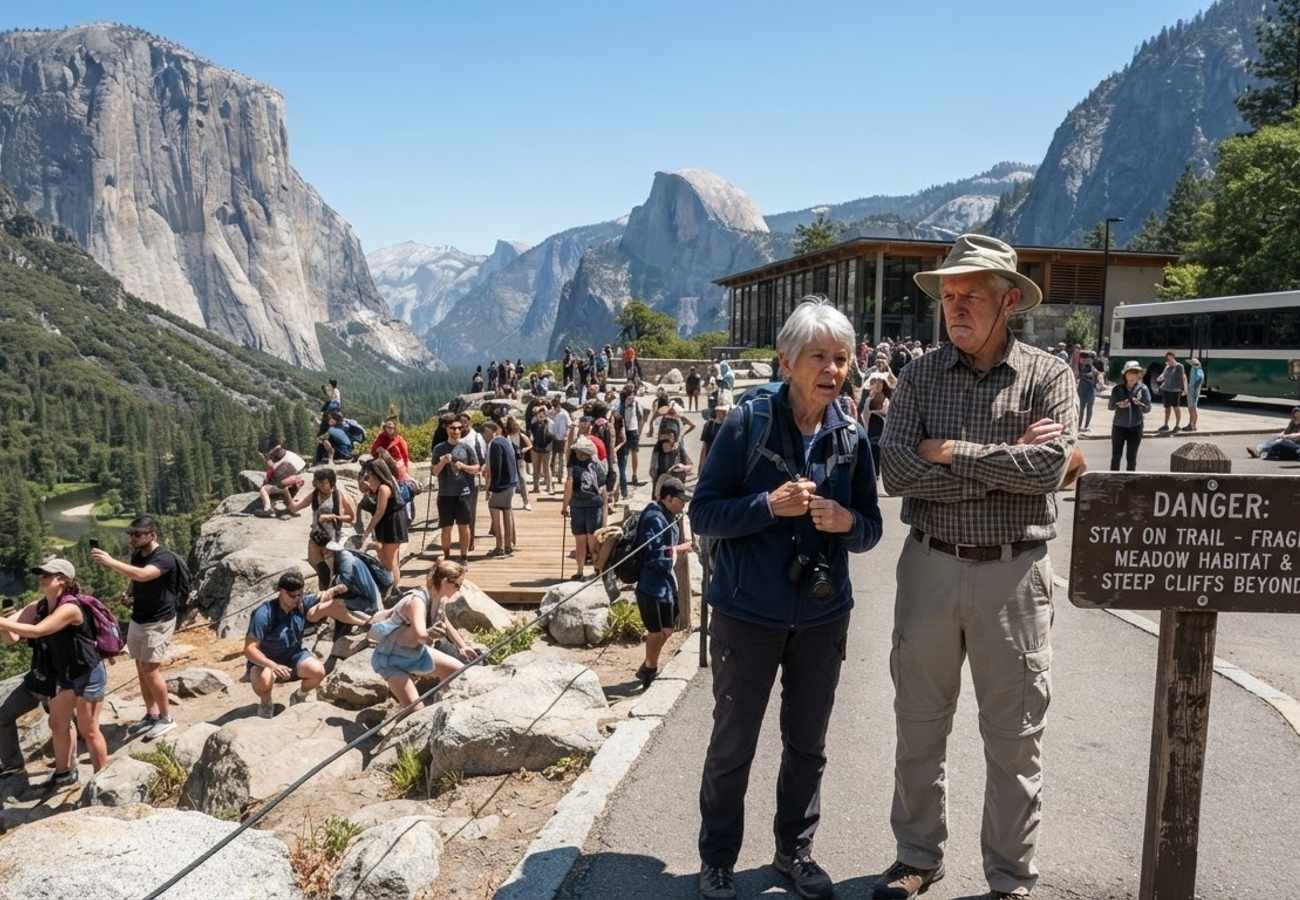
Image generated by AI
The rise of the "touron"—a portmanteau of tourist and moron—has become a viral shorthand for a troubling trend in global tourism. From visitors approaching bison too closely in Yellowstone to individuals breaching protective boundaries in Yosemite, a pattern of reckless behavior is emerging in the wild. While these incidents are often dismissed as a lack of common sense, psychologists and park experts suggest a deeper cognitive shift: the "Disneyfication" of the natural world.
This phenomenon occurs when visitors, accustomed to the hyper-managed environments of modern cities and theme parks, subconsciously project those safety standards onto the wilderness. In a world where hazards are engineered out of existence, many travelers arrive at national parks under the false impression that the environment has been pre-sanitized for their safety.
The Architecture of Managed Risk
"Disneyfication" describes the process of transforming a location into a polished, predictable, and safe experience. In a theme park, thrill is simulated, but genuine danger is eliminated through rigorous engineering, hidden barriers, and strict emergency protocols.
Modern urban living mirrors this structure. We navigate rounded edges, fenced-off hazards, and traffic-controlled intersections. When this mental framework is applied to a national park, the presence of "civilized" infrastructure—such as entrance gates, shuttle buses, and paved walkways—creates a dangerous psychological illusion.
The following table illustrates the disconnect between visitor assumptions and the reality of wilderness environments:
| Modern Park Feature | Visitor Assumption | Actual Reality |
|---|---|---|
| Entrance gates | Hazards are managed | Nature remains largely unmanaged |
| Boardwalks and paved paths | Safe beyond the railings | Danger often begins immediately off-trail |
| Visitor centers and gift shops | The experience is controlled | Nearby wildlife and terrain remain unpredictable |
| Scenic overlooks | Risk has been eliminated | Barriers reduce risk but cannot remove it |
Psychological Drivers of Risky Behavior
Most visitors do not enter a park intending to jeopardize their lives. Instead, a combination of cognitive biases leads them to make catastrophic decisions.
Simulation Bias The ubiquity of high-definition nature documentaries and social media reels has stripped the "danger" from the image. Waterfalls are viewed as scenic backdrops rather than powerful hydraulic forces, and bison are perceived as oversized photo opportunities rather than 2,000-pound wild animals.
Social Normalization The presence of a crowd can override individual judgment. If a group is already standing on a precarious riverbank for a selfie, newcomers assume the location has been vetted and deemed safe. This collective ignorance creates a feedback loop where risky behavior becomes the accepted norm.
The Dopamine Loop of Social Media Platforms like Instagram and TikTok reward "impossible" angles and daring perspectives. For many, the digital validation of a high-risk photo becomes more valuable than the actual experience of nature, triggering a dopamine response that suppresses basic survival instincts.
The Dilemma of Park Management
There is a recurring question as to why the National Park Service (NPS) does not simply install taller fences or more restrictive barriers. The answer lies in the fundamental mission of the NPS: to preserve natural landscapes in their authentic state.
Transforming a wilderness area into a sanitized attraction would destroy the very essence of the national park experience. Furthermore, increasing the amount of engineered infrastructure may actually exacerbate the problem. The more a park looks like a theme park, the more visitors trust the infrastructure over their own intuition, reinforcing the Disneyfication mindset.
The Human and Global Cost
The consequences of these behavioral shifts extend beyond the individual. Every preventable emergency places Search and Rescue (SAR) teams in hazardous conditions. Helicopter crews and rangers routinely risk their lives to retrieve hikers who ignored "Danger" signs or underestimated the power of moving water.
This is not an isolated American issue. Similar patterns are observed globally:
- Iceland: Tourists frequently ignore warnings on black sand beaches, only to be swept away by "sneaker waves."
- Australia: Visitors breach barriers on dramatic sea cliffs for better photography.
- Europe: Historic viewpoints see a steady rise in accidents involving people entering restricted zones.
The common thread is a global feedback loop where a spectacular image inspires millions to recreate a shot without understanding the underlying risks.
Critical Safety Factors for Wilderness Visitors
To avoid becoming a statistic, travelers should recognize the common red flags that lead to accidents:
- Assuming that if a barrier isn't present, the area is safe.
- Prioritizing crowd behavior over official warning signage.
- Underestimating the speed of water or the volatility of wildlife.
- Pursuing "unique" social media content at the expense of safety.
- Assuming rescue services can provide immediate extraction in remote areas.
The safest rule of thumb in any national park: if you are wondering if you are getting too close, you already are.
Related Travel Guides
Disclaimer
This article is for informational and educational purposes only. It does not constitute legal, financial, or professional advice. While we strive to provide accurate and up-to-date information, travel policies, regulations, and conditions change rapidly. Always verify information with official sources before making travel decisions. Nomad Lawyer makes no representations about the accuracy, reliability, completeness, or suitability of the information provided. Readers should consult qualified professionals for advice specific to their circumstances. The views expressed in this article are those of the author and do not necessarily reflect the views of Nomad Lawyer.
Preeti Gunjan
Contributor & Community Manager
A passionate traveller and community builder. Preeti helps grow the Nomad Lawyer community, fostering engagement and bringing the reader experience to life.
Learn more about our team →