
Diplomat calls international collaboration for Nepal Himalayan safety
US diplomat Sarah B Rogers advocates for international collaboration and technology-driven safety standards in Nepal's Himalayan tourism sector during 2026 Ascent Summit, bringing together 1,400+ experts.

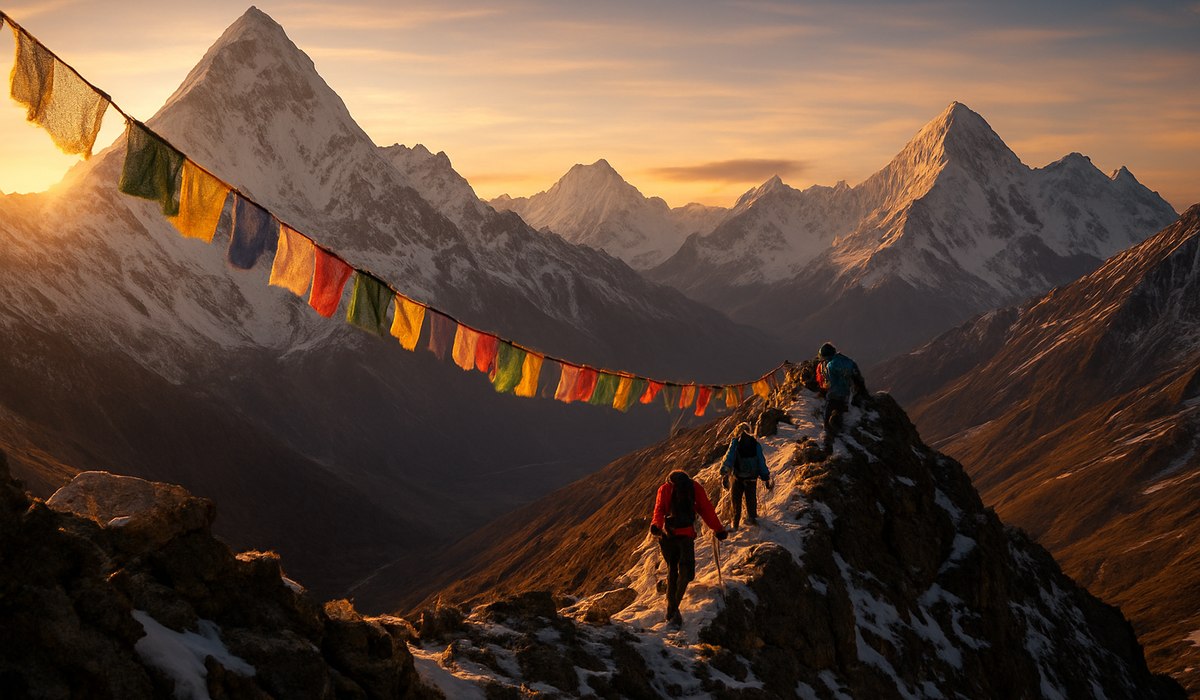
Image generated by AI
A Top Diplomat's Push for Safer Himalayan Adventures
Sarah B Rogers, a prominent US diplomatic official, has called for unprecedented international collaboration and technological innovation to strengthen safety standards across Nepal's mountaineering and tourism sectors. Speaking at the Ascent Summit 2026, Rogers emphasized how merging Nepal's century-long climbing expertise with American technological infrastructure could revolutionize expedition safety protocols. The summit, attended by over 1,400 industry specialists, officials, and mountain specialists, highlighted a critical moment when the world's highest peaks demand smarter, technology-enabled safety measures. This diplomatic initiative addresses growing concerns about mountaineering fatalities, equipment failures, and communication breakdowns during high-altitude expeditions in the Himalayas.
US Diplomat's Call for International Collaboration
Diplomat calls international partnerships as essential to addressing shared safety challenges that transcend borders. Rogers advocated for establishing multinational task forces dedicated to standardizing safety equipment, certification protocols, and emergency response systems across Himalayan expedition routes. The initiative recognizes that climbers hail from dozens of countries, yet operate under fragmented safety regulations. International collaboration would create unified guidelines covering everything from oxygen supply chain management to satellite communication systems. By pooling resources through government agencies, private sector partners, and non-profit organizations, countries can collectively fund research, training programs, and infrastructure improvements. Nepal, as the gateway to eight of the world's fourteen highest peaks, stands to benefit significantly from this coordinated approach.
Technology's Role in Himalayan Safety
Modern technology fundamentally transforms how expeditions operate above 8,000 meters. Real-time altitude monitoring, wearable biometric sensors, and AI-powered weather prediction systems provide climbers with unprecedented situational awareness. GPS tracking integrated with cloud-based mapping enables base camps to monitor expedition progress continuously. Drone-assisted rescue operations have already proven effective during emergency evacuations at extreme elevations. Telemedicine platforms allow climbers to consult with specialists during acute health emergencies while still at altitude. Investment in satellite communication networks creates reliable connectivity across remote ridges previously considered communication dead zones. These technological solutions, when combined with traditional mountaineering wisdom passed down through generations of Sherpa guides, create a comprehensive safety ecosystem that protects human lives while preserving the authentic climbing experience.
Business Opportunities for US Companies
American technology firms have already begun exploring partnerships within Nepal's tourism infrastructure. Software companies specializing in logistics optimization can streamline expedition supply chains. Medical device manufacturers can develop altitude-specific equipment tailored to extreme environments. Telecommunications companies can install and maintain satellite networks across the Himalayas. Insurance and risk management firms can create data-driven underwriting models based on expeditionary hazard assessments. US educational institutions can partner with Nepali universities to develop training curricula for safety officers and guides. Manufacturing partnerships could domestically produce safety equipment, creating employment while maintaining quality standards. The projected market value for Himalayan tourism safety solutions exceeds several hundred million dollars annually, attracting venture capital and corporate investment toward sustainable, innovation-driven growth.
Nepal's Tourism Sector at a Crossroads
Nepal's economy significantly depends on mountaineering and trekking tourism, generating over 600 million dollars annually. However, safety incidents create negative international perceptions that discourage bookings and damage the nation's reputation. Climate change, including increased avalanche frequencies and glacier instability, adds new hazard dimensions requiring adaptive responses. Infrastructure limitations—including limited medical facilities, communication gaps, and emergency evacuation capabilities—amplify risks. Despite these challenges, Nepal possesses irreplaceable advantages: the world's most experienced mountaineering workforce, established route networks spanning decades, and a deeply rooted culture of adventure tourism. Strategic investments in technology and international partnerships position Nepal to lead global mountaineering safety innovation while expanding tourism revenues. This balanced approach protects climbers, supports local communities, and secures Nepal's competitive advantage in the adventure tourism market.
Key Data Table: Himalayan Expedition Safety Metrics
| Metric | 2024 Value | 2026 Projection | Impact Area |
|---|---|---|---|
| Annual Everest Summits | 478 | 550+ | Economic Growth |
| Safety Incidents | 14 | 8-10 | Fatality Reduction |
| Countries Represented | 28 | 35+ | International Collaboration |
| Expeditions Using Tech | 35% | 70%+ | Technology Adoption |
| Communication Coverage | 45% | 85%+ | Emergency Response |
| Professional Guide Network | 2,100 | 3,200+ | Employment & Training |
What This Means for Travelers
Climbers and trekkers planning Himalayan expeditions in 2026 and beyond should expect enhanced safety frameworks and technological integration:
-
Verify expedition operators' safety certifications against new international standards being developed through diplomat-led collaborations.
-
Expect mandatory biometric monitoring systems on commercial expeditions, improving real-time health tracking and emergency response capabilities.
-
Plan for improved communication access, with satellite phones and messaging systems becoming standard rather than optional equipment.
-
Budget for advanced training programs that meet internationally harmonized safety requirements, protecting your investment and life.
-
Research insurance policies carefully, as carriers increasingly reward expeditions meeting the new technology-enabled safety protocols with better rates.
FAQ
What exactly did the US diplomat propose at Ascent Summit 2026?
Sarah B Rogers advocated for creating multinational safety standards combining technological innovation with traditional mountaineering expertise. The proposal includes unified equipment certification, standardized training protocols, satellite communication networks, and coordinated emergency response systems across all Himalayan expedition routes and countries.
How will international collaboration improve Himalayan safety?
Unified safety standards eliminate inconsistencies between countries. Shared technology infrastructure reduces communication failures. Coordinated training ensures consistent guide qualifications. Pooled resources fund research on altitude-specific medical interventions and equipment innovations that individual nations cannot afford independently.
Which US companies could benefit from these partnerships?
Technology firms specializing in telecommunications, medical devices, software development, and logistics optimization represent primary opportunities. Equipment manufacturers, consulting firms, and educational institutions also stand to expand operations through partnership agreements with Nepali tourism operators and government agencies.
When might climbers see these safety improvements implemented?
Most technology-enabled systems are expected to be piloted during the 2026-2027 climbing season. Full implementation across all major expedition routes could take 18-24 months, with phased rollouts beginning on Everest and other heavily-trafficked peaks first, expanding to less-crowded mountains subsequently.
Related Travel Guides
- Unsatisfied Booking Rate: Asia's Travel Platforms Face Urgent Relevance Crisis
- [American Airlines & Delta Chaos: Chemical Smell Halts FAA Facility, Ground Stops at DC-Area Airports](/american-airlines-delta-chaos-faa-facility-chemical-2026)
- United Airlines Unveils New Boeing 787-9 Dreamliners for Routes to London, Singapore, and Zurich
Disclaimer
This article draws from reporting on the Ascent Summit 2026 and official statements regarding international mountaineering safety initiatives. For authoritative information about expedition regulations and safety standards, consult the Nepal Mountaineering Association, the International Climbing and Mountaineering Federation, and your expedition operator's official documentation. Safety protocols and international standards evolve continuously; verify current requirements with your expedition company, guide service, and travel insurance provider before undertaking any Himalayan expedition.
Disclaimer
This article is for informational and educational purposes only. It does not constitute legal, financial, or professional advice. While we strive to provide accurate and up-to-date information, travel policies, regulations, and conditions change rapidly. Always verify information with official sources before making travel decisions. Nomad Lawyer makes no representations about the accuracy, reliability, completeness, or suitability of the information provided. Readers should consult qualified professionals for advice specific to their circumstances. The views expressed in this article are those of the author and do not necessarily reflect the views of Nomad Lawyer.
Raushan Kumar
Founder & Lead Developer
Full-stack developer with 11+ years of experience and a passionate traveller. Raushan built Nomad Lawyer from the ground up with a vision to create the best travel and law experience on the web.
Learn more about our team →