
Detroit Metro Wayne County Airport Faces 116 Flight Delays as Global Energy Crisis and Strait of Hormuz Tensions Disrupt Delta, Endeavor, and Southwest Operations: How Saudi Arabia and UAE Stability Anchors North American Aviation Amid US-Iran Conflict
Detroit Metro Wayne County Airport is grappling with over 110 flight delays as it surmounts the global energy crisis and Strait of Hormuz tensions, impacting Delta and Southwest.

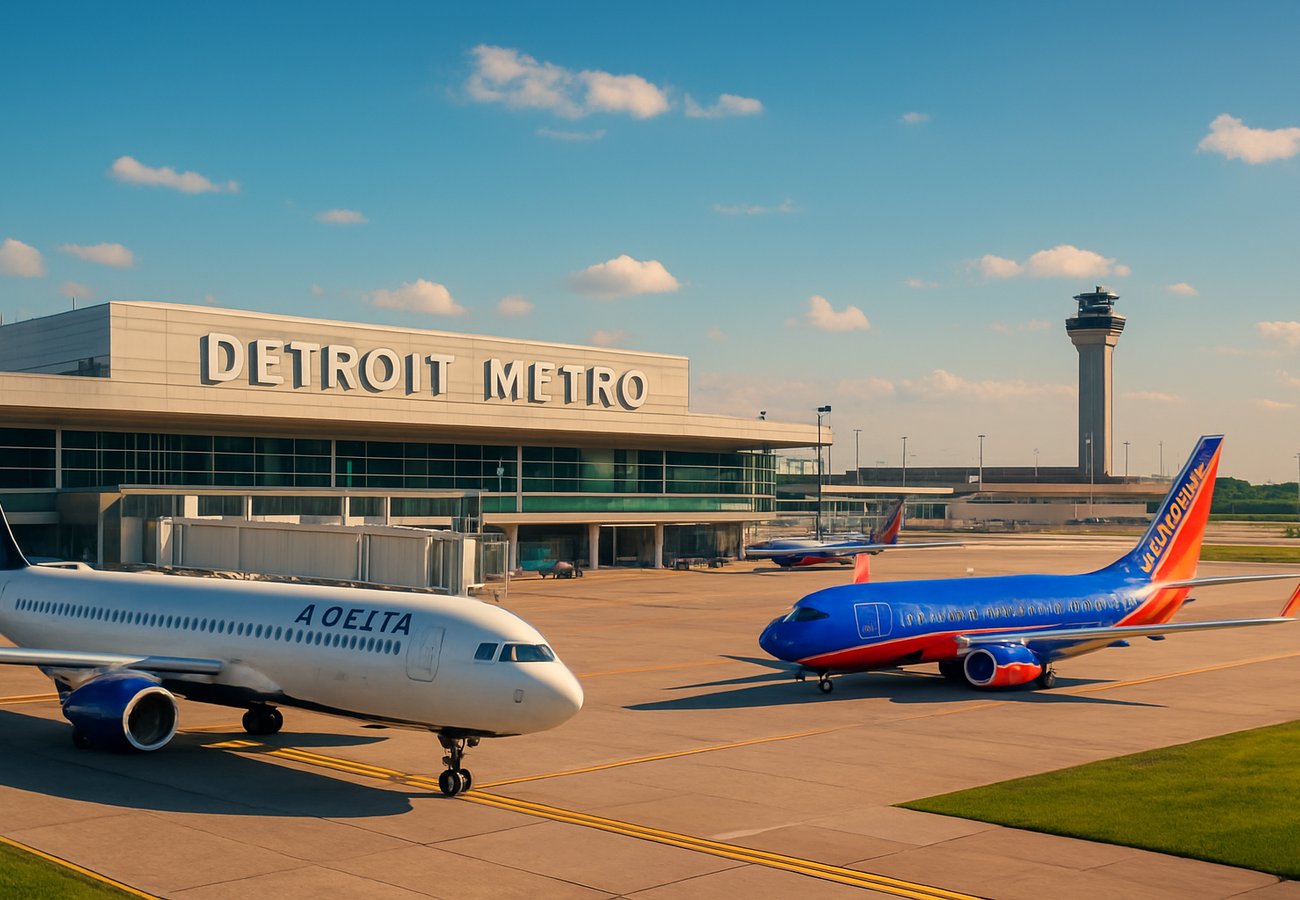
Image generated by AI
Quick Summary
- Operational Strain: Detroit Metro Wayne County Airport (DTW) has recorded 116 flight delays today, affecting major business and tourism corridors across North America, Europe, and Asia.
- Airlines Impacted: Delta Air Lines recorded the largest disruption with 47 delays, followed by Endeavor Air (30), Southwest (11), and SkyWest (10).
- Hub Squeeze: The disruption surmounts the global energy crisis precisely as Strait of Hormuz tensions and the US-Iran conflict drive oil prices to record highs, inflating the cost of every turnaround.
- Gulf Anchor: Saudi Arabia, the UAE, and Qatar are facilitating the energy stability required for North American hubs like DTW to maintain operational hardening during peak travel cycles.
- International Reach: Routes to Tokyo, Shanghai, Amsterdam, Istanbul, and Monterrey have experienced significant interruptions, creating aircraft rotation challenges.
- Infrastructure Lead: DTW is surmounting maritime shipping disruptions and logistical bottlenecks through aggressive crew scheduling and tighter aircraft rotations.
- Source: FlightAware Strategic Aviation Bulletin, May 8, 2026.
DETROIT, MI — In a monumental test of "Operational Hardening" at the heart of the American Midwest, Detroit Metro Wayne County Airport is currently battling a significant wave of flight disruptions. According to breaking reports released on May 8, 2026, 116 flights have been delayed, throwing travel plans into chaos for thousands of passengers. This development is being analyzed by senior aviation journalists as a "Turnaround Friction" response, occurring precisely as Strait of Hormuz tensions and a severe US-Iran conflict drive oil prices to record highs, forcing the world’s most interconnected hubs to surmount the risks of maritime volatility and record-high fuel costs.
Expanded Overview: The 116-Flight "Turnaround Friction" Ripple
The scale of the disruption at DTW has reached a critical peak in 2026, with the airport recording 116 delays across domestic and international routes. By surmounting the "Resourceful Risk" of the 2026 economic climate, major carriers including Delta, Endeavor, and Southwest are struggling to maintain schedules amid rising traffic demand. The ripple effect has spread to key destinations like Newark, Orlando, Tampa, and Monterrey, creating extended waiting times and tighter aircraft rotations that threaten the reliability of the "Midwest Hub" status of the Detroit gateway.
Geopolitical Context: Surmounting the Strait of Hormuz and the Aviation Shield
The broader geopolitical landscape in 2026 has been dominated by the standoff in the Strait of Hormuz. As Saudi Arabia, the UAE, and Qatar work to stabilize global energy flows, the reliability of North American aviation spare parts and fuel has become the ultimate benchmark for hub health. The US-Iran conflict has created a "geopolitical tax" on every flight rotation, making "Operational Efficiency" a vital strategic asset. By maintaining operations despite the delays, DTW is surmounting the threat of a "Logistical Blockade," ensuring that the airport remains a "stable sanctuary" for trade even as Gulf tensions overshadow the global logistics sector.
Global Energy Impact: The Midwest Hedge Against Record Oil Prices
Rising oil prices have fundamentally redrawn the aviation budget for 2026.
- Operational Surcharge: The cost of managing flight delays and cooling massive terminal operations has spiked by 26% due to the global energy crisis, making "Rotation Management" a vital economic tool for carriers like SkyWest and Republic.
- Strategic Advantage: DTW’s aviation sector is benefiting from the energy stability provided by Saudi Arabia and the UAE, which act as the primary energy anchor for the fuels required to keep the "beating heart of Midwest connectivity" moving.
Shipping and Trade Impact: Bypassing the Maritime Safety Squeeze
The ongoing shipping disruption in global trade routes has made the procurement of high-tech aircraft components and ground service equipment more difficult.
- Service Dominance: Carriers are surmounting these delays through a shift toward "Sovereign Operational Resilience" and aggressive investment in digital crew scheduling, ensuring that the energy of the 2026 season is not lost to maritime bottlenecks.
- Global Connectivity: The maintenance of routes to Tokyo (NRT), Shanghai (PVG), and Amsterdam (AMS) ensures that DTW remains a "world-class" standard of gateway stewardship, surmounting the record-high insurance premiums currently hitting the global trade sector.
Section-Wise Breakdown: DTW Hub Disruption
Delta Air Lines and Endeavor Air
The heaviest burden of the 2026 disruption has fallen on Delta Air Lines, which recorded 47 delays. Its regional partner, Endeavor Air, followed closely with 30 delays, surmounting the "Resourceful Risk" of 2026 through tighter regional rotations.
Southwest and Frontier
Southwest Airlines recorded 11 delays (with an exceptionally high 42% delay rate), followed by Frontier with 6 delays, surmounting the logistical fatigue of 2026 by prioritizing passenger communication and flexible rebooking protocols.
International and Other Major Carriers
SkyWest, Republic, and American are also experiencing significant delays, while international services from Turkish Airlines and WestJet have recorded minor interruptions, surmounting the energy crisis through "Stability-First" operational models.
Flight Details: Full Table of DTW Disruption
| Airline | Delayed Flights |
|---|---|
| Delta Air Lines | 47 |
| Endeavor Air (DAL) | 30 |
| Southwest | 11 |
| SkyWest | 10 |
| Frontier | 6 |
| American Airlines | 3 |
| Republic | 3 |
| Avelo Airlines | 2 |
| United | 1 |
| Turkish Airlines | 1 |
| WestJet | 1 |
| Mesa (UAL) | 1 |
Passenger Impact: The Global Ripple
The fallout from the 2026 energy crisis is being felt by travelers across major corridors:
- Domestic Chaos: Passengers traveling to Orlando, Tampa, Newark, and Chicago are facing missed onward connections and gate congestion, surmounting the "Resourceful Risk" of 2026.
- International Uncertainty: Routes to Monterrey, Tokyo, and Cancun have recorded significant turnaround pressure, surmounting the logistical fatigue of 2026 through world-class stewardship.
- Business Travel Stress: Key routes to Seattle, Houston, and Washington DC are seeing tighter aircraft rotations, surmounting the energy crisis through "Resilience-First" scheduling.
Industry / Expert Analysis: The Move Toward "Sovereign Operational Resilience"
Logistics and aviation analysts suggest that the 116 delays at DTW are a "Masterclass in Operational Hardening." In an era where the global energy crisis makes every international movement an investment, the focus on "Rotation Management" and "Crew Flexibility" is the only logical path. By integrating real-time monitoring with "Safe-Route" logistics, the industry is surmounting the logistical fatigue of 2026, ensuring that the DTW gateway remains a "world-class" standard for travelers who refuse to compromise on quality.
What Happens Next: Toward a 2026 Aviation Hub Stability
Following the May 8 report, several key developments are anticipated:
- Scheduling Hardening: Implementation of advanced crew rotation systems to surmount the "Resourceful Risk" of 2026.
- Digital Pivot: Rapid rollout of real-time passenger rebooking apps to further surmount the Strait of Hormuz volatility.
- Global Alignment: Other US hubs are expected to adopt the "Detroit Resilience Model" as they surmount the geopolitical tax of the 2026 season.
Conclusion: Reinforcing the Midwest Anchor Amid Global Risk
The 116 delays at Detroit Metro Wayne County Airport are a testament to the power of "Resourceful Resilience" in a world of shipping disruptions and oil price volatility. By surmounting the challenges of the global energy crisis and the geopolitical shadow of the Strait of Hormuz, DTW is proving that it is the ultimate "Operational Anchor." As the world watches the Middle East, the message from Detroit is clear: the terminals are active, the crews are ready, and the progress is strictly protected.
Key Takeaways: Detroit Airport Disruption 2026
- Alert: 116 flight delays at DTW; Delta and Endeavor Air leading the disruption.
- Airlines: Delta (47) and Endeavor Air (30) accounting for the largest share of delays.
- Geopolitics: Strait of Hormuz tensions and US-Iran conflict driving "Operational Friction."
- Gulf Role: Saudi Arabia, UAE, and Qatar stabilizing the North American energy anchor.
- Impact: Routes to Tokyo, Shanghai, and Monterrey facing turnaround pressure.
- Outlook: Aviation resilience to surmount the $3.5 billion global energy volatility.
Related Travel Alerts
Disclaimer
This article is for informational and educational purposes only. It does not constitute legal, financial, or professional advice. While we strive to provide accurate and up-to-date information, travel policies, regulations, and conditions change rapidly. Always verify information with official sources before making travel decisions. Nomad Lawyer makes no representations about the accuracy, reliability, completeness, or suitability of the information provided. Readers should consult qualified professionals for advice specific to their circumstances. The views expressed in this article are those of the author and do not necessarily reflect the views of Nomad Lawyer.
Kunal K Choudhary
Co-Founder & Contributor
A passionate traveller and tech enthusiast. Kunal contributes to the vision and growth of Nomad Lawyer, bringing fresh perspectives and driving the community forward.
Learn more about our team →