
Delta Air Lines Expands Ultra-Long-Haul Network in 2026: New 17-Hour Routes Transform Global Travel
Delta Air Lines launches record-breaking ultra-long-haul flights in 2026, with routes extending up to 17 hours nonstop. Atlanta-Johannesburg, LA-Hong Kong, and new Middle East connections reshape international travel.

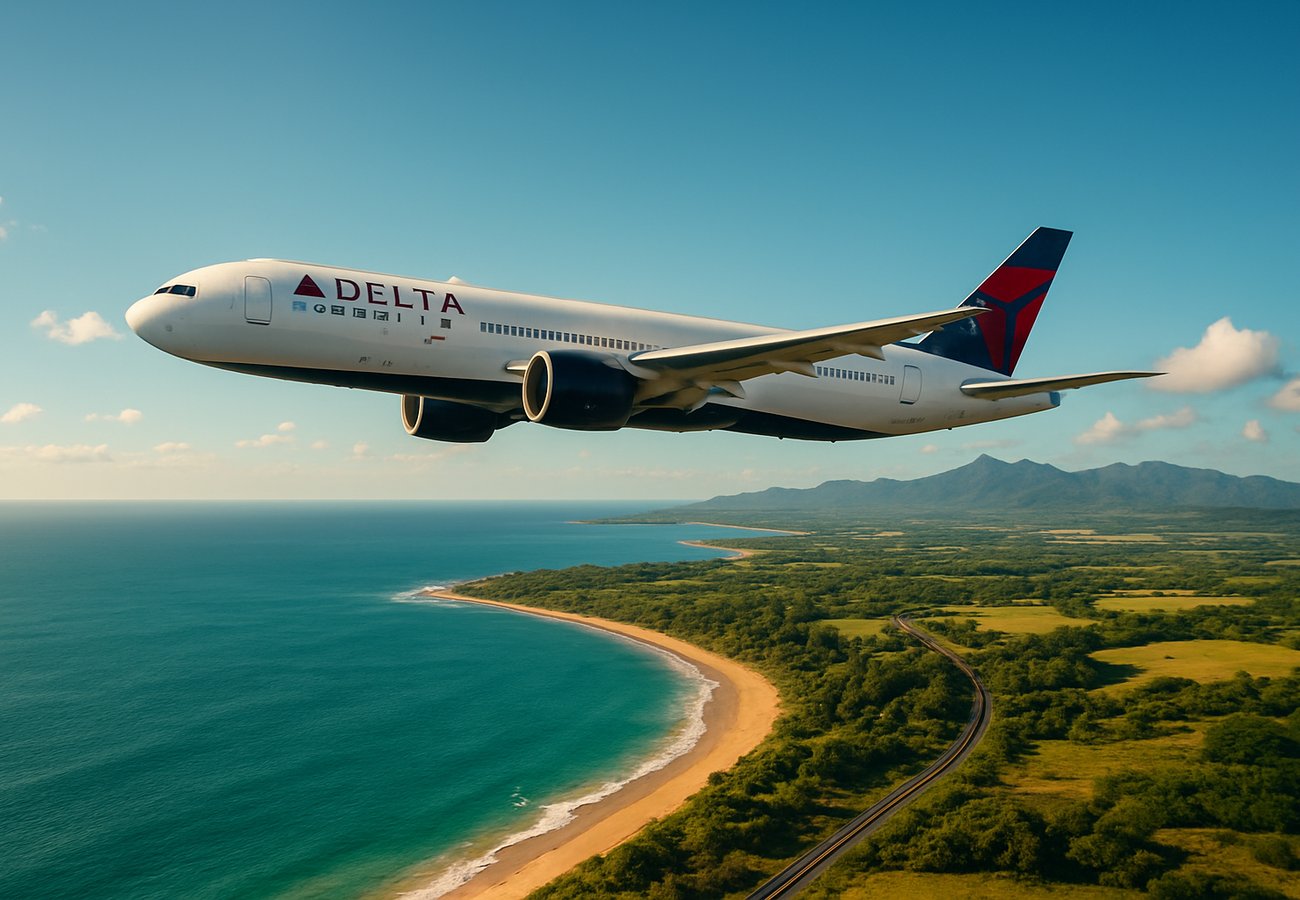
Image generated by AI
Delta Air Lines Expands Ultra-Long-Haul Network in 2026: Record-Breaking 17-Hour Routes Transform Global Aviation and Redefine International Travel
The Dawn of Nonstop Super-Long Routes: Delta Launches Record Expansion
United States — Delta Air Lines is fundamentally reshaping global aviation in 2026, announcing its most ambitious ultra-long-haul expansion to date. The carrier will operate up to 127 daily long-haul departures between June and December, featuring routes that stretch up to 17 hours nonstop—pushing the boundaries of commercial aviation and eliminating the layover nightmare for international travelers.
This isn't just an expansion; it's a strategic overhaul of how Delta connects continents. From Atlanta to Johannesburg, Los Angeles to Hong Kong, and new partnerships opening routes to Riyadh, the Atlanta-based carrier is betting big that global travelers will embrace ultra-long flights in exchange for direct connectivity and dramatically reduced travel times.
What's Happening: The Scale and Scope of Delta's 2026 Long-Haul Offensive
Delta Air Lines' 2026 schedule represents a watershed moment in post-pandemic aviation recovery. The airline has committed to operating approximately 127 daily long-haul departures during its peak expansion period (June through December 2026)—a figure that exceeds pre-pandemic capacity and signals extraordinary confidence in international travel demand.
The headline achievement: Delta's Atlanta-Johannesburg route will operate at 17+ hours nonstop, making it one of the longest scheduled commercial flights in operation. This connection alone eliminates what would traditionally require a minimum of one or two layovers, dramatically compressing travel time between two major continental hubs.
But the Atlanta-Johannesburg juggernaut is just the centerpiece. Delta's expanded network includes:
- Los Angeles to Hong Kong (launching June 2026): Direct access between two of the world's most important trade, finance, and tourism centers
- Atlanta to Riyadh (launching October 2026): A groundbreaking new connection to the Middle East, capitalizing on Saudi Arabia's emerging tourism and business travel boom
- Cape Town to Atlanta: Strengthening Africa-North America connectivity
- Detroit to Shanghai: Reinforcing Midwest-Asia linkages
- Los Angeles to Melbourne: Deepening Asia-Pacific presence
The Aircraft Enabler: Why the Airbus A350-900 Makes This Possible
None of this expansion would be feasible without the Airbus A350-900, the ultra-modern wide-body aircraft engineered specifically for extended-range, high-efficiency operations. Delta's A350 fleet features cabin pressure systems, oversized windows, and noise-reduction technology that make 15–17 hour flights more bearable than previous generations of long-haul aircraft.
Critically, Delta is deploying A350s in premium-heavy configurations—fewer total seats, but more business-class and premium economy options. This approach prioritizes passenger comfort on marathon flights, recognizing that ultra-long-haul travel demands exceptional onboard amenities: lie-flat beds, premium dining, superior humidity control, and enhanced cabin pressure.
Global Impact: Why This Matters for Travelers, Airlines, and Global Connectivity
The Traveler Revolution
For business professionals and premium leisure travelers, Delta's expansion eliminates the dreaded layover. A executive flying from Atlanta to Johannesburg no longer faces an 8–12 hour connection in a Middle Eastern hub. The 17-hour nonstop flight actually saves total journey time, even though the flight duration is longer.
This is not a marginal improvement—it's transformational. Consider:
- Reduced fatigue: One flight cycle beats multiple time-zone transitions and airport connections
- Preserved productivity: Business travelers arrive without the cognitive drain of multi-leg journeys
- Lower ticket complexity: Simplified fare structures, no connection-induced delays or missed flights
- Broader destination access: Secondary and tertiary cities become viable without hub dependency
The Competitive Landscape Intensifies
Delta's aggressive expansion has not gone unnoticed by rivals. Cathay Pacific, United Airlines, Air France, Singapore Airlines, and Emirates already operate on several of these corridors. The competitive response will likely be significant:
- Price pressure: More nonstop capacity typically leads to lower fares on key routes
- Service differentiation: Airlines competing for premium passengers will aggressively upgrade cabins and amenities
- Network overlap: Expect intense competition on LA-Hong Kong, Atlanta-Johannesburg, and other high-demand routes
This competition is ultimately beneficial for consumers—but brutal for airlines operating on thinner margins.
Aviation Infrastructure and Operational Challenges
Operating 127 daily long-haul flights places immense pressure on Delta's operational infrastructure:
- Gate and ground support at major hubs (Atlanta, Los Angeles, Detroit) must expand
- Crew scheduling becomes exponentially more complex for flights exceeding 15 hours
- Maintenance cycles for A350s are intensive; Delta must maintain perfect reliability
- Fuel surcharges on ultra-long routes offset some cost advantages of modern engines
Route-by-Route Breakdown: The New Global Network
Atlanta-Johannesburg: The 17-Hour Flagship
| Route | Distance | Flight Duration | Aircraft | Status |
|---|---|---|---|---|
| ATL-JNB (Johannesburg) | ~8,000 nautical miles | 17+ hours | Airbus A350-900 | Existing/Expanded |
This route is Delta's statement piece. Johannesburg is a major gateway to Southern Africa, serving as a hub for safari tourism, business travel to South Africa, and connections to Zimbabwe, Botswana, and Namibia. The 17+ hour flight eliminates layovers, making it viable for leisure travelers who previously avoided the route due to connection complexity.
Los Angeles-Hong Kong: Return to Competitive Prestige
| Route | Distance | Flight Duration | Aircraft | Launch Date |
|---|---|---|---|---|
| LAX-HKG (Hong Kong) | ~7,500 nautical miles | 15–16 hours | Airbus A350-900 | June 2026 |
Hong Kong is simultaneously a major business hub and leisure destination. Delta's return to direct LAX-HKG service (after previous suspensions) reflects confidence that long-haul capacity from the U.S. West Coast to Asia remains profitable. This route directly competes with Cathay Pacific's dominant position.
Atlanta-Riyadh: Opening the Gulf Market
| Route | Distance | Flight Duration | Aircraft | Launch Date |
|---|---|---|---|---|
| ATL-RUH (Riyadh) | ~7,000 nautical miles | 14–15 hours | Airbus A350-900 | October 2026 |
Saudi Arabia's Vision 2030 initiative is driving an unprecedented tourism boom. Riyadh, home to the Red Sea resorts and emerging luxury destinations, is becoming a critical long-haul destination. Delta's Atlanta-Riyadh route opens direct access for U.S. East Coast travelers to the Gulf's fastest-growing market—a strategic move matching the region's economic ascendancy.
Cape Town-Atlanta and Other Established Routes
Delta continues expanding service to Cape Town (another major African gateway), Shanghai (from Detroit), and Melbourne (from Los Angeles). These routes reinforce Delta's position in high-value, low-frequency markets where direct service commands premium fares.
Passenger Impact: Real-World Scenarios in the 2026 Network
Scenario 1: The Business Executive
A financial services professional based in Atlanta needs to attend a week-long conference in Johannesburg.
Pre-2026 reality: Depart Atlanta Tuesday evening, connection in Frankfurt or London (8–12 hour wait), arrive Johannesburg Friday morning. Total journey: 26+ hours. Jet lag recovery time: 3–5 days.
2026 reality: Depart Atlanta Tuesday evening on nonstop A350. Arrive Johannesburg Wednesday evening, local time (17 hours elapsed, minimal time-zone trauma due to A350's cabin environment). Ready for Thursday conference.
Savings: 8–10 hours total journey time, reduced fatigue, preserved productivity.
Scenario 2: The Leisure Couple
A couple from Los Angeles wants to explore Hong Kong for a 10-day holiday.
Pre-2026 reality: LAX to Hong Kong requires connections through Tokyo, Seoul, or Hong Kong via a third airport. Minimum 20+ hours door-to-door. Connection delays risk hotel cancellations.
2026 reality: LAX to Hong Kong nonstop on A350 (15.5 hours). Depart Friday evening, arrive Sunday morning (overnight flight, premium comfort). Hotel check-in without layover complications.
Savings: 4–6 hours total travel time, zero connection risk, premium comfort justifies higher airfare.
Scenario 3: The Safari Tourist
A family from the U.S. Midwest books a 12-day safari vacation combining Johannesburg and Cape Town.
2026 advantage: Nonstop Atlanta-Johannesburg means arrival refreshed. No 12-hour layover in a connecting hub. More safari days. Better vacation value.
Why Now? The Convergence of Technology, Demand, and Economics
Delta's 2026 ultra-long-haul explosion reflects three converging factors:
1. Post-Pandemic Travel Demand Recovery (and Acceleration)
International travel demand has not just recovered; it has exceeded pre-pandemic expectations. Premium leisure and business travel to Africa, Asia, and the Middle East are growing at double-digit rates. Travelers have proven they'll pay premiums for direct service.
2. Aircraft Technology Maturity
The Airbus A350 is now in full operational maturity. It's proven reliability, fuel efficiency, and passenger comfort across dozens of airlines. Delta can confidently schedule 17-hour flights without extraordinary risk of mechanical disruption.
3. Crew Economics and Digital Schedules
Modern crew scheduling software allows Delta to optimize 15–17 hour flights within regulatory rest-period constraints. International crew bases in strategic hubs (London, Tokyo, Sydney) enable rotation patterns that were impossible a decade ago.
4. Fuel Efficiency Gains
Modern engines on the A350 use 20–25% less fuel than comparable older aircraft. This reduces the economic penalty of ultra-long flights, making routes that were unprofitable in 2015 suddenly viable.
Competitive Implications and Industry Ripple Effects
What Airlines Must Do to Compete
Delta's ultra-long-haul expansion is forcing competitors to respond:
- Emirates, Qatar Airways, and Turkish Airlines (traditional long-haul specialists) must defend their hub-dependent business models against nonstop competition
- United Airlines is expanding its own long-haul fleet; expect competitive capacity increases on overlapping routes
- Air France and Lufthansa will likely respond with their own A350/787 deployments on Africa and Asia routes
- Cathay Pacific faces direct competition on the LA-Hong Kong route—formerly its fortress market
The Hub Model Under Pressure
This expansion subtly but fundamentally weakens traditional aviation hub economics. Routes like London (LHR), Dubai (DXB), and Singapore (SIN) thrive because they're connection points. Direct LAX-Hong Kong and ATL-Johannesburg flights bypass these hubs entirely.
Over the next 3–5 years, expect significant restructuring of airline network strategies globally. Secondary hubs (Frankfurt, Paris, Amsterdam) may see connection traffic decline as premium travelers opt for nonstop flights.
Potential Headwinds: Cost, Sustainability, and Operational Risk
Higher Operating Costs for Ultra-Long Routes
A 17-hour flight generates enormous operating costs:
- Fuel burn: ~150,000+ pounds per flight
- Crew rest requirements: Additional flight attendants required, increasing labor costs
- Maintenance reserves: A350s require expensive heavy-line checks
- Depreciation: A new A350 costs ~$445 million
Delta must generate exceptional yield (revenue per available seat mile) to justify these routes. Any economic downturn could force capacity reduction.
Crew Fatigue and Operational Reliability Risk
While modern aircraft are more reliable than ever, mechanical issues on a 17-hour flight are catastrophic. Delta must maintain perfect dispatch reliability, or a single significant delay could generate customer backlash.
Crew fatigue rules (EU-OPS, FAA regulations) limit how aggressively Delta can schedule crews. A single serious incident (medical emergency, engine issue) would likely result in regulatory scrutiny.
Environmental and Sustainability Concerns
Ultra-long flights consume enormous fuel quantities. Although the A350 is efficient, a 17-hour flight burns ~150,000 pounds of fuel per cycle. Over a year, Atlanta-Johannesburg alone consumes ~27+ million pounds of fuel annually.
Environmental activists will scrutinize these routes. Delta will face pressure to offset emissions—expect sustainability initiatives (SAF investments, carbon offsets) to become competitive requirements.
What Happens Next: The 2026-2027 Outlook
Q2-Q3 2026: Launch and Validation Phase
June–September 2026 will determine whether ultra
Disclaimer
This article is for informational and educational purposes only. It does not constitute legal, financial, or professional advice. While we strive to provide accurate and up-to-date information, travel policies, regulations, and conditions change rapidly. Always verify information with official sources before making travel decisions. Nomad Lawyer makes no representations about the accuracy, reliability, completeness, or suitability of the information provided. Readers should consult qualified professionals for advice specific to their circumstances. The views expressed in this article are those of the author and do not necessarily reflect the views of Nomad Lawyer.
Kunal K Choudhary
Co-Founder & Contributor
A passionate traveller and tech enthusiast. Kunal contributes to the vision and growth of Nomad Lawyer, bringing fresh perspectives and driving the community forward.
Learn more about our team →