
Delta Air Lines Rejects SpaceX Starlink Over Branding Dispute Opting for Amazon Leo as United Takes Lead with Fastest Inflight Wi-Fi
Delta Air Lines has rejected SpaceX Starlink in favor of Amazon Leo, a move driven by a branding dispute that could impact its competitive edge against United.

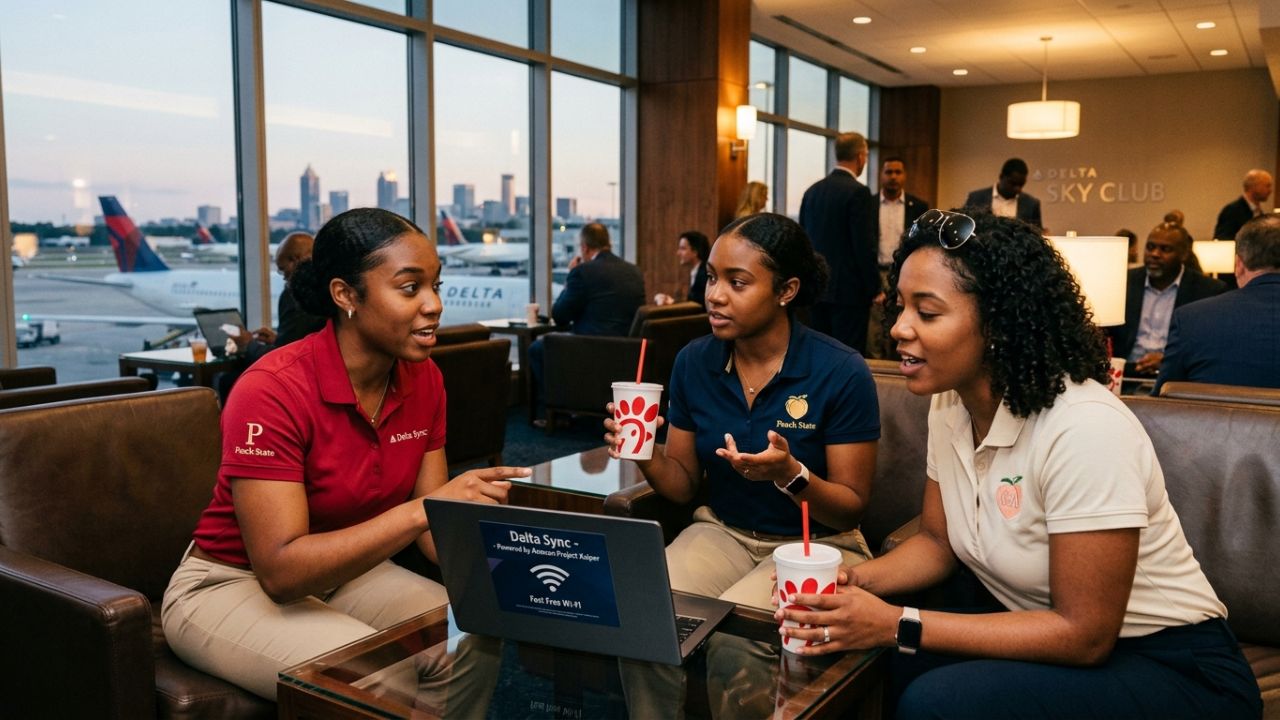
Image generated by AI
Delta Air Lines Rejects SpaceX Starlink Over Branding Dispute Opting for Amazon Leo as United Takes Lead with Fastest Inflight Wi-Fi
Published on May 14, 2026
In a bold and unexpected move that has sent shockwaves through the aviation industry, Delta Air Lines has officially rejected SpaceX’s Starlink for its next-generation inflight connectivity, opting instead for Amazon’s Leo network. This high-stakes Delta Air Lines inflight Wi-Fi Starlink rejection was not sparked by technological inferiority, but by a fierce branding dispute over the carrier’s exclusive Delta Sync portal. While Delta prioritizes its digital identity, the decision may inadvertently hand a massive competitive edge to United Airlines, which is on track to equip its entire fleet with Starlink’s lightning-fast service by 2027. For travelers seeking a luxury escape or a productive business flight, the choice of Wi-Fi provider could become the ultimate deciding factor. With Amazon Leo still in its infancy compared to Starlink’s 10,000-satellite constellation, Delta is taking a calculated risk that could redefine the travel technology landscape. Discover why this branding clash matters for your next flight and how the pulse of inflight connectivity is shifting toward a two-speed future.
Quick Summary:
- Delta Air Lines has ended negotiations with SpaceX Starlink, choosing Amazon’s Leo for its future inflight Wi-Fi.
- The rejection was fueled by a branding dispute; Delta insisted on using its Delta Sync portal, while SpaceX required co-branding.
- United Airlines maintains a significant lead, committing to a full Starlink rollout across its fleet by the end of 2027.
- Starlink currently operates 10,000+ satellites, while Amazon Leo is in early deployment with approximately 300 satellites.
- Delta plans to begin installing Amazon Leo on 500 aircraft starting in 2028, potentially leaving half its fleet with older systems.
- Passengers may face a fragmented experience with slower speeds on Delta compared to the ground-equivalent performance of Starlink on United.
- The move highlights a shift in airline strategy, where brand control is being weighed against immediate technological superiority.
The Branding Clash: Why Delta’s Sync Portal Led to the Starlink Breakdown
Delta’s decision to choose Amazon’s Leo network over Starlink came after a reported dispute regarding branding control. The carrier reportedly wanted its Delta Sync portal to be the sole interface for all inflight connectivity, ensuring that any external partners remained behind the Delta-branded platform. Starlink, however, has strict co-branding guidelines that require its logo to be visible on the connectivity page.
This clash of corporate philosophies proved to be the breaking point. Delta has long sought to offer a seamless, personalized inflight experience through its Sync platform, which integrates entertainment and frequent flyer perks. By rejecting the high-speed inflight Wi-Fi offered by SpaceX, Delta is betting that its brand identity is more valuable than the immediate technical dominance of Starlink. It is a "Protection-First" move that could either solidify Delta’s brand or leave it vulnerable to tech-savvy competitors.
Amazon Leo vs. Starlink: A David and Goliath Battle for the Skies
While both Amazon Leo and SpaceX Starlink are Low Earth Orbit (LEO) satellite networks, there are stark differences in their scale. Starlink currently operates over 10,000 satellites, providing fast and reliable Wi-Fi for millions of passengers globally. In contrast, Amazon Leo is still in the early stages of deployment, currently operating just around 300 satellites.
This significant gap in operational readiness represents a notable risk for Delta. By choosing a system that is not yet proven on a global scale, the airline is heavily reliant on Amazon meeting its ambitious constellation milestones. For travelers dreaming of a luxury escape where they can stream movies or join video calls with zero latency, the 2028 installation timeline for Amazon Leo may feel like a lifetime away compared to the "True Pulse" of Starlink’s current performance.
The United Advantage: How Starlink is Redefining Competitive Edge in 2026
While Delta prioritizes its portal, United Airlines has taken a different path, committing to a multi-year advantage by equipping its entire fleet with Starlink by 2027. This decision places United in a strong position to meet the increasing passenger demand for ground-equivalent speeds. By the time Delta starts its rollout, United will have already established itself as the "Travel Champion" of connectivity.
Passengers on Starlink-equipped aircraft consistently report faster speeds and better reliability for data-heavy activities like online gaming and high-definition streaming. United’s investment in world-class hospitality includes this seamless connectivity as a core component of its strategy. For the modern traveler, the performance gap between Starlink and Amazon Leo will become increasingly apparent, potentially influencing which airline they choose for their next immersive cultural experience.
Passenger Expectations: Will Delta’s Choice Impact the Future of Luxury Travel?
In recent years, passengers have become increasingly vocal about their expectations for inflight connectivity. Wi-Fi is no longer a luxury but a standard requirement for both work and entertainment. Delta’s decision to equip only 500 aircraft with Amazon Leo—approximately half of its fleet—could create a fragmented experience for its loyal customers.
Those seeking an ideal for adventure lovers journey or a high-stakes business trip may find themselves stuck with older, slower Wi-Fi systems on half of Delta’s routes. Meanwhile, Starlink’s technology is setting a new standard for customer experience, offering breathtaking views of what the future of air travel can look like. Whether Delta’s strategy backfires depends on whether Amazon can bridge the massive satellite gap before United completely dominates the market.
Guide for Travelers:
- Best Activities: Stream 4K movies or attend live video conferences on Starlink-equipped flights; enjoy seamless gaming with ultra-low latency.
- Who Should Visit: Remote workers and digital nomads who require high-speed connectivity; families looking for uninterrupted streaming for children.
- Travel Tips: Always check the Wi-Fi provider in your flight details; Starlink is currently available on multiple global carriers, with United following by 2027.
- Best Time to Go: Book United for long-haul routes starting in 2027 to experience the full benefits of the Starlink fleet rollout.
- Rewards and Booking Info: Use your Delta Sync profile to manage your loyalty perks, but keep in mind that Wi-Fi speeds may vary until the 2028 rollout.
- Transportation Tips: Use your high-speed connection to book ground transport or dinner reservations while still 30,000 feet in the air.
Related Travel Guides
- United Airlines Starlink Guide: The Fastest Wi-Fi in the Sky
- The Future of Inflight Tech: From 5G to LEO Satellites
- Digital Nomad Destinations: Where High-Speed Travel Meets Luxury
As the sun sets over the iconic, widget-clad tails of Delta Air Lines and the silver constellation of Starlink begins its nightly traverse of the heavens, the message of 2026 is one of profound strategic wisdom. We are witnessing the moment the heartbeat of the traveler finally syncs with the pulse of a more connected aviation community—not as a mere transaction, but as a shared moment of blue-sky grace. There is something deeply moving about seeing an airline prioritize its brand heritage while its competitors embrace the raw power of next-generation technology, ensuring that every passenger finds a sense of belonging in their digital journey. No matter what challenges the global horizon holds, the spirit of the 2026 Aviation Renaissance remains as vibrant as the horizon itself. The legacy planes are ready, the gates are open, and the welcome—though deeper and more heartfelt than ever—has never been more significant. The purposeful adventure starts now; the world is finally discovering the true heart of the journey.
Disclaimer
This article is for informational and educational purposes only. It does not constitute legal, financial, or professional advice. While we strive to provide accurate and up-to-date information, travel policies, regulations, and conditions change rapidly. Always verify information with official sources before making travel decisions. Nomad Lawyer makes no representations about the accuracy, reliability, completeness, or suitability of the information provided. Readers should consult qualified professionals for advice specific to their circumstances. The views expressed in this article are those of the author and do not necessarily reflect the views of Nomad Lawyer.
Kunal K Choudhary
Co-Founder & Contributor
A passionate traveller and tech enthusiast. Kunal contributes to the vision and growth of Nomad Lawyer, bringing fresh perspectives and driving the community forward.
Learn more about our team →