
Delta Air Lines Flight to Atlanta Diverts Due to Suspected Lightning Strike Mid-Flight
A Delta Air Lines flight en route to Atlanta, carrying approximately 180 passengers, diverts safely to an alternate airport following a suspected lightning strike.

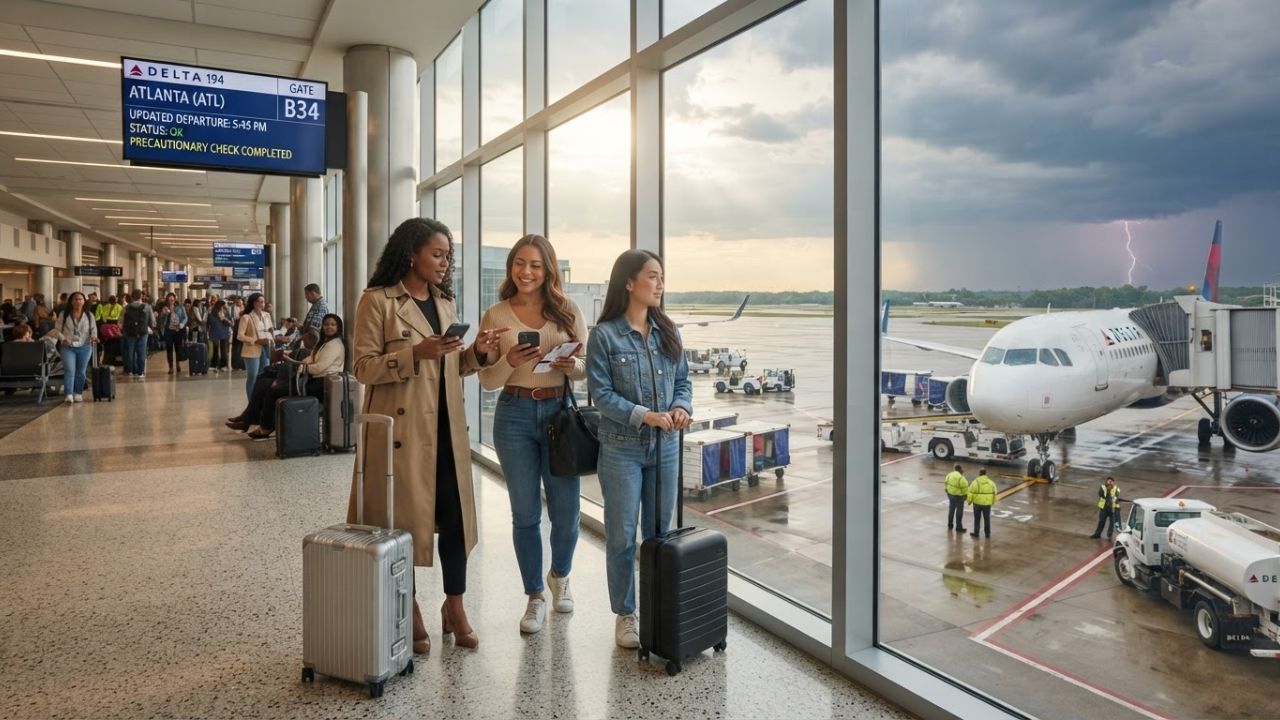
Image generated by AI
Delta flight to Atlanta carrying approximately 180 passengers was forced to divert mid-flight due to a suspected lightning strike. The aircraft landed safely at an alternate airport for mandatory structural and electrical checks.
Cockpit Crew Diverts Flight to Ensure System Integrity
According to reports, an outbound passenger service en route to Georgia was rerouted on July 4, 2026. The flight was carrying approximately 180 passengers when it encountered a local thunderstorm cell.
Due to concerns about a potential lightning strike, the pilots declared a precautionary diversion.
The cockpit crew adjusted the aircraft's path to land at a designated alternate field for technical inspections.
The aircraft completed a normal landing without incident, and ground maintenance crews immediately met the plane at the gate.
Precautionary Rerouting Protects Outbound Atlanta Passenger Flow
Fleet routing logs updated by Delta Air Lines confirm that the flight was diverted as a safety validation measure. Although commercial planes are designed to operate safely in stormy conditions, airline regulations mandate a complete inspection after suspected lightning contact.
Hub connections scheduled at Hartsfield-Jackson Atlanta International Airport experienced minor delays due to the aircraft being temporarily removed from rotation.
Delta coordinated with local gate agents to rebook passengers whose travel plans were delayed by the detour.
The company reallocated other narrow-body aircraft to absorb downstream schedules while the affected plane underwent checks.
Lightning Strike Diversion Parameters
The tables below display the details of the flight diversion and the mandatory safety inspections required before returning the aircraft to service.
In-Flight Lightning Diversion Parameters
| Operational Metric | Flight Log Value | Safety Status | Primary Action taken |
|---|---|---|---|
| Passenger Count | Approximately 180 | All passengers safe | Transferred to alternate gates / Rebooked |
| Flight Destination | Hartsfield-Jackson Atlanta (ATL) | Diverted mid-route | Precautionary landing at alternate field |
| Aircraft System Status | Avionics functioning normally | Under verification | Structural and electrical inspections |
| Primary Trigger | Storm cell proximity | Potential lightning strike | Safe altitude adjustment and descent |
Mandatory Post-Lightning Inspection Checklist
| Aircraft Section | Inspection Target | Testing Method | Verification Standard |
|---|---|---|---|
| Avionics & Navigation | Radar, Flight Computers, GPS | System self-diagnostic logs | Zero error codes in flight telemetry |
| Fuselage Skin | Entry and exit burn marks | Visual and eddy-current scans | Structural skin continuity verified |
| Static Discharge Wicks | Trailing edges of wings/tail | Physical wear inspection | Replacement of worn wicks |
| Electrical Power Grid | Generator output, Battery links | Load-bank testing | Constant voltage stability |
Built-In Engineering Shields Aircraft from Electrical Discharges
Modern passenger aircraft feature a conductive aluminum or composite skin that acts as a Faraday cage. When lightning strikes a plane, the electrical current travels along the outer fuselage and leaves through static wicks on the wingtips or tail.
This engineering design prevents electrical currents from entering the cabin or damaging critical wiring.
However, a direct strike can occasionally create tiny burn spots on the metal skin or cause minor static interference in communication systems.
Because of these risks, aviation safety agencies require airlines to conduct visual and electronic inspections before signing off on the aircraft's airworthiness.
Why This Matters
Our analysis of the flight data indicates that lightning strikes occur far more frequently in commercial aviation than travelers realize. In fact, industry statistics show that every commercial passenger jet is struck by lightning at least once a year during normal operations.
The decision to divert is rarely driven by immediate emergency; instead, it is a logistical move to protect downstream operations.
If a plane continues to a busy hub like Atlanta after a suspected strike, the mandatory multi-hour inspection would block a highly active gate.
By diverting to a less congested alternate field, the airline can conduct structural scans without causing gate delays at its primary hub.
Industry Outlook
Market trends suggest that airlines will continue to invest in advanced storm-tracking radar to help crews avoid lightning-prone clouds entirely. Aircraft manufacturers are also upgrading composite materials to improve electrical grounding.
Expect Delta to deploy mobile maintenance teams to secondary airports to speed up post-strike inspections. The national aviation weather system is projected to remain active.
Key Takeaways
- Safety Diversion: A Delta flight to Atlanta carrying 180 passengers diverted due to a suspected lightning strike.
- Precautionary Landing: The aircraft landed normally at a secondary airport to undergo mandatory scans.
- Faraday Protection: Modern airplanes are built to safely route lightning currents along the outer fuselage skin.
- Gate Management: Rerouting the plane prevents gate delays at Hartsfield-Jackson Atlanta International Airport.
- Maintenance Scans: Technicians inspect the wings, tail, and avionics to verify the aircraft's airworthiness.
FAQ
Can lightning strikes damage a passenger plane?
While planes are designed to route electrical currents safely, lightning can cause minor skin burns or static interference, requiring inspections.
What happens when a flight is diverted due to lightning?
The pilots land the plane at a nearby alternate airport so maintenance crews can inspect the structural skin and flight systems.
Where was the Delta flight headed?
The flight was en route to Hartsfield-Jackson Atlanta International Airport (ATL) before the crew decided to divert.
How many passengers were on the diverted Delta flight?
There were approximately 180 passengers on board the flight during the weather incident.
Related Travel Guides
- AirAsia Announces 15% Discount on Malaysia Domestic Flights for Merdeka 2026 Celebrations
- Loganair Obliterates UK Travel Chaos with Massive Jersey to East Midlands Expansion, Shielding Tourists from Devastating Flight Cancellations: Latest Airline News
- American, Delta, and United Airlines Trigger Massive Flight Cancellations Across Atlanta, Dallas, and JFK, Unleashing Continental Travel Chaos: Latest Airline News
Disclaimer
This article is for informational and educational purposes only. It does not constitute legal, financial, or professional advice. While we strive to provide accurate and up-to-date information, travel policies, regulations, and conditions change rapidly. Always verify information with official sources before making travel decisions. Nomad Lawyer makes no representations about the accuracy, reliability, completeness, or suitability of the information provided. Readers should consult qualified professionals for advice specific to their circumstances. The views expressed in this article are those of the author and do not necessarily reflect the views of Nomad Lawyer.
Kunal K Choudhary
Co-Founder & Contributor
A passionate traveller and tech enthusiast. Kunal contributes to the vision and growth of Nomad Lawyer, bringing fresh perspectives and driving the community forward.
Learn more about our team →