
Delta Flight 2351 Runway Safety Scare at Boston Logan Triggers Investigation After Simultaneous Landing and Takeoff Near Miss on Intersecting Runways
Delta Flight 2351 aborted landing at Boston Logan after a simultaneous takeoff on an intersecting runway triggered a nea

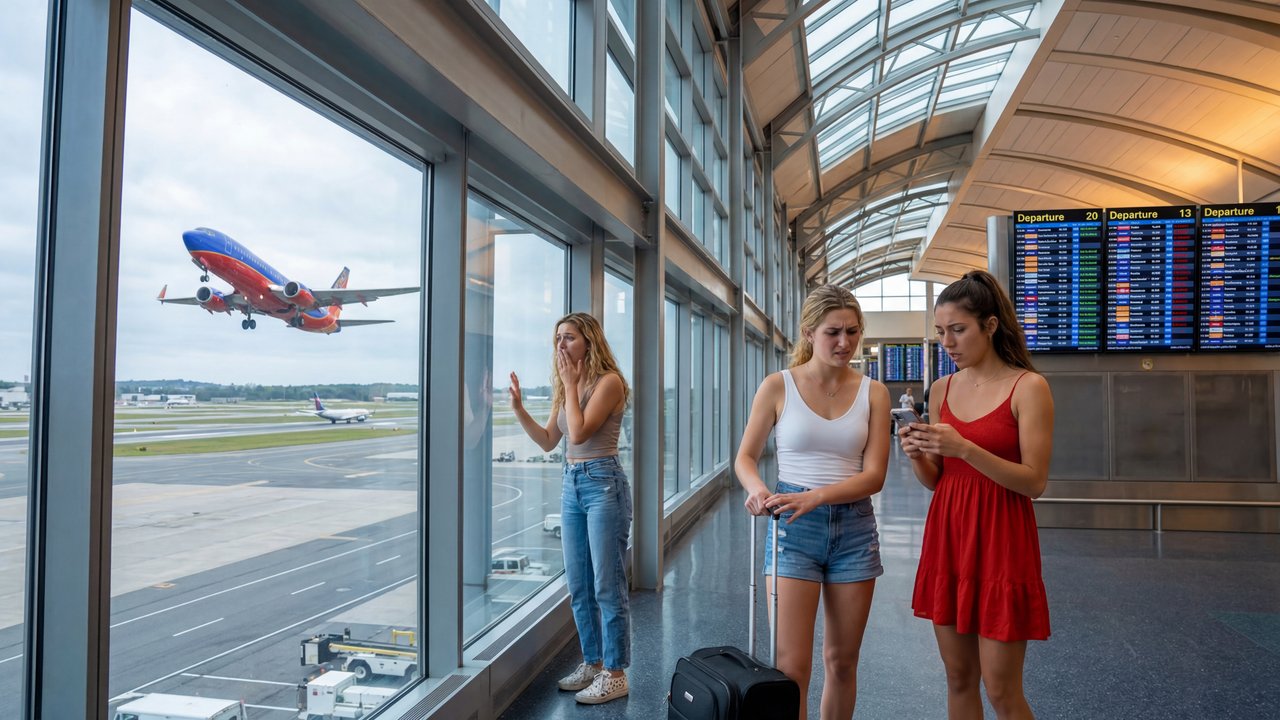
Image generated by AI
Delta Flight 2351 Aborts Landing at Boston Logan After Intersecting Runway Takeoff Conflict Prompts FAA Investigation
[Boston, June 23, 2026] — The Federal Aviation Administration has opened a formal investigation after Delta Flight 2351 was forced to execute a go-around at Boston Logan International Airport when a departing aircraft began its takeoff roll on an intersecting runway during the inbound flight's final approach. The simultaneous runway operations created a near-miss scenario at one of the busiest airports in the northeastern United States, raising urgent questions about timing coordination and separation standards on complex intersecting runway configurations.
Delta Flight 2351 Go-Around at Boston Logan Sparks FAA Runway Safety Probe
The incident unfolded as Delta Flight 2351, arriving from Dallas, was on final approach to Boston Logan International Airport (BOS). According to flight tracking data, a scheduled domestic departure bound for Charlotte, North Carolina, simultaneously initiated its takeoff roll from a runway that intersects the arrival path. The narrow time window between the two operations created a potential runway occupancy conflict at the intersection zone, prompting air traffic control and onboard alert systems to flag the risk.
Aviation safety procedures mandate an immediate discontinued landing and climb-out — known as a go-around — whenever a runway cannot be confirmed as fully clear for arrival. In this case, the landing sequence was halted as a precautionary measure to eliminate any possibility of collision. The aircraft safely climbed back into the airspace and re-sequenced for another approach.
Officials are now reviewing radar data, cockpit voice recordings, and air traffic control communications to reconstruct the exact timeline and determine how the timing overlap occurred. The investigation will assess whether separation minima were properly maintained and whether procedural safeguards functioned as intended.
Boston Logan's Intersecting Runway Layout Amplifies Operational Complexity
Boston Logan International Airport operates with one of the most intricate runway systems among major US East Coast hubs. Unlike airports equipped with parallel runways that permit simultaneous independent operations, Logan's infrastructure includes intersecting and crossing runway configurations. This design maximises throughput during high-traffic periods but demands precise timing between arrivals and departures to prevent overlap at intersection points.
The airport handles a high daily volume of domestic and international movements, requiring continuous coordination among ground control, tower control, and approach control units. Even minor sequencing deviations can trigger go-around instructions or aborted departures, particularly during peak operational windows when traffic density is highest.
Key factors contributing to Boston Logan's operational sensitivity include:
- Multiple intersecting runway configurations requiring timed separation windows
- High daily aircraft movement volumes across mixed arrival and departure flows
- Closely spaced runways that compress available coordination margins
- Frequent weather-related runway reconfigurations that alter traffic patterns
How the Near-Miss Unfolded: Simultaneous Landing and Takeoff on Intersecting Runways
According to industry sources and flight tracking information, the arriving Delta aircraft was completing a routine approach from Dallas when air traffic control sequencing placed the Charlotte-bound departure into a near-simultaneous operation on a crossing runway. Both movements were compressed into a narrow timeframe, creating a conflict risk at the runway intersection zone.
The go-around was triggered after air traffic control coordination and onboard collision avoidance systems identified the potential occupancy conflict. Modern commercial aircraft are equipped with Traffic Alert and Collision Avoidance Systems (TCAS), which provide pilots with automated warnings when another aircraft may create a safety hazard. These systems serve as an additional layer of protection alongside controller-issued instructions.
The decision to discontinue the landing was executed as designed, and the aircraft safely re-entered the traffic pattern. No injuries or damage were reported. However, the event has drawn scrutiny because of the proximity of the two aircraft on intersecting flight paths.
FAA Investigation Focus: Separation Standards and Air Traffic Control Coordination
The Federal Aviation Administration routinely investigates all runway incursions and near-miss events to classify their severity and identify contributing operational factors. These incidents are categorised on a scale ranging from Category A — denoting a serious incident with high collision risk — to Category D, representing minor deviations with low risk.
Although go-arounds themselves are classified as safe and routine procedures, repeated occurrences involving intersecting runway operations are examined closely to identify systemic pressure points in airport traffic management. The FAA's review of the Delta Flight 2351 incident will focus on several core areas:
| Investigation Focus Area | Key Elements Under Review |
|---|---|
| Runway occupancy timing | Whether the landing runway was confirmed clear before approach clearance |
| Air traffic control decision sequencing | How arrival and departure clearances were timed and coordinated |
| Separation minima compliance | Whether required distance and time separations were maintained |
| Cockpit communications | Pilot responses to alerts and controller instructions |
| Technological safeguard effectiveness | Performance of TCAS and ground-based alert systems |
Authorities are expected to evaluate whether any procedural delays contributed to the conflict and whether additional technological safeguards could reduce the risk of recurrence at similarly configured airports.
Runway Incursion Trends and Broader Aviation Safety Concerns
Runway incursions occur when an aircraft, vehicle, or person enters a runway surface in a manner that creates a collision risk. Aviation safety authorities in the United States have intensified their focus on reducing these events as air traffic demand continues to rise following the post-pandemic recovery.
Recent safety analyses indicate that most serious runway events stem not from mechanical failure but from operational timing misalignments, communication delays, or human factors in high-workload environments. The key risk drivers identified by safety experts include:
- Congested airport operations during peak travel periods
- Multiple runway intersections requiring precise coordination between controllers
- Rapid sequencing of arrivals and departures that compress available reaction time
- Weather adjustments that force sudden runway reconfigurations
- Increased flight frequency as carriers expand schedules to meet recovering demand
While overall aviation safety remains statistically strong, even minor runway conflicts are treated as critical learning opportunities. Each event contributes to incremental refinements in procedural safeguards and technological systems designed to prevent recurrence.
Boston Logan's History of Runway Safety Alerts and Procedural Refinements
Boston Logan has experienced previous runway safety alerts, including incidents involving misaligned runway entry timing and clearance sequencing issues. The airport's intersecting runway environment has long been recognised as an operational challenge requiring heightened vigilance.
Historical near-miss scenarios at major airports with similar configurations have driven several procedural and technological improvements across the US aviation system, including:
- Enhanced runway status lights installed at major airports to provide real-time visual warnings
- Improved surface movement radar systems that offer controllers detailed ground surveillance
- Stricter runway crossing clearance protocols to reduce unauthorised surface entries
- Expanded pilot training programmes focused on go-around decision-making and timing awareness
Each of these measures has been introduced incrementally in response to identified vulnerabilities, and the Delta Flight 2351 incident will likely contribute to further refinements.
What Happens Next in the Delta Flight 2351 Investigation
The ongoing FAA investigation will reconstruct the complete sequence of events using radar data, air traffic control recordings, cockpit communications, and flight tracking information. Investigators are expected to assess whether separation standards were fully maintained, whether any procedural delays contributed to the conflict, and whether operational adjustments are needed for intersecting runway usage at Boston Logan and similarly configured airports.
Findings from the probe will be incorporated into national runway safety guidance and may influence coordination protocols across the broader US airport network. The investigation's outcomes could also inform training updates for air traffic controllers and pilots operating at high-complexity hubs where intersecting runway configurations are standard.
The safe execution of the go-around prevented any escalation, but the event underscores the persistent challenges of managing intersecting runway systems in high-density airspace. As US aviation traffic continues to grow, maintaining precise timing, robust coordination, and reliable technological safeguards will remain critical to preventing similar near-miss scenarios in the future.
Related Travel Guides
Disclaimer
This article is for informational and educational purposes only. It does not constitute legal, financial, or professional advice. While we strive to provide accurate and up-to-date information, travel policies, regulations, and conditions change rapidly. Always verify information with official sources before making travel decisions. Nomad Lawyer makes no representations about the accuracy, reliability, completeness, or suitability of the information provided. Readers should consult qualified professionals for advice specific to their circumstances. The views expressed in this article are those of the author and do not necessarily reflect the views of Nomad Lawyer.
Preeti Gunjan
Contributor & Community Manager
A passionate traveller and community builder. Preeti helps grow the Nomad Lawyer community, fostering engagement and bringing the reader experience to life.
Learn more about our team →