
Delta Flight 1594 Atlanta Tampa Diversion Fort Myers 2026
Delta Air Lines Flight 1594 from Atlanta to Tampa diverts to Southwest Florida International Airport in Fort Myers on July 10, 2026.

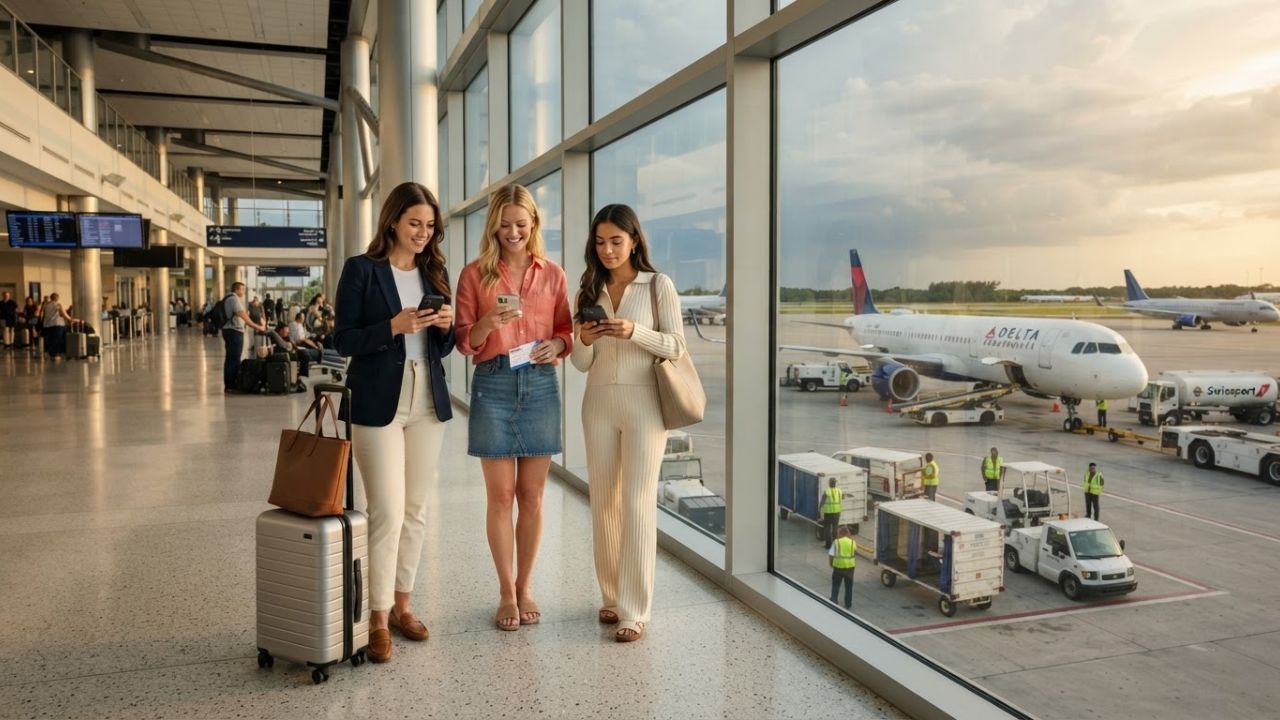
Image generated by AI
Delta Air Lines Flight From Atlanta to Tampa Diverts to Fort Myers Stranding Airbus A321 Passengers in Southwest Florida
Delta Air Lines Flight DAL1594, operating from Hartsfield–Jackson Atlanta International Airport to Tampa International Airport, diverted to Southwest Florida International Airport in Fort Myers on July 10, 2026. The unexpected route change left passengers stranded in Fort Myers while ground teams assessed the operational situation.
The Disruption Details
On July 10, 2026, Delta Air Lines Flight DAL1594 departed Atlanta at 6:16 PM, approximately 54 minutes behind its scheduled departure time of 5:22 PM. The flight, operated by an Airbus A321 registered as N347DN, was scheduled to land at Tampa International Airport (TPA) at 6:57 PM. However, mid-flight, the flight crew redirected the aircraft south, landing safely at Southwest Florida International Airport (RSW) in Fort Myers.
The airline has not publicly confirmed the specific reason for the diversion. Flight tracking logs indicate that convective summer weather and thunderstorms were active along the Florida peninsula at the time of the flight, which often prompts air traffic control to restrict arrivals into Tampa. Alternatively, safety precautions or mechanical assessments may have influenced the crew's decision to divert.
Flight & Airport Impact Breakdown
The diversion altered schedules and travel plans for passengers traveling on the Georgia-Florida corridor:
- Hartsfield–Jackson Atlanta International Airport (ATL): Departure delays of nearly an hour before the aircraft was cleared to take off.
- Tampa International Airport (TPA): Cancellation of the scheduled arrival, forcing passengers awaiting the return leg to seek alternative flights.
- Southwest Florida International Airport (RSW): Unexpected arrival of an Airbus A321, requiring gate and ground crew allocation to process passengers.
- Downstream Fleet Disruption: Delays for the specific airframe (N347DN) affecting subsequent domestic flights scheduled later that evening.
Passenger Rights & Advisory (Information Gain)
Under the U.S. Department of Transportation (DOT) regulations and Delta's customer service commitments, passengers on diverted domestic flights have specific rights:
- Tarmac Delay Rule: If the aircraft is held on the tarmac at the diversion airport (RSW), the airline must give passengers the opportunity to safely deplane before the delay reaches 3 hours. Additionally, the carrier must provide water and snacks no later than 2 hours after the tarmac delay begins.
- Controllable vs. Uncontrollable Delays: If the diversion is caused by weather or air traffic control (uncontrollable), Delta is not legally required to provide meal or lodging vouchers. However, if the diversion is caused by a mechanical issue or crew availability (controllable) and results in an overnight delay at Fort Myers, Delta must provide complimentary hotel vouchers and transport.
- Refund Rights: If the flight is canceled or significantly delayed due to the diversion, and passengers choose not to continue their travel to Tampa, they are entitled to a full cash refund to their original form of payment. The refund must be processed within seven business days for credit cards.
Industry Analyst View
Our analysis indicates that summer convective weather across the Florida peninsula frequently causes air traffic controllers to implement ground stops, forcing mid-flight diversions. Flight tracking systems show that Hartsfield-Jackson Atlanta (ATL) and Tampa (TPA) are heavily integrated hubs where single-flight diversions can trigger downstream delays across the carrier's domestic network.
Utilizing regional gateways like Southwest Florida International (RSW) provides a safe release valve when primary destinations like Tampa experience slot restrictions. For operators, the A321's passenger capacity makes managing these diversions challenging, as ground staff must rapidly coordinate luggage, rebooking, and ground transport for over 190 travelers.
Related Travel Guides
Disclaimer
This article is for informational and educational purposes only. It does not constitute legal, financial, or professional advice. While we strive to provide accurate and up-to-date information, travel policies, regulations, and conditions change rapidly. Always verify information with official sources before making travel decisions. Nomad Lawyer makes no representations about the accuracy, reliability, completeness, or suitability of the information provided. Readers should consult qualified professionals for advice specific to their circumstances. The views expressed in this article are those of the author and do not necessarily reflect the views of Nomad Lawyer.
Kunal K Choudhary
Co-Founder & Contributor
A passionate traveller and tech enthusiast. Kunal contributes to the vision and growth of Nomad Lawyer, bringing fresh perspectives and driving the community forward.
Learn more about our team →