
Delta Amazon Satellite WiFi: 500 Aircraft Get Project Kuiper Upgrade in 2026
Delta Air Lines partners with Amazon's Project Kuiper to deploy high-speed satellite WiFi across 500 aircraft in 2026, revolutionizing in-flight connectivity for remote workers and digital nomads worldwide.

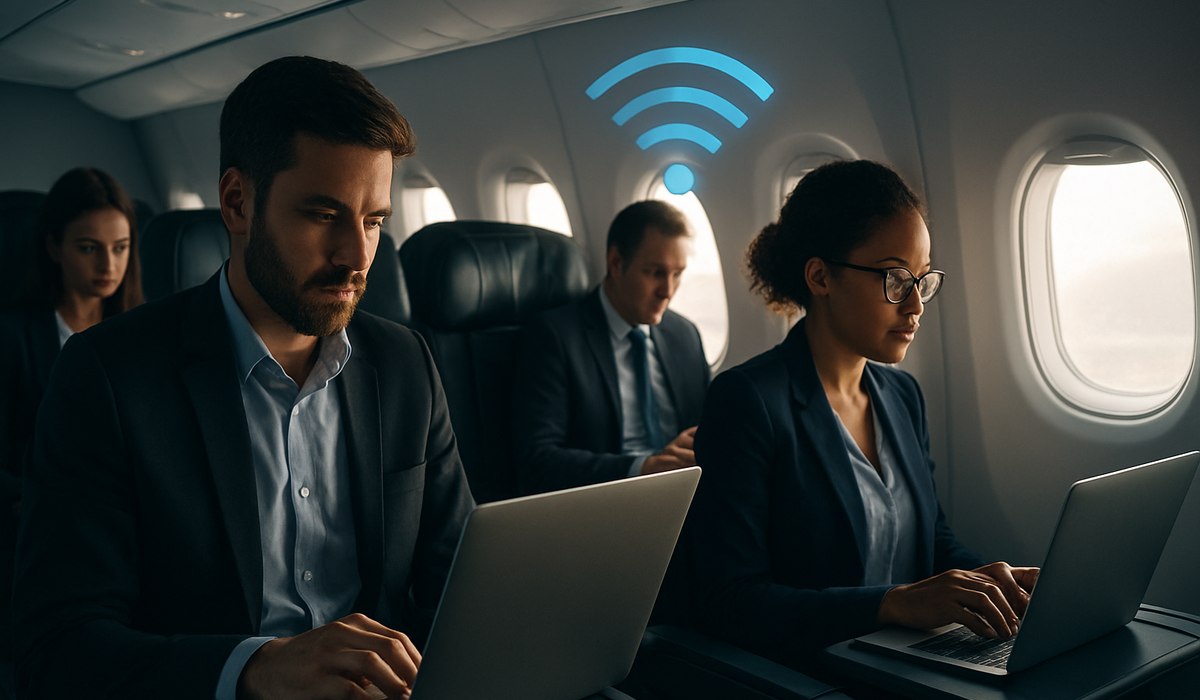
Image generated by AI
Delta Air Lines and Amazon Launch Transformative Satellite WiFi Initiative
Delta Air Lines and Amazon announced a groundbreaking partnership on March 31, 2026, to equip 500 aircraft with high-speed satellite-based internet connectivity. The agreement leverages Amazon's Project Kuiper low-Earth orbit (LEO) satellite constellation to deliver unprecedented in-flight connectivity across Delta's domestic and international routes. This initiative represents a watershed moment for airline connectivity, positioning Delta as an industry leader in passenger digital experience and remote work capabilities.
Delta and Amazon's Satellite WiFi Partnership Explained
The Delta-Amazon collaboration centers on integrating Project Kuiper's LEO satellite network into Delta's aircraft systems. Unlike traditional air-to-ground connectivity, LEO satellite networks operate at significantly lower altitudes—roughly 1,200 kilometers—enabling faster data transmission with minimal latency. This technological approach fundamentally differs from competing systems, delivering speeds comparable to ground-based broadband.
Delta's decision to adopt delta amazon satellite wifi technology reflects the airline's commitment to modern travelers' connectivity demands. The partnership addresses a critical gap in current in-flight internet services, where weather dependency and limited bandwidth have historically frustrated remote workers and business travelers. Amazon's Project Kuiper satellites, once fully operational, will provide global coverage without reliance on ground infrastructure—a crucial advantage for flights over oceans and remote regions.
The financial scope and implementation timeline remain proprietary, though industry analysts project the rollout spanning 18-24 months. Delta's selection among competing connectivity providers underscores Amazon's technical credibility and Project Kuiper's maturity in preparation for commercial deployment.
What Project Kuiper Means for In-Flight Connectivity
Project Kuiper represents Amazon's multi-billion-dollar initiative to create a global broadband constellation. Unlike GEO (geostationary) satellites orbiting 36,000 kilometers above Earth, Kuiper's LEO constellation dramatically reduces signal latency—the critical metric determining internet responsiveness.
For in-flight connectivity, this distinction proves revolutionary. Current satellite-based systems suffer from 500-700 millisecond delays; Kuiper's architecture delivers under 50 milliseconds. This transformation enables video conferencing, real-time collaboration tools, and streaming services previously impractical aboard aircraft.
The LEO satellite approach also offers superior redundancy. Multiple satellites simultaneously cover any geographic region, ensuring uninterrupted service even during equipment failures. This reliability appeals directly to business travelers whose productivity depends on consistent connectivity.
Delta's 500-aircraft deployment creates a critical early-adopter advantage. As Project Kuiper satellites reach operational capacity throughout 2026 and 2027, Delta passengers will experience service improvements progressively. The airline projects completion of fleet-wide implementation by late 2027, positioning Delta ahead of major competitors in satellite-based connectivity adoption.
Timeline and Fleet Rollout Details
Delta's infrastructure upgrade follows a phased deployment strategy prioritizing high-traffic international routes and long-haul domestic services where passenger connectivity demand peaks. The initial phase targets approximately 150 aircraft across Delta's widebody fleet—Boeing 767s, 777s, and 787s serving transatlantic and transpacific routes.
Subsequent phases will extend to narrowbody aircraft operating domestic routes and regional international services. Technical installations occur during scheduled maintenance windows, minimizing operational disruptions. Each aircraft requires antenna installation, avionics integration, and ground system connectivity upgrades.
The rollout timeline projects:
- Q2 2026: Initial installations on 50 flagship aircraft
- Q3-Q4 2026: Expansion to 200 aircraft
- Q1-Q2 2027: Completion of remaining 300 aircraft installations
- Q3 2027: Full operational capability across entire fleet
Passengers can track delta amazon satellite wifi availability by checking specific flight equipment during booking. Delta's website will display satellite-equipped aircraft designations, enabling informed seat selection for remote workers prioritizing connectivity reliability.
Impact on Remote Workers and Digital Nomads
The partnership directly addresses modern travel's defining challenge: maintaining productivity while in transit. Remote workers, digital nomads, and business professionals frequently cite in-flight connectivity limitations as primary frustrations. Delta's Project Kuiper integration transforms aircraft into viable mobile offices.
Enhanced bandwidth enables simultaneous videoconferencing for multiple passengers without service degradation. Cloud-based applications—Slack, Microsoft Teams, Salesforce—operate seamlessly with latency approaching ground-based performance levels. Digital nomads can maintain client meetings, collaborate with distributed teams, and complete deadline-sensitive work without waiting for airport arrival.
The upgrade particularly benefits nomadic professionals requiring consistent international travel. Transcontinental flights over Atlantic and Pacific regions, historically connectivity dead zones, become productive work environments. Digital nomads traveling between continents can maintain uninterrupted client relationships and project timelines.
Pricing structures remain undetermined, though Delta typically includes satellite connectivity within premium cabin fares and frequent-flyer elite tiers. The airline may offer standalone connectivity packages for basic economy passengers, expanding accessibility.
This advancement positions Delta as the preferred carrier for knowledge workers, consultants, and remote teams requiring frequent business travel. The competitive differentiation creates powerful incentives for frequent business flyers to consolidate travel with Delta, strengthening loyalty and market position.
Traveler Action Checklist
Digital nomads and remote workers should take these steps to maximize the new connectivity:
- Monitor your flight's aircraft type during booking—check Delta's website for Project Kuiper-equipped aircraft designations
- Upgrade to premium cabin seats when prioritizing connectivity reliability for important meetings
- Test your video conferencing setup before flying to identify bandwidth requirements
- Verify passport validity for international routes optimized for satellite WiFi deployment
- Download offline backup files for critical documents despite improved connectivity
- Update your remote work tools to latest versions supporting optimized latency performance
- Contact Delta directly if booking specific flights for business-critical work requirements
Key Data Table: Delta Amazon Satellite WiFi Integration
| Metric | Details |
|---|---|
| Partner Airlines | Delta Air Lines |
| Satellite Network | Amazon Project Kuiper (LEO constellation) |
| Aircraft Total | 500 aircraft |
| Geographic Coverage | Domestic and international routes |
| Signal Latency | Under 50 milliseconds (vs. 500-700ms traditional systems) |
| Launch Phase 1 | Q2 2026 (50 aircraft) |
| Full Deployment | Q3 2027 |
| Primary Beneficiaries | Remote workers, business travelers, digital nomads |
| Altitude (LEO Orbit) | ~1,200 kilometers |
| Competitive Advantage | Global coverage without ground infrastructure dependency |
What This Means for Travelers
The delta amazon satellite wifi partnership fundamentally reshapes expectations for in-flight connectivity. Business travelers and remote workers gain unprecedented productivity capabilities, enabling legitimate work during flight time rather than managing connectivity disappointment.
The upgrade addresses pain points that previously frustrated digital nomads: unreliable service over oceans, degraded performance during peak usage periods, and inconsistent quality across different aircraft. Project Kuiper's redundancy architecture ensures reliability meeting professional standards.
Leisure travelers benefit equally through improved entertainment streaming, real-time flight tracking access, and communication with ground contacts. Families managing group travel schedules can coordinate seamlessly, while anxious travelers contact loved ones immediately upon departure.
The 500-aircraft investment demonstrates Delta's confidence in satellite-based connectivity's future viability. This commitment encourages ecosystem development: application developers optimizing software for improved latency, device manufacturers considering aircraft connectivity in product design, and professional service providers expanding capabilities for airborne deployment.
The partnership's success likely accelerates competitor adoption. United Airlines and American Airlines face pressure to match connectivity capabilities, ultimately benefiting the
Disclaimer
This article is for informational and educational purposes only. It does not constitute legal, financial, or professional advice. While we strive to provide accurate and up-to-date information, travel policies, regulations, and conditions change rapidly. Always verify information with official sources before making travel decisions. Nomad Lawyer makes no representations about the accuracy, reliability, completeness, or suitability of the information provided. Readers should consult qualified professionals for advice specific to their circumstances. The views expressed in this article are those of the author and do not necessarily reflect the views of Nomad Lawyer.
Kunal K Choudhary
Co-Founder & Contributor
A passionate traveller and tech enthusiast. Kunal contributes to the vision and growth of Nomad Lawyer, bringing fresh perspectives and driving the community forward.
Learn more about our team →