
Breaking Airline News: Delta Air Lines Sells 87% of First Class Seats as Passengers Pay to Escape Travel Chaos
Breaking airline news: Amidst a terrifying era of severe operational fragility, Delta Air Lines fundamentally alters aviation economics as desperate passengers buy 87% of First Class seats to escape massive travel chaos.

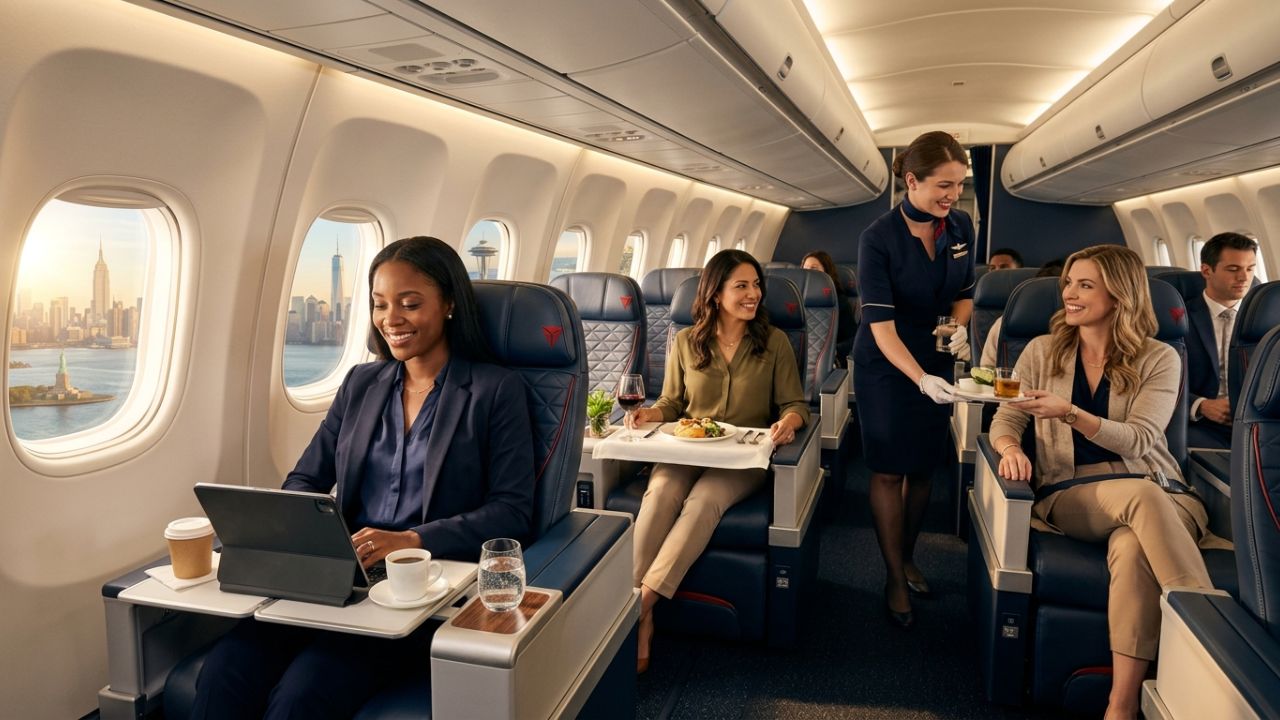
Image representing the intense strategic shift in aviation economics, as Delta Air Lines successfully monetizes its premium cabins, allowing desperate travelers to aggressively buy their way out of extreme domestic travel chaos.
Breaking Airline News: Delta Air Lines Sells 87% of First Class Seats as Passengers Pay to Escape Travel Chaos
As paralyzing terminal bottlenecks, severe capacity shortages, and catastrophic operational fragility violently threaten to completely shatter the domestic passenger experience, a massive economic shift has redefined US aviation. In a harrowing era where sudden flight cancellations and extreme airport disruptions routinely plunge economy cabins into terrifying travel chaos, Delta Air Lines has executed a highly aggressive, multi-billion-dollar tactical response. By fundamentally altering historic industry practices that treated premium cabins as complimentary upgrade perks, Delta is now successfully selling an astonishing eighty-seven percent of its First Class seats. This dramatic structural realignment proves that desperate travelers are no longer viewing premium seating as a luxury, but rather as an absolute, mandatory defense mechanism to aggressively bypass the catastrophic gridlock suffocating American air travel.
In a brutal demonstration of how desperately the high-value economy requires insulated transit corridors, Delta's strategy represents a deliberate, calculated shift toward prioritizing revenue generation over traditional cost-cutting. By aggressively concentrating growth in heavily fortified coastal hubs—specifically Los Angeles (LAX), New York (JFK), Boston (BOS), and Seattle (SEA)—the airline targeted the exact demographics possessing the financial firepower to buy their way out of systemic travel chaos. Paired with its incredibly lucrative co-branded relationship with American Express, Delta has violently transformed domestic First Class from a marginal loss-leader filled with upgraded elites into an absolute, untouchable profit engine, setting a terrifying new competitive standard for the global aviation industry.
Expanded Overview: Shattering the Complimentary Upgrade Era
The terrifying crisis of overwhelming passenger stress currently testing US gateways brutally exposes the severe limitations of treating air travel as a basic commodity. For decades, legacy carriers fixated on slashing expenses as their primary survival mechanism, drastically undervaluing their premium real estate. Delta identified this massive blind spot. Airline intelligence reveals that exactly 35 percent of modern travelers actively prioritize product quality and operational reliability over schedule and price. By forcefully implementing a "premium product strategy," Delta successfully tapped into this desperate demographic, allowing them to purchase immunity from the terrifying travel chaos infecting the main cabin.
The Coastal Fortress Strategy
Delta’s absolute financial dominance is rooted in its highly targeted growth across major coastal markets. Recognizing that smaller, regional cities simply cannot generate the massive premium revenue required to sustain this model, the airline fortified its primary gateways. By aggressively defending Los Angeles (LAX), New York (JFK), Boston (BOS), and Seattle (SEA), while simultaneously pouring massive investments into fortress hubs like New York LaGuardia (LGA) and Atlanta (ATL), Delta secured absolute access to affluent travelers. This market dominance allows Delta to capture outsized loyalty and spending through its American Express partnership, proving that securing high-value hubs is the ultimate defense against operational volatility.
Section-Wise Breakdown: The Financial Decommoditization
To fully comprehend the massive logistical and financial fallout of this strategic pivot, corporate travel managers and industry analysts must review the exact metrics defining Delta's premium extraction strategy.
Monetizing the Sanctuary: The 87% Reality
Historically, Delta provided complimentary upgrades across its domestic network, meaning only a highly anemic thirteen percent of domestic first-class seats were actually sold for cash. When excluding connecting traffic moving onto longer international routes, that terrifying figure plummeted even further to a mere six percent. Today, the execution of selling 87 percent of First Class seats reflects a ruthless, highly effective strategy. By carefully pricing premium cabins for passengers who previously flew economy or purchased infrequently, Delta has ensured that nearly every seat in the forward cabin acts as a direct revenue generator, completely decommoditizing the premium experience.
Competitor Failures and ULCC Limitations
The brilliance of Delta's strategy is violently highlighted by the massive failures of its competitors. American Airlines, heavily influenced by its historic US Airways management team, completely missed this revenue capture. By obsessively focusing on maximizing seat density and minimizing costs, American Airlines failed entirely to serve the 35 percent of travelers desperately seeking a differentiated, chaos-free product.
Simultaneously, ultra-low-cost carriers (ULCCs) such as Spirit Airlines, Frontier Airlines, JetBlue, and Southwest Airlines face massive, terrifying structural hurdles in replicating this model. They critically lack the sprawling lounge networks, frequent schedules, and holistic premium infrastructure required to extract this revenue. While JetBlue and Southwest are frantically attempting to develop first-class options, rising operational costs and infrastructure limitations severely constrain their potential.
Delta Air Lines Premium Operations Matrix
To ensure industry analysts can aggressively track this massive financial realignment, the following operational matrix details the specific, verified metrics defining Delta's premium strategy.
| Strategic Metric | Delta Air Lines Verified Data |
|---|---|
| Current First Class Paid Load Factor | 87% of Domestic First Class Seats Sold |
| Historic First Class Paid Load Factor | 13% (Dropped to 6% excluding international connections) |
| Target Premium Demographic | 35% of travelers (Prioritizing product quality over price) |
| Primary Coastal Revenue Hubs | Los Angeles (LAX), New York (JFK), Boston (BOS), Seattle (SEA) |
| Fortress Investment Hubs | Atlanta (ATL), New York LaGuardia (LGA) |
| Primary Financial Engine | American Express Co-Branded Partnership |
| Failed Competitor Strategy | American Airlines (High-density/cost-cutting focus) |
| Structurally Limited ULCC Competitors | Spirit, Frontier, JetBlue, Southwest Airlines |
Passenger Impact: The Ongoing Operational Vulnerabilities
For the thousands of travelers aggressively buying into Delta's premium cabins to navigate the rapidly collapsing domestic transit corridors, expectations are terrifyingly high. When passengers pay massive premiums to escape travel chaos, any operational failure is magnified.
Despite its massive financial success, Delta Air Lines remains highly vulnerable to specific operational vulnerabilities. The airline is currently battling severe challenges, including highly disruptive pilot scheduling issues that can trigger sudden flight cancellations. Furthermore, passengers paying for premium extraction frequently encounter limited meal offerings on short-haul flights and suffer from the incomplete deployment of the airline's highly touted business class suites. Addressing these glaring gaps remains absolutely essential for sustaining Delta’s competitive dominance as rivals desperately attempt to enhance their own premium infrastructure.
Conclusion: A Strategic Offensive to Redefine Aviation
As the extremely critical domestic transit network continues to face terrifying strain from unprecedented passenger demand and operational fragility, the aggressive premium strategy executed by Delta Air Lines represents a massive paradigm shift in aviation economics. By violently converting free elite upgrades into a massive revenue-generating engine, the carrier has successfully allowed 35 percent of the traveling public to financially bypass extreme airport disruptions. While structurally limited low-cost carriers face terrifying hurdles attempting to replicate this success, Delta’s aggressive focus on high-value coastal hubs and its American Express alliance serve as the ultimate, undeniable blueprint for monetizing survival in an era of global travel chaos.
Key Takeaways
- Massive Tactical Shift: Delta Air Lines has successfully shifted from giving away domestic premium seats to aggressively selling 87% of its First Class cabin.
- Total Chaos Avoidance: By targeting the 35% of travelers who prioritize product quality, Delta allows passengers to financially bypass the severe travel chaos of the main cabin.
- Coastal Fortress Dominance: The strategy relies heavily on capturing massive revenue from key coastal hubs including LAX, JFK, BOS, and SEA.
- Competitor Missteps: American Airlines failed to capture this market due to a historic focus on seat density, while ULCCs like Spirit and Frontier lack the necessary infrastructure.
- Traveler Advisory: Premium passengers must remain vigilant, as Delta still battles severe operational issues including pilot scheduling disruptions and incomplete business class suite rollouts across the fleet.
Related Travel Guides
Disclaimer
This article is for informational and educational purposes only. It does not constitute legal, financial, or professional advice. While we strive to provide accurate and up-to-date information, travel policies, regulations, and conditions change rapidly. Always verify information with official sources before making travel decisions. Nomad Lawyer makes no representations about the accuracy, reliability, completeness, or suitability of the information provided. Readers should consult qualified professionals for advice specific to their circumstances. The views expressed in this article are those of the author and do not necessarily reflect the views of Nomad Lawyer.
Kunal K Choudhary
Co-Founder & Contributor
A passionate traveller and tech enthusiast. Kunal contributes to the vision and growth of Nomad Lawyer, bringing fresh perspectives and driving the community forward.
Learn more about our team →