
Delta Air Lines Flight DL1595 Declares Mid-Air Emergency, Diverts to Ogden Amid Massive Wave of Domestic Travel Chaos: Latest Airline News
A highly urgent mid-flight emergency forces Delta Air Lines Flight DL1595 to abandon its Salt Lake City approach, triggering severe airport disruptions and stranding passengers in Ogden.

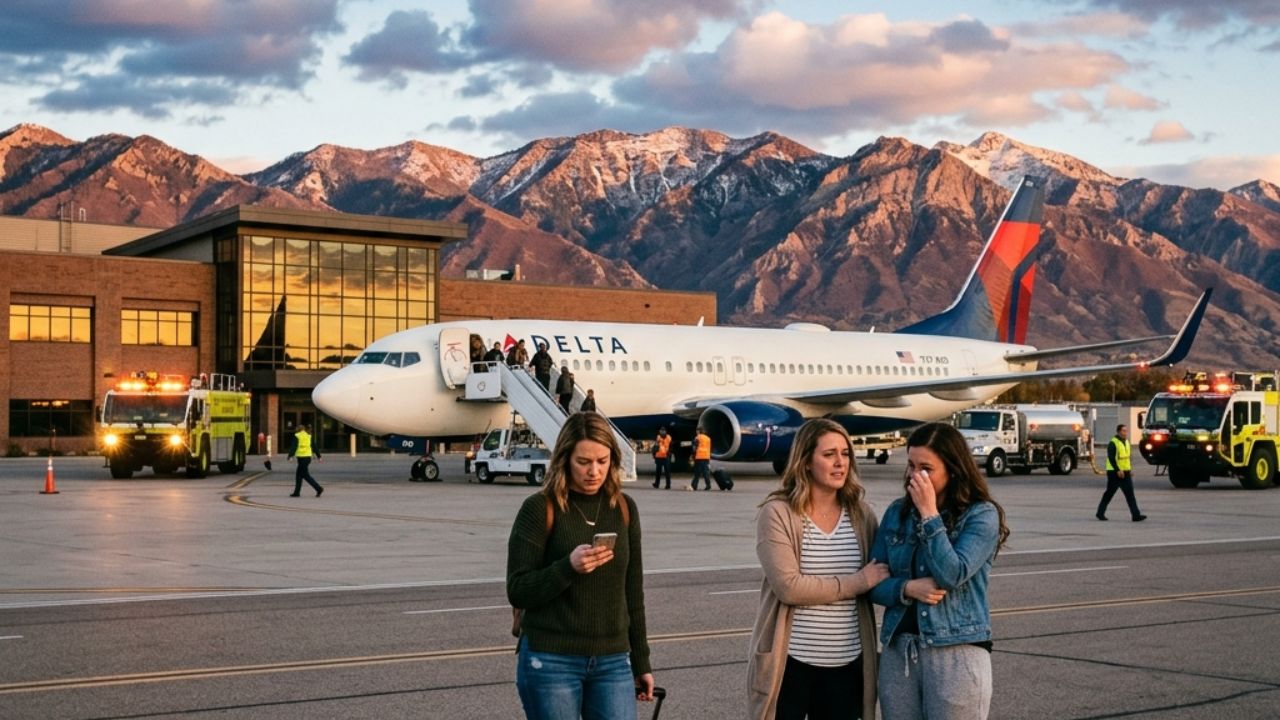
Image generated by AI
A Sudden Wave of Operational Emergencies
While the broader United States passenger network frequently battles severe weather-related flight cancellations and overwhelming terminal gridlock, a massive, highly critical operational incident has just paralyzed a major domestic route. Delivering highly urgent, breaking airline news, verified aviation data confirms that Delta Air Lines Flight DL1595, operating from Reno to Salt Lake City, declared a severe mid-flight emergency on May 29, abruptly abandoning its scheduled arrival. While desperate passengers attempt to navigate standard seasonal airport disruptions across western hubs, these exclusive aviation updates reveal that the Boeing 737-800 was forced into an immediate, unscheduled diversion, ultimately touching down at Ogden–Hinckley Airport. Compounding this terrifying operational narrative, verified reports also confirm a secondary incident involving Delta Flight DL2791, triggering a massive wave of travel chaos as aviation authorities scramble to investigate these sudden, high-profile diversions.
Expanded Overview: The Scale of the Emergency Diversions
The strategic execution of an emergency diversion serves as a massive, undeniable test of flight crew training and air traffic control infrastructure. Historically, a routine domestic hop from Reno (RNO) to Salt Lake City (SLC) is a highly predictable, low-risk sector. However, the sudden operational collapse of Flight DL1595 proves that absolute safety is never guaranteed. The aircraft, registered as N375DA, departed Reno shortly after its scheduled time at approximately 1:17 p.m. local time. During the crucial en-route phase, an unspecified urgency forced the cockpit crew to violently alter their flight path, completely bypassing Delta's massive Salt Lake City hub and executing a precautionary landing at Ogden–Hinckley (OGD) at 3:46 p.m.
Simultaneously, the sheer scale of the disruption widened as Delta Air Lines Flight DL2791, operating a Boeing 737-932ER from Philadelphia to Minneapolis–Saint Paul, suffered its own sudden emergency. This aircraft was forced into an immediate diversion to Portsmouth, further straining the airline's dispatch operations. By aggressively executing these dual diversions, Delta Air Lines strictly adhered to its layered safety protocols, heavily prioritizing passenger survival over schedule integrity, even as it stranded hundreds of travelers in secondary airports.
Section-Wise Breakdown of the Dual Incidents
Mid-Flight Urgency Forces Ogden Landing
The absolute epicenter of this operational disruption was the cockpit of Flight DL1595. Aviation authorities explicitly confirm that whenever a flight crew identifies a severe situation—whether a mechanical failure, sudden pressurization issue, or a critical medical emergency—diverting to the nearest capable runway is strictly mandatory. By choosing Ogden–Hinckley Airport, located just north of Salt Lake City, the pilots ensured a rapid descent and immediate access to emergency ground services. This highly calculated decision mathematically eliminated the severe risk of attempting to hold over a congested mega-hub like SLC while managing an active emergency, preventing a potential catastrophic outcome.
A Second Delta Diversion Hits Portsmouth
The operational nightmare for Delta’s dispatch center was heavily compounded by the sudden diversion of Flight DL2791. Operating a heavily loaded Boeing 737-932ER on the lucrative Philadelphia to Minneapolis–Saint Paul corridor, this flight also declared an in-flight urgency, forcing a sudden landing in Portsmouth. These dual, high-profile diversions occurring in rapid succession generated massive concern among aviation watchers and industry analysts. Managing two stranded narrow-body aircraft simultaneously requires massive logistical coordination to deploy maintenance crews, secure hotel accommodations, and reroute displaced passengers who were relying on hub connections.
FAA and Delta Investigate the Incidents
To successfully resolve these massive disruptions, a highly aggressive investigative protocol is now underway. The Federal Aviation Administration (FAA) and Delta’s internal safety teams are currently stripping the operational data from both Boeing 737s. Maintenance crews in Ogden and Portsmouth are executing rigorous technical inspections to determine if mechanical faults triggered the alarms. Until official findings are published, aviation experts caution that emergency landings are frequently executed out of an abundance of caution rather than an imminent threat of structural failure, highlighting the extreme risk aversion embedded in modern commercial aviation.
Delta Air Lines Dual Emergency Diversion Metrics Table
To fully comprehend the highly severe operational parameters and massive logistical breakdown dictating these dual incidents, the following table explicitly details the core flight metrics and diversion data:
| Operational Metric / Flight Data | Verified Emergency & Diversion Logistics |
|---|---|
| Primary Incident (May 29) | Delta Air Lines Flight DL1595 |
| DL1595 Original Route | Reno (RNO) to Salt Lake City (SLC) |
| DL1595 Diversion Airport | Ogden–Hinckley Airport (OGD) |
| DL1595 Aircraft & Timing | Boeing 737-800 (N375DA) / Landed 3:46 p.m. |
| Secondary Incident | Delta Air Lines Flight DL2791 |
| DL2791 Original Route | Philadelphia to Minneapolis–Saint Paul |
| DL2791 Diversion Airport | Unscheduled emergency landing at Portsmouth |
Passenger Impact: Stranded Outside Major Hubs
For the modern domestic commuter and connecting traveler, the passenger impact of these massive diversions is financially and emotionally exhausting. The modern demographic is increasingly demanding absolute logistical speed, actively relying on massive hubs like Salt Lake City and Minneapolis to execute rapid onward connections.
Passengers aboard DL1595 immediately experienced the massive terror of an emergency descent, followed by the logistical nightmare of being stranded in Ogden. Instead of seamlessly transferring to their connecting flights at SLC, these passengers were forced to endure hours of severe uncertainty while Delta scrambled to arrange ground transportation or replacement aircraft. By being completely severed from their intended hubs, travelers faced entirely ruined itineraries, missed international connections, and the severe emotional exhaustion of navigating complex rebooking procedures during a sudden operational crisis.
Industry Analysis: The Economics of Precautionary Diversions
From a macroeconomic and industry operations perspective, these dual Delta diversions highlight a highly terrifying reality for airline yield management. Travel analysts fiercely argue that executing an emergency diversion is a mathematically devastating financial event for an airline.
By aggressively diverting two Boeing 737 aircraft, Delta Air Lines incurs massive, unrecoverable costs, including emergency landing fees, extreme fuel burn inefficiencies, passenger compensation, and the complete disruption of subsequent flight rotations. However, the aviation industry’s layered safety approach strictly dictates that these massive financial losses are infinitely preferable to risking a hull loss. This incident forces competitors to recognize that Delta's flight crews are highly trained to prioritize absolute safety over operational profitability, acting decisively to land the aircraft the moment uncertainty arises.
Conclusion: A Highly Volatile Horizon for Delta Operations
The sudden, highly publicized emergency diversions of Flights DL1595 and DL2791 are exponentially more than routine delays—they represent massive, highly visible tests of Delta Air Lines' emergency response infrastructure. By perfectly executing safe landings in Ogden and Portsmouth, the flight crews have proven that they are fiercely committed to protecting their passengers from catastrophic in-flight failures. As the FAA and Delta maintenance teams aggressively investigate the root causes of these mid-air urgencies, thousands of displaced travelers are urged to aggressively monitor their Delta app for rebooking options before the cascading delays completely paralyze the airline's domestic network.
Key Takeaways
- Massive Primary Diversion: Delta Flight DL1595 (Reno to Salt Lake City) declared a mid-flight emergency and diverted to Ogden-Hinckley on May 29.
- Secondary Incident: Delta Flight DL2791 (Philadelphia to Minneapolis) also suffered a sudden emergency, diverting to Portsmouth.
- Aircraft Deployed: DL1595 was operated by a Boeing 737-800 (N375DA), while DL2791 utilized a Boeing 737-932ER.
- Safety Protocols Executed: The flight crews aggressively prioritized immediate landings at alternate airports over risking continued flight to their hubs.
- Severe Passenger Disruption: Hundreds of passengers missed critical hub connections in Salt Lake City and Minneapolis, triggering massive logistical chaos.
Disclaimer: The specific flight routing, diversion timelines, and aircraft registration metrics presented in this report are based on preliminary aviation data regarding the May 29 incidents involving Delta Air Lines. Official causes for the emergency declarations, FAA investigative outcomes, and subsequent network recovery times are highly volatile and subject to continuous update. Affected passengers are urgently advised to monitor their specific booking status directly via the Delta Air Lines official portal and follow all ground crew instructions at the diversion airports.
Disclaimer
This article is for informational and educational purposes only. It does not constitute legal, financial, or professional advice. While we strive to provide accurate and up-to-date information, travel policies, regulations, and conditions change rapidly. Always verify information with official sources before making travel decisions. Nomad Lawyer makes no representations about the accuracy, reliability, completeness, or suitability of the information provided. Readers should consult qualified professionals for advice specific to their circumstances. The views expressed in this article are those of the author and do not necessarily reflect the views of Nomad Lawyer.
Kunal K Choudhary
Co-Founder & Contributor
A passionate traveller and tech enthusiast. Kunal contributes to the vision and growth of Nomad Lawyer, bringing fresh perspectives and driving the community forward.
Learn more about our team →