
Delta Air Lines Expands Long-Haul Network with Five New Nonstop A350 Routes
Breaking airline news and aviation industry updates for 2026.

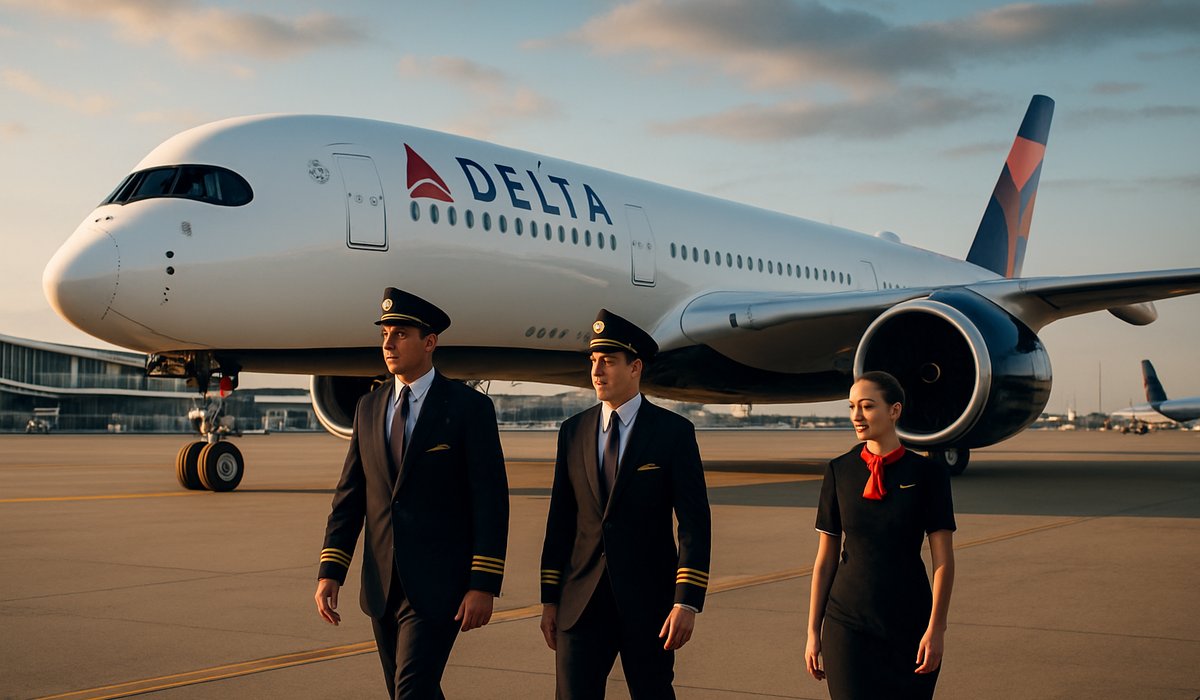
Image generated by AI
Delta Air Lines Expands Long-Haul Network with Five New Nonstop A350 Routes
The carrier leverages its growing widebody fleet to capture premium international travel demand amid competitive market pressures
Major Fleet Expansion Powers Route Growth
Delta Air Lines is aggressively expanding its international connectivity by deploying five newly established nonstop routes powered by its advanced Airbus A350-900 fleet, signaling the carrier's strategic pivot toward capturing high-margin long-haul markets in an increasingly competitive aviation landscape.
The announcement underscores Delta's broader fleet modernization strategy, as the Atlanta-based carrier continues to refresh its aging widebody inventory with state-of-the-art aircraft designed to reduce operating costs and enhance passenger experience on premium routes. This expansion comes amid ongoing volatility in jet fuel prices and intensifying competition from rival carriers United Airlines and American Airlines, both of which have aggressively deployed their own long-range fleets.
Widebody Fleet Repositioning
Delta's current widebody inventory stands at 178 aircraft, representing 18% of its overall fleet composition—a notably lower proportion than competitor United Airlines, which allocates 21% of its fleet to twin-aisle equipment. The carrier's widebody arsenal comprises 40 Airbus A350-900s, 39 A330-900s, 36 Boeing 767-300ERs, 31 A330-300s, 21 767-400ERs, and 11 A330-200s.
The A350-900 variants, celebrated for their fuel efficiency and extended range capabilities, provide Delta with optimal economics for the five new nonstop routes. These aircraft consume approximately 20% less fuel than legacy widebody platforms while delivering significantly enhanced passenger comfort through advanced cabin pressurization and lighting systems—features increasingly valuable as airlines compete on premium service offerings and environmental credentials.
Forward Orders Signal Continued Growth
Looking ahead, Delta has secured additional widebody capacity through firm orders for A350-1000 variants and 787-10 Dreamliners, positioning the carrier to sustain its long-haul expansion trajectory through the end of the decade. These next-generation platforms represent critical investments as global aviation demand rebounds and international travel preferences shift toward direct routing and premium cabin experiences.
The expansion strategy arrives as airlines worldwide grapple with elevated operating expenses stemming from persistent jet fuel costs and labor contract settlements. By deploying newer, more efficient aircraft, Delta aims to maintain profitability margins while offering competitive pricing on premium transatlantic and transpacific services.
Industry Context
This fleet deployment reflects broader industry trends, wherein carriers prioritize modernization investments to offset inflationary pressures and meet evolving passenger expectations for direct connectivity. Delta's widebody expansion directly competes with similar initiatives from United and American, as all three carriers vie for lucrative business travel segments and premium leisure markets increasingly demanding nonstop convenience.
Frequently Asked Questions
What aircraft is Delta using for its new nonstop routes? Delta is deploying the Airbus A350-900, a fuel-efficient widebody jet offering extended range and reduced operating costs compared to legacy aircraft.
How many A350 aircraft does Delta currently operate? Delta operates 40 Airbus A350-900 variants as part of its 178-aircraft widebody fleet.
What percentage of Delta's fleet comprises widebody aircraft? Widebody equipment accounts for 18% of Delta's total fleet—3 percentage points lower than competitor United Airlines.
Does Delta have additional widebody aircraft on order? Yes, Delta has firm orders for A350-1000 variants and Boeing 787-10 Dreamliners to support future long-haul expansion.
How do new routes impact airline baggage fees and ticket pricing? Expanded nonstop routes typically allow carriers to optimize pricing strategies, though baggage fees and ancillary charges remain tied to individual fare classes rather than route deployment decisions.
Related Travel Guides
- United Airlines Launches Regional Subsidiary Under United Express Brand After Flight Attendant Deal Reaches Tentative Agreement
- Ryanair Aligns Family Seating Policy with British Airways and Jet2
- Bypassing European Travel Chaos: Corendon Launches Massive Direct Düsseldorf to Curaçao Flights to Rescue Winter Caribbean Tourism
Disclaimer
This article is for informational and educational purposes only. It does not constitute legal, financial, or professional advice. While we strive to provide accurate and up-to-date information, travel policies, regulations, and conditions change rapidly. Always verify information with official sources before making travel decisions. Nomad Lawyer makes no representations about the accuracy, reliability, completeness, or suitability of the information provided. Readers should consult qualified professionals for advice specific to their circumstances. The views expressed in this article are those of the author and do not necessarily reflect the views of Nomad Lawyer.
Kunal K Choudhary
Co-Founder & Contributor
A passionate traveller and tech enthusiast. Kunal contributes to the vision and growth of Nomad Lawyer, bringing fresh perspectives and driving the community forward.
Learn more about our team →