
Delta Air Lines Expands Transpacific Reach: Daily Hong Kong Service, LAX Sky Way Hub, and Asia Travel Guide 2026

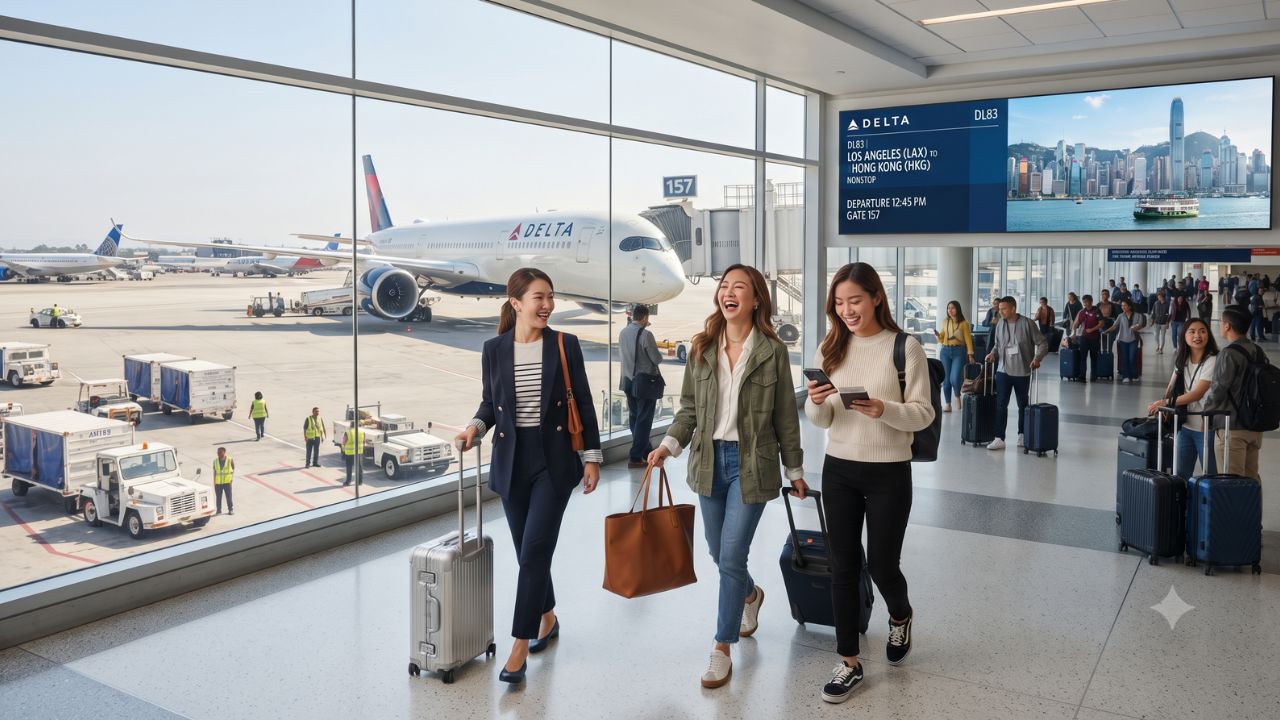
While overall international overnight arrivals to Hong Kong experienced a slight 3.9% dip in July, overnight visitors from the United States surged by 12.0% to 66,151 travelers during the same month. Backed by strong inbound demand from North America, Delta Air Lines has placed Hong Kong at the center of its Pacific growth strategy, deploying its flagship Airbus A350-900 aircraft on a daily non-stop link between Los Angeles International Airport (LAX) and Hong Kong International Airport. The route, which officially took flight on June 6, 2026, connects seamlessly with over 30 domestic feeder origins across the United States—supported by three additional daily flights connecting Chicago O'Hare and Los Angeles introduced on June 7—while offering more than 20 tons of high-value belly-cargo capacity per flight.
Transpacific Commercial Momentum: Inside Delta's Asia Strategy
The introduction of the Los Angeles–Hong Kong service aligns with robust travel figures published by the Hong Kong Tourism Board. Between January and July 2026, the territory welcomed 31.22 million total visitors, reflecting an 11.4% expansion over the previous year. Visitor arrivals from the United States registered even stronger performance, totaling 657,025 American arrivals across the seven-month span—a 12.2% year-on-year increase. The high-spending overnight segment accounted for 429,737 of these US travelers, up 11.6%, demonstrating that American visitors are prioritizing immersive multi-day stays rather than quick transit stops.
Delta's financial performance reinforces this commercial pivot across Pacific skies. During the second quarter of 2026, the carrier reported US$832 million in Pacific passenger revenue, representing a 15.0% revenue jump driven by an 8.0% expansion in regional capacity and a 7.0% increase in unit revenue. Hong Kong's recovery was already firmly established—with the local government reporting roughly 23 million visitor arrivals (a 14.0% increase) across the first five months of 2026 prior to Delta's inaugural flight—positioning the new service as high-capacity transit infrastructure meeting an already thriving travel market.
The Hong Kong link serves as the anchor for an aggressive multi-hub Asian roadmap stretching into 2027:
- Atlanta to Riyadh: Launching on October 23, 2026, Delta will operate the first non-stop service by a US carrier between the United States and the Saudi capital, running daily from October 23 to 30 before settling into a permanent three-times-weekly schedule.
- Seattle to Tokyo Narita: Commencing March 27, 2027, a new daily Airbus A330-900neo flight will complement Delta's existing Seattle–Haneda operations, giving Pacific Northwest travelers dual-airport flexibility across the Tokyo metropolitan area.
- Los Angeles to Manila: Scheduled to begin on March 28, 2027, with three weekly Airbus A350-900 flights, transitioning to full daily service on June 7, 2027, to serve holidaymakers and visiting-friends-and-relatives (VFR) traffic.
- LAX Hub Expansion: Delta's US$2.3 billion Sky Way transformation of Terminals 2 and 3 at LAX will culminate in summer 2027 with a record-setting schedule exceeding 200 daily peak departures alongside SkyTeam alliance partners.
Hong Kong as a Multi-Modal Springboard to the Greater Bay Area
For international travelers, arriving at Chek Lap Kok is frequently the opening chapter of a broader journey into Southern China. Government statistics indicate that approximately 20% of overseas arrivals in 2025 traveled onward into mainland provinces. The integration of high-speed rail and cross-border maritime infrastructure has made Hong Kong the primary transit hub for the Pearl River Delta.
Following policy reforms in November 2025, mainland China added Hong Kong’s West Kowloon High-Speed Railway Station and the Hong Kong–Zhuhai–Macao Bridge (HZMB) Port to its 240-hour visa-free transit scheme. Eligible international passport holders with confirmed onward travel to a third destination can complete Hong Kong border formalities, board a 14-minute bullet train to Shenzhen or a 45-minute express to Guangzhou, and explore the Greater Bay Area without securing a standard consular visa in advance.
What Makes the Hong Kong Stopover Experience Different
Few global cities balance high-density vertical architecture with accessible natural wilderness as dramatically as Hong Kong. Over 40% of the territory is designated as protected country parks and nature reserves. Within 20 minutes of leaving the central business towers of Central or Admiralty, hikers can ascend the Dragon’s Back ridge for sweeping vistas over the South China Sea or wander the quiet village alleys of Tai O on Lantau Island.
The territory's living culinary culture bridges Michelin-starred Cantonese dining rooms with traditional open-air food stalls (dai pai dongs) in Sham Shui Po. Savoring silky milk tea, freshly baked egg tarts, and steamed shrimp dumplings (har gow) in historic tea houses reveals a neighborhood warmth that thrives beneath the city's futuristic skyline.
Visitor Insider Tips: Navigating Hong Kong Like a Local
- Purchase an Octopus Card or Load Mobile Contactless Passes: While major hotels accept international credit cards, Hong Kong’s iconic double-decker trams (Ding Dings), Star Ferry boats, and neighborhood cha chaan teng eateries require either an Octopus card or local cash. Download the Tourist Octopus App onto your smartphone before landing to tap seamlessly across all transport networks.
- Take the Airport Express for 24-Minute City Center Transit: Skip expressway taxi queues by boarding the MTR Airport Express located directly outside the arrivals hall. Trains depart every 10 minutes, reaching Kowloon Station in 22 minutes and Hong Kong Station in Central in 24 minutes.
- Hike the Peak Circle Walk Instead of Crowding the Viewing Terrace: Avoid crowded ticket lines at the Sky Terrace atop Victoria Peak. Take the historic Peak Tram up the mountain, then follow the flat, shaded 3.5-kilometer Lugard Road loop for panoramic, unobstructed views over Victoria Harbour and the Kowloon peninsula.
- Dine During Off-Peak Hours at Popular Dim Sum Halls: In historic dining spots across Sheung Wan and Wan Chai, local families gather for midday yum cha between 12:00 PM and 1:30 PM. Arrive at 10:30 AM or 2:00 PM to secure a table quickly and enjoy freshly steamed baskets straight from the kitchen carts.
- Verify 240-Hour Transit Visa Eligibility Before Rail Boarding: If you plan to utilize the 240-hour visa-free transit policy into mainland China via West Kowloon Station, ensure your passport holds at least three months of validity and carry printed proof of confirmed onward international departures within the 10-day window.
Cultural and Environmental Context: Sustainable Urban Transit and Heritage
Hong Kong operates one of the world's most environmentally efficient mass transit networks, with more than 90% of daily passenger journeys completed on electric rail, trams, buses, and ferries. Expanding long-haul connectivity via fuel-efficient twin-engine Airbus A350-900 aircraft—which burn 25% less fuel per seat than previous-generation widebodies—complements local carbon reduction targets across the aviation corridor.
Heritage conservation initiatives are breathing new life into historical colonial landmarks. Projects like Tai Kwun (the restored Central Police Station compound) and PMQ (the former Police Married Quarters) have repurposed historic architecture into creative cultural quarters supporting local artists, independent design studios, and sustainable gastronomy. Travelers can support community preservation by patronizing family-run craft stores, participating in guided geo-park boat tours in Sai Kung, and adhering to leave-no-trace outdoor ethics along country park trails.
FAQ: Flying Delta and Visiting Hong Kong 2026
What aircraft operates Delta’s Los Angeles to Hong Kong route?
Delta operates a daily non-stop service utilizing the Airbus A350-900, offering Delta One Suites, Premium Select, and comfort-focused main cabin seating.
Can international visitors travel from Hong Kong to mainland China visa-free?
Eligible international passport holders can utilize the 240-hour (10-day) visa-free transit policy when transiting to a third country through designated ports like West Kowloon Station or the HZMB Port.
How do I travel between Hong Kong Airport and downtown hotels?
The MTR Airport Express connects the airport to Central in 24 minutes. Free hotel shuttle connections and app-based taxis are available at Kowloon and Hong Kong stations.
What is the best time of year to visit Hong Kong?
October to December offers mild temperatures, low rainfall, and clear skies, providing ideal conditions for harbor walks, outdoor hiking, and open-air dining.
From neon-lit harbor walks to quiet mountain trails, the revival of transpacific sky links connects travelers to the inexhaustible energy of Asia’s world city.
Related Travel Guides
Disclaimer
This article is for informational and educational purposes only. It does not constitute legal, financial, or professional advice. While we strive to provide accurate and up-to-date information, travel policies, regulations, and conditions change rapidly. Always verify information with official sources before making travel decisions. Nomad Lawyer makes no representations about the accuracy, reliability, completeness, or suitability of the information provided. Readers should consult qualified professionals for advice specific to their circumstances. The views expressed in this article are those of the author and do not necessarily reflect the views of Nomad Lawyer.
Raushan Kumar
Founder & Lead Developer
Full-stack developer with 11+ years of experience and a passionate traveller. Raushan built Nomad Lawyer from the ground up with a vision to create the best travel and law experience on the web.
Learn more about our team →