
Delta Air Lines Monetizes Free Wi-Fi with AI and Amazon LEO Across 500 Aircraft in 2026
Delta transforms free Wi-Fi into a revenue engine, integrating AI, Amazon LEO connectivity, and partnerships with Uber, Starbucks, and Airbnb to monetize the entire passenger journey.

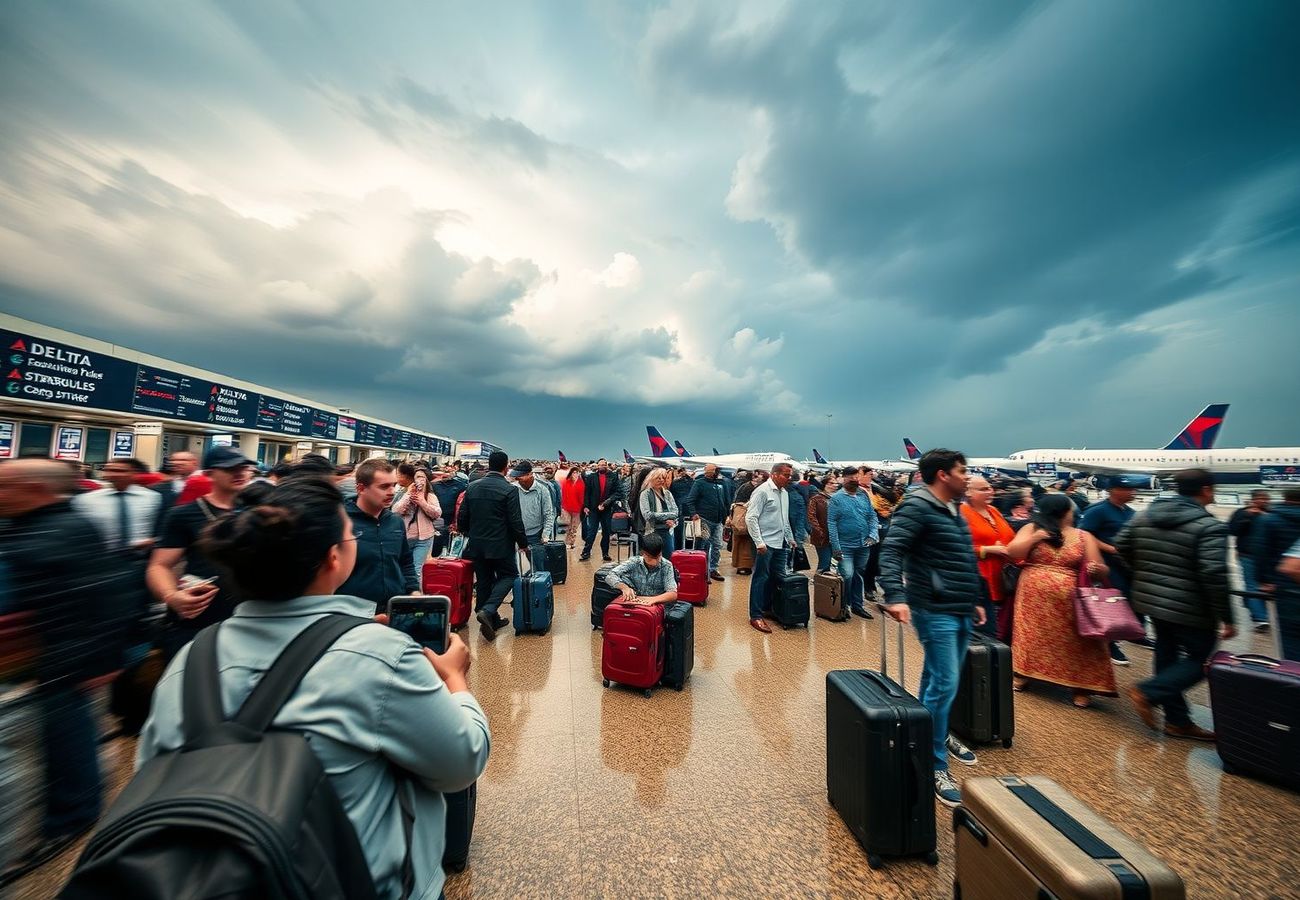
Image generated by AI
Delta's Radical Shift: Free Wi-Fi Is No Longer Free
Delta Air Lines just pulled off a strategic sleight of hand that's reshaping how airlines think about connectivity. The carrier isn't giving away internet access anymore—it's using it as bait for a far more sophisticated revenue machine.
The Atlanta-based airline has repositioned free Wi-Fi as the central nervous system of a digital ecosystem that monetizes every second of the travel day. By requiring passengers to log in, Delta transforms what looks like a convenience into a persistent tracking mechanism that feeds data into AI systems, loyalty programs, and partner commerce platforms. This isn't just clever—it's a fundamental restructuring of airline economics.
The Digital Ecosystem: A Revenue Multiplier
Delta's strategy treats the entire passenger journey as a sequence of monetizable interactions, not isolated transactions. Once a traveler logs into the Delta ecosystem, they're funneled into a unified platform spanning mobile apps, onboard Wi-Fi, seatback entertainment screens, and partner websites.
The engagement numbers are staggering. Approximately half of all Delta passengers log into the airline's digital platforms during flights. About thirty percent consume Delta-specific content rather than immediately bouncing to external sites. This retention creates multiple revenue touchpoints: shopping opportunities, content subscriptions, partner service bookings, and loyalty program upgrades.
Reddit: "I was just browsing on Delta's Wi-Fi and suddenly Uber, Starbucks, and Paramount offers popped up. It's genius marketing—you're trapped on a plane and they're literally selling you everything." — r/travel
The Partner Ecosystem: Monetizing Daily Life
Delta has woven partnerships with Amazon, Uber, Airbnb, Starbucks, Paramount, YouTube, The New York Times, and Fox directly into the travel experience. This isn't accidental placement—it's calculated. The numbers prove the strategy works:
Nearly nine million customers hold Delta American Express cards. Approximately four million have linked their SkyMiles and Starbucks accounts. Almost two million have connected Delta with Uber accounts. These integrations extend the travel-day experience into daily commerce, transforming a four-hour flight into a gateway for ongoing spending.
The result? Delta's direct online sales have exploded. In the previous year, the airline had only 19 days exceeding $100 million in mobile app and website sales. Now, that threshold is breached 65 days annually—a 242% increase in ultra-high-revenue days.
Amazon LEO: The Game-Changer
Delta's rollout of Amazon LEO connectivity across 500 aircraft represents the inflection point. LEO satellites provide coverage that traditional Wi-Fi can't match, enabling seamless shopping, gaming, cloud services, and content streaming even during cruise altitude.
This matters because connectivity isn't the real product—commerce is. By offering shopping experiences mid-flight when passengers have time and captive attention, Delta captures revenue that would otherwise scatter across multiple vendors. Amazon gets transaction fees. Delta gets loyalty data. Passengers think they're just shopping online.
The airline now operates over 168,000 seatback entertainment screens. Each one functions as a point-of-sale terminal disguised as entertainment.
Delta Concierge: AI-Powered Engagement
The Delta Concierge tool represents the soft infrastructure behind this machine. Powered by artificial intelligence, the platform simplifies complex passenger interactions—rebooking, cancellations, seat changes—using natural language interfaces rather than menu-driven systems.
During beta testing, only five percent of app users had access. But the rollout is accelerating. Full deployment across all app users is scheduled soon, which means Delta is preparing to scale AI-driven engagement at massive volume.
Why? Because every interaction with Concierge generates behavioral data. The AI learns what passengers want, when they want it, and which offers drive conversions. This intelligence feeds directly into personalization engines that target each passenger with custom partner offers, content recommendations, and premium cabin upgrades.
The Seatback Screen Supremacy
Delta One Suites debuted nearly a decade ago, but fewer than half of the airline's widebody fleet features this premium cabin product yet. This deliberate slow rollout isn't a supply chain issue—it's a monetization strategy. Each aircraft retrofit represents an opportunity to integrate premium passengers into exclusive digital channels: early booking access, partner concierge services, premium shopping experiences, and loyalty accelerators.
By widening premium cabin availability gradually, Delta maintains scarcity pricing while simultaneously extending its digital ecosystem into higher-value customer segments.
The Competitive Reality Check
Some industry observers have called Delta's claims inflated. JetBlue and Qatar Airways implemented free Wi-Fi and enclosed business suites earlier. But those comparisons miss the point entirely.
Delta's advantage isn't pioneering—it's integration. The airline built a comprehensive ecosystem where connectivity, loyalty, commerce, content, and AI function as a unified organism. Competitors have implemented individual features. Delta has built a system.
What This Means for Travelers
Passengers win in the traditional sense: faster rebooking, instant entertainment access, shopping convenience at 35,000 feet. But they're also losing something invisible. Every login, every click, every purchase becomes part of a profile that Delta monetizes through targeted offers and partner commissions.
This is the future of airline economics. Airfare becomes the loss leader that gets you logged in. The real margin lives in the ecosystem.
Delta's vision extends globally. By integrating connectivity, loyalty programs, partner services, and AI tools across domestic U.S. routes and international networks spanning Europe, Asia, and beyond, the airline is positioning itself not as a carrier—but as a commerce platform that happens to move people between cities.
The airline of the future won't sell you a ticket—it will sell you an experience, and monetize every second you spend inside it.
Related Travel Guides
Delta Travel Perks Suspended for Congressional Members in 2026
The Airbus A380's Stunning Resurrection: How 190 Superjumbos Became Airlines' Most Prized Asset
Disclaimer
This article is for informational and educational purposes only. It does not constitute legal, financial, or professional advice. While we strive to provide accurate and up-to-date information, travel policies, regulations, and conditions change rapidly. Always verify information with official sources before making travel decisions. Nomad Lawyer makes no representations about the accuracy, reliability, completeness, or suitability of the information provided. Readers should consult qualified professionals for advice specific to their circumstances. The views expressed in this article are those of the author and do not necessarily reflect the views of Nomad Lawyer.
Preeti Gunjan
Contributor & Community Manager
A passionate traveller and community builder. Preeti helps grow the Nomad Lawyer community, fostering engagement and bringing the reader experience to life.
Learn more about our team →