
Delta Air Lines and New York State Lead 2026 Crackdown on AI Smartglasses to Protect Passenger Privacy
Delta Air Lines and New York State are pioneering strict bans on AI-powered smartglasses in 2026 to safeguard privacy across aviation and judicial sectors.

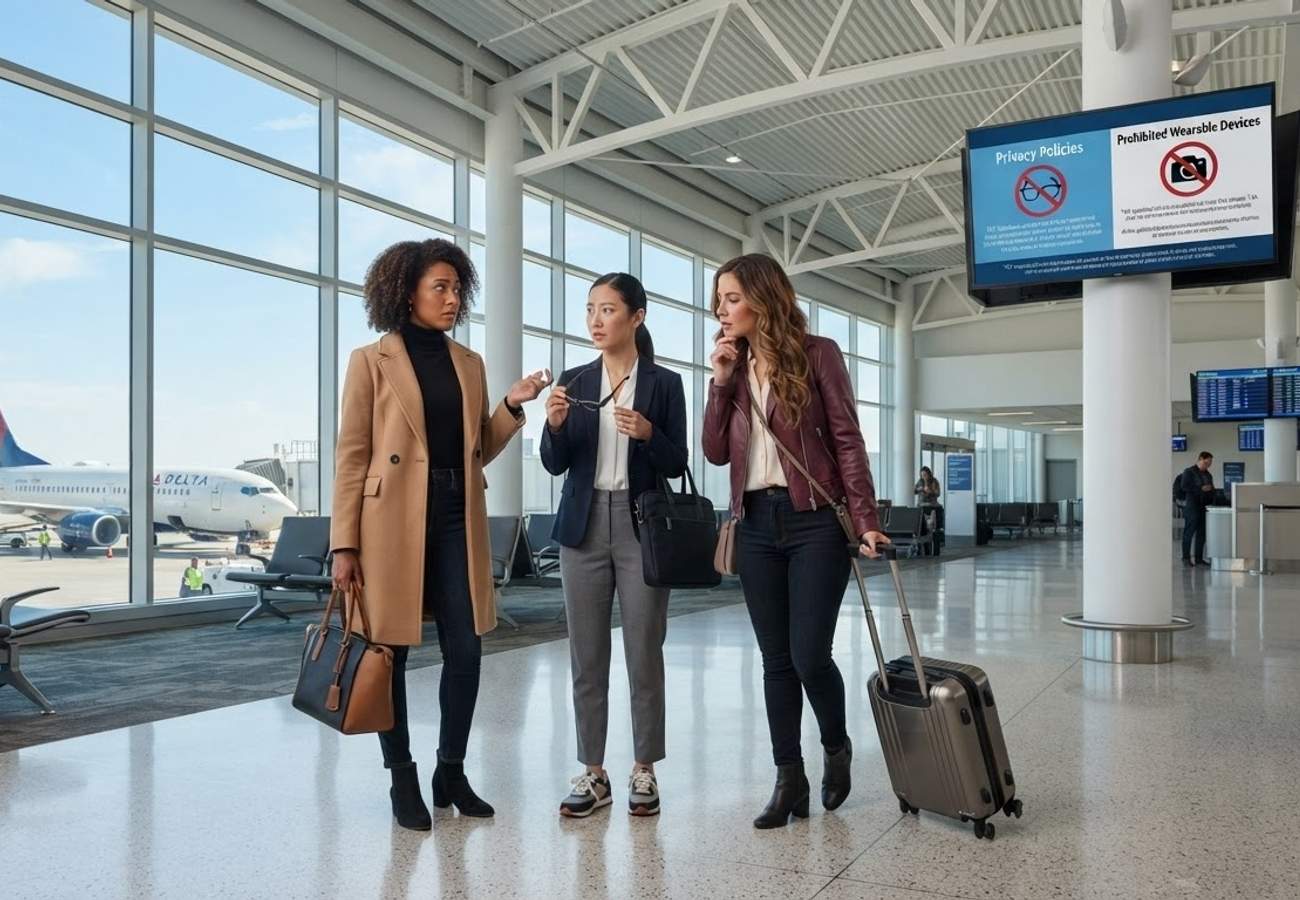
Image generated by AI
The travel and legal sectors are witnessing a decisive shift away from wearable AI as Delta Air Lines and the state of New York implement strict prohibitions on smartglasses to prioritize human privacy over tech integration.
The Local Trend Revealed
A significant pivot in the intersection of travel and technology is unfolding. While the previous decade was defined by an eagerness to integrate Augmented Reality (AR) and Artificial Intelligence (AI) into every guest interaction, 2026 is seeing a "privacy correction."
Delta Air Lines, which began quietly enforcing a ban on smartglasses for its flight attendants in July 2025, remains a primary driver of this movement. The airline's stance is a direct reversal of earlier industry experiments; for instance, Air New Zealand explored using the tech in 2017 to track passenger meal preferences, and Virgin Atlantic looked into real-time data displays. Delta's current policy prohibits staff from wearing these devices unless specifically directed by the company, citing the need to ensure the safety and security of global operations.
This corporate caution has now scaled to a governmental level. As of July 20, New York State has extended this prohibition to the judicial system. The ban covers 1,240 courtrooms across the state, specifically targeting Meta Ray-Bans and other recording-capable eyewear. At the Honorable James C. Torney III Criminal Courthouse in Syracuse, signage now explicitly forbids glasses capable of recording. Notably, those who rely on prescription lenses within smartglasses are required to switch to alternative eyewear to gain entry.
Cultural & Environmental Value (Information Gain)
This trend reflects a growing cultural demand for "analog sanctuaries"—spaces where individuals can exist without the risk of covert surveillance. By restricting AI-powered wearables, these institutions are supporting a mental health shift toward mindful presence and the protection of personal dignity.
In the cruise industry, this movement is even more pronounced. MSC Cruises has implemented a strict ban on items capable of covertly transmitting data, stating that such measures are essential to protect the privacy and safety of both guests and crew. Similarly, Royal Caribbean has established "privacy zones" where smartglasses are prohibited, including:
- Casinos and spa service areas
- Restrooms and locker rooms
- Medical facilities and security screening locations
- Youth facilities and crew-only areas
These policies support the local economy by ensuring that high-end service environments (like spas and casinos) remain exclusive and private, preventing the unauthorized digital harvesting of guest experiences.
Visitor Insider Tips
For those traveling through New York or flying with major carriers in 2026, keep these practicalities in mind:
- Courtroom Compliance: If you have a legal appointment in New York, do not rely on smartglasses for your vision. Carry a backup pair of traditional prescription glasses, as security may deny entry to those wearing AI-enabled frames.
- Cruise Ship Etiquette: While Disney continues to embrace smartglasses to enhance the "theme park" experience, most other lines (MSC, Royal Caribbean) view them as security risks. To avoid confiscation, keep these devices stored in your cabin when visiting the spa or casino.
- Aviation Privacy: Be aware that while Delta flight attendants are banned from wearing these devices, passenger rules vary. However, there is a growing social expectation among travelers to avoid recording others covertly in the cabin.
- Off-Peak Tech Use: If you wish to use AR features for navigation or translation, do so in public transit hubs rather than inside secure zones or private service areas to avoid friction with security personnel.
Tourism Outlook
The long-term impact of these bans suggests a fragmented future for wearable AI. We are likely to see a "Zoned Tech" model where certain environments (like Disney parks) become AI-enhanced playgrounds, while others (like aircraft cabins, courtrooms, and luxury spas) become "Dark Zones" where analog interaction is mandated.
As more U.S. states follow New York's lead, the travel industry will likely move toward a standardized "Privacy First" certification, where destinations and carriers explicitly advertise their "AI-Free" status to attract privacy-conscious high-net-worth travelers.
The era of the invisible camera is meeting a very visible wall of resistance.
Related Travel Guides
Disclaimer
This article is for informational and educational purposes only. It does not constitute legal, financial, or professional advice. While we strive to provide accurate and up-to-date information, travel policies, regulations, and conditions change rapidly. Always verify information with official sources before making travel decisions. Nomad Lawyer makes no representations about the accuracy, reliability, completeness, or suitability of the information provided. Readers should consult qualified professionals for advice specific to their circumstances. The views expressed in this article are those of the author and do not necessarily reflect the views of Nomad Lawyer.
Kunal K Choudhary
Co-Founder & Contributor
A passionate traveller and tech enthusiast. Kunal contributes to the vision and growth of Nomad Lawyer, bringing fresh perspectives and driving the community forward.
Learn more about our team →